Old music tech people under 30 wouldn’t understand

Vinyl may have made a comeback, but before MP3s and streaming services, there was a bewildering array of music formats. How many of these do you recognise?
The past, as they say, is another country. That’s never more true than when you look back at how the past listened to their music.
If you grew up in the 1970s, 80s and 90s, music listening was a far more active pastime – getting up to change the sides of a record being the most obvious example – and with those physical formats came a host of associated paraphernalia. Cottage industries built up around such dinosaur-like activities such as cleaning musical equipment, while the whole act of taking your music on the go created tech big and heavy enough to replace a gym membership.
So, see how many of these archaic examples you can remember…
Cassette tape head cleaner
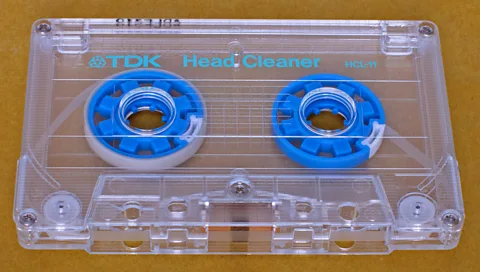
The cassette was the dominant music format from the mid 1970s until the early 1990s when it was supplanted by the CD. Just like vinyl, the music was broadcast via moving parts – in this case, the movement of tape across the magnetic heads which sent a signal to be turned into music via an amplifier. Play lots of cassettes, and these heads got gummed up with tiny specks of magnetic material, leading to ever-increasing loss of sound quality. The solution was a solution; usually some form of alcohol, which would dissolve the built-up gunk. These were often poured onto a head cleaning tape, which was played for a few minutes, wiping the heads clean.
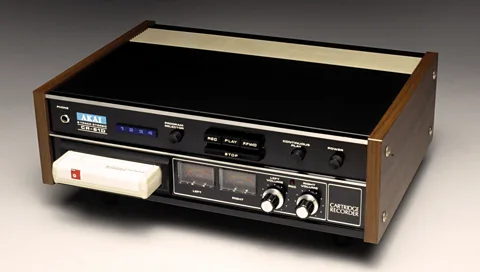
Eight-track tape decks
The battle between cassette tapes and 8-track mirrored that between VHS and BetaMax video formats; only with more Meat Loaf. Eight track, or Stereo-8 as the first players were known, was an attempt to bring the audio quality of vinyl to the world of magnetic tape. The eight-track cartridge could cram up to 80 minutes of music, and play it back in stereo sound. What’s more, much of the magnetic playing technology was actually contained in the cartridge itself rather than the player. Eight track grew in popularity when car companies started adding them into new models in the 1970s; in the UK, they came as standard if you bought high-end cars like a Rolls-Royce or a Bentley.
With the ever-improving quality of normal cassettes, the clunky, chunky eight-track went into decline from the early 1980s. In 1993, Kurt Cobain, perhaps slightly tongue-in cheek, suggested the album In Utero might be released only on eight-track.
CD lens cleaner
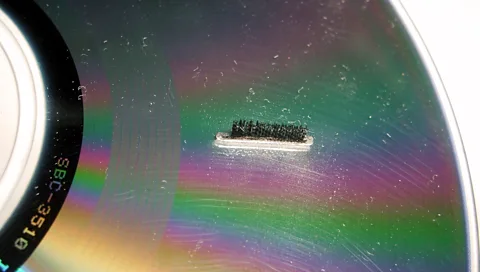
When they were unveiled to the public, much was made of the futuristic digital nature of the compact disc – with some media reports even claiming the laser could still read the disc’s music through a layer of jam (Pro tip: It can’t, don’t try this at home). While the laser lens didn’t touch the disc itself, it could still be affected by atmospheric dust. This gunk was no match for the CD lens cleaner – a special CD covered in tiny soft bristles that swept that nasty analogue dirt off your lens.
Tape-to-tape deck
In the mid-80s, you could have serious cultural cachet from having a hi-fi with not one but two tape decks – allowing the enterprising, if not exactly law-abiding, music fan to record commercial music with the click of a button. No longer did you have to laboriously scour record collections or radio broadcasts to cobble together a mixtape; you could record someone else’s. Home taping may not have killed music, but it did kill much of the annoying legwork.
CD travel cases
Imagine an MP3 player with all your music, which is several times the size and weight, but you can’t actually play anything. Before the mid-2000s, wanting to take your music on the go required some judicious pre-planning and space in your luggage. The CD player brought high-fidelity digital sound quality in something you could fit in your pocket, as long as the pocket was big enough to stick a bread and butter plate into.
CD cases are remarkably brittle things, prone to splintering if dropped, so some kind of CD-friendly travel case was needed. Full of CD storage sleeves, a plastic window to put the booklet into, and with a zipper to keep the dust out, this was about as 90s as the APS film camera or the Nintendo Game Boy.
Walkman
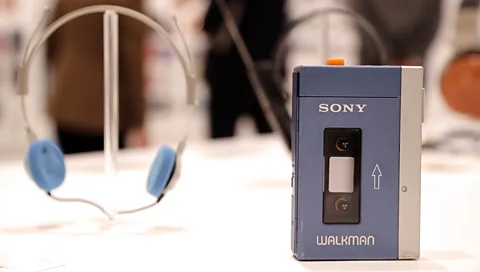
Before Sony launched its Walkman in 1979, music on the go meant bicep-testing boomboxes or tinny transistor radios tuned (hopefully) to a station that might play what you wanted to listen to. No more. The supplied headphones meant your very own personal music world was only the click of a button away. The Walkman wasn‘t the first such personal cassette player – German-Brazilian inventor Andreas Pavel created the Stereobelt several years earlier – but it became the most iconic, at least until the advent of the CD.
The combination of a personal musical soundtrack to otherwise everyday existence was a powerful draw; certain pop stars even donned the device in hit videos. It also may have created the so-called ‘Walkman Effect’, which could be seen as a precursor to the smartphone consumption age. Japanese professor Shuhei Hosokawa claimed that the player was changing the urban landscape, cutting off people from the outer world and allowing them to seek their own “individual zone of listening”.
Minidisc
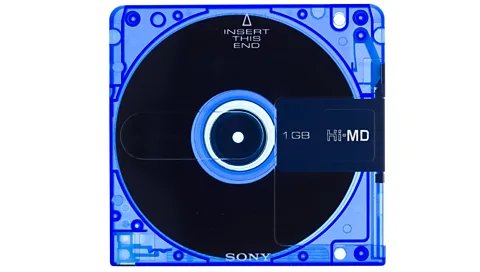
Even as the CD was hoovering up music sales from Anchorage to Addis Adaba, Japanese tech giants Sony were already thinking of the format to possibly replace it. MiniDisc was a pint-sized digital disc dreamed up by Sony in an attempt to find a truly pocketable portable music system; as this Medium piece noted, “both cassette tape and CD Walkman devices really couldn’t get any smaller, because the medium itself was the limiting factor”.
The true breakthrough for Minidiscs was that the format was recordable; you could re-record onto MiniDiscs, making “mix discs” that you could record over when you were bored of them. Later models even had the ability to play a new digital format called MP3…
The pencil
Not just an ancient instrument that previous generations used to write with, but also an invaluable music-saving device. Cassettes may have been the first truly portable music format, but they had one major flaw. Thanks to their physical content with the tape heads, and the tendency for dirty players to spin the supply side of the tape faster than the take-up end, the tape would often come spooling out of the bottom and get tangled in the player (a particular problem in car stereos). The solution? The humble pencil, which could be stuck through the take-up reel (the right of the two holes in the centre) and twirled until the tape took up the slack. You then only had to deal with the sound of mangled magnetic tape next time the cassette reached the crucial point…
If you liked this story, sign up for the weekly bbc.com features newsletter, called “If You Only Read 6 Things This Week”. A handpicked selection of stories from BBC Music, Culture, Capital, Future and Travel, delivered to your inbox every Friday.
