Seven intriguing phrases from around the world

 Lan Truong
For International Translation Day, BBC Culture takes a global tour of quirky lingo.
“We suppose that the most common experiences are the same as, and translatable between, different cultures,” writes Christopher Moore in his book In Other Words, “but this simply isn’t so”.
Instead, Moore explains, some expressions can offer meanings unique to their own culture. For the book, he’s collected 93 of his favourite mots justes from more than 35 tongues, including Swahili, Maori and Urdu. Some offer insights into the values of that language group; others are amusing turns of phrase. They each capture something particular with satisfying precision.
More like this:
– Can language slow down time?
 Lan Truong
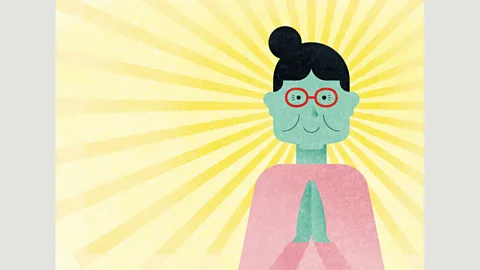
Shibui (Japanese)
“Shibui describes an aesthetic that only time can reveal,” according to Moore. “As we become older and more marked by the riches of life’s experience, we radiate with a beauty that stems from becoming fully ourselves. The term can be applied to almost anything – a person, a house, or even a piece of aged wood.”
 Lan Truong
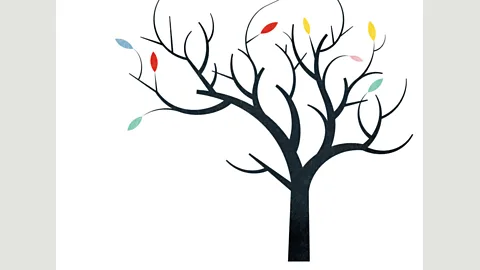
Gagung (Cantonese)
The one-child policy in China has altered the population’s gender balance, leaving a surplus of males. That has been recognised in a poignant expression. “This sad term, which means ‘bare sticks’ or ‘bare branches’, refers to men who are unlikely to marry or to have families because of the skewed sex ratios,” writes Moore.
 Lan Truong
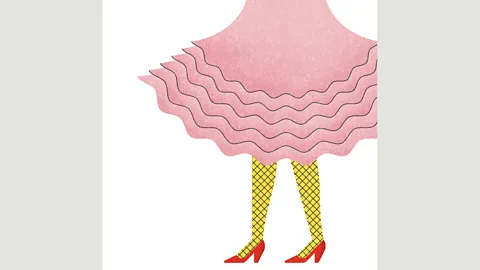
Froufrou (French)
“A rustling, especially that of a woman’s skirt, and one of the nicest onomatopoeic words around. This lovely expression evokes the whole risqué world of thés dansants, soirées intimes, and the institution of the discreet venue, the chambre séparée,” writes Moore.
 Lan Truong
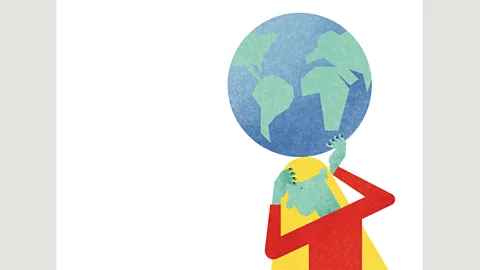
Weltschmerz (German)
A compound word made up of Welt,meaning ‘world’ and Schmerz,meaning ‘pain’. According to Moore, “just as your head can hurt (Kopfschmerzen) or you can suffer from a stomach ache (Magenschmerzen), so the world can hurt too. In its mildest form, this is ‘world-weariness’. At the other extreme, it’s an existential pain that leaves you reeling with a damaging, head-clutching despair.”
 Lan Truong
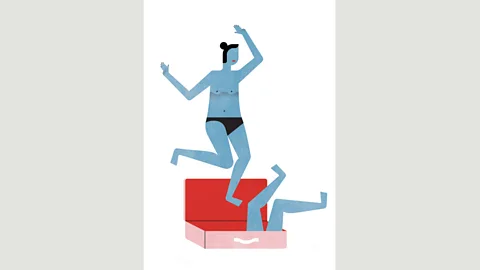
Met iemand in de Koffer duiken (Dutch)
“In the Netherlands you don’t have a roll in the hay with someone,” says Moore, “you ‘jump in a suitcase together’ – possibly to elope, but probably suggesting a dirty weekend away. While not the kind of phrase you’d use to initiate a romantic encounter, this is still the sort of schoolyard insult that will get a laugh.”
 Lan Truong
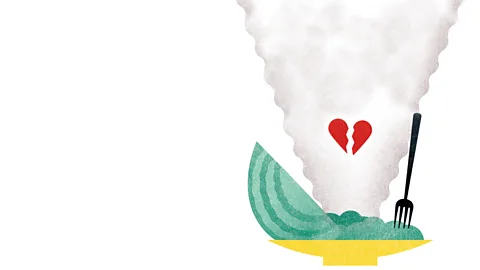
Cavoli riscaldati (Italian)
“Literally ‘reheated cabbage’,” according to Moore, “this Italian phrase describes a pointless attempt to revive a former love affair, and comes from a proverb: cavoli riscaldati né amore ritornato non fu mai buono – ‘neither reheated cabbage nor revived love is ever any good’.”
 Lan Truong
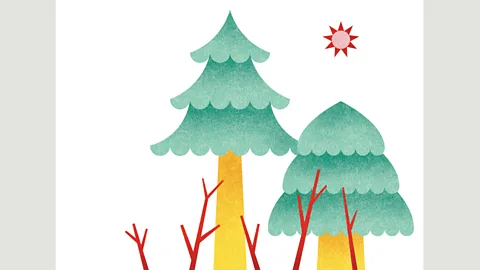
Yolki-palki (Russian)
“A peculiar Russian expression which could express surprise, dismay or pleasure, depending on the situation,” writes Moore. “The phrase literally translates as ‘fir trees and sticks’ but is probably approximated in English by the expression ‘holy cow!’”
These expressions can often be entertaining – yet they also reveal differences not just in language, but in ways of thinking. As Moore points out, “Take the example of dreaming. What are we to make of the fact that languages such as Spanish and Italian have the same noun for sleep as for dream, while others, like French and English, differentiate between the two? Do some nations sleep differently from others?”
They can offer an insight into prevailing attitudes, too. “In Britain, for example, where an Englishman’s home is his castle and it is possible to live for years without knowing your neighbours, the phrase ‘living together’ refers without ambiguity to the domestic arrangement of unmarried couples,” says Moore.
“Germany throws its hat in the ring with the word zusammenleben, a more pragmatic notion of ‘getting along’ in your family or in the community… In Spain, the word convivencia alludes to ‘living together with others’, the quality of a society where citizens get along by practising tolerance and mutual respect. In this sense, it comes close to meaning a ‘civic culture’.”
It’s a reminder of something meaningful about opening ourselves up to new concepts in other languages. “People who are not us speak, write and do things that are alien and mysterious but which, when explained, often make an awful lot of sense,” writes Simon Winchester in the book’s foreword. “The understanding of tongues other than our own offers us a chance to come to a better understanding of peoples other than ourselves.”
In Other Words: An Illustrated Miscellany of the World’s Most Intriguing Words and Phrases (Modern Books) by Christopher Moore (illustrated by Lan Truong) is out now.
If you would like to comment on this story or anything else you have seen on BBC Culture, head over to our Facebook page or message us onTwitter.
And if you liked this story, sign up for the weekly bbc.com features newsletter, called “If You Only Read 6 Things This Week”. A handpicked selection of stories from BBC Future, Culture, Capital and Travel, delivered to your inbox every Friday.
