Preserving Morocco's grand gardens

 Anima Garden/Suzi Stoeckl
Liza Foreman explores some of Morocco's most beautiful gardens, and meets the people working to preserve these serene spaces.
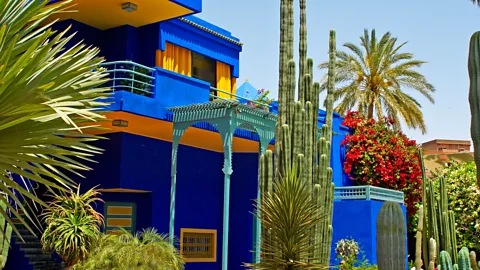
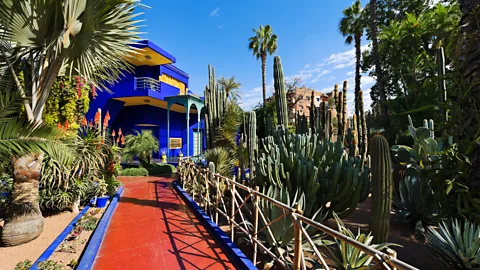
The vivid blue walls of the Berber Museum and IslamicArt Museum in Marrakech, juxtaposed with the vibrant green cacti that rise like totem poles in the Jardin Majorelle, are a stunning sight to behold.
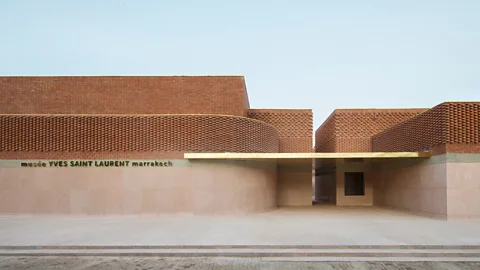
The complex, the largest work completed by artist and former resident Jacques Majorelle, is one of the most visited sites in Morocco, and its history is rich with design heritage. Long after the death of Marjorelle, it was rescued in the 1980s by Yves Saint Laurent alongside his partner Pierre Bergé, who died in September this year, shortly before a new YSL museum opened next door. Saint Laurent’s ashes are scattered in the garden.
 Alamy
AlamyThe intriguing work of American landscape gardener Madison Cox (who married Bergé in March this year and who also serves as the President of the Fondation Jardin Marjorelle) in these gardens could also be considered art.
Now, most likely inspired by this unique place, several gardens in this vibrant country are leaving design lovers and gardening enthusiasts alike spoilt for choice.
 Musée Yves Saint Laurent Marrakech
Budding designs
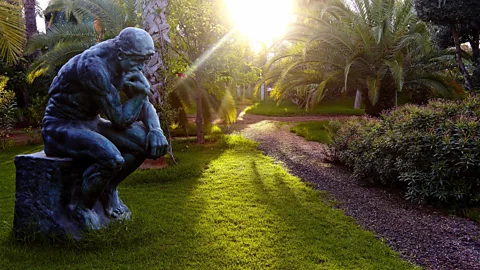
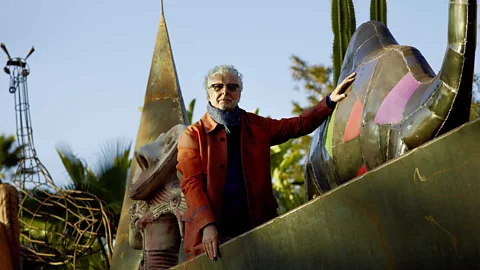
The fantastical Anima gardens, created by Austrian artist AndréHeller provide an equally delightful combination of design and foliage that draws upon Morocco’s rich gardening heritage. The gardens are around 28 km from Marrakech.
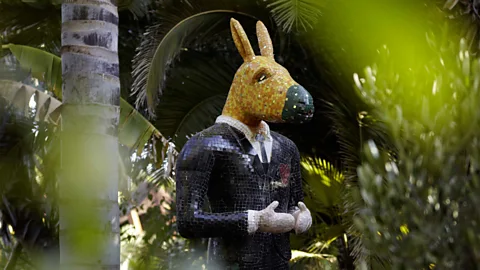
Heller spent six years transforming this desert landscape into a paradise garden, importing plants from around the globe. Amid the fields of roses and a dozen-odd palm tree varieties, there is a contemporary art centre that Heller hopes to turn into the leading home for contemporary art in Morocco. Works from the greats, including Keith Haring and Pablo Picasso, are dotted around the gardens. An African face stares out from the foliage, before visitors stumble upon a path of Chinese zodiac signs and a glass house.
 Alamy
AlamyThe garden’s website calls it, “one of the most imaginative gardens in the world.” And they might not be wrong: Heller is neither afraid to plant roses in the desert nor to push artistic boundaries.
Le Jardin Secret, a former palace in the midst of the Medina sprawl, opened in 2016, and is slightly more conservative. Visitors come from far afield to take in its intoxicating mix of boldly-coloured new buildings and traditional Islamic gardens.
 Anima Garden/Stefan Liewehr
Built more than 400 years ago, and re-built in the mid 1800s, the garden on recently opened for public viewing. It features beautifully restored Islamic architecture with structured gardens complementing the buildings, offering a place to retreat from the bustle of the medina and a classic example of a stately Moroccan estate.
A strikingly minimalist complex, containing a shop and offices, has been added to the existing palace, containing a less formal exotic garden, with plant species from around the world that draw upon the experimental nature of the great gardens of Morocco.
A heavenly metaphor
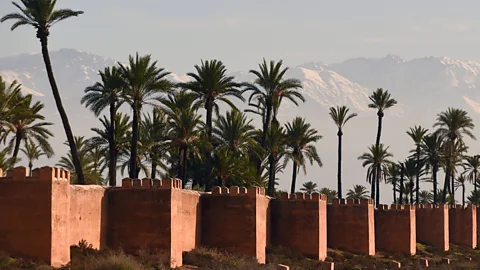
Marrakech is known as a rose among the palm trees, an oasis in the desert. The Islamic garden, meanwhile, is designed to offer an inner retreat like a courtyard in a riad, a traditional Moroccan home.
“The garden is as a matter of fact a metaphor of heaven; it is a sacred place, laid out according to rigid geometrical rules, in which the Muslim order asserts itself over the wild disorder of nature,” say the organisers of Le Jardin Secret.
 Anima Garden/Stefan Liewehr
Other notable gardens in Marrakech include those at the Mamounia hotel, and the 400-hectare botanical Agdal Gardens.
And now, a number of grass-roots organisations are working to restore more gardens around Morocco that serve communities. “The problem in Morocco is not so much saving the gardens but creating them,” says Swedish gardening activist and photographer Ingrid Pullar. “There are some old gardens created by the French, mainly, but all in all, empty spaces are being sucked up by real estate companies.”
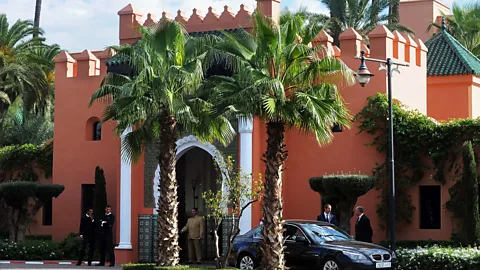
Pullar volunteers with several organisations, including Orange Bleu Maghreb (OBM). She also co-founded her own non-governmental organisation, The Green Challenge, to take over the management of a garden project in a district of Cassabanca, Sidi Moumen. The garden, known as Jardin Ibn Al Awam, was created in 2014.
 Getty Images
“Some of the area’s complexes have barren land, filled with garbage next to them so OBM decided to make a garden there,” says Pullar. “In the Spring of 2015, I coordinated and organised a collection of trees via Facebook posts. People here are starved of green space, and parks. Casablanca is getting more and more crowded, and they are building everywhere. People are suffocating from lack of parks and trees.”
“So many people saw our posts and went to their chosen nursery and selected fruit trees or plants,” she says. “People from Casablanca, Fes and even my friends in Germany willingly donated trees for the garden. Then we brought the trees over to the barren land and planted them. Today we already have some tall trees. In the Spring, it looks fantastic.”
 Getty Images
“There is not one group that brings together all of the smaller NGOs at this point,” she notes.
Other gardens that local enthusiasts have saved include Les Jardins Exotiques de Bouknadel, which lies between Sale and Kenitra.
“It is not very famous but it is a big garden with thick, tall trees. It was founded in 1951 by a French engineer and took 10 years to make,” Pullar says. “At one point, it was almost abandoned but it was reopened again in 2005. In 2011, they inaugurated a pedagogic tour of the garden for school kids.”
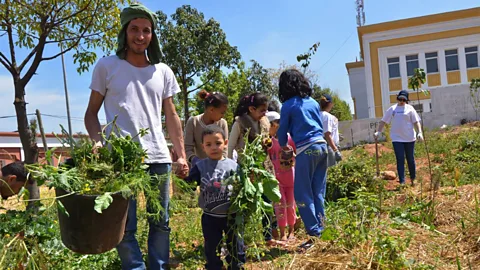 Ingrid Pullar
Pullar grew up in Sweden surrounded by trees and has an appreciation of nature that goes beyond design.
“When OBM came to Casablanca to do urban permaculture and started to transform an old dump in the outskirts of town, I was more than happy to join the team of nature enthusiasts and tree lovers, like myself,” she recalls. “First we had to remove trash and flatten the land. Then it was time to make the space green and collect trees. We realised how starved people in the cities are of nature. Then we planted. Since then, we have organised dozens of workshops and events, while the garden slowly has grown.”
If you liked this story, sign up for the weekly bbc.com features newsletter called "If You Only Read 6 Things This Week". A handpicked selection of stories from BBC Future, Culture, Capital and Travel, delivered to your inbox every Friday.
