The surprising power of kneeling

 Christian Petersen/Getty Images
After a wave of NFL players knelt during the US anthem this week, Kelly Grovier considers the symbolic power of bringing the body low.
In the Frame
Each week Kelly Grovier takes a photo from the news and likens it to a great work of art.
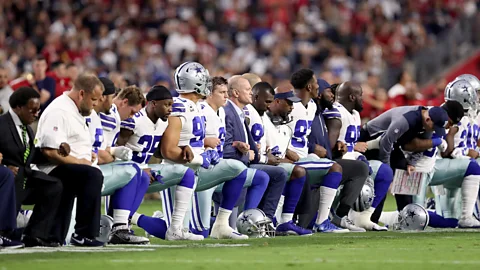
“There are,” according to the 13th-Century Persian mystic Rumi, “a thousand ways to kneel”. If you think that calculation is a poetic exaggeration, you haven’t been watching much American football recently. Hundreds of players across the National Football League “took-a-knee” this week during or before the performance of The Star-Spangled Banner (the US national anthem, which is traditionally sung before the start of each game).
Each teammate who participated appeared to attach to the passive posture his own personal and political meaning. The controversial gesture of genuflecting during the anthem’s recital began in 2016 when Colin Kaepernick, then the quarterback of the San Francisco 49ers, did so in protest against racial inequality. After President Donald Trump condemned the NFL last week for failing to punish those who followed Kaepernick’s example, many of the league’s players elected to stoop in what has widely been seen as a wave of quiet defiance.
Christian Petersen/Getty ImagesBut is kneeling really so rebellious? In the 1960s, Martin Luther King Jr championed peaceful “sit-ins, kneel-ins, and wade-ins” in order to “awaken the conscience of the white man”. But as a social mannerism, kneeling has far more often been associated with humble obeisance and polite deference than with resistance or confrontation. Pious pilgrims kneel and so too do nervous lovers stammering to pop the question. A species of bowing, kneeling brings the body low in order to demonstrate the kneeler’s insignificance in the presence of a more worthy or powerful figure.
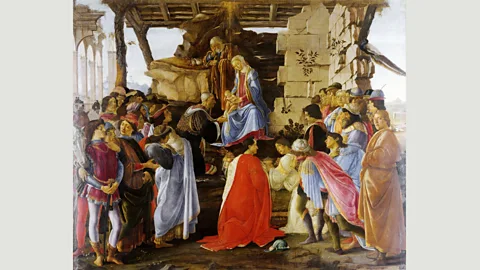
A stranger unfamiliar with the custom of standing to attention while the anthem is being sung, might well assume that those kneeling during its performance were in fact the ones displaying the profounder respect. Their reverential posture rings a retinal bell. It echoes the submissive stance adopted in countless medieval and Renaissance paintings by the world-weary wise men, exhausted from arduous travel, who crumple tenderly at the sight of the infant Christ.
 Wikimedia
About spiritual power, they were never wrong, the old masters. In Sandro Botticelli’s exquisite panel painting The Adoration of the Magi (c 1475), the act of kneeling is more than merely worshipful; it is mystically restorative of life itself. Botticelli curiously cast deceased members of the powerful Florentine family, the Medicis, in anachronistic roles of the three supplicating magi – the Persian kings who brought gifts of gold, frankincense, and myrrh to the baby Christ. By doing so, the artist managed simultaneously to immortalise and to subjugate the Italian dynasty to a higher authority. As do the countless photos of genuflecting NFL players circulating in the news this week, Botticelli’s masterpiece dares to ask: what in the world, or beyond it, brings you to your knees?
If you would like to comment on this story or anything else you have seen on BBC Culture, head over to our Facebook page or message us onTwitter.
And if you liked this story, sign up for the weekly bbc.com features newsletter, called “If You Only Read 6 Things This Week”. A handpicked selection of stories from BBC Future, Earth, Culture, Capital, Travel and Autos, delivered to your inbox every Friday.
