Five cities to watch in 2019

 Getty Images
The world's cities are ever-evolving economic drivers – so which ones could see the most significant change in 2019?
 Getty Images
Few trends have transformed the global landscape over the past century as dramatically as urbanisation.
In 1900, there were just 16 cities with more than one million inhabitants. But upward of half the world’s population now lives in urban areas, according to the Brookings Institution. The 300 largest metropolitan economies account for nearly half of all global output.
Cities are now key economic drivers, but they are also constantly evolving. So which ones could see the most significant change in 2019?
 Getty Images
Figuring out which city will grow the fastest economically is surprisingly tricky. That’s because there are often one or two outliers that top the table due to some kind of statistical anomaly. The Brookings Institution’s Global Metro Monitor puts Dublin at the top, but it is less because of local economic activity than corporations who reside there on paper, including many banks.
Oxford Economics says Tripoli will, at least in theory, grow fastest in 2019, but adds that it is a risky bet because of Libya’s tenuous security situation. So which city has the most significant, quantifiable and sustainable growth?
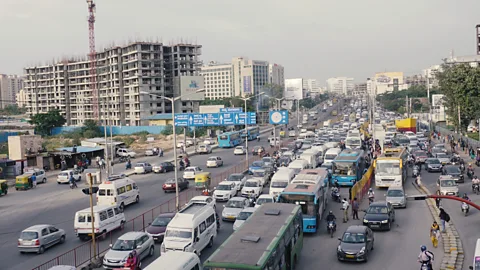
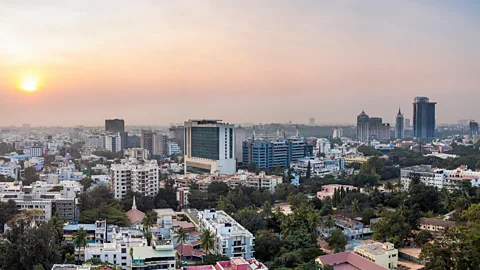
“In meaningful terms it’s Bangalore in India, which is likely to see the strongest growth. We forecast GDP growth of 10.5% for Bangalore in 2019, even after adjusting for inflation,” says Richard Holt, the head of Global Cities Research with Oxford Economics.
 Alamy
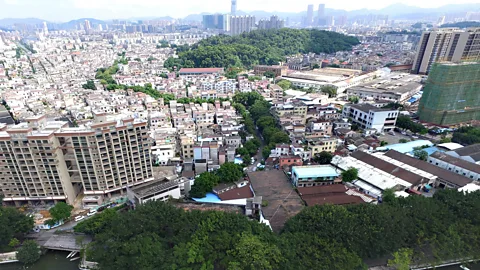
AlamyIndia’s answer to Silicon Valley is where the country’s biggest home-grown tech companies base themselves. Many multinationals also have offices there to take advantage of the city’s combination of technical know-how and cost efficiency.
Bangalore also does well in high-growth manufacturing in sectors including biotech and aerospace. The city has long been a major centre for India’s growth, but may really hit its stride in the upcoming year.
“The overall result is more jobs and higher wages. That, in turn, means that consumer spending in the city could also grow by 10% or more in real terms in 2019. Much of that spending will then feed back into the city’s economy,” says Holt. “And although cost rises could eventually endanger this virtuous circle, that day is years, perhaps decades, away.”
 Getty Images
In December, the US and China agreed to a 90-day pause in trade hostilities to allow for talks which could defuse the tit-for-tat rounds of tariffs that characterised 2018.
Even if those talks make progress – which could be unlikely – the US has already hit $250bn of Chinese goods with tariffs since July. China has retaliated by imposing duties on $110bn of US products.
The export-led manufacturing bases along China’s coast are likely to be the areas that really feel the pinch as their goods become more expensive to US consumers. That includes Zhongshan, says Deborah Elms, executive director of the Asian Trade Centre.
 Alamy
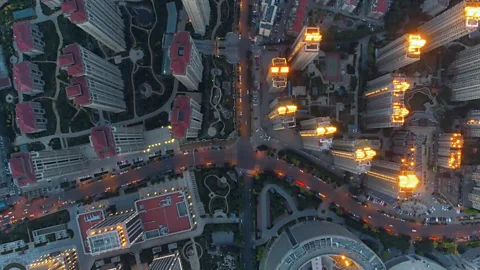
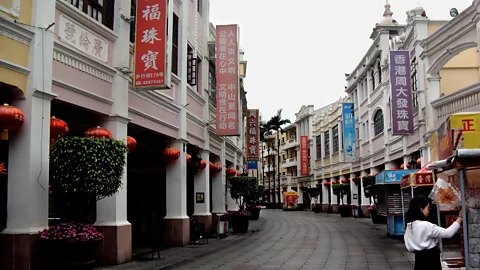
AlamyZhongshan sits across the border from Macau in Guangdong province, which is China’s biggest technology and manufacturing hub.
The whole of Guangdong province, which has a population of more than 100 million, will likely feel a significant impact on its trade and foreign investment. A recent survey from the US Chamber of Commerce indicated that as many as 70% of US firms operating within Guangdong are delaying investment or even considering shipping out. So why does Zhongshan stick out?
“Over 70% of their exports that go to the US are currently hit with tariffs. They export machinery, which is also the largest category of products shipped from China to the US, making it an especially good bellwether of the trade dispute in 2019,” says Elms.
 Getty Images
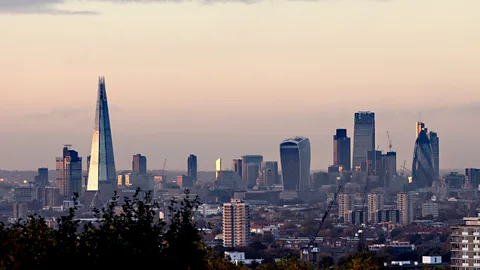
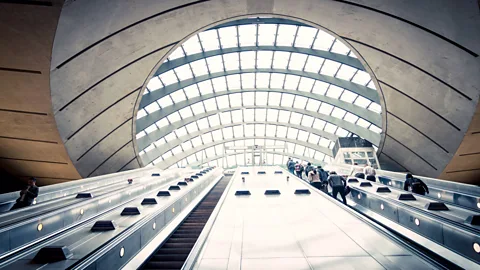
London is the largest city in Europe and accounts for more than a fifth of the UK’s economy. But London undoubtedly faces a difficult and transformative year as the UK attempts to finalise a deal to withdraw from the European Union.
In her New Year speech, Prime Minister Theresa May said the UK could "turn a corner" if parliament backed her proposed Brexit deal. But only a few months from the 29 March deadline, it’s far from certain she can secure the numbers. A no-deal Brexit or a second referendum aren’t entirely off the table either.
 Getty Images
Most experts agree the uncertainty isn’t helpful. The pound has suffered and the city’s property market is more subdued than usual. The bank of England warns of recession if there’s no deal, and it has previously said as many as75,000 finance jobs could go due to Brexit, with 5,000 of them alone coming from London’s financial hub. London’s continental competitor Frankfurt expects to pinch 10,000 finance jobs for itself, along with 800bn euros ($918bn) in assets. And some multinationals say they’ll move their headquarters overseas.
Brexit’s supporters, though, believe fears are exaggerated and Brexit will allow the UK to chart a new economic course. This could be the year we find out who’s right.
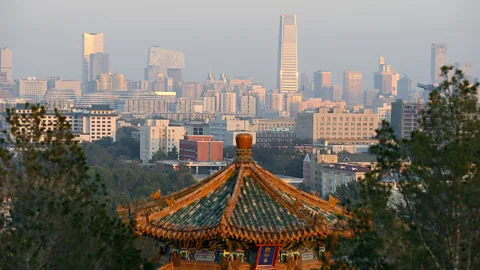 Getty Images
The International Air Transport Association predicts China will overtake the US as the biggest aviation market in 2022. This year, Beijing will take a big step towards that target.
In or around September 2019, Daxing International Airport will open. It is a monster aviation hub that will be capable of churning through 100 million passengers a year when it’s fully operational – and its impact will be huge.
Ellis Taylor, Asia Finance Editor at FlightGlobal, says Daxing International Airport will introduce more competition into the domestic market, because China Southern and China Eastern will be able to eat into Air China’s dominance in the capital.
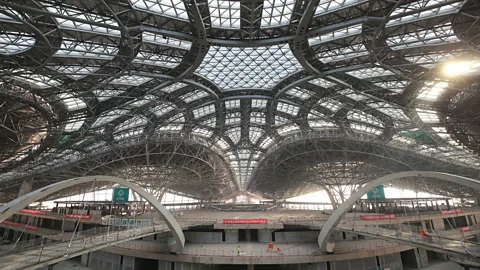 Getty Images
If you’re travelling to Asia, or maybe from Asia to the US, you might find yourself with a Beijing layover. The new airport has the potential to reshape the international flight map as Beijing becomes a much more significant hub.
"You could see more people connecting through both Beijing airports. Those airlines will use the cost advantages they have to lower fares on connecting long-haul flights," says Taylor.
 Getty Images
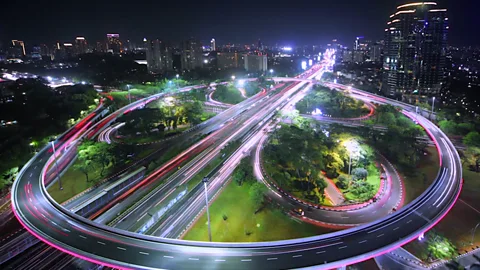
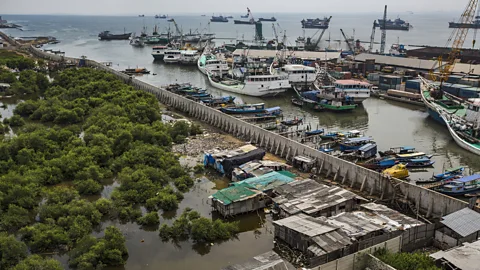
Jakarta has the ignominious distinction of likely being the world’s fastest sinking city in 2019.
“Jakarta does have a lot of factors coming together – natural and man-made – that do mean it is very vulnerable to rising sea levels,” according to Dr Katherine Kramer, the global lead on Climate Change for Christian Aid, which wrote a report on sinking cities this year.
The capital of Indonesia is low-lying, coastal and largely built on a swamp. But a more urgent problem is the use of groundwater by local residents, who pump it from underground aquifers. Poor water infrastructure means there’s little alternative. When the water comes out, the land above it sinks. The northern part of Jakarta has sunk 2.5m in 10 years, and is sinking by as much as 25cm a year in some parts.
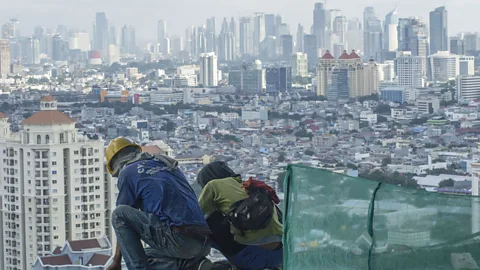 Getty Images
Climate change will add to the city’s challenges.
“Jakarta is also vulnerable to episodic events made more frequent and severe by climate change, such as floods and storm surges,” says Kramer. “Changes to intensity and patterns of precipitation caused by warming surface temperatures also mean greater risks of extreme weather events.
