May 2009Goodbye Marcos and hello Jihad!Sorry to hear that you weren’t feeling well Marcos… I hope you’ve caught up with your work now. I have enjoyed reading your posts and wish you all the best with your job, studies and English!
It’s great to meet you Jihad! Like the other blog readers, I am looking forward to hearing about your work in the pharmacy, the people you meet and area you live in. I’ve never been to Egypt, so would love to see some of your photos.
Let me know which bits of English you want me to write about. Marcos asked for feedback on his writing and help with multi-word verbs and reporting speech. I’ll finish the reporting speech topic by pointing out some useful exercises on the BBC LE site. The first exercise practises moving the tense in the reported clause one step back into the past; this is called tense backshift and is a way of showing that the reporting is in a different time from the original speech. We don’t always move the tense one step back; sometimes when the report is talking about something that is still true or which hasn’t happened yet, the form of the verb is unchanged. For example:
Yesterday Clara said, “I’m going into town with my friends this weekend”.
Yesterday Clara told me that she is going into town with her friends this weekend.
Grammar challenge: reported speech - quiz 2
So far, we have mainly talked about representing speech in writing. So for a change, here is an exercise on the use of be like for reporting speech orally. You may remember in my first post that Clara talked about youth English and mentioned the use of be like to report speech:
Keep your English up-to-date 4: be like
I really look forward to hearing from you Jihad. Have a great weekend!
Rachel
--------------------------------------------------------------------------------------
Comments on the comments:
Rabail (from the UK) – Advise is a verb and advice is a noun. Hope this helps!
Filippo (from Italy) – The Cambridge Grammar of English is available from amazon.co.uk from £18.40 plus delivery charges. You could try the Cambridge University Press website for information about stockists in Italy.
posted on Friday, 01 May 2009 | comment on this postUsing all the (simple) tools we haveHello Jihad!
You are welcome to call me Rachel, in fact I prefer it. Thank you for your two interesting posts. We are lucky to have a pharmacist blogging at the moment and I look forward to hearing your comments on health issues in general and swine flu in particular….
You asked about punctuation so I have a suggestion for you which might help…. It is a simple suggestion, so apologies if you are already doing it! Anyway, my suggestion is that you use your word-processing software to give you free-of-charge, detailed feedback on your writing, every time you type. The specific help that your software will give depends on the manufacturer and the version you are using. In Microsoft Word, for example, you can click on Tools in the toolbar and then select Spelling and Grammar. A dialogue box will appear offering several choices. Click on Options and choose the features that you think might help you. If there is a Writing Style drop down menu, click Grammar and Style, not Grammar Only. Click Settings and browse through the features, again, choosing the ones that you think will help (or all of them!).
As an experiment, I copied a paragraph from one of your posts and pasted it into MS Word. Here it is, with the words in bold-faced type showing what the Spelling and Grammar tool underlined in red (grammar, spelling and punctuation mistakes) or green (possible style mistakes).
Medically speaking, Most types of influinza, including the swine type, share the same symptoms of the the regular flu and we can't reach an exact diagnosis without laboratory test. Also, the WHO says that the current anti-influinza vaccines and the widely known antiviral drug "Tamiflu" showed little effectiveness against swine flu.Added to that, I'm not sure that using protective musks is adequate to protect ourselves from this virus whish is still classified as the strongest micro organism on earth. Absolutely disappointing!!!!!!! Isn't it?
In MS Word, you can right click, using your mouse, to find out what the software thinks is a better way of writing. These are the changes the software suggested:
influinza = (spelling) influenza
the = (repetition)
can't = (style: contraction) I disagree with the software here because I think contractions are fine in informal writing
Also = (style) you could use the more formal phrase in addition, but again, I think also is fine here
Tamiflu = a new word that Word doesn’t recognise!
flu.Added = (punctuation) space after the full stop
musks = (spelling) masks
disappointing!!!!!!! = (style) Word doesn’t like your multiple exclamation marks, but I do, because they show how strongly you feel!!!!!!!
Isn't it? = (style) Word doesn’t like contractions, but I think they’re fine, though I think you could put the exclamation marks after the tag question, like this Absolutely disappointing, isn’t it?!!!!
This is what MS Word didn’t notice, but that I did:
speaking, Most = (punctuation) speaking, most
share the same symptoms of the regular flu = (word choice) I think that share and the same mean something similar; instead try, share the symptoms of the regular flu or have the same symptoms as the regular flu
without laboratory test = (grammar) without a laboratory test
"Tamiflu" showed little effectiveness = (grammar) because the crisis is ongoing, I think that a present tense or a present perfect tense would be better here. Using the past simple sense makes it sound like the crisis is in the past. For example, "Tamiflu" has shown little effectiveness (present perfect)
this virus whish is still classified = (spelling) which
Absolutely disappointing = (word choice) Disappointing probably isn’t the right word choice because it suggests that you had hopes or expectations of the swine flu epidemic which have not been fulfilled – and I don’t think that this is exactly what you mean. Maybe, incredibly worrying, absolutely shocking, or really frightening would be better???
So, you can see that, while the spelling and grammar tool isn’t perfect, it will help you notice some mistakes in your writing, including some punctuation problems.
I hope this has been useful. Try it and let me know!
I look forward to hearing more from you soon. We may need your advice on simple things we can do to protect ourselves in the next few weeks!
Rachel
posted on Monday, 04 May 2009 | comment on this postPunctuation and pointless humming at the train stationHello Jihad!
How are you? I hope your week is going well.
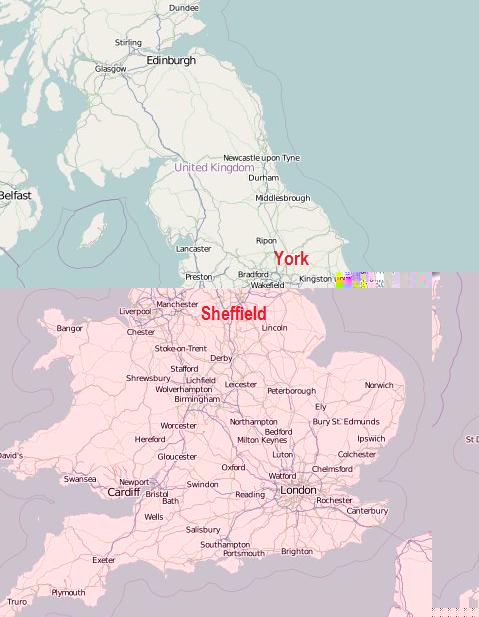
Today I went to Sheffield to visit our new External Examiner for the MA TESOL. The External Examiner checks a sample of our students’ work, to make sure that the marks we give at York St John University are fair. All academic programmes in Higher Education must appoint an External Examiner, who is usually working on a similar programme at another university.
I cycled to the train station from home, left my bike at the station and got a train to Sheffield. The train journey took about forty-five minutes. Here is a (large!) map showing the location of the two cities:
 I made a short video of York train station while I was waiting for the train. For some reason, I was humming tunelessly all through the filming. The ‘tune’ is about three notes repeated over and over again in different combinations. Oh dear. I didn’t even realise I was doing it. Next time I will either try and keep quiet or say something more interesting!
York train station with tuneless humming in the background
You mentioned in one of your posts that you are interested in improving your punctuation. I looked carefully at your writing for punctuation problems and found very few!
So, based on the paragraph that follows, I have just two comments; one about apostrophes and one about commas.
Jihad wrote:
But have you realised that some international reactions was to some sort childish and showing a great degree of lack of responsibility and even sense towards an epedimic that threats the all humanbeings? Especially, these animal rights defending organisations who condemned the Egyptian authorities disicion to slaughter all pigs as a preemptive action to avoid a swine flu outbreak in Egypt. Very rediulous!!!! Rachel wrote:
But do you agree that some international reactions were childish and irresponsible, considering that this is an epidemic that threatens all human beings? Especially the animal rights organisations that condemned the Egyptian authorities’ decision to slaughter all pigs as a pre-emptive action against a swine flu outbreak in Egypt. Absolutely ridiculous!!!! My apostrophe comment may be one you already know: Egyptian authorities’ decision.... because the decision belongs to the (plural) authorities. For a plural nouns which ends in s (for example, authorities), use s’ to mark the possessive form.
My comma comment is a bit more complicated: Especially [no comma] the animal rights organisations… because especially is a focussing adverb (others are: simply, only, just, particularly) and does not need a comma to separate it from the rest of the sentence.
There are many examples in your writing of where you use commas effectively:
My next entry, I promise, will be…. Here you are marking an adjunct (which functions as a comment) off from the rest of the sentence.
Added to that, I’m not sure…. Here you are again marking an adjunct (which functions as a link with the previous sentence) off from the rest of the sentence.
Also, the WHO says…. Again, the comma separates the adjunct (another link with the previous sentence) from the rest of the sentence.
I hope that makes sense. At least more sense than my nonsensical background humming!!!
I noticed that the BBC LE site has an exercise on vocabulary related to swine flu here:
Europe's first swine flu case
OK, that’s all for now. See you again soon!
Rachel
---------------------------------------------------------------------------------
Comments on the comments:
Jirka (from the Czech Republic) - your question about the difference between that’s OK and it’s OK is a very interesting one! Sometimes either phrase is acceptable, for example:
A: Are you sure it’s no trouble?
B: No, it’s OK or No, that’s OK.
My grammar book suggests that it is often used to refer to a situation and that to refer to a person, object or topic. Let’s listen carefully to the conversations we hear and try to notice when that and/or it is used!
Rabail (from the UK) – all your examples of advice/advise were correct except one, great! The incorrect one was I am planning to take advise from….. I think that I am planning to take advice from..... is better.
Kiran Gautam (from Nepal) – You are quite right to point out that MS Word doesn’t like the passive voice. I’ve noticed this too, but I have no idea why! Does anyone else know? Your example of the passive voice is correct; to use the active voice here (as MS Word suggests) would sound very strange.
Hello to Cristina, Abdisamad Sharif, Ana Paula, Chaikh Vall, Mauricio, Adek – great comments!!
posted on Wednesday, 06 May 2009 | comment on this postBusy at workHello Jihad!
I hope the weather has settled down now and the dust storms have stopped. Your photos give a very good idea of how bad the situation is when the wind blows dust in from the desert and dusting the shelves of your pharmacy becomes a full-time job for you.
Could you take some photos of yourself at work? I am interested to see what your pharmacy looks like!
I’ve had a busy week at work this week and need to catch up with some marking tomorrow, as well as finishing off a few other jobs I didn’t get done earlier in the week….
I taught my last class on Tuesday. From now on, I’ll mainly be doing tutorials, marking and watching students’ assessed presentations. Although the undergraduates will soon be finished all their assessments, the postgraduates (on the MA English Language Teaching programme) continue to work on their dissertation over the summer and submit at the end of August. Then there is more marking to be done and the new students to welcome at the end of September!
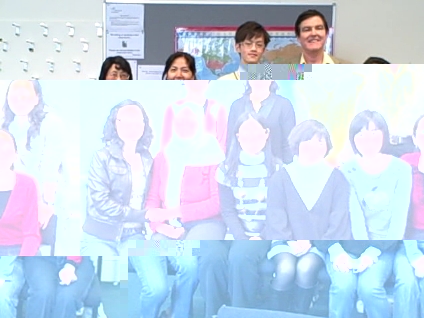
We took a photo at the end of our last class; it’s turned out better than the one I posted a few weeks ago. There is a short video of us getting ready for the photo (the silly laughing in the background is me; pointless humming and silly laughter – I need to learn to keep quiet during filming!).
Getting ready for a photo
I have had a look around the BBC LE site for information about punctuation that might be useful to you. Here are some of the links I found:
Punctuation: colons and semi-colons, dashes and brackets
Punctuation: when to use commas, semi-colons and colons
This one is a post I wrote for the LE blog two years ago in which an eagle-eyed reader (correctly) corrected my use of a semi-colon!
BBC LE Teacher Blog: Monday, 24 July 2006
It’s clear that punctuation causes problems for all kinds of users of English! Fortunately, it is usually possible to guess what someone means; even if their punctuation differs from the rules you can see in grammar books and dictionaries.
OK, I hope these links are useful (if you have time to study when you’re not dusting all the dusty dust away…).
Have a good weekend!
Rachel
 posted on Saturday, 09 May 2009 | comment on this postClustersHi Jihad!
I hope you’re well and had a good weekend.
At home today we received a leaflet from the National Health Service about swine flu, telling us how to recognise the symptoms and how to avoid spreading it, if we get it:
Swine Flu Information
There is a phrase in the leaflet that I have never heard before: flu friend. A flu friend, apparently, is someone who you call to tell them that you are ill and need medication, and who will pick up and deliver the medication to your house. New situation: new language!
The suggestion in the leaflet to set up a network of flu friends is in a section towards the end of the leaflet headed What else can I do?What else can I do? is an example of a sequence of words that can be re-cycled in a fixed, or semi-fixed, form.
These kinds of sequences (sometimes also called clusters) are very common in both written and (especially) spoken English. Clusters of words help us sound fluent and write quickly because we can easily glue them together, without having to think about word order, agreement (and so on). There are hundreds of clusters in the swine flu leaflet, including:
(it/they) can help (you/me/her etc.) to (recover/learn/walk)
this (type of flu) is (not) the same as (seasonal flu)
(it) can only be (developed/achieved/done) when (the specific strain) has been (identified)
and so on….
My grammar book says that the 10 most common five-word clusters (in the corpus used to provide examples) are:
(at/by) the end of the
for the first time in
at the (top/back) of the
on the other side of
in the centre of
the end of the day
for the rest of the
the middle of the night
Looking at the first two paragraphs in your last post Jihad, I can see that you are using clusters very effectively, for example:
Oh my God!
I can't believe that….
the (first) (week) has passed so quickly
the (proper/right) time to reply
… a very warm welcome
thanks a million!
on the other hand,
I have to tell you that
everyday life in (Egypt)
Noticing frequently occurring clusters in speech and writing might be a good way to improve your fluency and therefore your confidence. Particularly when you are at work in your pharmacy and need to talk to a tourist in English, you will probably notice frequently occurring patterns in your conversation. Do you have any audio recording equipment? Perhaps you could record some of the conversations you have in the pharmacy with tourists and then listen to them later, looking for frequently occurring clusters of words. If they don’t mind, that is!
OK, that’s it for now. Enjoy looking for clusters and have a good week!
Rachel
________________________________________________
Comments on the comments:
Jeronimo14 (from Valencia, Spain) – you’re right, I do like my job and I know that I’m lucky to have a job I like…
Soroush (from Toronto) – glad you like the videos!
Ernesto (from Chile) - I get really nice students from all over the world, and many lovely ones from China! This year they are a great bunch!
Hyoshil (from the UK) – I always cry at the graduation ceremony and always think that the new students cannot possibly be as nice as the old ones….
posted on Tuesday, 12 May 2009 | comment on this postHeroism and the power of languageHello Jihad!
I’m sorry to hear about your ‘heroic’ queuing experience! It sounds exhausting.
Toni (from Barcelona) mentions how the internet has reduced the need for long queues in Spain. The same thing has happened here; a lot of applications and payments can now be made online. I think that the only queues I have to join these days are: at the bus stop, in the York St John University dining room and (sometimes) at the supermarket. So, I’m lucky!
Most people don’t have to have an ID card in the UK (though, of course lots of people have driving licences and passports etc.). The government seems keen on ID cards, however, and has just introduced a trial voluntary sign-up scheme in Manchester. There are details of the scheme here, a sample ID card and a link called Have your Say which shows how some people feel about ID cards:
Manchester launch for ID cards
The BBC News article above mentions that, in future, we will be able to get an ID card at our local post office or pharmacy. So, your British colleagues will be asked to take on this extra job, in addition to carrying out their regular services!
We’ve have been talking about how language changes to cope with new ideas; I mentioned the new phrase flu friend in the leaflet giving us information about swine flu. You mentioned the very interesting and important example of pre-emptive (as in pre-emptive strike – meaning I hit you first, but implying that my reason for doing so was only to prevent something worse happening).
I think that noticing changes in the meaning of words and noticing how certain words, and not others, are selected is important. Not only do changes in meaningrespond to new ideas, they also create and maintain new ideas. For example, the idea that there is a moral justification for hitting someone before she hits you (when many people may feel that there is, in fact, no moral justification).
I was recently looking for internet sites to help Rian and Clara with their school work and found this useful one for A-level English Language students (who are usually 18 years old):
Language and Power
The section on Influential power - media (broadcast, print, new technologies) is interesting. You have to scroll down to about the middle of the page to find it. This section contains one of the examples you mention: guerrillas/freedom fighters/terrorists, as well others such as: refugees/economic migrants/asylum seekers.
In the BBC News report on ID cards I mentioned earlier, the Home Secretary is quoted as saying, "ID cards will deliver real benefits to everyone, including increased protection against criminals, illegal immigrants and terrorists".
Imagine how this sentence would sound if the Home Secretary had used different words for these three 'categories' of people, for example, "increased protection against people who challenge the law, refugees and freedom fighters". Perhaps these three categories of people would not sound so frightening......and perhaps the Home Secretary's case for ID cards as 'protection' against them would be much less convincing...
The power of language!
OK, after that very serious point, I hope that tomorrow does not require you to perform any further heroic acts!
Rachel
posted on Wednesday, 13 May 2009 | comment on this postTalking about time in storiesHi Jihad!
I hope you have had a good week and have completely recovered from your traumatic queuing experience!
I have enjoyed reading and re-reading your queuing story; the frustration you felt is clear and yet you write so humorously that I can’t help laughing! I like the way you set out the narrative as a detailed diary, using the times as headings: 10.00 am, 11.00 am, 12.00 am etc.
I have one small comment about deictic expressions* in the reported speech in this sentence:
Some people told me that they were here from 7.00 am till this moment!!!!!!!! I wrote about deictic expressions in a post on representing speech on Monday, 27 April 2009, so I won’t repeat the information here. If you have time, perhaps you could review that post and have a go at changing the italicised words? If anyone else would also like to have a go, go ahead! I will give my suggestions for changes in my next post.
My second (and final) comment is about narrative tenses. In this sentence:
4.00 pm: After another hour of waiting that left me and rest of the people [absolutely] furious, the other clerk arrived, instead of that left (past simple) me, you COULD say that had left (past perfect) me, to emphasise that you were already furious when the second clerk arrived. Sometimes, if we want to talk about an event or action that happened earlier than the main events in the past, we use a past perfect verb form.
Actually, your sentence is perfectly clear, so I’m not sure that it makes much difference whether you use the past simple or the past perfect here! Anyway, if you are interested in knowing more about the difference between the past simple and the past perfect for narrating events or actions in the past, there is some useful information here:
Ask about English: past simple or past perfect?
OK, I’m going to finish this post and then go to bed; tomorrow I’m attending a conference in Leeds (about 40 minutes by train from York) on teaching English, together with some of my students. I’ll try and record some video (without humming while I’m filming….) to post here.
Hope you have a good weekend!
Rachel
* deictic expressions = ways of pointing to time (for example, tenses and words like yesterday and ago), place (here, there, this shop, that university) and persons (she, they) at the moment of speaking.
-----------------------------------------------------------------
Comments on the comments:
Hyoshil (from the UK) – you asked about how to use the appropriate words or sentences in special situations, such as a giving a presentations or a making a speech, or when you disagree with someone. I have to say Hyoshil that your English already seems excellent to me, in the special situation of the BBC LE blog! As each situation is probably different from the next, perhaps careful listening to the way people are using English in that situation is a good start. If you get a chance, you may like to write down clusters of words that you frequently hear in a specific situation, and memorise them for later use in similar situations. You could organise your notebook based on the situations in which you are interested in learning more about. So, for example, you could have a section on presentations, a section on speeches, a section on disagreeing and so on. Gradually you will build up a bank of useful clusters of word that you have noticed, memorised and are ready to use.!
Toni (from Barcelona, Spain) – you asked about the difference between cluster and collocation….. According to my grammar book, collocations are regularly co-occurring nouns, adjectives, prepositions, verbs and adverbs, such as:
give a presentation
make a speech
blonde (not yellow) hair
a yellow (not blonde) car
a palomino (not blonde or yellow) horse
Clusters are also regularly co-occurring words, but can include grammatical words, for example:
do you know what I mean? [informal]
at the end of the day [informal: meaning after all or in the end]
Marianna (from Slovakia) – I loved reading about your trip to see your friend in Osrblie. Please tell us more of your stories!
posted on Saturday, 16 May 2009 | comment on this postFrom flu friend to flu victim!So sorry to hear that you are now a flu victim, rather than a flu friend, Jihad!
Hope you get well soon….
Your photos are great! Thank you so much – they’re just what I was hoping for. It’s lovely to see your Mum and Dad too. They must be very proud that you are continuing their tradition of helping people stay healthy.
Your pharmacy has a huge amount of stock; record-keeping must be a challenge, especially if you get new stock in every day. You work long hours too, but I’m glad to see that you manage to fit in some TV watching!
Reading your post, I noticed the many excellent examples of collocation*, for example:
• to catch flu
• to take some/a photo(s)
• to be interested to see something
• to have my/a/our/your morning tea break
• a cup of tea with milk (and sugar)
Here is a little challenge for you (clue: some of your original choices of preposition were correct, others weren’t…). Choose one of the prepositions in brackets:
I have never been good (in/on/at/for) cleaning my room and making it tidy, and it was hard at first to do that in the pharmacy. (By/at/on/for/over) time, the whole task has become easier. During this time, I have to deal (with/on/up/at) the new drugs coming to the pharmacy. I arrange them in categories; write (down/on/over/by) their expiry date in the records, put the price labels (in/on/at/for), then put them (in/on/up/at) the shelves. Now, to relax you after a hard day’s work, here is my favourite ever song.
Tamanna Phir Machal Jaaye
It’s not in English I’m afraid! I first heard this song more than twenty years ago in India, where I was teaching English and music (very easy-to-play piano and school choir-type songs) at a girls’ boarding school*.
Do you have a favourite song, or genre* of music?
OK, hope you’re feeling better soon. Thanks again for the fabulous photos!
Rachel
* collocation = regularly co-occurring nouns, adjectives, verbs, prepositions or adverbs.
* boarding school = a school where pupils live, like Hogwarts in the Harry Potter books!
* genre = style, category or type (especially of music, literature or other work of art).
---------------------------------------------------------------------------------------
Comments on the comments:
Hyoshil (from the UK) – hope you like the prepositions topic (and the song....) today!
Soroush (from Toronto. Canada) – hope you like the collocations topic today!!
Toni (from Barcelona, Spain) – you threw the dice correctly, well done! 'Some people told me that they had been there from 7.00 am till that moment!!' is what I was looking for. You are the winner of the BBC LE (virtual) t-shirt for today!!!
posted on Monday, 18 May 2009 | comment on this postBetter late than neverHello Jihad!
Your poor sister, what a terrible experience! How awful to lose five hours of work. I hope your internet connection is sorted out now. I agree that technology introduces lots of new problems, but I have to admit that I do like how easy it makes finding information and communicating with people…
I am a bit late with this post because it was my birthday on Wednesday and I have had a brilliant week of birthday celebrations! But better late than never...
On Wednesday, I recorded a few bits of video and have put them together here:
My birthday
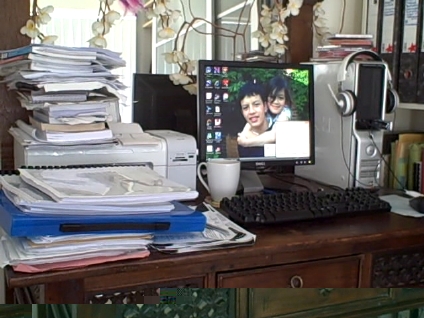
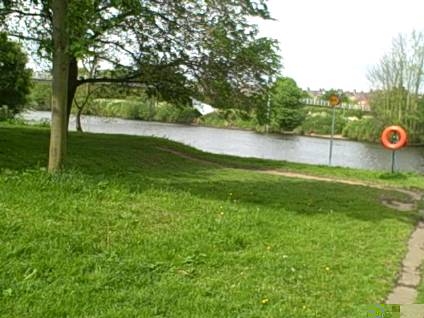
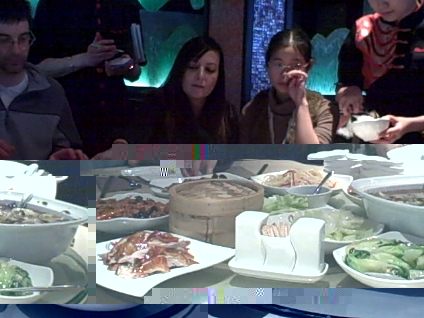
The sequence of events on the video is: breakfast in bed and open presents from Rian and Clara; get up and make coffee; check email; leave home on my bike; cycle to work; arrive at York St John; in the evening, go to York Theatre Royal (where my sister works) to see a ballet (only a few seconds of waiting for the performance to start is recorded here. I wasn’t allowed to record the actual performance, unfortunately, but there are some pictures here; (the next day) go out for dinner with colleagues and students to a Chinese restaurant in York.
Here are some pictures from the video:
   In my last post I talked about prepositions; here are my answers to the prepositions challenge:
I have never been good at cleaning my room and making it tidy and it was hard at first to do that in the pharmacy. Over time, the whole task has become easier.
During this time, I have to deal with the new drugs coming to the pharmacy. I arrange them in categories; write down their expiry date in the records, put the price labels on, then put them on the shelves. I noticed that you use a proverb to describe what technology is NOT: A friend in need is a friend indeed. Just in case you are interested in proverbs, I have found a couple of BBC LE pages that have useful examples and explanations of some others:
Money and work proverbs
Weather proverbs
If it's true that early to bed and early to rise makes a person healthy, wealthy and wise then tomorrow (today) is NOT going to be a good day!!
See you again soon!
Rachel
---------------------------------------------------------------------------------
Comments on the comments:
Marianna (from Slovakia) and Hyoshil (from the UK) - you got most of the answers right, well done! A (virtual) BBC LE t-shirt for both of you!
posted on Saturday, 23 May 2009 | comment on this postHyperboleHi Jihad!
How are you? I hope you had a good weekend! We had a longer weekend than usual because today was a national holiday. Yesterday and today we finally got some nice weather!
I have spent some time re-reading your ‘technology’ post and have decided to talk about two things I noticed in your writing. The first is a grammar point that is probably revision for you: verb + (to) verb/verb (ing). The second is a matter of style which you are already using effectively: hyperbole.
OK, here are two sentences from your post:
She spent 2 days to gather information and 5 long hours typing the report.
…they know that I can't afford discarding them. The verbs in bold are followed by (an)other verb(s) in italics, and when this is the case, we often have to decide whether the second verb should be to verb or verb-ing. There are a several good pages of information on this grammar point on the BBC LE site, for example:
start doing and start to do something, stop doing and stop to do something
verb + verb-ing
Looking at the information on these pages, you can probably see that your sentences would be more usually written as:
She spent 2 days gathering information and 5 long hours typing the report.
…they know that I can't afford to discard them. Now, my second point is on a matter of style which I think you already use very effectively, so I just want to point it out to the readers of your post and give a few more examples. Look at these sentences from your writing:
…some of these gadgets can let you down and ruin your life
…these devices commit these crimes against me in cold blood
Well, what my computer and mobile do, for example, is very opposite to a friend action [here you could replace the phrase in bold with: more like the behaviour of an archenemy than the behaviour of a friend.]
The device you are using here is called hyperbole and is occurs in both written and spoken English. Hyperbole is when you describe something in order to make it sound much smaller, bigger, worse, better etc. than it actually is. You are using it very effectively in your post to show the reader how strongly you feel about the negative effects of technology! Other examples of hyperbole are:
I could eat a horse = I am very hungry
My bag weighs a ton = my bag is very heavy
It took forever to get home = it took a very long time to get home
Hyperbole is used to create strong effects in literary writing. Here is a famous example of hyperbole from the poem To His Coy Mistress by Andrew Marvell (1621 – 1678)
An hundred years should go to praise
Thine eyes and on thy forehead gaze You can hear the poem here:
To His Coy Mistress
OK, that’s it for today. See you again later in the week!
Rachel
------------------------------------------------------
Comments on the comments:
Sreenadh (from Hyderabad, India) – my first teaching job was at a girls school in Shimla. I loved the scenery but not the monkeys. I once had a big fight over my handbag right in front of the classroom where was just about to start a lesson with the youngest pupils in the school. I won, but not after I had used my rudest English on the monkey who wanted my handbag, to the shock and horror of the little girls…..
posted on Monday, 25 May 2009 | comment on this postVirtual presents and cleft sentencesWow! Your pictures are gorgeous Jihad!
Thank you so much for the virtual picnic; it’s a lovely birthday present. Al-Azhar Park looks beautiful and is definitely on my list of places to visit! I also really liked the pictures of the city skyline, with palm trees and minarets and a pinkish-apricot-coloured sky.
Thank you!
Now, after that very pleasant virtual picnic, let’s get back to work! One of the blog readers (Abdisamad Sharif, from Kampala, Uganda) asked about ‘I’ in the middle of a sentence so I’ll make cleft sentences the topic for today. A cleft sentence is a sentence that has been divided into two clauses and re-arranged. Cleft sentences are a way of providing variety in your writing and also a way of focussing your readers’ attention on a new or important bit of information.
So what do cleft sentences look like? Let’s start with a sentence from your last post Jihad, as follows:
I am going to give you a virtual birthday present.
OK, we can re-arrange this sentence in (for example) the following three ways:
It’s a virtual birthday present that I’m going to give you.
What I’m going to do is give you a virtual birthday present.
The thing I’m going to give you is a virtual birthday present.
Let’s have a look at those sentences in a bit more detail. The first example:
It’s a virtual birthday present that I’m going to give you.
…is a typical it-cleft structure, with the focus on the final element of the it-clause (virtual birthday present), the object of the main verb give.
The second sentence:
What I’m going to do is give you a virtual birthday present.
… is an example of a wh-cleft sentence (usually what, other question words are more likely to be expressed by nouns such as: the person, the place, the way used in a front position). Wh-cleft sentences put the focus on the end of the clause. The information in the wh-clause (what I’m going to do is) is either old, or already understood in the context, and the information that is new, or which we want to emphasise, is in the copula complement (give you a virtual birthday present).
Finally, the third sentence:
The thing I’m going to give you is a virtual birthday present.
… is another type of cleft sentence, this time beginning with the thing, one thing, or something. Again, this structure is a way of emphasising the second part of the sentence, the copula complement (a virtual birthday present).
There’s a really good explanation of the structure and use of cleft sentences on this BBC LE page:
Cleft sentences
I hope I haven’t given you a headache with all this sentence structure information, but if I have, there is a lovely park nearby where you can go for a relaxing walk!
OK, that’s it for today. Thanks again for the lovely photos. They’re unforgettable!
Rachel
---------------------------------------------------------
Comments on the comments:
Ana Paula - I’m glad to hear that you have a messy desk too! Actually, although our desks may look messy to other people, they actually represent a highly organised and efficient system that is understood only by ourselves….right??!!
Thanks to everyone for your birthday wishes. I had a really lovely week!
posted on Thursday, 28 May 2009 | comment on this postGood bye Jihad and thank you (said in a Yorkshire accent)
Thank you for the lovely pictures of sunset in Al-Azhar Park Jihad – very calming! You’re lucky to live so close to such a beautiful place.
This month has gone so quickly; I can’t believe that it’s almost the end of May. I’ve really enjoyed reading your posts and learning about your work, your family and your wonderful surroundings. It is clear to me (and to all the readers of your blog, I’m sure) that you provide a very important service to both locals and visitors. Your professional knowledge, language skills and sense of humour combine to make you the ideal person to do the essential work you do. I wish you the best of luck in your future.
Jihad, I thought about basing this post on adjectives describing your beautiful pictures, but then I decided that the pictures don’t need describing, they speak for themselves.
So, instead I have decided to talk about pronunciation. Jeronimo (from Valencia, Spain) asked about the pronunciation of the vowel sound in hut and in the first syllable of money. As Jeronimo said, this vowel sound is usually represented with the phonemic symbol /^/. You can hear the /^/ sound and the other phonemes of British English here:
The phonemic chart
In fact, the vowel sound in hut is also pronounced in a way that sounds more like the /u/ phoneme, mainly in the North of England (including in York, where I live). You may remember the first time Clara (my daughter) helped me with this blog by talking about her English. In that conversation, she pronounced the word bubbles with a /u/ sound, rather than a /^/. In a video that she made today (Friday), she is describing the preparations for the summer ball* to be held tonight at York St John University. One of the games she describes is called a bouncy castle*. Clara’s pronunciation of the first vowel sound in the word castle is typically Northern British; she says /a/ not /a:/.
York St John University: preparations for the summer ball (testing the microphones/drums/bouncy castle and other games/electric bass/gardens with lavender/going upstairs/opening the window/more music)
 If you are interested in the accents and dialects of British English, the British Library has a really great website with lots of audio files of different regional voices:
Sounds Familiar? Accents and Dialects of the UK: phonological variation
On the same website there is a paragraph about attitudes to language variety,
For many years, certain English dialects have been viewed more positively than others. Many of us make assumptions based on the way people speak — judging certain dialects or accents as too posh, harsh, aggressive, unfriendly, ‘unintelligent’ or ‘common’. Unfortunately many individuals have suffered as a result of this irrational prejudice. No one dialect is better at communicating meaning than another. The fact some dialects and accents are seen to be more prestigious than others is more a reflection of judgements based on social, rather than linguistic, criteria. […] the vocabulary, structure and sounds that define the speech of a particular region, should be and indeed are for many speakers, a source of great pride and an important expression of cultural identity. I think that it’s interesting to think about the accents of English speakers in countries other than England (Australia, India, Egypt, Finland etc. etc.) and remind ourselves that any views (positive or negative) that we have about these accents are social, not linguistic. And that our accent can be a way of expressing our identity, rather than something we try to change because it doesn’t match the phonemic chart!!
OK, I’ll get off my soap box* now…
I’ve been asked to carry on blogging for another week, so I get to meet one more student blogger, Taru from Finland. I look forward to that and, once again, say a big thank you to you, Jihad, for your great posts.
All the best,
Rachel
* summer ball = a formal dance, in this case an annual event for university students. Clara also uses the word prom in her video. Prom is American English, and I think refers to high school, as well as college-level, dances.
* bouncy castle = a large inflatable structure in the shape of a castle. You can jump up and down and fall over on the structure without hurting yourself!
* getting off (or on) your (her, his) soap box = stopping (or starting) stating your (his, her) opinions loudly and forcefully.
posted on Saturday, 30 May 2009 | comment on this post | May 2009
| Sun | Mon | Tue | Wed | Thu | Fri | Sat |
|---|
| | | | | | 1 | 2 | | 3 | 4 | 5 | 6 | 7 | 8 | 9 | | 10 | 11 | 12 | 13 | 14 | 15 | 16 | | 17 | 18 | 19 | 20 | 21 | 22 | 23 | | 24 | 25 | 26 | 27 | 28 | 29 | 30 | | 31 | | | | | | |
|


