June 2009Welcome and some suffixesHello Taru!
Welcome to the BBC Learning English blog! I’m sure that you’ll find it is a very friendly place to practise writing in English. I’ll be your ‘teacher blogger’ for this week and then I’ll hand over to someone else at the weekend.
I really look forward to learning more about Finland, your studies, work and family. I’ve done a little bit of teaching in a Swedish university, but never been to Finland. Though I did have a Finnish pen pal when I was at school!
I have just done an internet search for Rovaniemi and found out that tomorrow the sun rises at just before 2 a.m. and sets at half past midnight there. So you have only 90 minutes of darkness? Wow! My children grew up in Indonesia, near the Equator, where the sun sets at six o’clock in the evening every day, all year round. When we moved back to the UK, they found it very difficult to sleep in the summer. “But it’s still light!” they would say when I insisted they go to bed!
Your English is great by the way and I look forward to working with you for the rest of this week. I’m going to talk today about word formation, because there are lots of correct examples in your writing and one example which needs attention.
Here we go…. Sometimes new words come into English from other languages (for example, these food words: pizza, salsa, satay, tapas, chapatti). But more frequently, new words are formed from existing words in one of four main processes: adding a prefix (pro-Europe, decriminalise); adding a suffix (ageism, stardom, booklet); changing a word from one word class to another (a visit to Finland is an absolute must – verb to noun, can we microwave it – noun to verb); and compounding (helpline, award-winning, lifelong).
I want to focus on suffixes here. You correctly use several suffixes in your post to change the class of a word. For example:
properly = in a suitable or correct manner. Here the suffix changes the word proper from an adjective to an adverb (see also: slowly, quietly)
vocational = preparing for a job. Here the suffix changes the word vocation from a noun to an adjective (see also: criminal, traditional)
suitable = the right type or quality for a particular person, purpose or thing. Here the suffix changes the word suit from a verb to an adjective (see also: readable, workable)
management = the practice of managing a business or money. Here the suffix changes the word manage from a verb to a noun (see also: tourism, education, competition and employee)
It’s also possible to use a suffix to change the meaning of the base word. For example:
employer, interviewer = person or organisation that does the action
employee, interviewee = person or organisation that has the action done to them
host, actor = male
hostess, actress = female (though today most people use the ‘male’ form for both genders, or use a non-gender specific phrase, for example flight attendant instead of air steward and air stewardess)
booklet, kitchenette = small book, kitchen
So by now, you’ve probably guessed what my correction is! Instead of:
When I got the reply from the employee I was shocked.
you need,
When I got the reply from the employer I was shocked.
OK, that’s all for today. I look forward to hearing more from you soon Taru!
Rachel
------------------------------------------------
Comments on the comments:
Ana Paula (from Brazil) – I am glad to have found a desk-organisation-style soulmate! Actually, one of my piles of papers fell over today, so now my desk has a fresh new look for June. Hurrah! Hope your exam went well!
James Wu (from Taiwan) – glad you liked the videos! I always enjoy reading your comments.
Vladimir (from Ukraine) – I’d like to hear you imitating the accents you’ve picked up on your travels! The study of attitudes to accents is an academic field called perceptual dialectology. There is a lovely website about research into US attitudes to different accents here: Perceptual Dialectology in the USA.
Toni Morrison’s Beloved is a brilliant book, isn’t it? Partly because she is so good at representing the speech of her characters; reading her book is almost like eavesdropping on her characters' lives.
Toni (from Barcelona, Spain) – thanks for your comments!
Marianna (from Slovakia) – I agree with you and also agree that you deserve to go to the ball!
posted on Tuesday, 02 June 2009 | comment on this postConditionally vagueHello again Taru!
Thanks for telling us more about your lifelong learning! So, you’re studying Hospitality Management and Tourism at Rovaniemi University of Applied Sciences, as well a taking a teacher training course at Oulu University of Applied Sciences and, as part of your teacher training, learning about e-learning and web-based learning at the University of Jyväskylä? That must keep you pretty busy! Do your twins help out with your five-year old, or are they also busy with their own studies (and social lives)?
Like you, I also seem to be a permanent student, which can be fun but is also often tiring and sometimes a bit frustrating….
I did an internet search for the term diploma disease, which I remember reading about a few years ago when I did a course (!) on the economics of education: private and public returns on investment. I found this interesting webpage from the University of Toronto. I think you’ll find a lot to agree with here:
History of education: 1976 Ronald Dore publishes Diploma Disease in response to qualification escalation
In your discussion of the benefits and challenges of lifelong learning you use the following sentence (and I’m going to make two language points based on what you have written here):
What would happen if every person who is able to read and write would join to every possible learning community and become a profession what ever. I’m going to start by re-writing your sentences as follows, can you see the difference?
What would happen if every person who is able to read and write joined every possible learning community and became a professional whatever? I'm sure you can see that the main change I have made is to the structure of the first part of your sentence. You need a second conditional in the first part because you are talking about something which could happen in the future, but probably won’t. I have deleted the second would and changed the two verbs that follow (joined and became) into the past simple tense.
So, the second conditional is my first language point! There is already quite a lot of information on the BBC LE site about second conditionals, so I’m not going to repeat it here. Try these two links for useful tips and practice exercises:
BBC LE grammar challenge: second conditional
BBC LE Flatmates: second conditional
Onto my second language point now, which is about vague* language. I have briefly mentioned vague language before, in reference to a video that my daughter, Clara, made about our garden. When Clara couldn’t remember the name of a flower in the garden, she said, “It’s a kind of….”. You are using vague language very effectively at the end of the sentence about ‘learning communities’ when you say, “a professional whatever”. Here, I think you are using whatever not because you don’t know the names of any professions, but because you mean any or all professions. Whatever in this sense means anything. By saying a professional whatever, you are able to be general, by being vague. Similar phrases are:
I’ll do whatever
You could write about whatever
I don’t mind, whatever
There is a lot more useful information about vague language here:
BBC LE Flatmates: vague language
OK, so those are my two language points: the second conditional and vague language.
Thanks for the information about your 90-minute night/dawn, it sounds amazing. I look forward to hearing about your hobbies soon!
My next post is my last one and there will be a new teacher blogger next week. I’m planning to do one final video, probably of me saying goodbye and thank you….
Until then!
Rachel
*vague = not specific, unclear
---------------------------------------------------------------------------------
Comments on the comments:
Sita Ram Rai (from Nepal), Asma (from UAE), Young (from South Korea), Jeronimo from (Valencia, Spain) – thank you for your comments!
Vladimir (from Ukraine) – glad you liked the accents website. Go on, give YouTube a try!
Marianna (from Slovakia) – lots of strong coffee (and quite a lot of chocolate) keeps me going.
Hyoshil (from the UK) – I agree that accents are very interesting and that we should be proud of the one(s) we have…..after all, even the Queen has an accent….
posted on Wednesday, 03 June 2009 | comment on this postFrom BBC Learning EnglishJust a quick message to say thank you Rachel for your superb and very informative blog! Rachel will still be here until Sunday but from Monday the blog will have a new host. He is Jim Pettiward whom many of you will know from our series of talks about new words and expressions Keep Your English up to date-5. Welcome Jim and enjoy blogging!
BBC Learning English team posted on Friday, 05 June 2009 | comment on this postSaying goodbye with a nice cup of tea
Hello again Taru!
I really enjoyed reading about how you collect wild herbs, mushrooms and other plants in summer and autumn. How lovely to be able to go out of your house, look around for something to eat, pick it and then go back inside and cook.
Your photos were great too. I’ve got a blackcurrant bush in the front garden. Next time the sun is shining in the morning, I’ll go outside and pick the leaves to make into tea. We pick the fruit and cook it slowly with sugar to make a dessert or jam, but I had never thought of making a herbal tea with the leaves. Thank you for the tip!
I like the links you posted too, particularly the one with the recipes. Dandelion leaves grow wild here like they do in Finland, so I am going to try adding some to a salad. Perhaps I will tell Rian and Clara that they are eating lettuce, until after they’ve tried it…
I have found this useful list of cooking vocabulary on the BBC LE site:
BBC LE: Flatmates - Kitchen vocabulary
The list includes the word boil (meaning to heat water until it is very, very hot to make a hot drink or to cook food), as in boil an egg, boil some potatoes, boil some water for tea and so on. A couple of other cooking words that are not on the list are: pour and teapot. Pour means to make something (perhaps boiling water) flow out of a container (perhaps a kettle). A teapot is the container into which you pour boiling water onto tea or blackcurrant leaves. I can see from your photos that your teapot has got a blue stripe around the bottom. I can’t see your kettle; is it electric or do you boil your kettle on your gas (or electric) hob?
OK, so the words that I want to show you today are: boil, pour and teapot. Can you use them to replace the words in italics in this sentence?
Put the leaves into a tee pan and cook the water and turn it over the leaves.
The answer is as the bottom of the page, after the 'comments on the comments' section!
Making and drinking tea is an important social activity for lots of people I know. Rian, (my 14 -year old son) usually kindly offers to make me a cup of tea just after I have reminded him that it is his bedtime. He knows that I will always say 'yes, please!' and he will get a few extra minutes downstairs before he has to go up to bed…
Here’s a really nice page on tea idioms in English:
BBC LE: Food idioms - Tea
Well that’s it from me; it’s over to Jim for the rest of June. I have really enjoyed reading your posts Taru, and equally enjoyed getting to know Marcos and Jihad too. What a wonderfully diverse community the BBC LE bloggers are! Clara and I have made a little 'goodbye and thank you' video which you can see here:
Saying goodbye and thank you!
I tried to change the picture from the video that is automatically selected by YouTube, but all the other options were equally weird-looking. Oh dear. My tuneless humming and unintentionally weird poses have all been exposed on this blog. Never mind. I should have let Clara do all my videos.
I hope to see you on an Open Blog in the future. If any of you are on Facebook, I am there too and would be happy to be Facebook friends with you (and fellow fans of the BBC LE Facebook site!).
All the best with your learning, using and blogging!
Rachel
-------------------------------------------------------------
Comments on the comments:
All of your comments have been brilliant – so a special thank you to all of you who have written to me over the last ten weeks. You are part of a very exciting community!
Hyoshil (from the UK) – I’ve really enjoyed talking to you through the blog and reading your energetic and expressive writing. Please pop in to York St John University for a cup of coffee sometime! It would be great to meet in person and we have very nice cakes!
Vladimir (from Ukraine) – thank you for your translation of the Russian saying about education. As a lifelong learner (and an adult-lifelong teacher) I definitely agree!!
Asma (from UAE) – yes, when what we study and what we teach is also a hobby, we’re very lucky.
Marianna (from Slovakia) – best of luck with everything. I’ve enjoyed reading your comments about your trips to visit friends and all the other interesting things you have described. Thank you!
Answer: Put the leaves into a teapot and boil the water and pour it over the leaves.
posted on Saturday, 06 June 2009 | comment on this postCeud mile failte!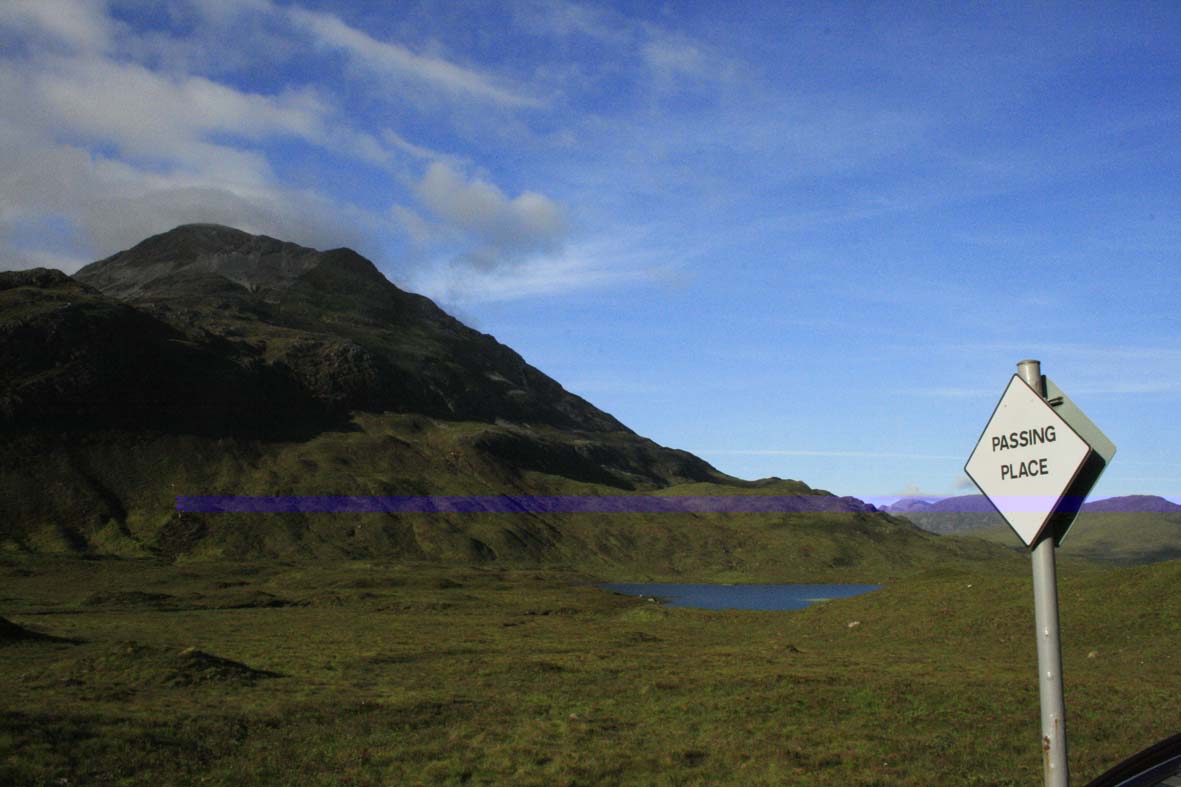 Can you guess why I chose this title and photograph?
To answer that question, you’ll need to read on…
But wait, I’m getting ahead of myself. First of all, an introduction.
Hello! My name is Jim Pettiward, and that’s me at the top of the page. I’ll be blogging with you for the next few weeks and I’m really excited by the opportunity to be a part of this fantastic community of English language learners and teachers. Unlike many of our previous teacher bloggers, who seem to be in all sorts of far-flung places around the world, I live in London, and have done for the last 6 years. In fact, I was born and grew up here, but like many other English language teachers, I’ve been lucky enough to travel quite widely. I've been teaching for eleven years or so , five of which have been spent abroad. I travelled and worked in Ecuador for about 2 and a half years, and then lived in Budapest, Hungary for 2 years. I have always been a keen traveller, and I still get itchy feet from time to time. I think the experience of living and working abroad really helps us to get a handle on our own culture as well as understanding more about other cultures.
So, as I said, I live in London now, and I’m currently working as an EAP (English for Academic Purposes) teacher at London Metropolitan University. My job is to help prepare students for under- and postgraduate study in the UK by helping them with their academic and language skills. I’ve been using blogs with my students at the university for about a year, so I’m not entirely new to it, but while I may be lucky if 10 – 15 students read my class blog, I have a feeling (and I hope) that the audience for my BBC blog will be a bit larger – that’s an exciting (and slightly frightening!) prospect…
Now it’s high time I gave a warm welcome to our current student blogger Taru, from Finland. Hi Taru! When I was in Hungary I remember people telling me that Hungarian was almost unique as a language and that the only other languages it was similar to were Finnish and Estonian (and possibly to a language or dialect spoken somewhere in Siberia). I’m not an expert on Finno-ugric tongues, but what I do know is that Hungarian is a fiendishly difficult language to learn. I’m ashamed to say that in two years I didn’t get much further than ordering food and drink, basic greetings and very simple small talk, thus reinforcing the stereotype of the British as unwilling language learners. Having said that, I studied French and Spanish at university, so perhaps I’m the exception that proves the rule. Is Finnish another fiendishly difficult language?
I’ve enjoyed reading your opening posts, and I like the variety of subjects you talk about. Looking at all that you do, I realise that you must need all those hours of daylight to squeeze in so many activities to your day. I’m really looking forward to reading more of your posts!
The subject of long summer days brings me back to the picture at the top of this post, and the title. You’ve probably noticed that I’m starting a little late this month (many thanks to Rachel for stepping in during my absence :-). At the university we’re gearing up for a busy summer of pre-sessional academic English so I’ll be working flat out for the next few months. Now seemed like a good time to take a break so I took a week off and went up to the Scottish Highlands. It was wonderful! The weather was warm and sunny for most of the week, and because many of the places were off the beaten track, it wasn’t crowded. I’ve uploaded some of the pictures I took there - I hope they give you a feel for the place.
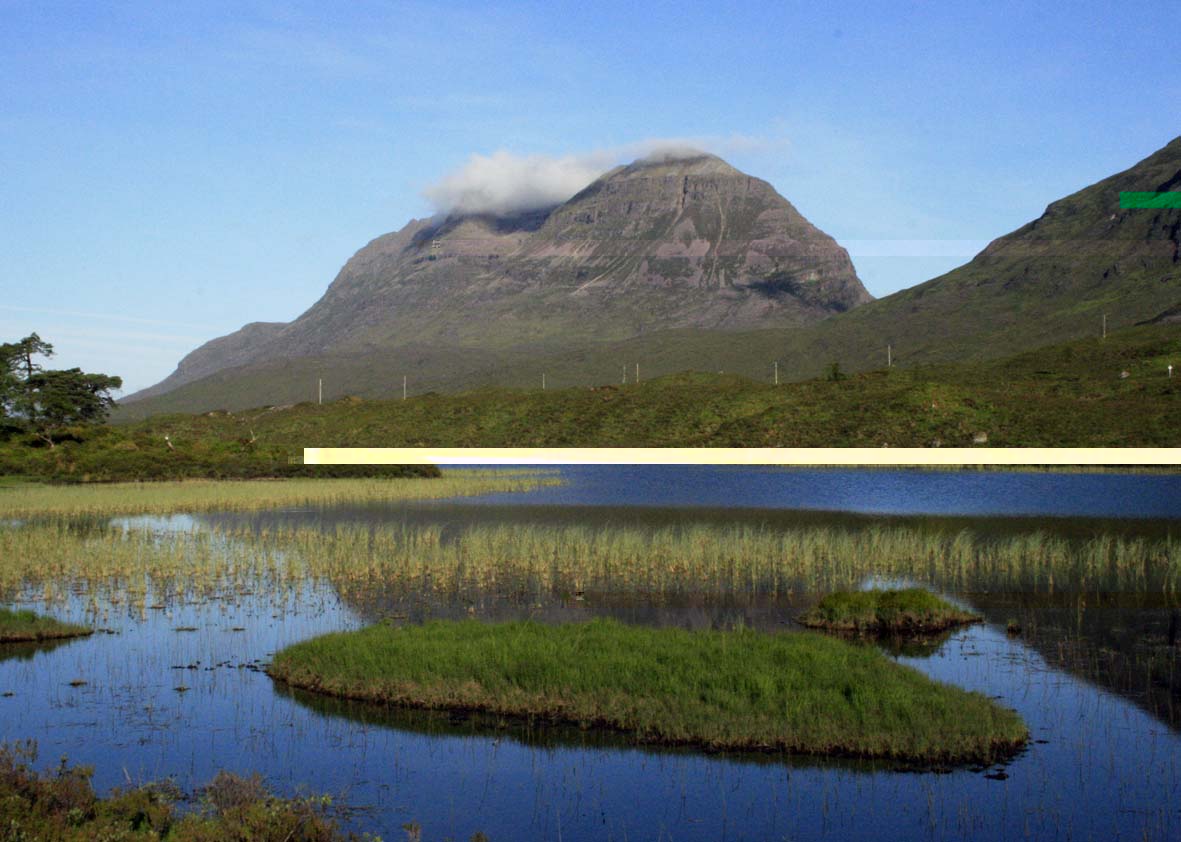 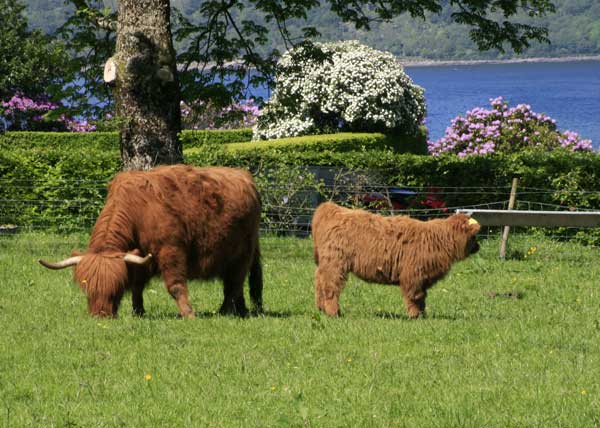   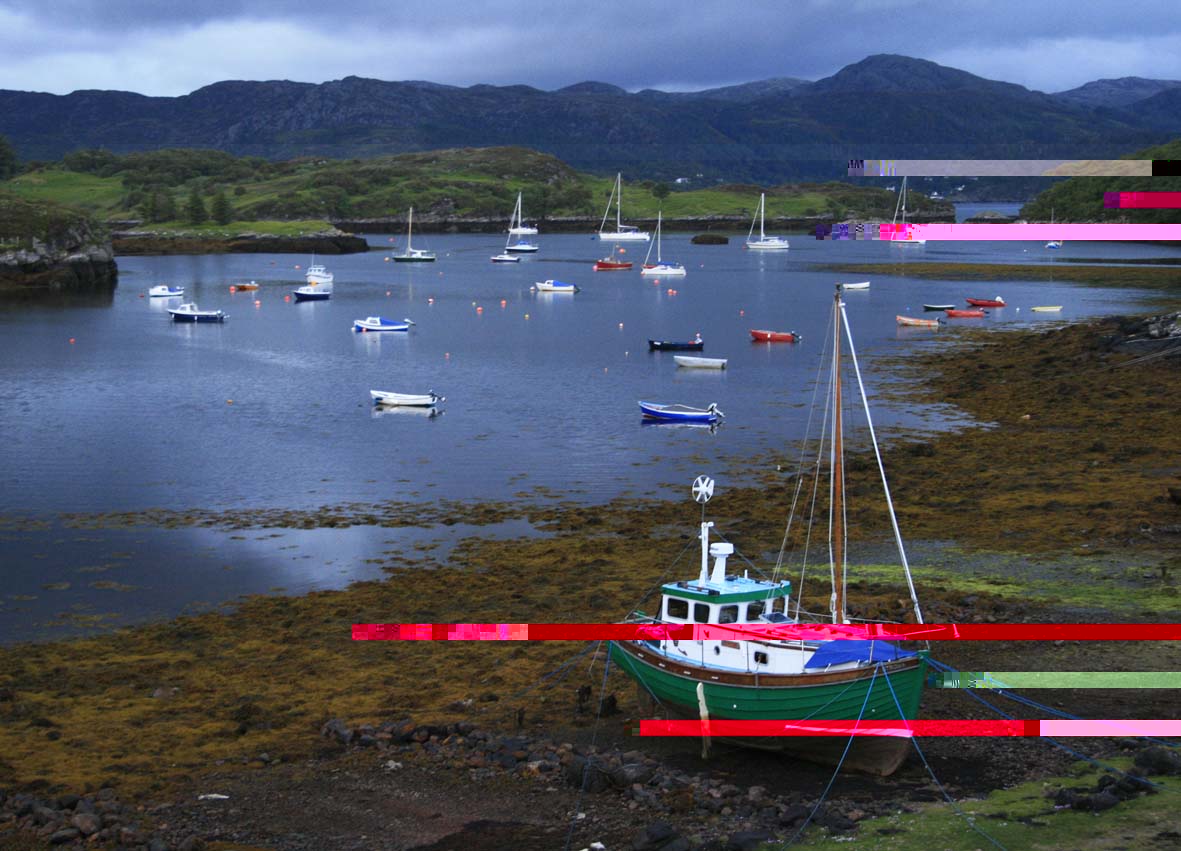 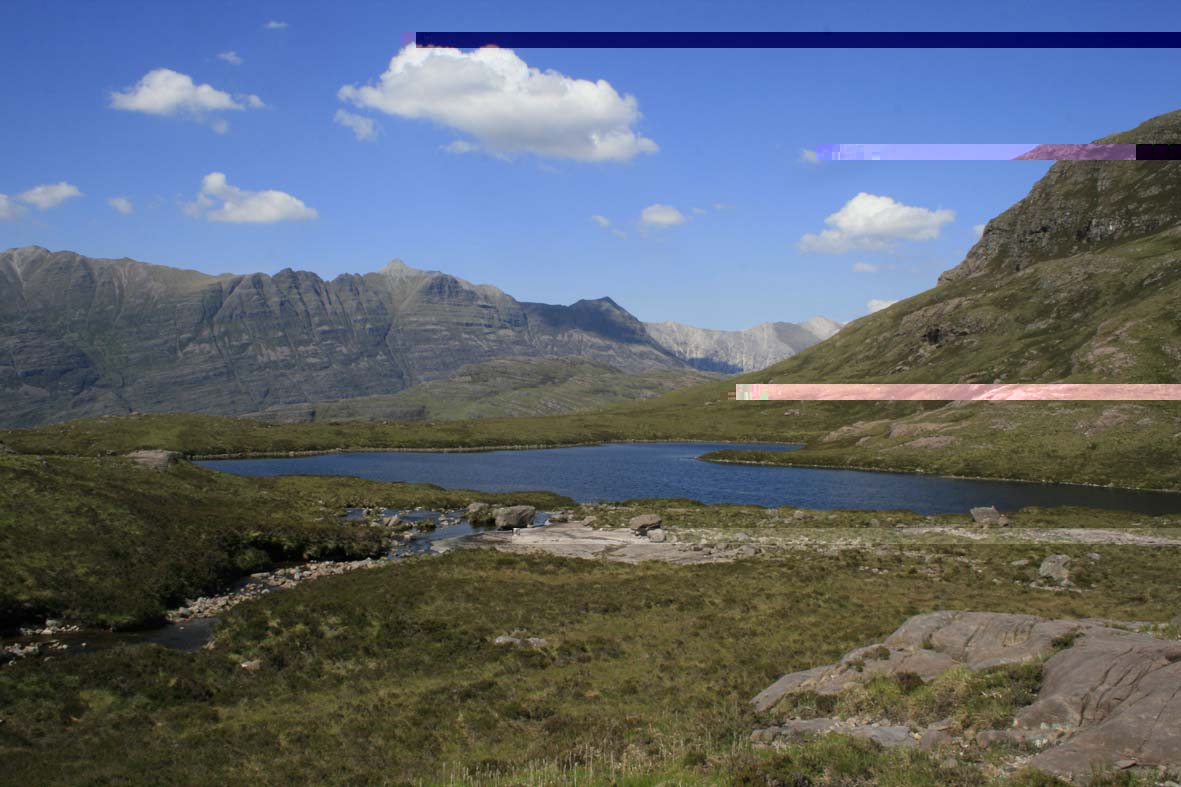  Nb – As usual, there are some words and expressions in bold which I’d like you to look at. I will give you some definitions…. but not yet! I’d like you to do a little research first. I sometimes ask my students to use the internet to give new words and phrases some context, then to try to work out the meaning from that context. Try limiting where you search, so, instead of typing a phrase and searching for it in Google, try searching some of the better newspaper websites (Guardian, Times, Independent, Telegraph etc) or the BBC site. Make sure you put quotation marks “ ” around a phrase. See what you can find and try noting down one or two examples in your vocabulary notebook. Don’t worry - if you’re having trouble, I’ll include some definitions in my next post
And finally,
• ‘Ceud Mile Failte’ is Scottish (or Highland) Gaelic which translates as ‘One hundred thousand welcomes’. And before you ask, no, I don’t speak Gaelic!
• Many of the roads in the highlands are single track (with enough room for only one car) so they need to have specially widened sections where 2 cars going in opposite directions can pass each other. I thought this could be a nice analogy for our blog – not only has the blog been passed from Rachel to me, but also this is a place where it doesn’t matter where we come from, for a short while we meet before moving on towards our destination, wherever that may be…. Let’s enjoy it while we can!
posted on Sunday, 07 June 2009 | comment on this postWhat is culture?Hello again and many thanks for your comments – maybe I should get a job with the Scottish tourist board!
As I was looking at the link Taru put in her post about the summer school project she’s involved in, I noticed that they are doing a ‘Cross-cultural Development’ course. Now that’s a coincidence…. I’ve recently been discussing the subject of ‘culture’ and cross-cultural awareness with some of my classes, and we’ve been discussing questions such as: How can we define culture? What exactly is it? How does it affect us? How can we be more aware of our own culture and other cultures? We’ve been listening to an interesting series of programmes called ‘Who on Earth are we?’ Why not give some of them a listen?
BBC LE - Talk about English: Who on Earth are We?
I’d be fascinated to know some of your views on culture and its importance in our lives.
Did any of you manage to look up any of those words and phrases from my last post? If not, a) Why not? :-) and b) Here are some definitions:
Get ahead of oneself - to do or say something sooner than you should.
Far-flung - a place that is a great distance away or spread over a large area
Get itchy feet - to feel a desire to travel, visit new places, move on
…or so – an example of ‘vague language’ meaning approximately/about
Get a handle on - to gain a (better) understanding of something
It’s high time – means that something should already have been done, or something cannot be delayed any longer
Fiendishly – extremely (usually found with words like difficult/hard/complex)
Small talk – conversation which has no real importance but it is to pass time, for example talking about the weather.
The exception that proves the rule – although the specific example doesn’t follow the general rule, the statement is usually true.
Squeeze in – to fit something in
Gearing up for – preparing/getting ready for
Flat out – as fast or as hard as possible
Off the beaten track – a remote place, not often visited and away from the usual tourist routes
Give you a feel for – to give you an impression or idea of what something is like
It can be difficult finding out the meaning of idioms and phrasal verbs using normal dictionaries. I’ve found the Cambridge Online dictionary very useful as you can search the idioms and phrasal verbs dictionaries online. You just need to go to the link below and, where it says ‘Select another dictionary’, choose ‘Idioms’ or ‘Phrasal verbs’. Simple! Make sure you type in what you think is the key word. For example, in the phrase ‘off the beaten track’ it makes more sense to search for ‘track’ than ‘off’. Try it…
Cambridge Dictionaries online
Taru, in general, your writing is very clear and communicates your message effectively. I like the fact that you do not always settle for the simplest way to say something – you are inventive and try to use more complex and imaginative structures. I really liked your description of the karaoke singer – it’s funny the idea of a singer who strikes fear into your heart yet at the same time fills you with anticipation. Sounds a bit like the Eurovision Song Contest…
A few points to consider:
Do you know the difference between how we use the verbs ‘say’ and ‘tell’? This is a common mistake made by a lot of students. Look at the following LE page and try to improve the beginning of your post.
BBC LE - Ask about English: Say & Tell
What’s the difference between ‘experiment’ and ‘experience’?
'We were wondering how the river boat will survive on waves'. (in this situation you are looking at the future but from a point in the past, not from the present moment. This is sometimes called ‘future in the past’. Can you think of any alternative to the word ‘will’ in your sentence?
In the time-honoured teacher tradition of getting the students to do the lion’s share of the work, I’ve got a few sentences from Taru’s writing which I’d like everyone to help her improve. Can you spot the problems in the following sentences and provide an alternative? (the errors are mostly in one particular grammatical area – what is it?)
1. The studies consist with 210 units and they are divided in seven parts.
2. We have a small group and we arrange free time actives to the students.
3. We left from campus and walked though the city and arrived to the harbor of the Kemijoki River.
4. He laughed of it.
* The lion's share = the biggest part of something (in English we have loads of idioms with animals. Can you think of any others?)
Comments Corner
Mercè, James, Plinio, Ana Paula, YPW, Abdisamad and Kuldeep.
Thanks for making me feel at home here. It's nice to read your lovely comments on my photographs.
Taru
What really traumatised me about Hungarian was the number of different suffixes they add to words and the incredible number of different vowel sounds. If I remember rightly, four different 'o' sounds, four 'u' sounds - help! I wonder if Finnish has a large number of vowel sounds?
Marianna
Thanks! Walking and climbing mountains is one of my favourite pastimes, although I don't do as much as I'd like. Not much beats the feeling of reaching the summit of a mountain and enjoying the moment, exhaustion and elation.
Alice
The Scottish Highlands are indeed a wonderful place. It's great to see that you're taking my advice and looking for those words. I'm impressed!
Hyoshil
I'm glad you're listening to 'Keep your English up to date' and you're setting a great example by using some of the new words and expressions in your writing.
Thanks for the tip - looks like I'll have to 'keep my eye on the ball'. By the way, the way you said 'fired' I wonder... have you been watching 'The Apprentice'?
Kriszta
I really enjoyed my time in Budapest - I loved the quality of the light there. Scotland is a great place to visit, although you can't guarantee the sunshine and you need to be wary of the midges!!
posted on Tuesday, 09 June 2009 | comment on this postPlaygrounds, zoos and collocations..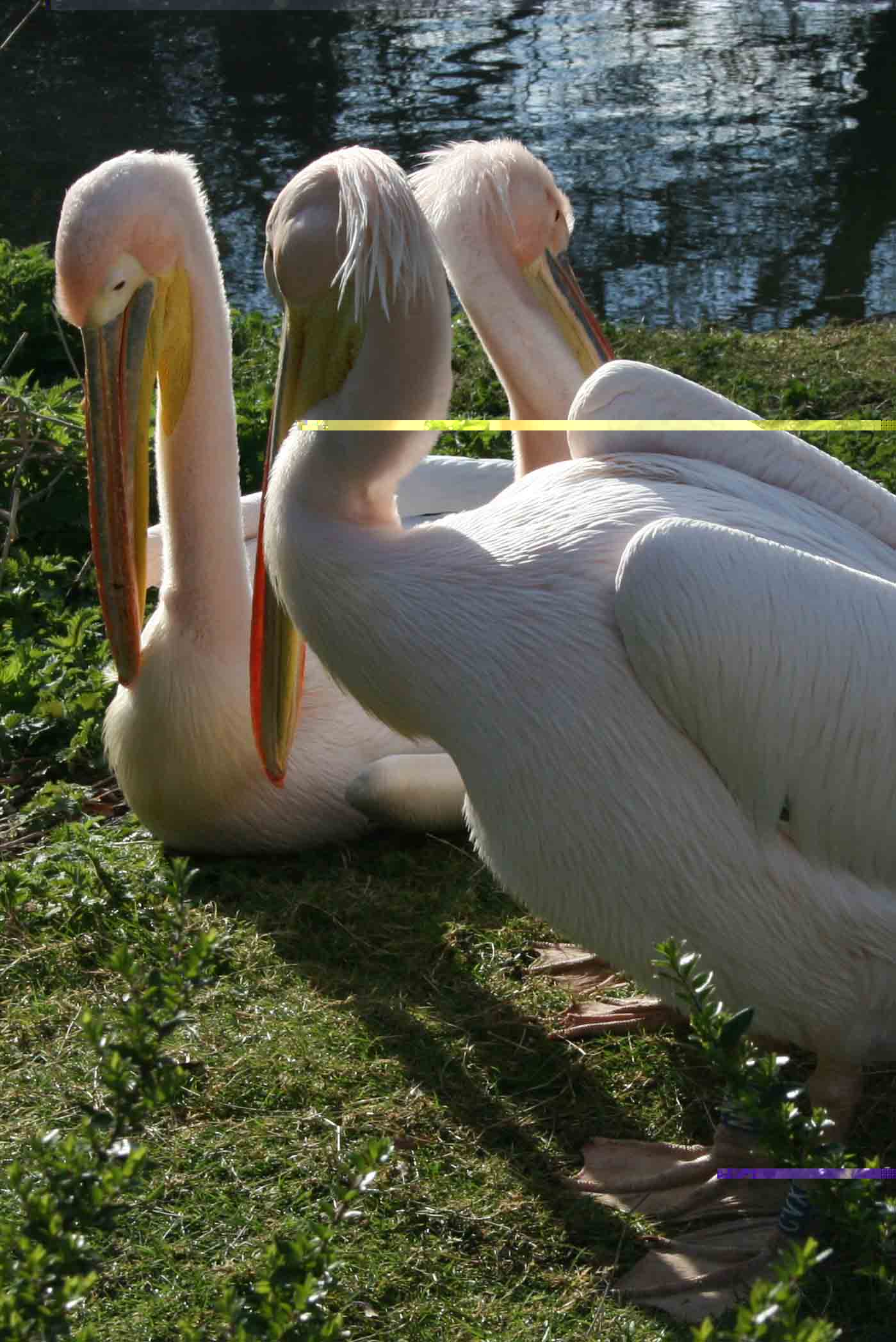
3 pelicans ponder the meaning of 'culture' at London Zoo
Hi Taru. It looks like you all had a lot of fun on your course, but I can also see why you would be knackered after all that. If a picture speaks a thousand words, then the 2 small photos inset in your final photograph say it all! I like the idea of an indoor playground for adults. Did you have a go?
The playground reminds me of a fad back in the 90s for men’s crèches at shopping centres. The idea was for a specific relaxation area to be set up for men who were out bargain-hunting with their other halves. It had TVs showing sport, magazines, and other things supposed to keep them quiet while their partners went round the shops looking for that killer outfit. I’m not sure where the idea originated from, but it never really got off the ground in the UK…
I live quite near London Zoo (not in it, though). A few years ago I used to play football in Regent’s Park. The pitch was a stone’s throw from the zoo and we could sometimes hear lions roaring in the background as we played – they weren’t watching, of course, probably just hungry. If we kicked the ball over the fence, one of us would have to climb over and retrieve it, being careful not to get bitten. (actually I made that last bit up, but we really could hear them...).
The last time I went to the zoo was about a year ago. I have mixed feelings about zoos. I know that they do lots of good work in terms of conservation and education, but it gets me down a bit seeing some of the animals in their confined spaces and thinking of how different it is to their natural habitat. Having said that, I think some zoos are better than others, and London Zoo seems to take care of its animals well. It’s been open since 1828, so they’ve had plenty of time to develop it in the right way.
Vocabulary
Some informal words and expressions this time, most commonly found in spoken English and less formal writing.
Knackered - Exhausted
fad - a trend or fashion for something which does not last for a long time
bargain-hunting - Searching the shops for products which are good value for money
other half - partner/wife/husband etc.
killer - Excellent/in-demand
get off the ground - to become successful or establish itself (usually of a business or project of some sort)
a stone's throw - close (in distance)
get sby down - to make somebody feel depressed/sad
Now, time for some language.
Well done everyone who correctly identified that the problem with the sentences from Taru’s blog was prepositions. Choosing the correct preposition is something which always gives students problems, so don’t worry Taru – you’re not alone!
The correct answers were:
1. The studies consist of 210 units and they are divided into seven parts.
2. We have a small group and we arrange free time activities for the students.
3. We left campus and walked through the city and arrived at the harbour of the Kemijoki River.
4. He laughed at it.
I would love to be able to say that there are some very simple rules which help us to decide which preposition to use but sadly, there aren’t any such rules. So how can you improve your use of prepositions in English?
1) Read a lot.
2) Try to become aware of which prepositions cause you most difficulty (for example, prepositions of place) and find some practice exercises on them.
3) If you are noting down a word or phrase which is often used with a particular preposition (often called a ‘dependent preposition’), make sure you record both the word and its preposition. For example ‘have an influence ON’, ‘accuse OF’, ‘satisfied WITH’ etc.
4) Remember certain fixed prepositional phrases like ‘at home’ ‘at school’ ‘in bed’ etc.
The following website has a useful page on prepositions.
Capital Community College Foundation - prepositions
Collocations
Taru, for your post from yesterday, I’d like to focus on collocations.
I’m sure many of you will be aware of the importance of collocation for English learners. It’s really important to familiarise yourself with combinations of words, and there are many different types of collocation. For example:
Adjective + noun: a warm smile (not a hot smile)
Adverb + verb: vaguely remember (not weakly remember)
Verb + noun: commit murder (not do murder)
These are just a few examples. The point is that the words in the collocation are often found together in English. There is no grammatical reason for this so there are no rules to learn. A bit like prepositions, you need to read a lot, expose yourself to as much English as you can, and when recording vocabulary you should make sure you write down collocations whenever you can. Using a decent concordance programme can help you learn collocations. (for more on how to use concordance programmes see Rachel’s entry below)
LE Teacher blog - concordance
In your blog post, you wrote the following:
it has made a research
it will be really far-reaching view
I would like to tell my best regards
raised our experience
In these examples, the problem is collocation. I’ve given you some correct alternatives below:
It has done/conducted/carried out research
It will have a panoramic/good/great view
I would like to give/send my best regards
Increased/enhanced/deepened our experience
You’ve used prepositions very well in this post, Taru. Well done!
Here's a quick test for everyone - if you have read my first welcome blog post, without scrolling down to look at it, how many of the 14 words and expressions in bold can you remember??
A big thank you to everyone for your comments. In my next post I’ll return to the subject of culture and reply to your comments. Keep up the good work!
posted on Friday, 12 June 2009 | comment on this postThe naked truth....
Hello again! I've had a busy Monday, but I want to update you on my weekend, which was quite eventful. I had heard about a demonstration which was taking place in central London so on Saturday I headed down to Hyde Park to see what was happening. The demo was a chance for cyclists to show their contempt for our car-obsessed culture and campaign for more cycle lanes and facilities for those on two wheels. The twist to this particular demo.... most of the cyclists were stark naked! Quite a novel way to get people's attention I'm sure you'll agree...The procession left from the park and headed down Piccadilly, the riders in all their glory, wearing nothing but their birthday suits.... The best thing about it wasn't the riders themselves, it was the faces of gobsmacked onlookers who had no idea what was going on, or why the streets were suddenly full of naked cyclists. There's a picture below - it's not the best photo, but it gives you an idea (some of the others were a bit too revealing...!)
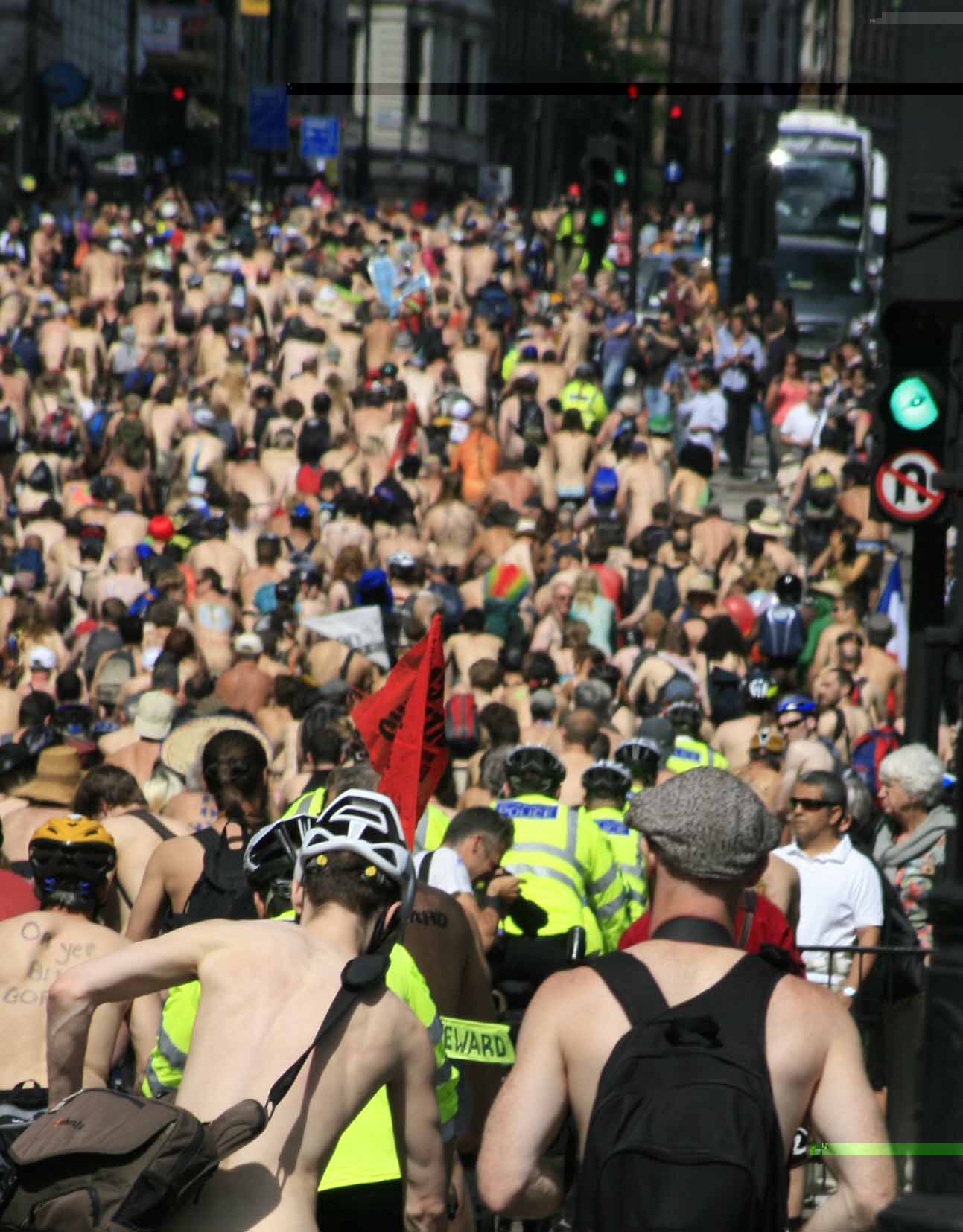
Cycling down Piccadilly in the buff...
...In fact, last week, a lot more Londoners did start using bicycles, but that was only because there was a two-day tube strike. Around 3 and a half million people use the tube in London every day, so when they go on strike it causes mayhem - people crowd onto buses, get on their bikes, walk, get their rollerblades out - anything to get into work.
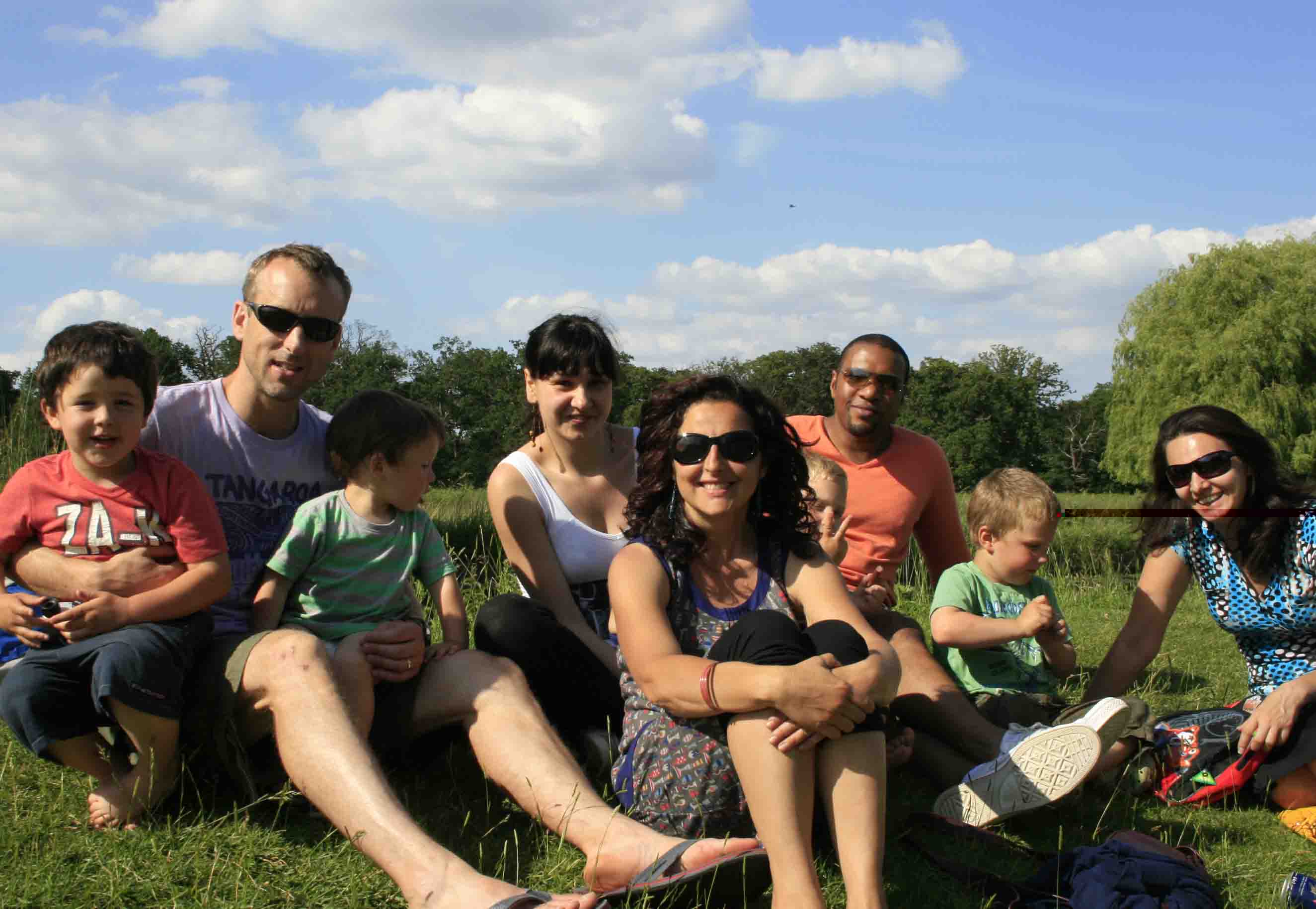
On Sunday, I met some friends in Bushy Park - that's a royal park in the South West of London. We were lucky to have great weather, and it was good to catch up. I promised them I'd put a picture on my blog, so here you go....
Vocabulary
If you are in your birthday suit, you're wearing what you were wearing the day you were born - nothing.
gobsmacked - gob is a slang word for mouth, but gobsmacked means shocked/astonished
Comments corner
Once again, thanks for all your comments. You had some interesting things to say about culture. Gabija from Lithuania said that culture is of huge importance and is probably everything that humans can create in order to develop their spiritual life and true worth. Jeronimo from Valencia, Spain pointed out that culture is related to the way we behave and that we should always try to be polite with other people, but that culture is very complex and much more than a word. Meanwhile, Kuldeep from Jammu made the very interesting point that culture is related to geographical conditions and weather, which helps to determine what we eat and wear for example.
Taru mentioned a Dutch writer, Geert Hofstede, who came up with a 'model of cultural dimensions' which is often used as the basis for intercultural awareness training, particularly in the field of business. Finally, Hyoshil from the UK mentioned that learning a language can help to understand different cultures. By the way, did you correctly predict the winner of The Apprentice Hyoshil??
Cheikh Vall from Mauritania asked about a lovely expression: 'like herding cats in a thunderstorm'. Herding an animal means trying to control a group of animals and make them go in one particular direction or towards one particular place. Shepherds and sheepdogs herd sheep, cowboys herd cattle. So, as we know, cats are fairly independent spirits and like to do their own thing. They also don't like to get wet and may be afraid of thunder and lightning. So, theoretically, herding cats may well be almost impossible and cause complete chaos. Any activity for which it's really difficult to get people organised can be like 'herding cats in a thunderstorm'. It's not a very common expression, but it's certainly very expressive!
Adek from Poland asks about the difference between 'at the harbour' and 'in the harbour'. In this case, both are possible but which one you choose depends on what you mean. If you are going to the harbour in order to take a boat somewhere, if it is your point of departure on land, then you would say AT - we met at the harbour. If, however, you are on a boat or arriving by boat, you can describe yourself as being IN the harbour. Remember, IN often describes a position relating to a 3-dimensional space (in this case, a body of water) whereas AT usually talks about a point (of departure) - at the airport, at the station etc.
posted on Sunday, 14 June 2009 | comment on this postWhat makes a good photo?

Taru - It’s fascinating to learn about some of the different techniques you use to create new images. I really like your ‘Blue moment’ picture – it’s very atmospheric. Looking at it I can almost feel the cold and the silence. Beautiful!
It seems to me that photography, like any art form, is very subjective. What is, for one person, a great photo, will leave somebody else cold. I use Photoshop Elements as I find I can do most of what I need with that basic version. It’s not very original, but for me the most satisfying photographs I take are the ones which require very little or no post-processing. I shoot pictures on Manual mode with my digital SLR, so it’s quite easy to get the exposure or aperture settings wrong. The closer I get to a good shot at the time of shooting, the happier I am. Having said that, I also like playing around with Photoshop and experimenting with different effects. It’s nice to use a dull picture or even a small section of a picture to try to create something different and original. The picture at the top is from a really dreary picture I took a while ago when I visited the Eden Project in Cornwall.
You write well about your experience and development in photography – use of verb tenses is accurate, there’s a good range of subject specific vocabulary. As usual, I want to highlight a few areas in which you could improve.
I’m going to set you, and our fellow members of the blogosphere, a little quiz based on your post. See how many of these questions you can answer:
Your Quiz...
1. Look at the first paragraph of Taru’s post ‘Processing photos’. Find one mistake with a preposition.
2. In the first paragraph, how could you change ‘on resent days’?
3. Can you find a spelling mistake in line 5 of the post?
4. Can you write a sentence which keeps the meaning ‘Taken photos presented people, children and nature.’ but which sounds more natural?
5. Can you find a word which means ‘reduce’ or ‘get lower’ which is spelt incorrectly?
6. What preposition normally follows the verb ‘concentrate’?
7. Find the sentence ‘It should be careful with one thing.’ What is ‘it’? How can we rephrase this sentence?
8. What is missing from ‘looking a photo’?
Now scroll down to the final two paragraphs of Taru’s post:
9. What preposition should follow ‘consist….’ (hmmm… haven’t we seen this somewhere before??)
10. What is the correct word order in questions? What is the problem with the questions ‘How they are made?’, ‘What kind of colours they use? Etc.
11. The verb ‘impress’ can add two different endings to create adjectives – what are they and which one would be appropriate in this paragraph?
12. Can you get addicted with something? What’s the correct preposition?
13. ‘there is made a lot of books and web sites’ – How can you rewrite this passive sentence correctly? What should go at the beginning?
Your comments
As always, thanks for all your comments. It’s a great feeling to read your ideas and points of view from all over the world. It’s funny to read more stories about lions and football – perhaps we’ve stumbled upon an important discovery. Lions like football.
Ana Paola – your writing is really good. Very descriptive. Hope you enjoyed Bloomsday!
Rabail - I'm glad you like the prepositions site. The word 'panoramic' usually describes a view, or landscape. To describe a website you could use the word 'comprehensive' (meaning with a broad range of information and a lot of detail). You asked about the use of contractions such as don't, won't and isn't in formal writing. In general, we tend to avoid using contractions in formal writing although it's fine for less formal writing such as blogs, letters to friends, most email correspondence. Its and it's? Have a look here.
Filippo - I'm glad to meet you too. Glad that some of those words have stuck in your mind. I'm an Arsenal supporter! - in fact, I work about 2 minutes walk from the Emirates stadium. How about you? What's your team in Italy? Do you like any English teams?
Hyoshil - some great expressions in your entry. I always enjoy reading what you have to say. I think remembering 10 words and expressions is pretty good... perhaps you could give YPW from Sweden some tips on how you remember them?! I've noticed that you often include them in your own writing - that's a great way to practise and really helps you to remember them I guess.. Abdisamad, I'm looking forward to your question next time. I know the book you mention and I think it's very good.
Lorial from Bali asks about the word 'having' and how to use it. Having is the present participle (-ing) form of the verb 'have'. Have is a very useful verb, as it can be used as an auxiliary (to help form a verb tense - I have been to Colombia) but also as a main verb 'I am having lunch'. It's important to realise that as a main verb it can be used to describe a state 'I have dark hair' or as an action verb 'My cat is having kittens'. You'll notice that as a state verb the -ing form is not used, so we can't say 'I am having a car'. For more on state verbs, have a look here 'Having' is sometimes used to form a 'perfect participle'. For example (active) 'Having failed his exam, he decided to give up and do something else.' Or (passive) 'Having been told he was no longer needed by the company, he stood up and walked calmly out of the room. He was never seen again...'
Gabija asked about good, not difficult and interesting English books. (but not graded readers). Hmmm. Tricky. A writer I like is Ian McEwan - he wrote Atonement which was made into a film recently. Might be a bit difficult though. Nick Hornby is a writer who shouldn't be too difficult for students. Mark Haddon wrote a book called 'The curious incident of the dog in the night-time' which you could try. Or why not try some short stories? Roald Dahl, for example. One of my favourite books when I was young was 'Danny the Champion of the World' - that's a children's book though.
Meo, I hope this blog can help keep you motivated and won't get your other half down too much!!
In my next post, I'll be returning to the subject of culture, and giving you some vocabulary related to various aspects of culture and life in London.
posted on Wednesday, 17 June 2009 | comment on this postSummer starts here..On Monday the 3 month summer pre-sessional courses start at my university. These are designed to get students up to speed with academic life here in the UK. My classes usually contain a great variety of different nationalities, sometimes more than 10, so one of the challenges for a teacher is to try to cater for so many different expectations and such a wide range of educational backgrounds. The importance of educational background is something which, as a teacher, you can’t underestimate. Higher educations systems around the world are very different – what is normal for a student in the UK, may be completely alien to someone from another country. My job on these courses is to try to prepare people for what to expect when they start their degree courses. What is the expected structure for an essay? How should students include references? What is the purpose of seminars? How can students improve their reading skills? How can I find reliable information online?
As you probably know, London is a multicultural city. Over 300 languages are spoken here, there are many different communities living side by side – go out on the street, on the bus, on the tube and you’ll hear myriad tongues and see people from all over the world. It is truly a melting pot. This can come as a shock to many students – perhaps their view has been informed by watching Mr Bean or studying from old coursebooks where everyone carries an umbrella and a briefcase, drinks tea at 5 o’clock and is absurdly polite. Often, the first reaction is culture shock.
Hang on a minute! It’s 5 o’clock – If you would be so kind as to excuse me, I’ll go and make my tea.
Ah, that’s better! In class today we had a really interesting seminar about culture. We talked about acculturation, and how students can adapt to the new culture in which they find themselves. For me, any opportunity for cultural exchange, whether it is educational, professional or social has to be a good thing. That’s one of the things I like about this blog – it’s a cultural exchange. It’s much easier to dismiss other cultures, simply because you don’t understand them. What I’ve learnt as a teacher is that any preconceived ideas I had about certain cultures or nationalities are constantly being challenged, and the only way this can happen is by interacting with other cultures. Insularity and the belief that one culture is superior to another can surely only cause conflict. Do we really want to live in cultural bubbles, separate and cut off from others? We’re all human beings aren’t we? Perhaps if an alien turns up one day, we’ll suddenly all realise we have more in common than we think..… anyway, I should probably get off my soapbox now. Besides, I guess I’m preaching to the converted… If you all weren’t interested in other cultures, you probably wouldn’t be reading this blog!
Your homework! Look up the words and expressions in bold and try to write sentences for a few of them to provide a context. I’ll give you some definitions and pick out some good examples in my next post…
Answers to the quiz: Well done to those of you who answered my quiz about Taru’s post (15 June) Good work! Here are my answers:
1. in recent days, at the table
2. It has been raining and windy recently/the last few days
3. my hobby
4. I took photos of people, children and nature or The photos I took were mostly of people, children and nature
5. decrease
6. on
7. We should be careful of one thing or A word of warning or There is one thing you need to watch out for
8. looking at a photo
9. consist of
10. How are they made? What colours do they use?
11. impressed and impressive – in this context ‘impressive’ fits. (impressionable adds 2 suffixes –ion and –able and has a rather different meaning)
12. addicted to
13. There are a lot of (useful) books and websites or A lot of books and websites can be found
Comments corner
Hi Cheik Vall. Where did your definition of culture come from? What’s the context? Does it mean after a certain community has been destroyed? It’s quite hard to get the sense of it without more context. I didn’t hear Obama’s speech, but I think what he means is that Islam and America can (and should) co-exist side by side. If we have one, it does not mean that we cannot have the other. The phrase often used is ‘mutually exclusive’.
Thanks Vijay, for your long and interesting comment about culture. I agree that an individual is a product of the culture in which they are raised as well as of their genes (nature vs nurture).
To everyone who wrote about the naked bike ride – it’s difficult to know what impact it had. It wasn’t widely reported in the media here as far as I could see. There are quite a lot of strange demonstrations and events in London so perhaps people grow a bit weary of them. For me, it was just a bit of fun, something a bit different, but I doubt whether an event like this can have much of an impact. What will get more people on their bikes in London? Proper provision of cycle lanes and facilities for cyclists, better education of drivers, especially bus and lorry drivers, better weather (a bit difficult that one!) Greener cars and car sharing schemes must be the way forward. Anyway, this protest was a laugh, people enjoyed it, no harm was done so why not? Vladimir says he wouldn’t be ready to join a demo in his birthday suit – nor would I (it must be quite uncomfortable..!)
The public and government response was minimal, although you can read what the government think about cycling more generally on their website here.
The picture in the park is of a couple of good friends of mine – we met at university, a (very) long time ago. My friend Matt is on the left, with his two boys, and his wife Gema from Spain (at the front, wearing sunglasses). John, in orange, is going out with Joanna, from Poland, (next to Matt). Joanna’s sister, on the right, has two boys (born in London, Polish parents)! Phew! That was complicated…a real United Nations as you can see! It was a lovely day.
Hyoshil, your story made me sad. Since when was a teacher’s job to stifle creativity and punish imagination?? I think it’s a great idea, sending soldiers into battle with no clothes on! How could they possibly take it seriously? Having said that, maybe your teacher did us all a favour – we’ve read and enjoyed your story, and your burning resentment may have made you more determined to use your imagination and learn all those idioms…
Ana Paola, it sounds really cold out there - did you see the naked bike ride? Did it get much coverage in the press? Abdisamad, there’s a very simple answer to your question. ‘No’. When you use the pronoun ‘I’ it always has to be capitalised, whatever it’s position in the sentence.
Keep those comments coming - bye for now!
posted on Friday, 19 June 2009 | comment on this postGame, set and match!A common idea about London is that it’s always raining or foggy. While I was teaching abroad, a student once asked me quite seriously whether there are any days in the year on which it is not foggy in London. While it’s true that it often rains and is quite grey sometimes, the fog idea probably goes back to the ‘pea-soupers’ or smog which was caused by Londoners burning coal to heat their homes. In 1952 there was an infamous smog which lasted 4 days and is said to have caused around 4000 deaths. Since then, regulations have been introduced to reduce air pollution and serious smog is very unusual now. Anyway, when the sun does shine and it’s hot, people really appreciate it. They know it probably won’t last so there’s often a kind of holiday atmosphere – people suddenly start acting like they're on holiday, slap on the suncream, sunbathe in the parks and pretend they don't have to go work!
Another regular feature of the British summer is Wimbledon. The tennis tournament has started – if you catch any of it on TV you’ll see what a beautiful day it was today. Every year when Wimbledon comes around, it seems only a matter of time before the umbrellas come out. So far, this year’s looking better. Tomorrow I’m meeting a friend down there after work to see if we can catch a match or two on the outside courts. Tickets for Centre Court and the main courts can be difficult to get on the day, but it’s nice to go down there to soak up the atmosphere and see a few of the less famous players.
The big talking point this year is ‘grunting’. This is the noise some (mostly female) players make when striking the ball. Some commentators seem to be suggesting that it’s a deliberate ploy to gain a psychological advantage over the opponent. The players generally say they can’t help it, and that it’s down to the physical strain of striking the ball. Hmm, what do you think? Should the rules change to outlaw grunting on court??
It’s been a while since there was a British man in with a chance of winning the tournament (I think it was the 1930s in fact…). This year though, Andy Murray, who is Scottish, is flying the flag for Great Britain and seems to be in with a shout (Rafa Nadal being injured obviously helps!) So, Andy Murray represents Great Britain in tennis, in the Olympics Great Britain (and Northern Ireland) did really well and came 4th, they’re trying to create a United Kingdom football team for the 2012 Olympics and England, Wales, Scotland and Northern Ireland all have their own football teams. Eh? How do you work that out? It’s an odd situation that in different sports the four countries [England, Scotland, Wales and Northern Ireland] sometimes compete individually, but at other times join together to form one team. Can you think of anywhere else which has a similar situation?
Your homework... Something slightly different this time. I'd like you to look at the words and expressions in bold and try to think of a synonym, or a way to rephrase each of them, while keeping the meaning the same (or as close as possible).
Well done to everyone who added their comments – there was some excellent writing there and the words and expressions were generally used very well. Here are some definitions...
Up to speed - if you are up to speed with a subject or an activity, you have all the latest information about it and are able to do it well
Cater for - to provide what is wanted or needed by someone or something
Alien to - strange and not familiar
Myriad - a very large number of something (literary)
Melting pot - a place where many different people and ideas exist together, often mixing and producing something new
Culture shock - a feeling of confusion felt by someone visiting a country or place that they do not know
Acculturation - cultural modification of an individual, group, or people by adapting to or borrowing traits from another culture
Preconceived - formed too early, especially without enough consideration or knowledge
Insularity – the concept of being interested only in your own country or group and not willing to accept different or foreign ideas
(Be on your) Soapbox - to express your opinions about a particular subject forcefully
Preach to the converted - to try to persuade people to believe things which they already believe
[these definitions came from Cambridge dictionaries and Merriam Webster's online dictionaries
In my next post, I'll come back to the 'thorny subject' of word formation, tell you about my dream destination (after Taru's last post about Arkhangelsk) and tell you about Wimbledon. posted on Tuesday, 23 June 2009 | comment on this postBack on form!Hi Taru. A very quick word about your previous post from Wednesday – I think we’ve all seen that you have a lot on your plate so I think it’s normal that you have had less time for blogging recently. Don’t worry, it’s good to see you back on form with your latest post. By the way, how do we spell the month after June and before August??? And the illness you have which makes you tired??
One more thing, I promised to tell you my dream destination (not my misery place….!) although the idea of a nightmare destination is also quite intriguing. That will be in my next post.
To have a lot on your plate – to be very busy
To be on form – you are ‘on form’ if you are feeling or performing well
Intriguing – something which fascinates you, often because it is a bit unusual
Today I’m going to set two separate tasks. Taru generally uses verb tenses very well, so the first, and easier task, is to identify four different verb tenses in her post and give an example with the name of the tense.
For example, in the second line she writes:
‘…when I do my studies in pedagogic studies and write this blog.’
These are both examples of the Present Simple, used here to describe something which is routine or habitual. For the more advanced bloggers out there, can you find a mistake with the Present Perfect?
For the second task, we come back to our old friends – Prepositions! Look for the following words and phrases in the text:
concentrate
divide
organized situations
internet
contact
time to time
looking
There is something wrong either before or after these words and phrases. Can you spot the problems and write the correct version?
Taru, what you have written is very thought-provoking. As a teacher, I’m constantly asking myself how new technology-driven learning strategies can be used in formal teaching. As I said earlier in the month, I have used blogs with my classes before and many students found it really motivating and stimulating, although some did not really take to it. Everyone has different learning styles, so what works for one student may not work for another. I’m currently doing a kind of experiment with my class – I’m using a WIKI (a collaborative website – watch out for a definition soon on ‘Keep your English up to date’). The idea is to get the whole class involved in creating their own learning ‘space’ – have a look if you want to get an idea of what I mean. I think the whole social networking phenomenon is important, especially for younger students. If we accept the fact that people are spending more and more time on this type of website or using more advanced applications on their phones, how can educators actually get them to use some of this time for learning? Oh dear, seems like I’ve been going on a bit too long again, time to get off my soapbox!
In my next post I’ll tell you about my day at Wimbledon and my dream destination. Have a great weekend!
posted on Friday, 26 June 2009 | comment on this postThe art of queueing...It is said that the British like queueing. As soon as there's a need to wait for something, an orderly line will form, as if by magic, and we'll all stand dutifully in line, waiting our turn. The same folks who say this might also contrast the way we queue over here to the disorganised rabble that masquerades as a queue in some other countries. I'm not so sure... maybe the art of queueing is dead. I've been in bus queues recently where it's every man for himself. Still, though it may be a dying art, it's certainly alive and well at Wimbledon.
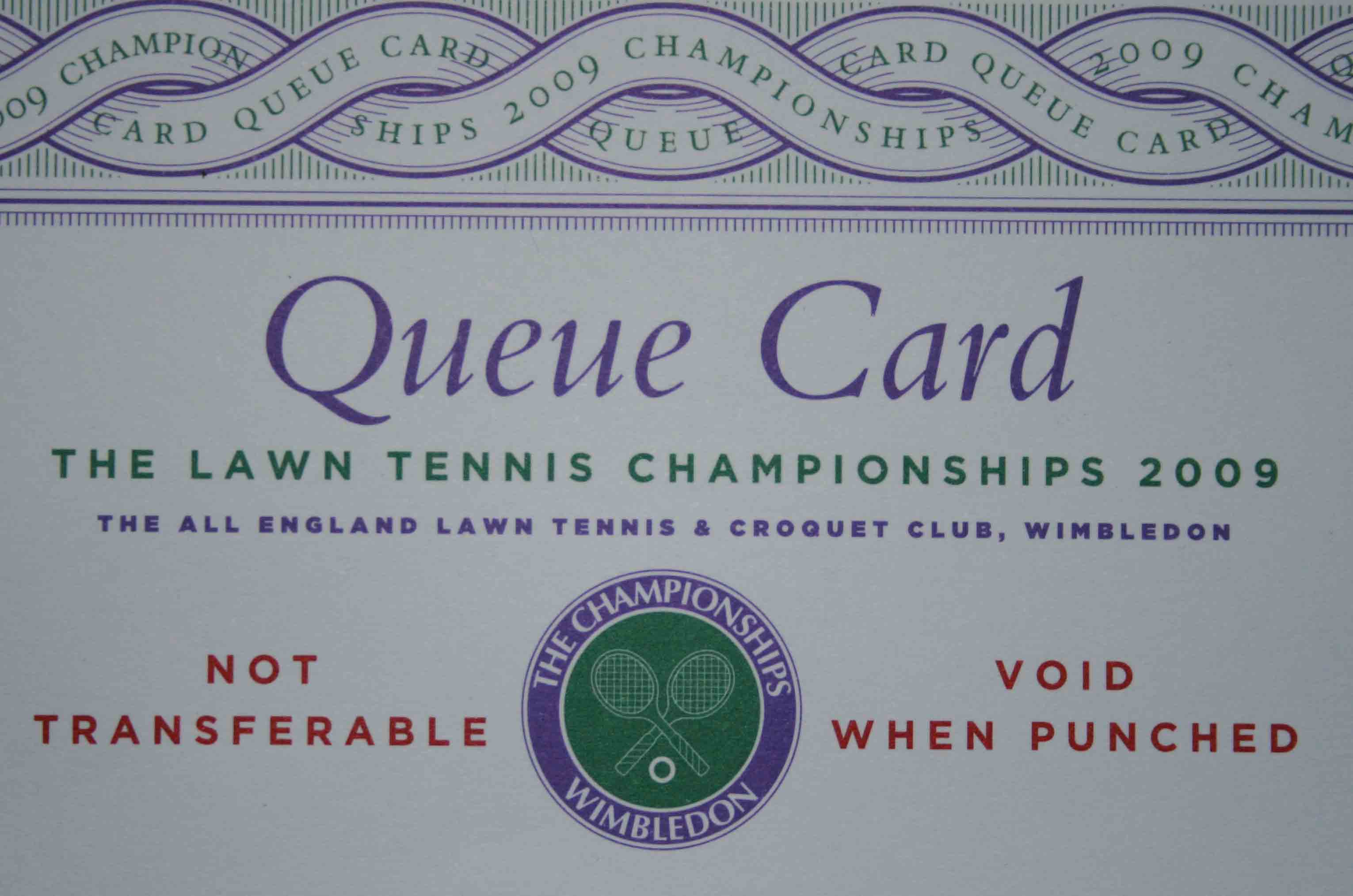
I have arrived at 3pm and was being told by a steward that the wait would be 3 or 4 hours! The organisation were military - everyone was give a card, queue jumping was strictly forbidded and no pushing in would be tolerated. To add insult to injury, as soon as I arrived, I had called my friend who was already been there. He has a ticket and was in the third row of Centre Court watching Maria Sharapova (who was losing her match)... Fortunately it was a lovely, sunny day, I was having a book and some grapes so I was happy.
Did you notice anything in that last paragraph? I hope so. I suddenly forgot how to use verb tenses - can you help me? If you find 8 mistakes in the previous paragraph, you might even be a grammar genius...
When I eventually got in I wasn't really too bothered about the tennis. I met up with my friends, we had a drink and wandered around the outside courts, watching a variety of games, singles, doubles, mixed doubles and so on. It's an exciting place to be, and the longer the tournament goes with a Brit still in it, the more the excitement mounts. There's a grass hill at one end for anyone not lucky enough to get tickets for one of the show courts. They can watch all the action on a huge screen and cheer on their favourite players. It used to be called Henman Hill because of our perennial 'plucky loser' Tim Henman (see picture below - he's now there as a commentator). It's now called Murray Mount - we'll see how far Murray gets this year, and how high the excitement grows towards the end of next week.....
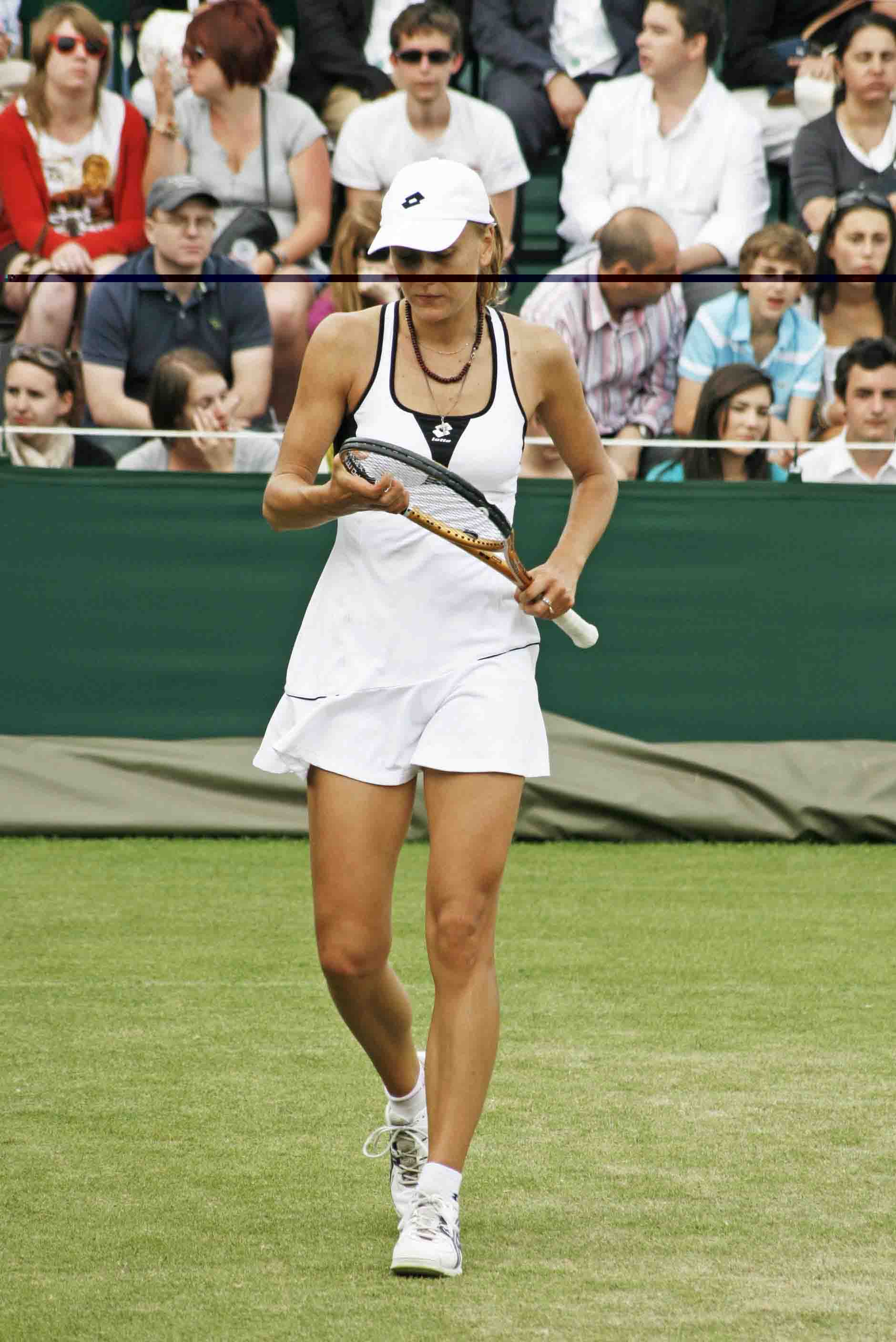
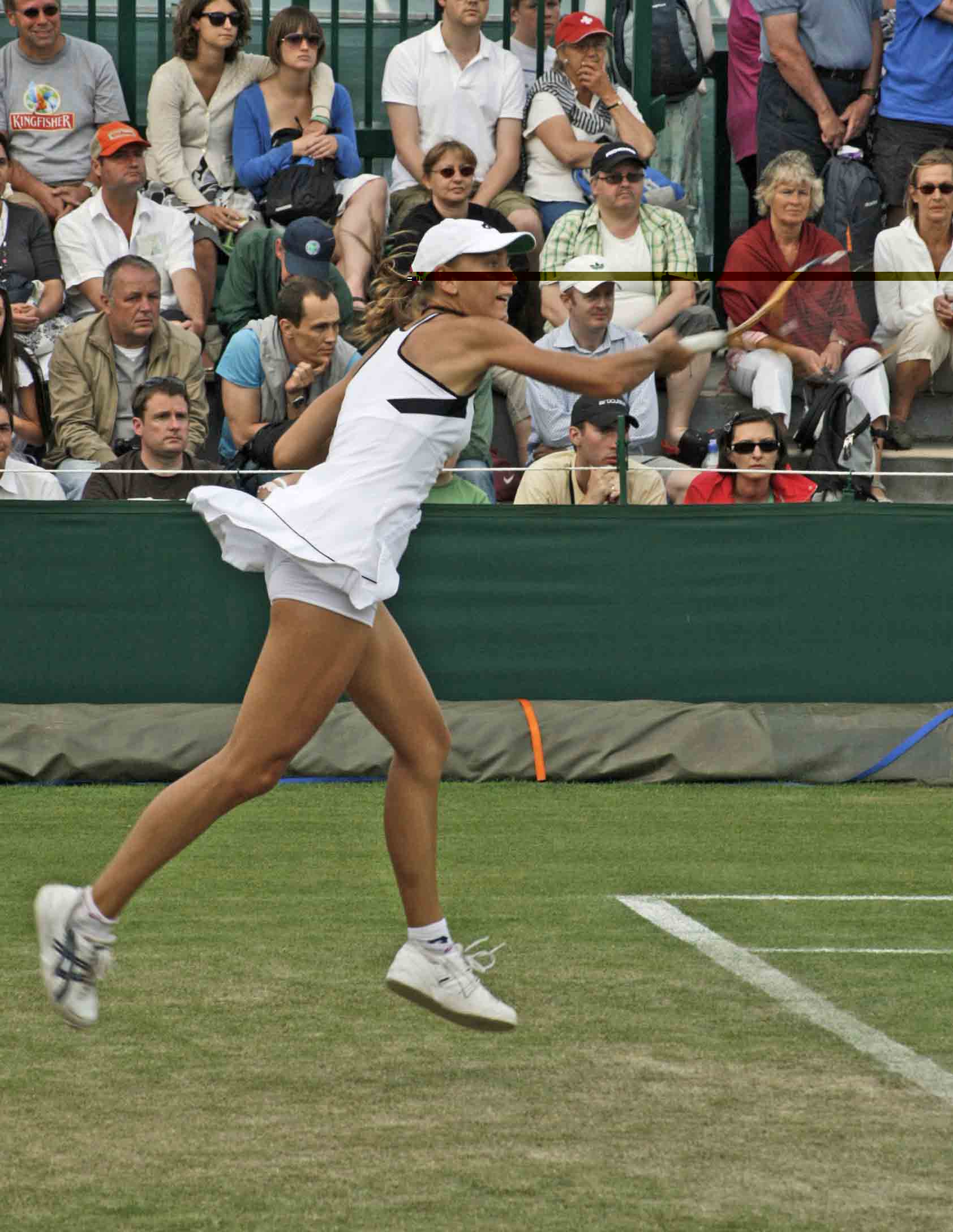
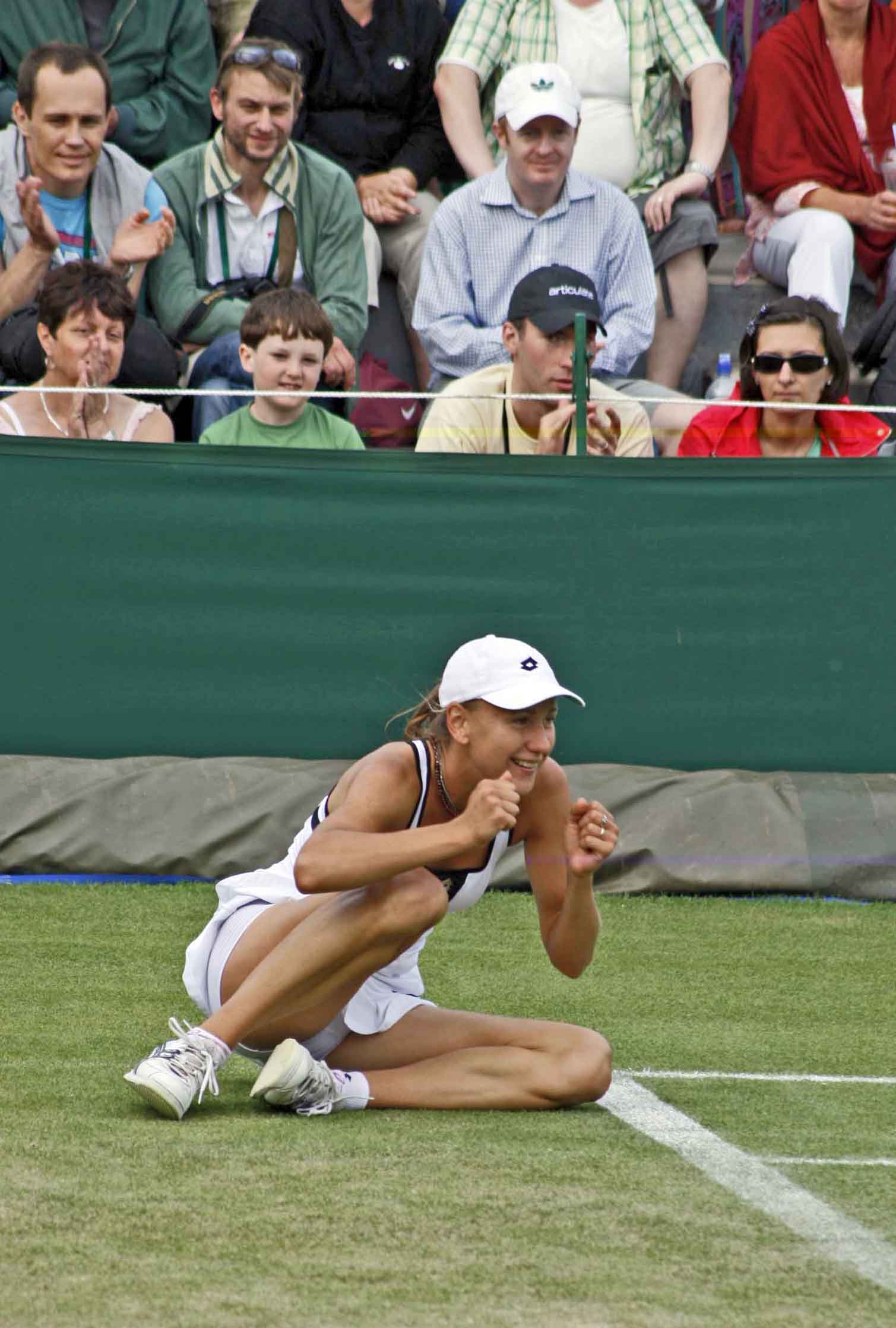
Here are some pictures of the day....nobody famous I'm afraid! (at least I don't think so...)
Concentration...
Action...
Victory...
And the unsung heroes... the ballboys and ballgirls.
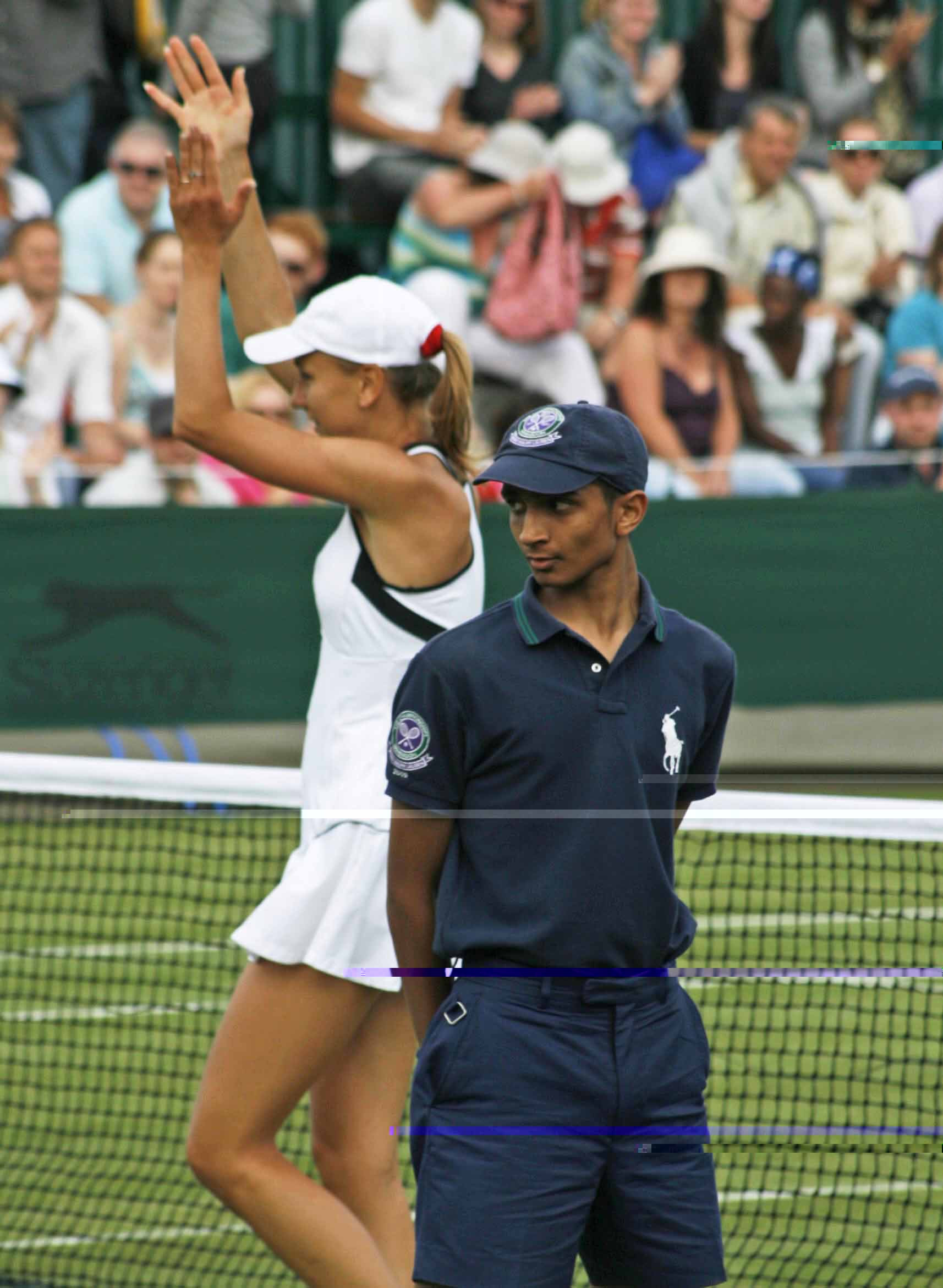
Some vocabulary
orderly - well-organised and controlled
rabble - a disorganised or disorderly crowd of people
to masquerade as - to pretend to be someone or something else
every man for himself - a phrase used to mean that everybody (man or woman) has to compete with everybone else, on their own
bothered - if you're not bothered about something, you don't care about it or it doesn't matter
Brit - a British person
plucky loser - a brave and loser who shows good spirit (but still loses!)
unsung heroes - people who act in a heroic way or perform a very good job but are not often recognised for their actions
I'll reply to some more of your comments over the weekend. Have a good one - keep studying!
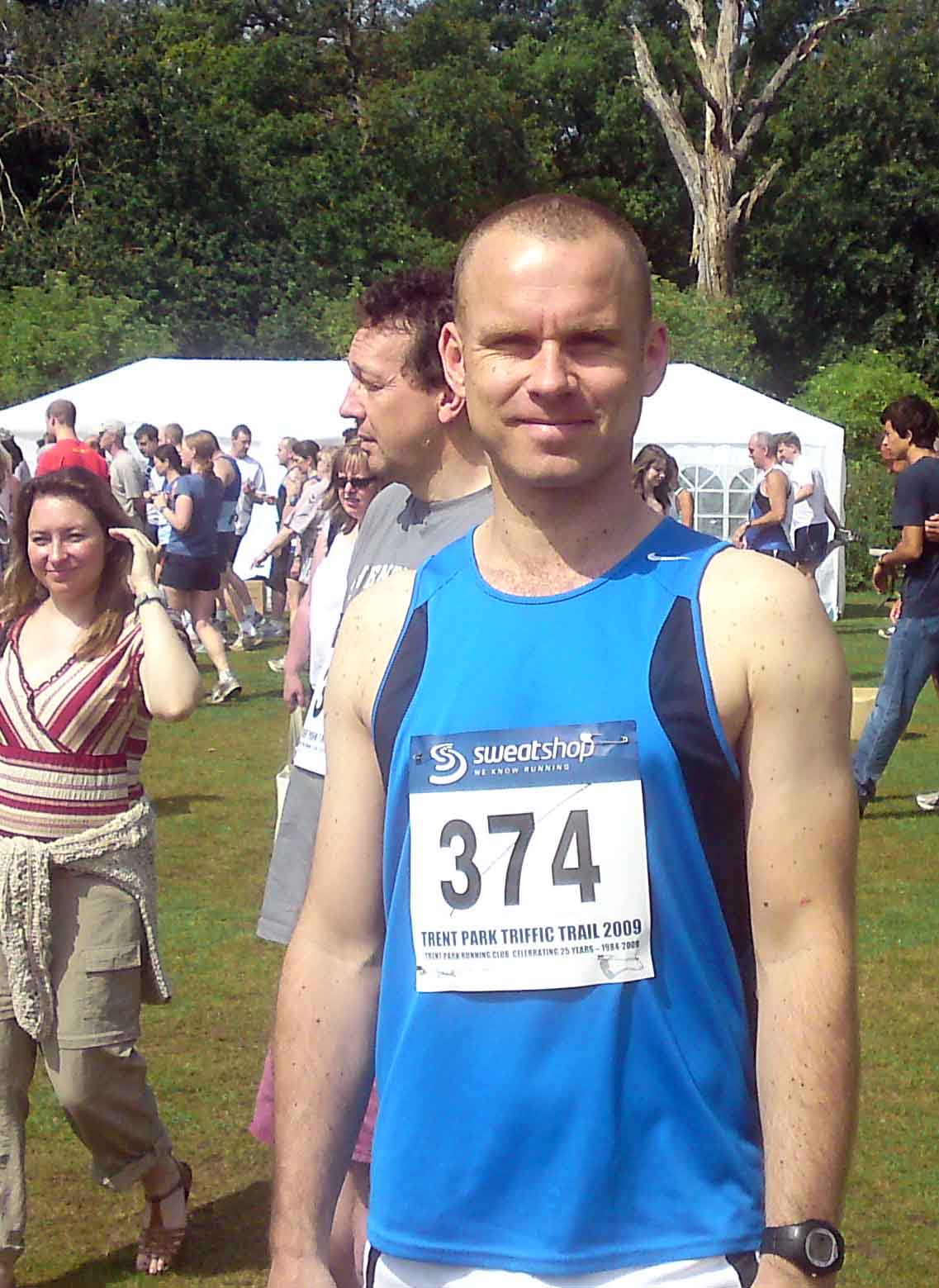
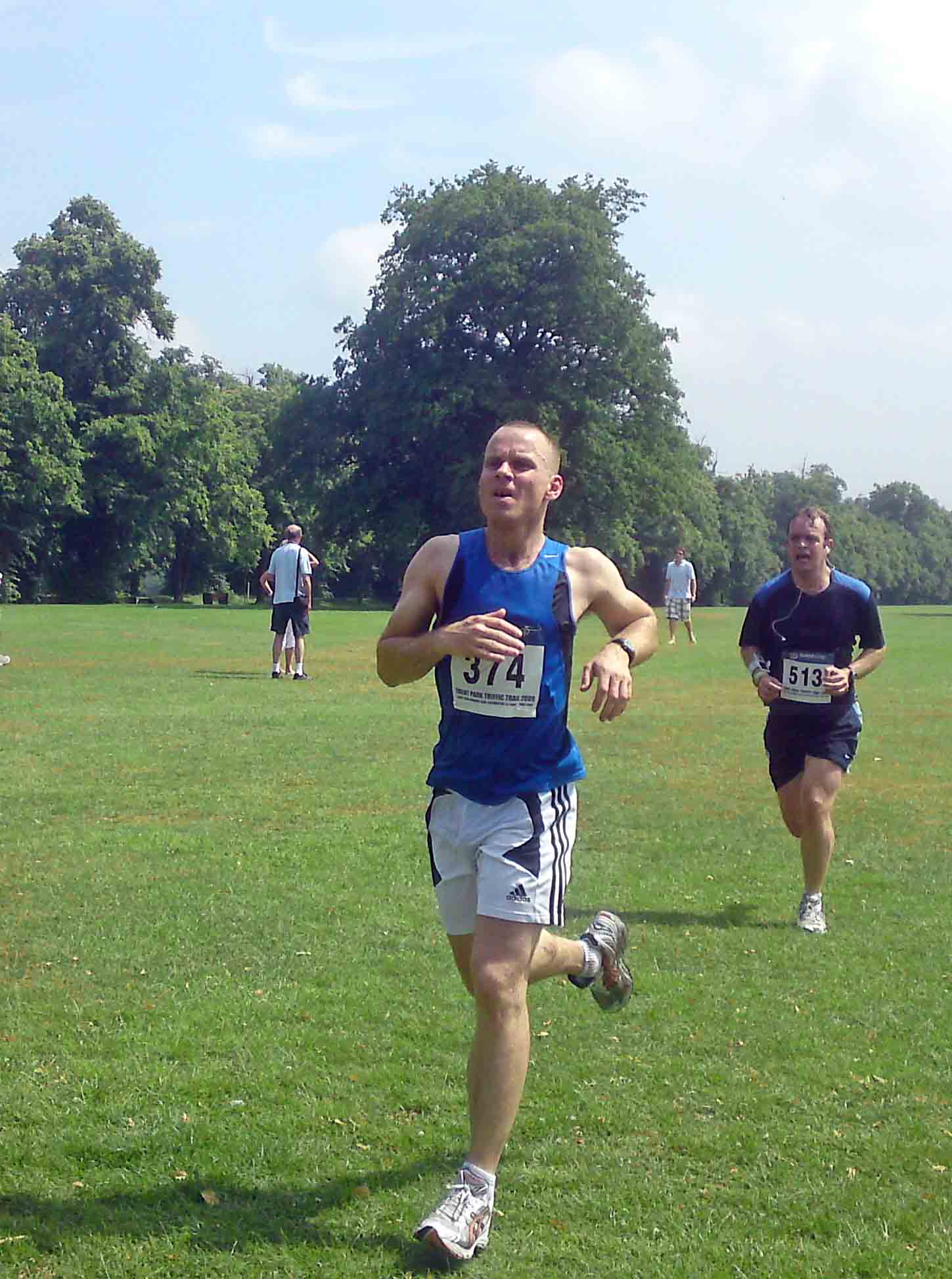
posted on Friday, 26 June 2009 | comment on this postRun for the hills..The weekend here in London was quite humid and a mixture of sunshine and really heavy showers. Not ideal weather, then, for the 10km run which I foolishly agreed to do on Sunday. It was an event held in a beautiful park in North London called Trent Park. My brother-in-law Tim often takes part in these runs - I've done one before so I thought I'd have another go. The weather was sticky when we arrived and the course had lots of hills. My heart sank - as usual, I asked myself 'Why do I do it?'. But I survived! - after I finished I was already looking forward to the next one.
The worst part - waiting around before the start
The best part - finsishing!
Comments (from June 23rd)
Leila – glad you enjoyed the homework. I also remember the weather being great even though I was quite young then. It was the year of the ‘Royal Wedding’, as you say, but also of the Brixton riots, two very different faces of the UK in stark contrast - from the ‘pomp and splendour’ of the wedding to the anger, frustration and violence in Brixton.
Hyoshil – scantily clad women – yes maybe it is a boy thing! It’s funny that your son grunts when he plays – did the opponent complain? I think grunting adds to the drama and excitement – above all, it’s quite funny. In my view, players should be professional enough not to let it disturb their concentration. Yes, I do know about the division between South and North Korea, but I had no idea that they had had joint sports teams – not anymore though right? When was the last one, and what sport was it? Good homework – well done!
Benka – I’m glad you liked the homework. Do factories ‘damp’ waste??
Paulraj, it’s amazing how 20-20 cricket has become so popular in such a short time. There’s no doubt it’s an exciting format and appeals to our desire to have everything more and more quickly. A 5-day test match can be exciting though, as this year’s Ashes series will hopefully show..
Cheikh Vall – you were right in about half your sentences. You might want to look up number 1,4 and 5 again.
Rabail, I love the idea that in Pakistan people cook a special meal when it rains – it says so much about how weather influences our lives. In the UK, as you know, we see quite a lot of rain so getting the umbrella out is certainly nothing to celebrate. It’s interesting to read that you’re not a fan of grunting. Do you think there is anything in cricket which should be outlawed? Really great work for that vocabulary. I didn’t manage to see any of the Twenty20 games but the tournament was a great success and perhaps if it comes back here I might try to get tickets.
YPW – I don’t have a particular favourite. I used to love watching players like Bjorn Borg, Jimmy Connors and John McEnroe – I remember some epic contests between them when I was growing up. Oh, and I like Ana Ivanovic also….
Naheed, do you never get tired of the sunshine in Karachi? Those power cuts must be really irritating, especially if you’re in the middle of writing your blog! Glad you’re enjoying ‘Keep your English up to date’!
Kuldeep, I really appreciate your comments about my blog, thank you. ‘It’s been a while since there was a British man in with a chance of winning the tournament’ means that a lot of time has passed since any British man came close to winning Wimbledon. ‘It’s been a while’ here actually means quite a large amount of time, although it doesn’t denote a specific period of time. ‘Having have’ is not possible grammatically – ‘having had’ is a perfect infinitive and can be found in sentences such as ‘Having had lunch, they decided to have a short siesta.’ It’s a nice way to avoid something longer such as ‘After they had had lunch..’.
Asma, are the fogs a kind of sandstorm? Or are they caused by moisture in the air?
Nice to meet you too Jingjing! Good homework, although ‘mumbling’ isn’t what the tennis players are doing..
Answers to the vocabulary quiz
Smog – this is a ‘portmanteau’ word formed from ‘smoke and fog’ = air pollution.
Infamous – notorious
Slap on – apply/put on
Soak up – enjoy/take in
Grunting – groaning with exertion
Ploy – trick/strategy
Flying the flag – representing a country
In with a shout – to have/stand a chance/have the possibility of…
Some answers to the last quiz…(June 26th)
Prepositions
Concentrate on (although I would probably rephrase it to say something like ‘the course mainly/mostly focuses on adult education’)
Divided into
…happens in organised situations according to some …. (could rephrase this ‘Non-formal learning occurs/happens in an organised context under some kind of supervision…’)
Online/on (the) internet/through (the) internet
In contact with people
From time to time
Looking through a window/seeing a reflection in a weekend
Comments from June 26th
Taru – yes, indeed. July! And ‘flu’! Marianna, I agree with you – grammar explanations can get tiring – that must be why you missed the problem with the Present Perfect sentence ‘When I have read…’! Paulraj, I’m glad that I encouraged you to read Taru’s blog. I’m sure you’ll agree that it’s interesting – I think we can all learn from each other. Good homework, just one mistake! Benka, well done for having a go at the grammar exercises, even though they aren’t your cup of tea. It’s always nice to see students thinking and reflecting on their knowledge.
Verb tenses
The problem with the sentence ‘When I have read these theories…’ is really about inconsistency of tenses. You could say 'When I read these theories and try to apply them to practice I realise that...'. But this would change the meaning slightly to mean 'every time I read these theories' - if that is what Taru means, then fine. I think, though, that she means that her reading of the theories at an unspecified time in the past has made her realise (now) that informal learning is what we're doing (now) The problem is the word ‘When’ – it can't apply to the unspecified occasions related to the two verbs in the Present Perfect and also to the present time - this is the 'inconsistency' I mentioned. What would work well here is a perfect participle: Having read these theories and tried to apply them to practice I (now) realise that actually we are doing it (informal learning) here with this blog. Does that make sense Taru? Hope this long-winded explanation helps!
There are lots of good examples of verb tense use in the post. For more on basic tense usage, see the LE Ask about English section on verbs and verb tenses.
Past tenses (Friday’s post)
I arrived at 3pm and was told by a steward that the wait would be 3 or 4 hours! The organisation was military – everyone was given a card, queue jumping was strictly forbidden and no pushing in would be tolerated. To add insult to injury, as soon as I arrived, I called my friend who was already there. He had a ticket and was in the third row of Centre Court watching Maria Sharapova (who was losing her match)… Fortunately it was a lovely, sunny day, I had a book and some grapes so I was happy.
Well done to everyone who managed to identify the dodgy verb tenses…
posted on Sunday, 28 June 2009 | comment on this post | |


