March 2009Early one morning...Hello everyone,
Well, I’m a little bleary-eyed but everything’s going ok. Looking back on the first part of the trip seems like looking back on some sort of nirvana: it’s been really rewarding, but very much nose to the grindstone since then! Blogger Paulraj commented ‘Isn’t it slightly tedious teaching 8 hours per day?’ Well, no, in a word! I love my job, and no matter how tired you are, something happens when you get in front of the class and see all these people coming from different lives and different perspectives wanting to learn and work together. I get this amazing rush of adrenaline , and can keep going for the whole day. The problem is at the end of the day, when all the adrenaline rushes back out of your system again, and you feel a bit like an empty shell, barely able to string a sentence together! When I reach this point in the UK, I usually go home and sit staring vacuously into space from the sofa, or play the piano for a few hours. I miss my piano, actually.
Anyway, back to the point. Shanghai was amazing; I learnt so much just from going on a one-day tour. May I share some photos with you?
I went to the museum where I learnt a new word: ‘numismatist’. From the context, I’d guess that a numismatist is someone who collects coins.
I saw some examples of early money. It wasn’t round, as you can see! These ‘coins’ are made in the form of a type of farm equipment. From the looks of it, I’d say they resembled shovels.
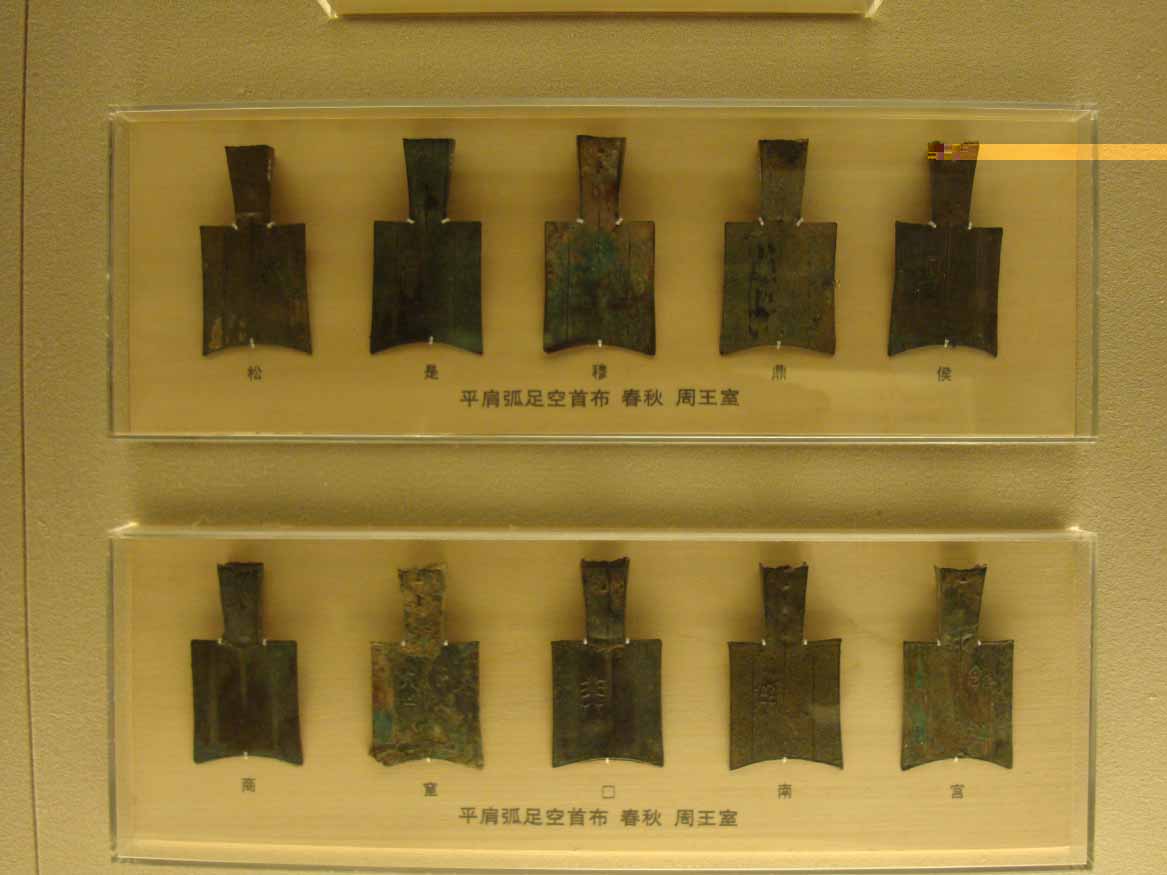
Neolithic prototype coinage
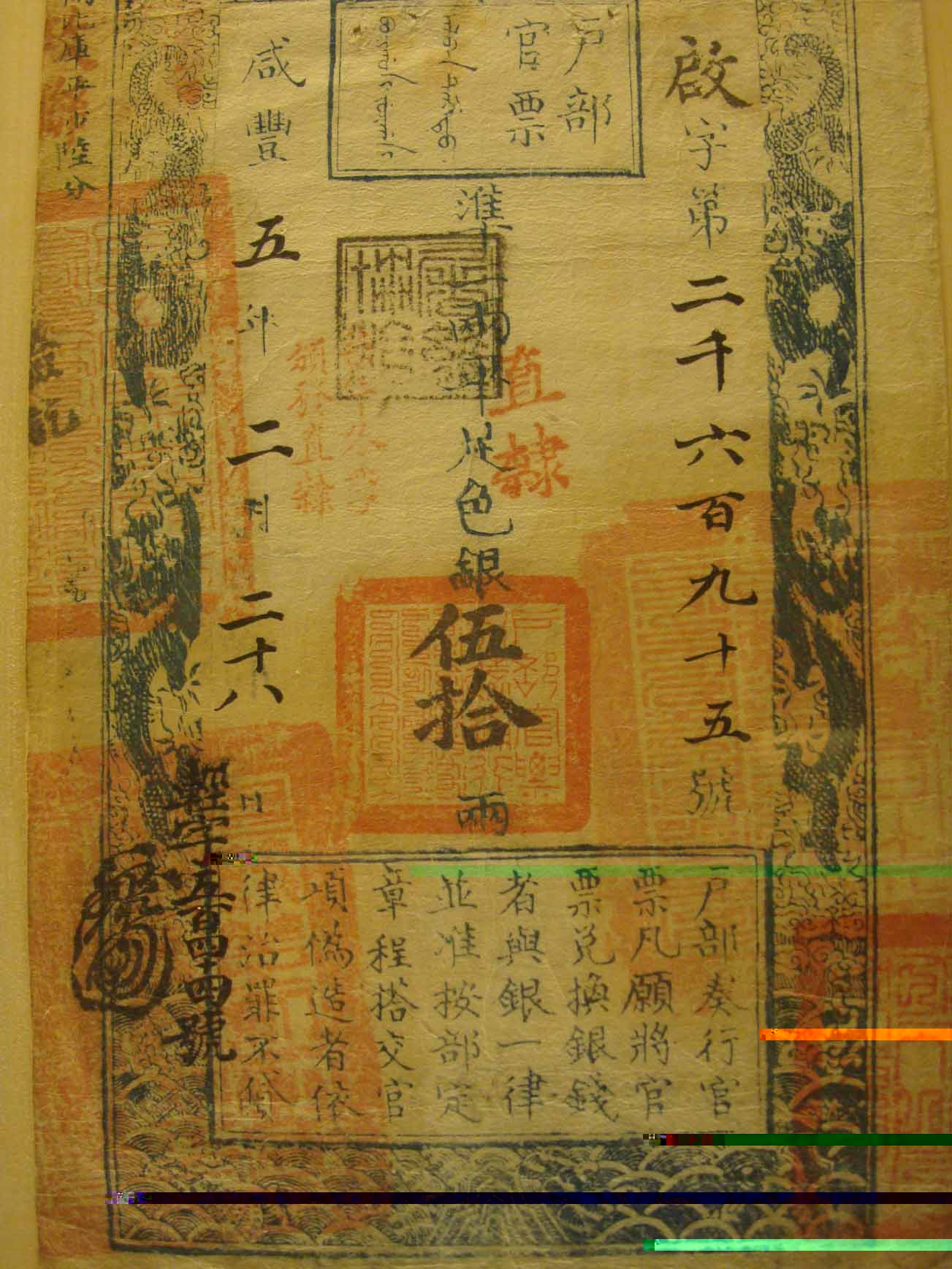
Skipping forward a couple of millennia, we have the world’s first paper money. Beautiful, isn’t it?
Later on that day, we also visited some gardens in central Shanghai. You can see what they were like from the photo below.

This portal is called a ‘moon gate’, and is aimed at framing the landscape, creating a composition worthy of a watercolour painting.
Lastly, we visited a Buddhist temple. It was incredibly serene. I feel quite drawn to Buddhism, although I don’t know a great deal about it.
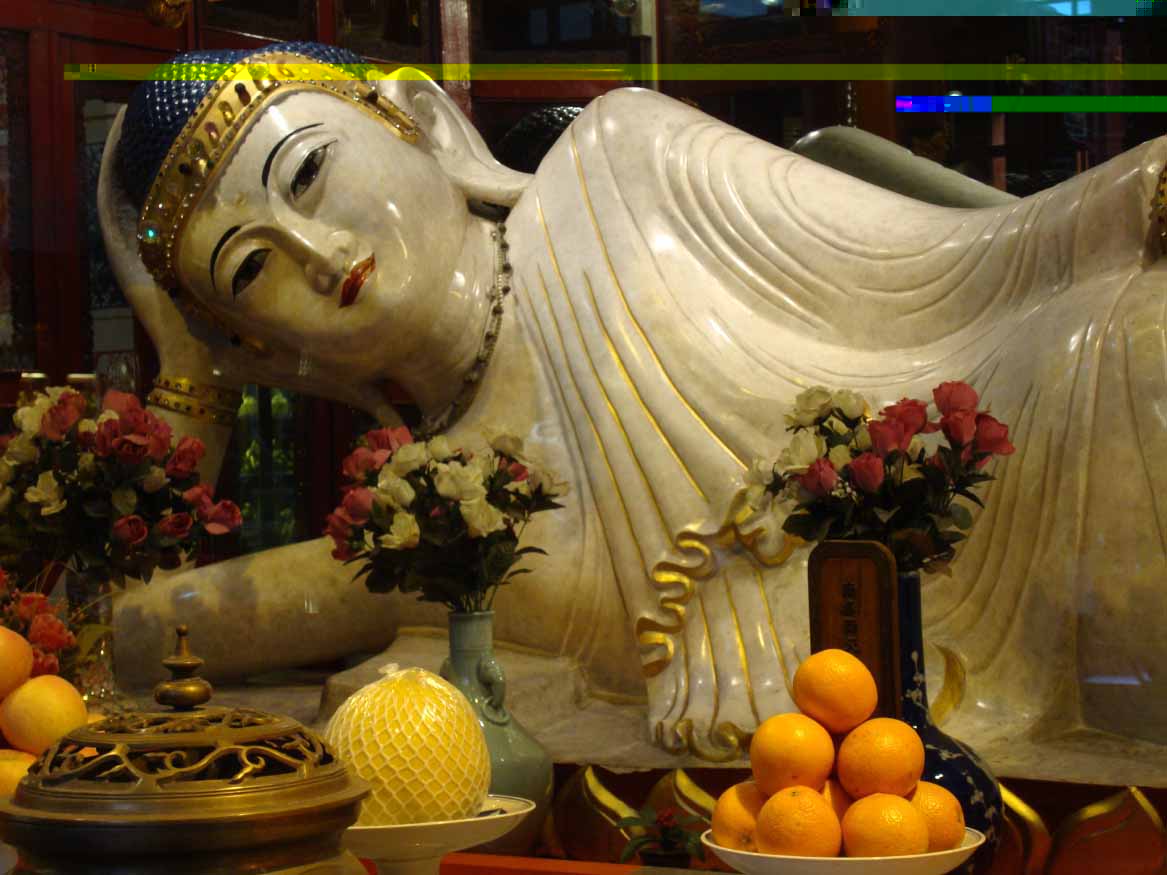
Reclining Jade Buddha
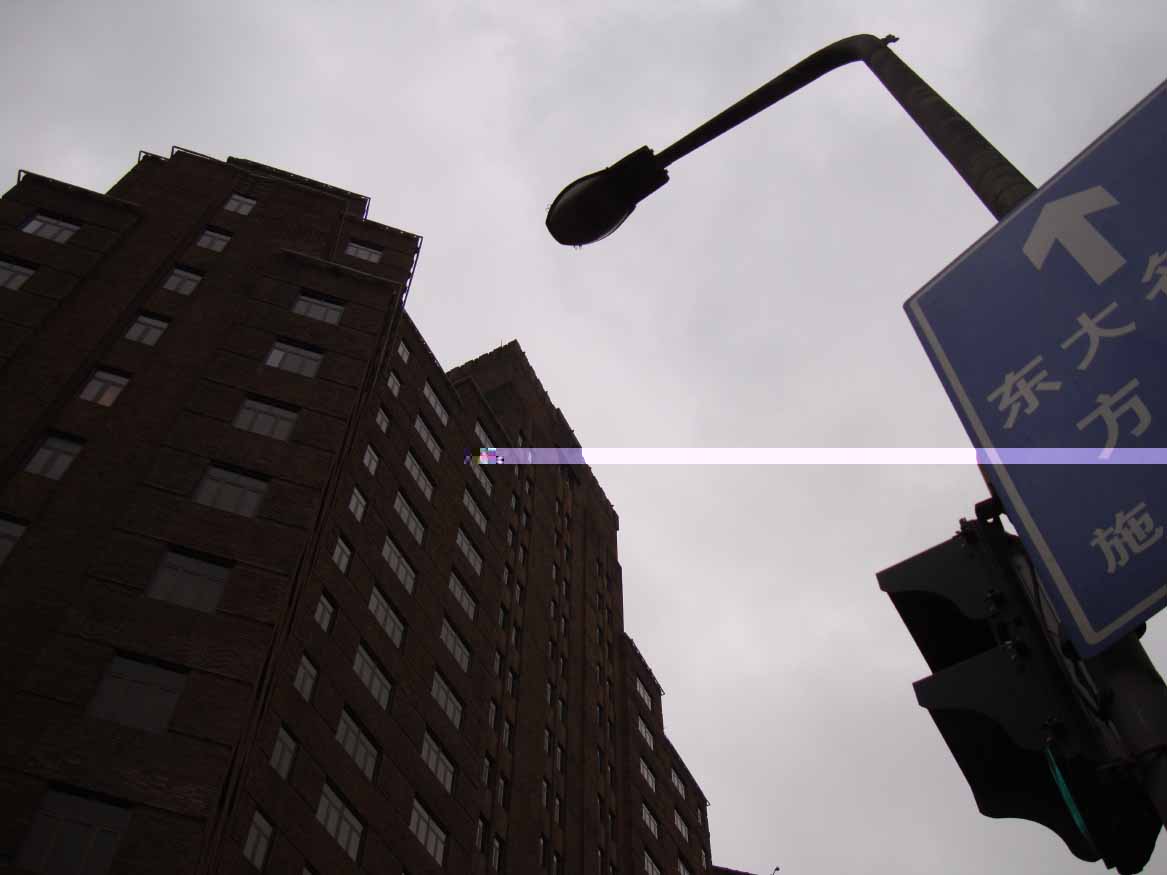
Finally, I made my way back to the hotel. It’s a bit of a monolith, isn’t it? The architecture’s actually inspired by Broadway, an influence which you can detect in the Art Deco style of the exterior.
It was interesting to hear about your first words in English, and how you learnt them. Some people learnt through song, others through repetition. My Chinese repertoire has now expanded to include ‘Beautiful, isn’t it?’, ‘I’m full, thank you’, ‘You first’, and ‘You’re welcome’. I’ve also learnt the word for ‘teacher’, so I can tell when people are talking about me ;-) Feeling quite chuffed with myself, although it’s largely thanks to the patience of my Chinese friend that I’ve learnt these words!
Anyway, ‘bye for now, and I look forward to hearing from you all.
Best wishes,
Sarah
VOCABULARY
• bleary-eyed = pink, dry eyes with problems focussing due to lack of sleep
• Nirvana = heaven (a place without worries)
• nose-to-the-grindstone = working very hard
• tedious = boring
• adrenaline = a chemical produced by the brain which gives us a burst of energy
• to stare vacuously into space = to stare into space with a blank expression (and very few thoughts in your head!)
• prototype = the first known example of something, which is usually followed by more refined versions of the initial concept
• worthy of = good enough to (usually used in sentences such as ‘This painting is particularly worthy of note’)
• serene = calm
• a monolith = a big, slabbish building with very little lightness or beauty to break up its heavy appearance
• to feel quite chuffed with oneself = to feel quite pleased with oneself (informal/colloquial)
LE VOCABULARY CHALLENGE
a) Where do you think the term ‘Nirvana’ comes from? What does this word mean to you?
b) Where do you think the phrase ‘nose to the grindstone’ comes from? Can you guess the origins of this phrase?
LE GRAMMAR & SPELLING CHALLENGE
The following sentences are taken from the blog comments, and each contain one tiny error. Can you correct them and explain your corrections? Good luck!
1. So, you’re in China! I’m glad you had a good time. (hint: tense)
2. He didn’t have much money on him, so I picked up the tap. (hint: spelling)
3. I’ve been speaking it for years now, so I’ve never thought about the first words I’ve learnt in English. (hint: tense)
GOOD LUCK! posted on Sunday, 01 March 2009 | comment on this postGrammar Challenge AnswersWell, everyone got 100% in the vocabulary challenge, so well done!
The grammar's tough, eh? Nobody got all 3 questions correct, so here are the answers:
1. So, you’re in China! I’m glad you’re having a good time
(present continuous for something happening now, at this moment, or around now)
2. He didn’t have much money on him, so I picked up the tab
(most people got this correct, congratulations!)
3. I’ve been speaking it for years now, so I’ve never thought about the first words I learnt in English
(past simple for a skill learnt in your childhood)
_________________________________
Well done to everyone, and I’ll be back soon - just got to go and see a man about a dog. ;-)
Best wishes,
Sarah
posted on Wednesday, 04 March 2009 | comment on this postHello to student Ilze!I'm sure all of you are aware by now, but Ilze is our new student blogger. The blog has a habit of occasionally 'eating' comments, so here's a message for Ilze:
Ilze - nice to meet you! It was really interesting to find out a bit about you. How long have you been living in the Channel Islands? Just one question: as your e-friend/teacher, what kind of advice would you like from me? Would you like to just chat over the internet/share life experiences, or would you like advice on your English language, too? Let me know!
I wish you all the best in this coming month.
Kind regards,
Sarah posted on Wednesday, 04 March 2009 | comment on this postCorrections for Ilze
Hi there! It was lovely to read about Latvia, thank you so much for your post. Please, do tell us more! You gave us so many interesting tidbits about life in Latvia, not least in the paragraph where you spoke about money-for-information. I’m always worried about publicising that kind of information though; you never know who’s reading! Please be careful. Big hugs.
On that note, I would love to tell you about how we were reported to the local town Mayor in China last week, but much along the same lines I think it’s best if I don’t! Clearly, our errors were borne of circumstance, were not committed intentionally, and we will never repeat them.
OK, here are some English corrections (as requested!):
“Average week salary in Latvia is about 75 Latvian Lats, it is about £ 85”
- use ‘that’ for this kind of sentence: ‘The average weekly salary in Latvia is about 75 Latvian Lats - that’s about £85.’
“I like compare my country with a wonderland”
- After ‘like’, use EITHER the infinitive (‘to do’ something) OR the gerund (‘doing’ something) OR a noun. Also, it would be more appropriate to use 'I'd like...' here. With this advice in mind, could you correct this sentence for me?
Overall, your written self-expression in English is of a very high level, and you must receive many compliments on your command of English, so I won’t bore you with another compliment. ;-)
Best wishes,
Sarah
posted on Monday, 09 March 2009 | comment on this postThe Worplesdon PostHello bloggers!
Hyoshil – thank you for the information about the photo of Buddha which I posted. The statue does have such a peaceful expression, doesn't it? Is Buddha just said to have drifted off onto another plane of being, in that position, with his eyes open?
Thank you to all the other students who posted information about Nirvana. I still know far too little about Buddhism, but did try ‘The Teachings of Buddha’. The copy I read over the New Year was a translation from the Japanese edition, and contained quite a few cultural inferences about the position of women in society which I find hard to swallow. Who knows if they are in the ‘original’ version.
On the other hand, I particularly liked reading the anecdotes which Buddha used to illustrate points to his disciples, as they are easily accessible, concrete stories. I hope I won’t offend people by posting the one which particularly captivated me:
‘Lust is like a dry bone smeared with blood. A dog will gnaw and gnaw at the bone until he collapses, exhausted’.
I think it’s talking about escaping worldly desires… Another one which I liked was this:
‘A general is attacked by bandits while travelling in his carriage. He cannot effectively retaliate until he discovers where the bandits have their hideout’.
I think this one is about understanding cause and effect. What do you all think? Do you have any stories in your religions or traditions which have stuck in your mind?
___________________________________________
JingJing from Beijing – hello there. Yes, your correction is 100% accurate: “I’d like to compare my country with a wonderland”. Congratulations! How long have you been learning English?
___________________________________________
Wang Bang – hello! Zhengzhou is a really interesting city. The training college where I was working is on the outskirts, so I got a slightly distorted view of the city until I went into the centre. Where do you live now?
____________________________________________
Leila – hi there! Nice to hear from you. Please feel free to ask me any English questions you have.
____________________________________________
Adriana – many thanks for your sweet message. I do try to dress smartly for teaching, and to use lots of energy and encouragement, especially if there are lower level learners in the class. I think it gives students a good impression, and encourages them to learn, even if they don’t understand 100% of what's going on! Fortunately, in China I heard very few ‘jama?’ (‘What?!’) in the classroom.
_________________________________________
Ok, so I’m back to England, and am plain old ‘Sarah’ now, no more Ma Su Lan. Which, incidentally, can sound like ‘Horse Meatball Scotland’ or ‘Mother Small Orchid’, depending on how you pronounce it. Good to know…
Best wishes from Worplesdon, and I look forward to hearing from you all soon.
Sarah
________________________________
VOCABULARY
Nouns
• inferences = negative or positive things which someone implies when writing or speaking
• bandits = thieves who traditionally travelled on horseback and targeted people travelling by road
Verbs/verbal phrases
• to gnaw = to chew (usually done by a dog with a bone)
• to retaliate = to fight back in response to an attack
• to have a distorted view of something = to see only an inaccurate or incomplete representation of a place or a situation
• to stick in my mind = to be very memorable
Adjectival phrase
• hard to swallow = difficult to accept
posted on Wednesday, 11 March 2009 | comment on this postA Massive GrovelI have rightly had my knuckles rapped by Dima at the BBC Learning English head office for being noticeably absent over the past week, and now I must make my apologies to all my online students: I am so, SO sorry for not writing here sooner, it’s just been so hectic, and I finally crashed and burned after coming back from China. As they say: ‘What goes up must come down!’
So I went on and on with no sleep and loads of coffee, and tried to keep going until the end of term, then started flailing! I officially lost my pseudo-Buddhist calm last week when I came into the office and started fighting an imaginary punchbag with great aggression.
The stress, the frustration: it all finally got to me. So, I’m sorry for not writing sooner.
I hope that you’re all well, and I look forward to posting something interesting later on.
Best wishes to you all; I really look forward to getting back in contact with everyone - it's so special to be able to write here, and to be able to 'speak' with people from all over the world, so thank you for your patience.
Sarah
xxx
VOCABULARY
• to grovel = to get down on your knees and say sorry
• to rap someone’s knuckles = (used metaphorically) to lightly hit someone on the back of the hand as a warning against bad behaviour
• to crash and burn = to fail utterly through exhaustion
• to flail = to struggle in doing whatever you’re trying to do
posted on Sunday, 22 March 2009 | comment on this postResusci AnnieHello there!
Here comes the sun... it’s been shining brightly, the birds are singing – finally!
I was sent this photo by email by Emily from China – it made me smile. The shutter snapped about 10 seconds before I was asked to insert a catheter into the Resusci Annie.

Do you know the story behind Resusci Annie? She was apparently invented by a Scandinavian man who lost his daughter when she drowned in a lake, and he was unable to bring her back to life. He was obvioiusly devastated by the loss of his child, but decided to do something positive to prevent that kind of tragedy from happening again.
To this end, he invested money into research to create a plastic human model which people could use to practice giving mouth-to-mouth resusscitation and CPR.
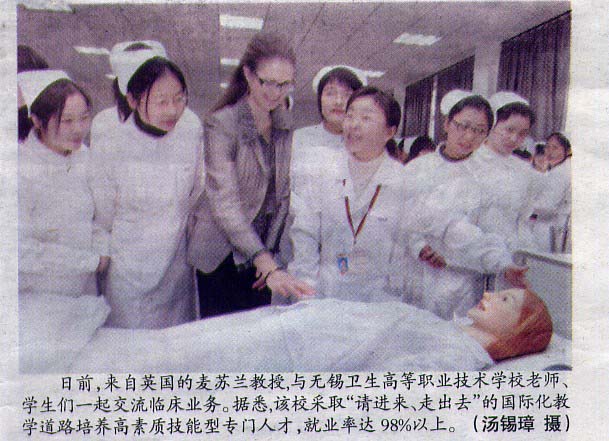
A photo from the Wuxi Times. Does anyone know what the caption says? I'd love to know!
Do you use Resusci Annies in your countries? I remember learning basic First Aid with old Annie at school, and how she used to fart out air when you blew it in through her nostrils… I never thought I’d be holding her hand again, 10 years later, 5,000 miles from home.
On that note, I think I’m going to leave you for now, and I wish you all a fantastic day.
Best wishes,
Sarah
VOCAB
• A catheter = a tube used in hospitals to take urine away from the human body
• CPR = cardiopulminary resuscitation posted on Monday, 23 March 2009 | comment on this postResponse to JB RowleyHi there,
Hm, interesting point you have there regarding 'infer'. Here's what JB said for those of you who might have missed it:
"Hi Sarah,
I would like to question your use of 'inferences'. An inference, as I understand it, is made by the audience (listener or reader) not by the writer or speaker. So a speaker or writer implies, a listener or reader infers. In which case it would be grammatically incorrect to say a piece of writing contained ‘inferences’ as in your blog (‘…and contained quite a few cultural inferences about the position of women in society…). From my understanding of grammar it would be more appropriate to say a piece of writing contains ‘implications’. I know that infer and imply are often misused but has it now become accepted practice to use ‘infer’ and ‘imply’ interchangeably?"
Well, I found the following information on www.dictionary.com:
Usage note:
Infer has been used to mean “to hint or suggest” since the 16th century by speakers and writers of unquestioned ability and eminence: The next speaker criticized the proposal, inferring that it was made solely to embarrass the government. Despite its long history, many 20th-century usage guides condemn the use, maintaining that the proper word for the intended sense is imply and that to use infer is to lose a valuable distinction between the two words.
Although the claimed distinction has probably existed chiefly in the pronouncements of usage guides, and although the use of infer to mean “to suggest” usually produces no ambiguity, the distinction too has a long history and is widely observed by many speakers and writers.
So, it would seem that I am old-fashioned in using 'infer' to mean 'hint/suggest'!
An interesting point, thanks for raising it.
S posted on Monday, 23 March 2009 | comment on this postComing up...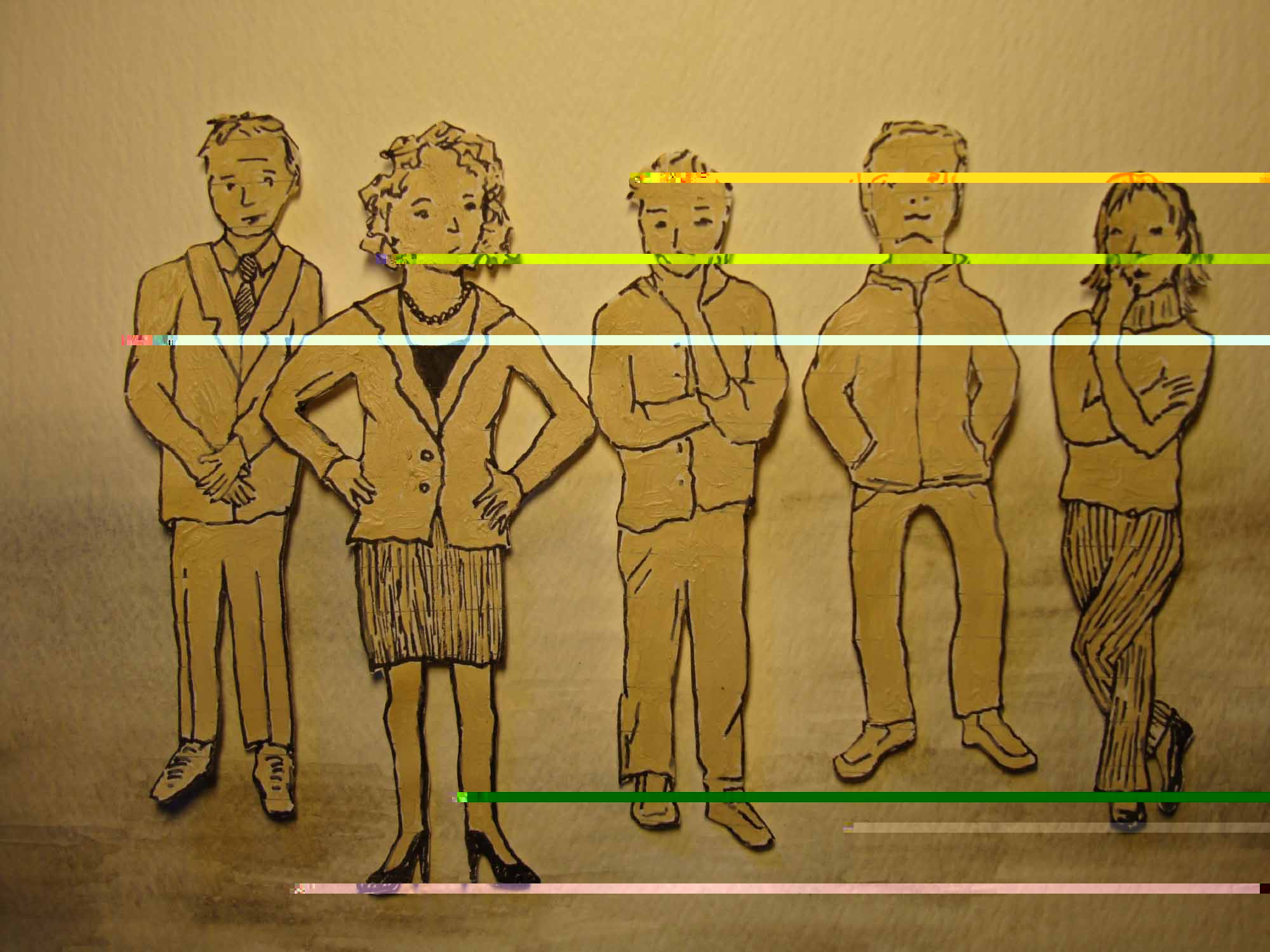
THE BODY LANGUAGE SERIES
*****
Watch this space over the next few days for a series of body language discussions focusing on the unspoken signals & signs we use every day.
"Body language"
The way we stand, hold our hands, arms and heads all make up a form of communication that is both powerful and influential in gaining us friends, enemies, a sympathetic audience or a hostile mob, and even time and money.
"Folded arms"
Many books have been published on the subject, but I'd like to get YOUR opinions on the matter! For example, when we cross our arms, are we sending out a subconscious signal that we're 'closed', or do we do it because it's "just comfy"?
Coming soon to a blog near you!
posted on Monday, 23 March 2009 | comment on this postBody Language Part I: Language Correction Spot
CROSSED ARMS: THE VERDICT & COMMON LANGUAGE ERRORS
Thank you to all the commenters who posted their ideas & gave such a valuable insight into pan-continental body language interpretation! Language errors are corrected in bold.
___________________
THE VERDICTS
“I fold my arms when listeningto a long conversation...I also fold my arms to get comfy, or when I feel cold, and lastly, if I get cross with someone!”
- Hyoshil, UK
Comment
As a conversation progresses between two people, one person may start to dominate the exchange. After a while, the listener may begin to ‘switch off’, or lose interest, even against their best intentions to stay focused. A natural body response to this situation is for the listener to fold his or her arms in an attempt to ‘close down’ the long-winded speaker.
______________________________
“There is no doubt about what it means: a person with folded arms shows that she feels a bit uncomfortable, a bit sceptical”
“..to become distant”
- Felicitas, Germany
“It’s very funny when you see someone trying to look interested in a conversation with all the right signs in the face, but the feet and arms are sending out other messages to the interlocutor!”
- Adriana, Brazil
Comment
No facial expressions can be interpreted in isolation from the signals given out by someone’s body language, and vice versa. For instance, someone may be nodding, leaning towards you, and doing everything they can to appear interested, but if their feet are pointing towards the nearest exit, you can be fairly sure that they can’t wait to get away!
________________________________
“There’s no doubt that folded arms usually means ‘closed’…after long-term observation in business…in negotiating, customers often fold their arms before they say ‘no’.”
- Seaman, China
Comment
Salesmen are particularly attuned to the non-verbal signals that people give off. These signals would appear to be the same in China as in Britain: if the body language says ‘no’, it’s a fair bet that the customer’s mind is thinking the same thing!
________________________________
“I fold my arms when I feel a bit awkward and have no idea where to place them. Folding my arms does make me feel more secure and less subconscious”.
- Silva, Taiwan
Comment
This is an interesting one. When we find ourselves in an uncomfortable situation, perhaps when we’re standing alone and feel physically or psychologically exposed, a natural reaction is to want to protect ourselves in some way, hence we cross our arms.
PRIMAEVAL INSTINCT
But why do we cross our arms against our chest? Well, the most vulnerable part of the human body (apart from the head) is the torso, as it contains all of your vital organs: your heart, your lungs, your liver and so on. When you cross your arms, this is the area of the body you are subconsciously seeking to protect.
You could say that this reaction dates from the days when we, as early hunter-gatherer humans, were in constant danger of real physical harm, and needed to protect ourselves from stronger, more aggressive beings. If you observe carefully, the strongest party in an encounter will not usually cross his or her arms, as they feel less need to protect themselves.
What about when dominant people, such as the Prime Minister or the Head of State cross their arms? Some body language specialists would say that we also cross our arms to protect ourselves from ideas or suggestions that we don't like.
A POLITICIAN'S BODY LANGUAGE
Clearly, we can all train ourselves to give off strong, positive or aggressive body language, so any signals need to be taken in conjunction with the situation, what’s just been said, what the person is saying, and last but not least, the person’s facial expression.
More Body Language coming up soon!
__________________________
GRAMMAR
Here is the most common error made in the posts:
• To cross YOUR arms
This phrasal verb needs a possessive pronoun before the object:
I crossed my arms
He crossed his arms
etc.
__________________________
SPELLING
Awkward
Lots of native English speakers spell this word incorrectly, too! To help you remember the spelling, I’d say that this word is, um, awkward to spell. It has 2 ‘w’s, one before the ‘k’ and one after it. It is also awkward and a little bit ugly to look at, with 3 spiky consonants in a row.
__________________________
posted on Sunday, 29 March 2009 | comment on this postBody Language IIIn the second episode of this series, we will be looking at some examples of commonly observed body language.
EXAMPLE 1: HANDS ON HIPS
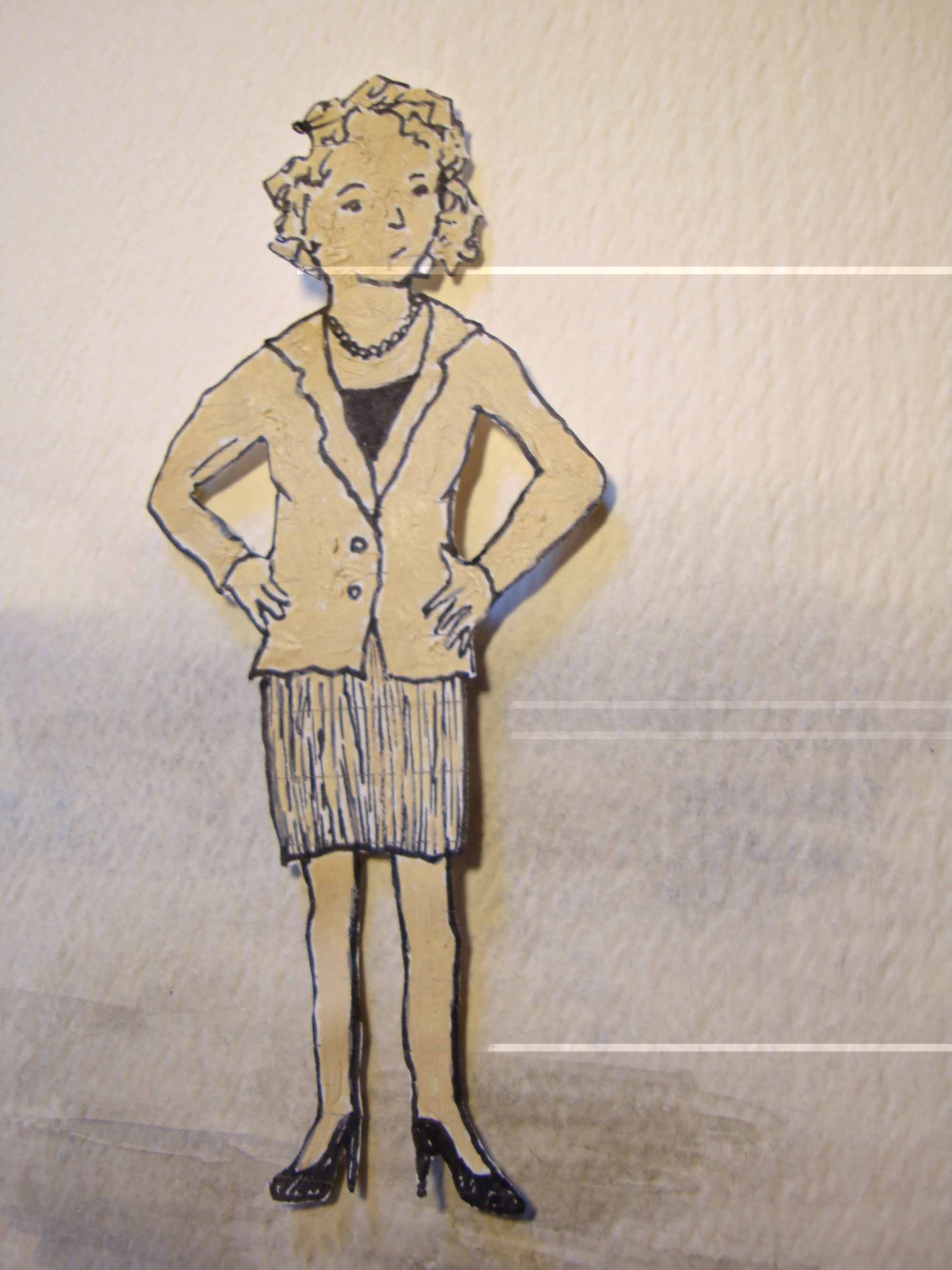
What does this mean to you?
a) Nothing – her arms are probably tired and her hips are a good place to rest them
b) She’s trying to make herself look ‘bigger’ and more aggressive in response to a threatening situation
c) She’s showing off the waistline on her new jacket
__________________________
EXAMPLE 2: CHIN STROKING
This picture has a number of possible interpretations. To start with, let’s look at the interplay between the two people.
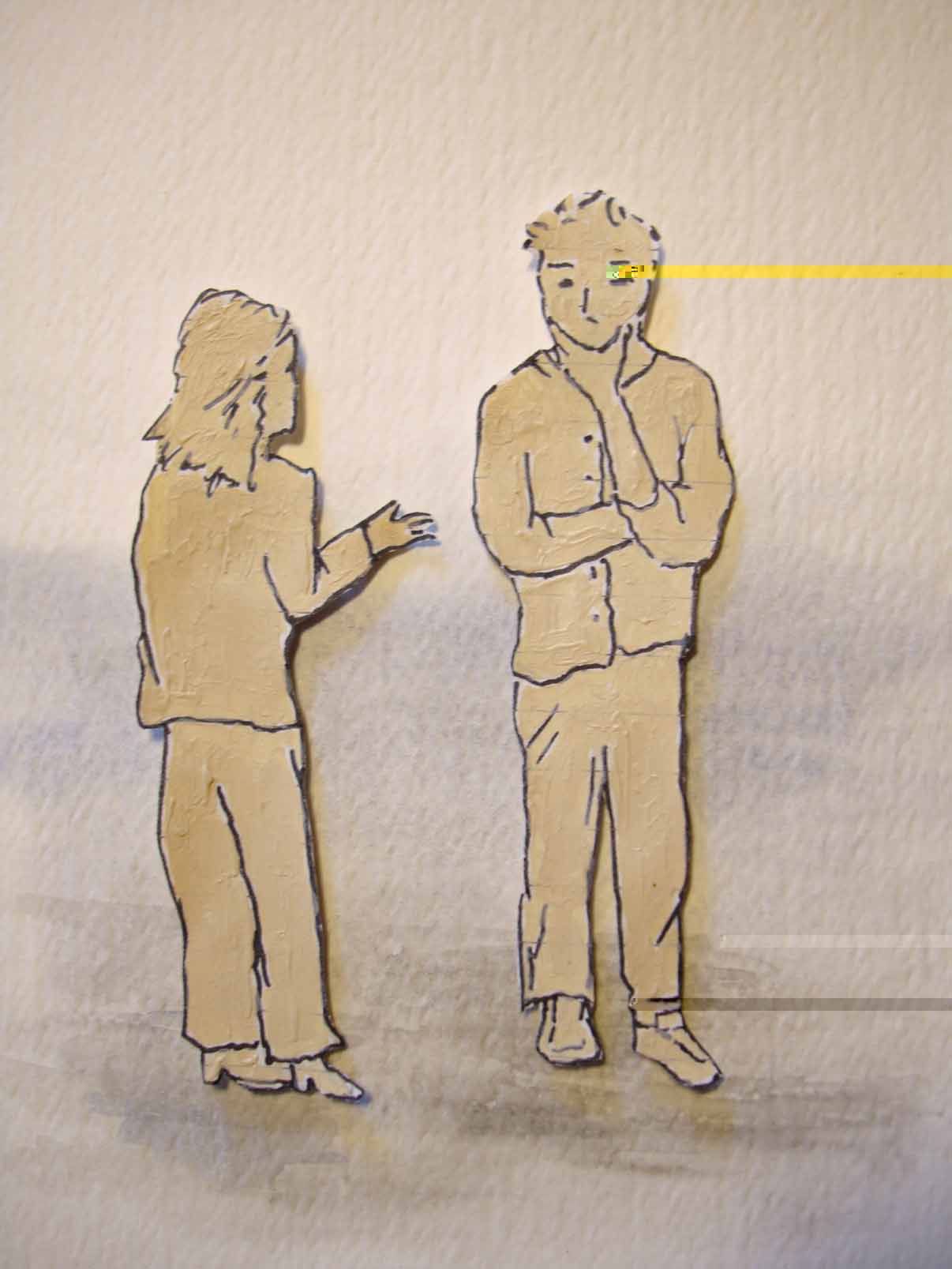
On the left, we clearly have someone attempting an explanation, or giving a suggestion, shown by the upward-facing palm, ‘offering’ something (an idea) to the listener, just as you would offer something by holding it out in the palm of your hand.
On the right, we have the listener, who appears to be contemplating something. There are several interesting aspects to his body language:
a) Chin stroking
Often, this signal is interpreted as ‘I’m thinking, but I’m not sure’, or as a sign that the listener is evaluating something. This gesture is often used by people when they need more time to come to a decision.
b) Crossed arm
How open is the listener to the speaker’s ideas? The crossed arm suggests that he’s either feeling a bit vulnerable, or that he isn’t particularly open to the speaker’s ideas. Would you agree?
c) Feet pointing
The speaker’s feet are clearly pointing towards the listener, showing that all their attention is directed towards that person. On the other hand, the listener’s feet are pointing away, suggesting that he may have other, more important things to attend to, or perhaps would like to find a way to escape from the conversation.
____________________
EXAMPLE 3: NECK RUBBING
Here we have the same speakers (after a swift change of clothes!), captured 30 seconds later in the conversation.
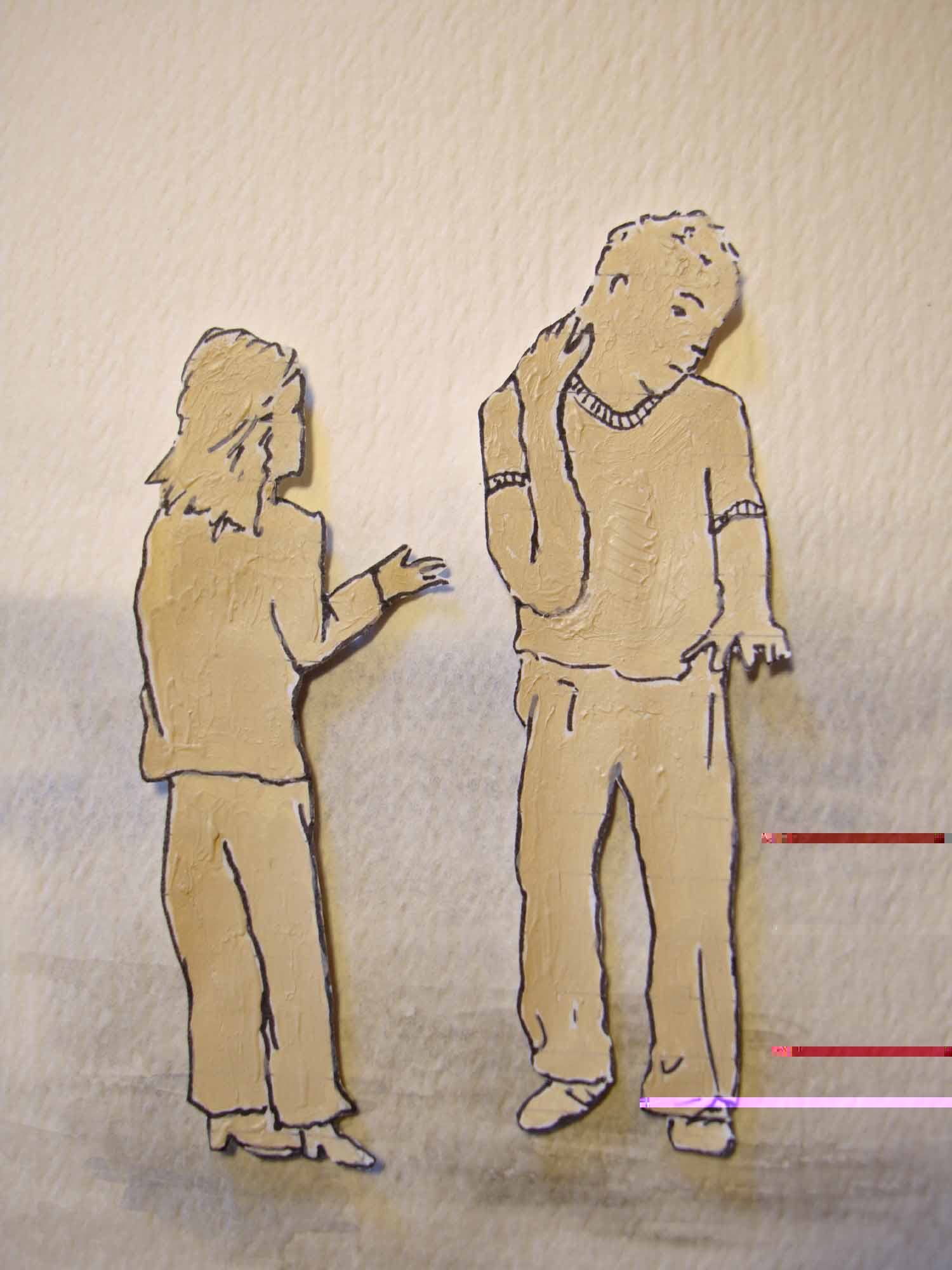
Clearly, whatever the speaker on the left has just said was not received well by the listener, who looks away and rubs his neck. Perhaps she has just reminded him of something he’d rather not think about, or something that he’d forgotten. In this case, the literal interpretation would be ‘You’re a pain in the neck for mentioning that’. Or else, the listener has a genuine ache in his shoulder which needs the doctor’s attention.
_________________
OVER TO YOU
Although countless studies have been conducted into the interpretation of body language, it’s still not a science, and as such is open to debate. What do you think about the above interpretations? Do you agree? Is it the same in your country?
________________
Tomorrow...
EPISODE 3: The fig leaf posted on Sunday, 29 March 2009 | comment on this postBody Language III: Who’s in charge here?
In the third and final episode of this series, we’ll be taking a look at some group dynamics, as it is in group situations that our non-verbal signals give off some of the strongest clues as to our inner thoughts and mental states. When in a group, the way we stand or sit can also ‘communicate’ to others, and can have a powerful subconscious effect on the way we are perceived and dealt with by others. You may well be the brightest accountant in the bank, but if your body language says ‘I’m not really sure’, then your colleagues won’t be either!
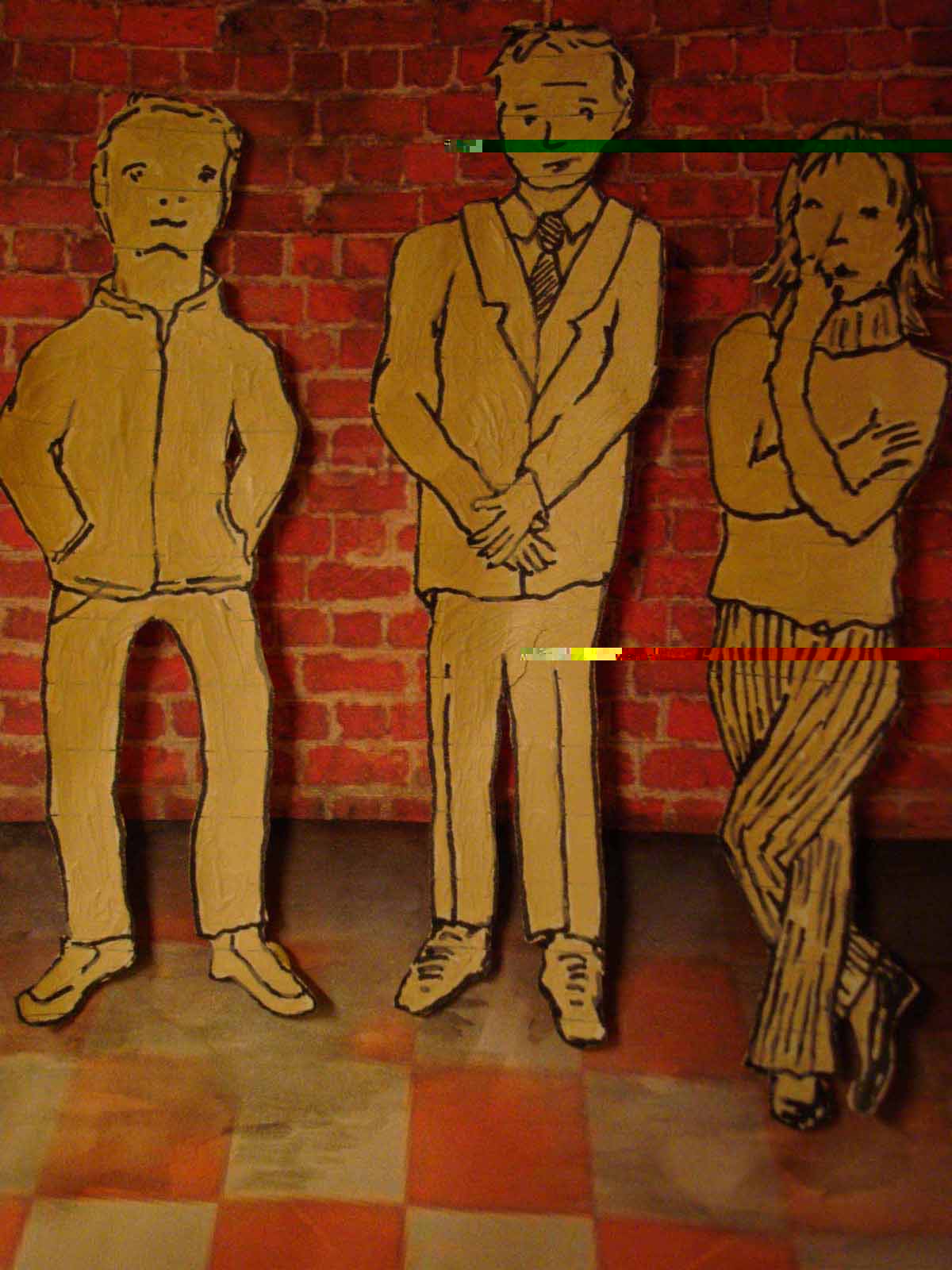
So here we have it: a classic trio of work colleagues. Perhaps one is the manager, and the other two are subordinates. Can you guess who’s who?
Before we give the game away, let’s take a closer look at some of the gestures being used by the three individuals.
On the left, we have a casually dressed male, hands in pockets, legs apart, feet planted firmly on the ground, pelvis thrust forward and upper body leaning back. On closer inspection, his chin is tilted upwards, giving the effect that he is ‘looking down’ at you.
In the centre, we have a smartly dressed male, standing with his feet pointing in a neutral direction in relation to the group, holding his hands in a ‘fig leaf’ position. Taken in conjunction with his uncertain facial expression, what does this say to you?
On the right, we have a female sporting smart-casual wear, rocking on one foot, with the other tucked behind her ankle and her legs twisted round each other. One arm is held across her chest, the other is raised diagonally across the torso to cover her mouth.
All three people are subconsciously using completely different body language to indicate their relative status in the group. With this in mind, can you tell who the boss is?!
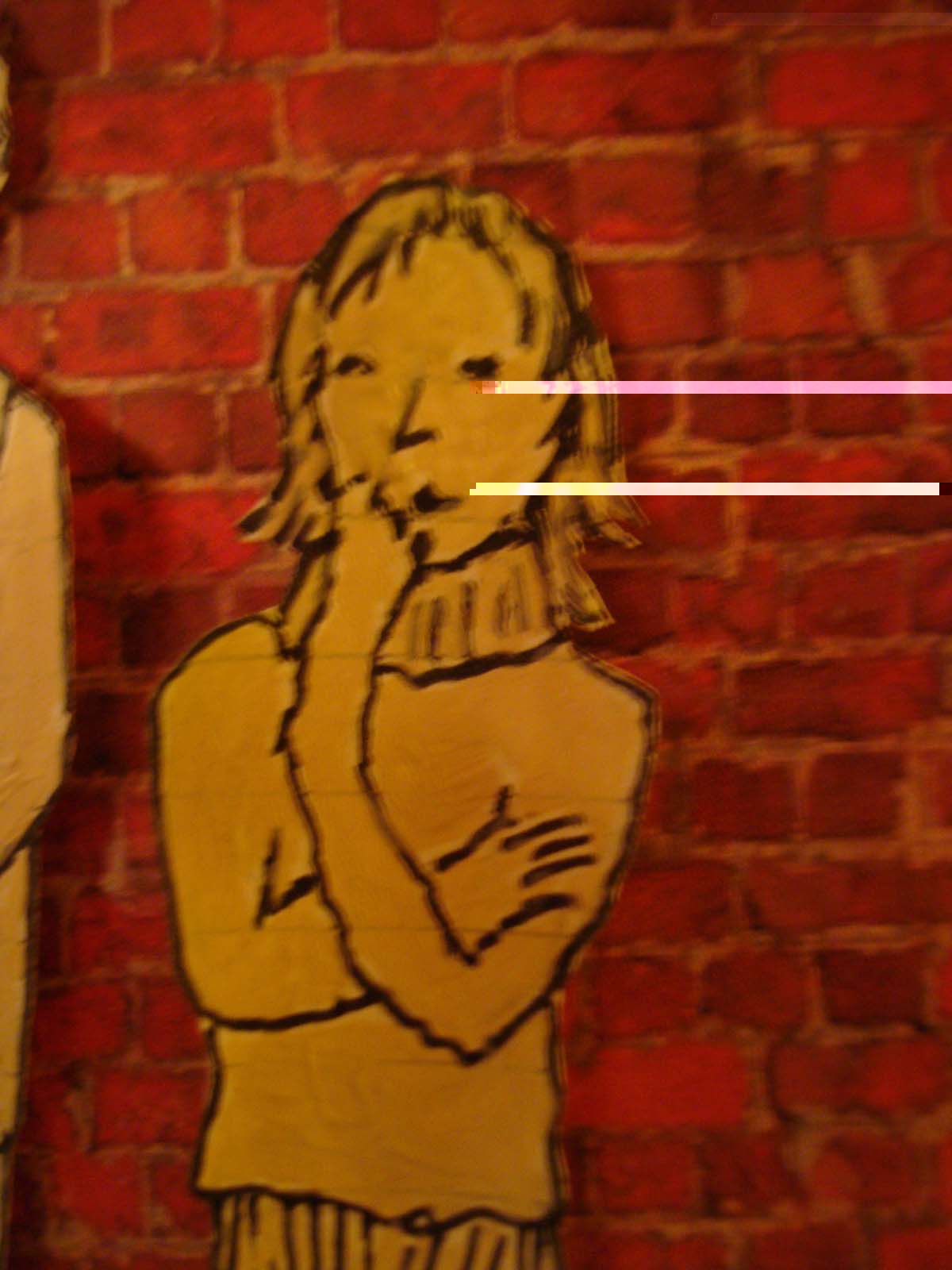
I look forward to hearing from you...
posted on Monday, 30 March 2009 | comment on this postFrom BBC Learning EnglishTime has come to say thank you and goodbye to Sarah and hello to Rachel Wicaksono who some of you will remember from years back. In fact, she was the first ever teacher blogger on bbclearningenglish.com. Welcome back Rachel!
Dima,
BBC Learning English posted on Tuesday, 31 March 2009 | comment on this post | March 2009
| Sun | Mon | Tue | Wed | Thu | Fri | Sat |
|---|
| 1 | 2 | 3 | 4 | 5 | 6 | 7 | | 8 | 9 | 10 | 11 | 12 | 13 | 14 | | 15 | 16 | 17 | 18 | 19 | 20 | 21 | | 22 | 23 | 24 | 25 | 26 | 27 | 28 | | 29 | 30 | 31 | | | | |
|


