


Early one morning...
Hello everyone,
Well, I’m a little bleary-eyed but everything’s going ok. Looking back on the first part of the trip seems like looking back on some sort of nirvana: it’s been really rewarding, but very much nose to the grindstone since then! Blogger Paulraj commented ‘Isn’t it slightly tedious teaching 8 hours per day?’ Well, no, in a word! I love my job, and no matter how tired you are, something happens when you get in front of the class and see all these people coming from different lives and different perspectives wanting to learn and work together. I get this amazing rush of adrenaline , and can keep going for the whole day. The problem is at the end of the day, when all the adrenaline rushes back out of your system again, and you feel a bit like an empty shell, barely able to string a sentence together! When I reach this point in the UK, I usually go home and sit staring vacuously into space from the sofa, or play the piano for a few hours. I miss my piano, actually.
Anyway, back to the point. Shanghai was amazing; I learnt so much just from going on a one-day tour. May I share some photos with you?
I went to the museum where I learnt a new word: ‘numismatist’. From the context, I’d guess that a numismatist is someone who collects coins.
I saw some examples of early money. It wasn’t round, as you can see! These ‘coins’ are made in the form of a type of farm equipment. From the looks of it, I’d say they resembled shovels. 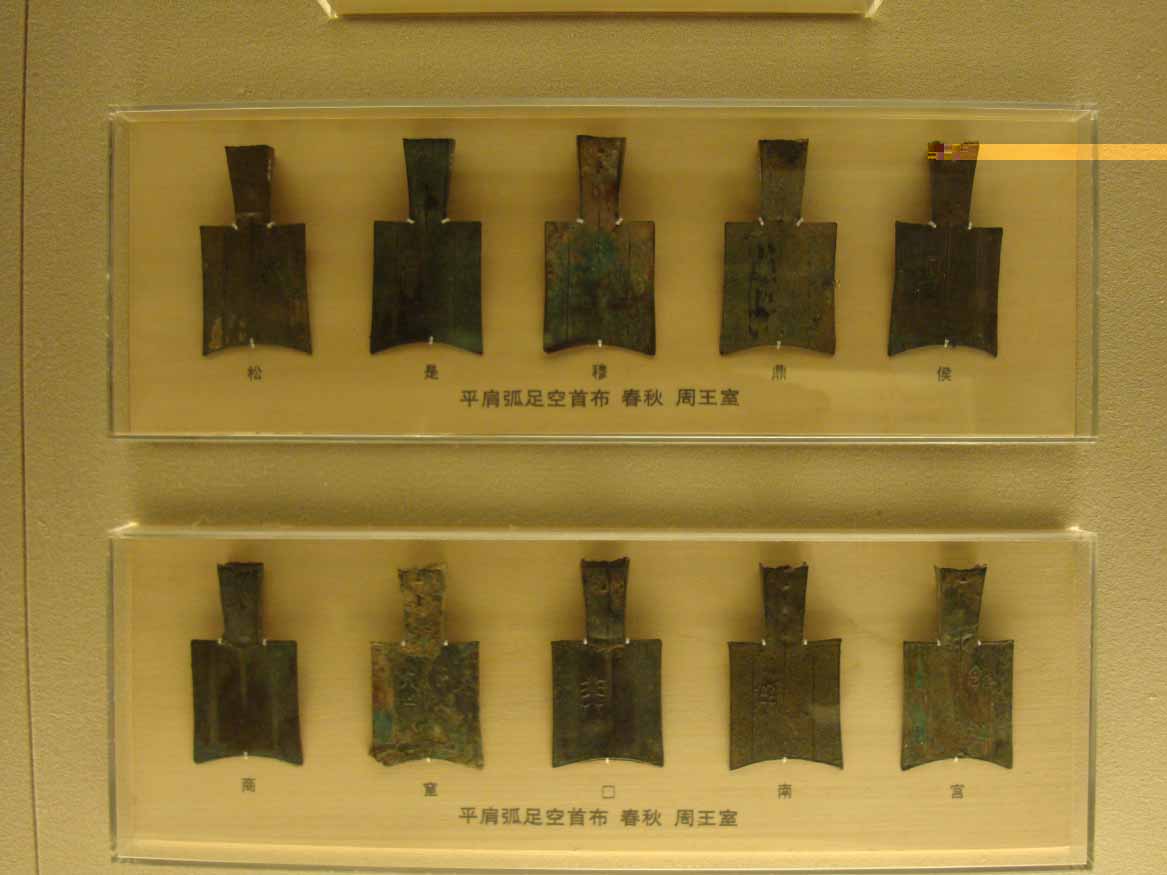
Neolithic prototype coinage
Skipping forward a couple of millennia, we have the world’s first paper money. Beautiful, isn’t it? 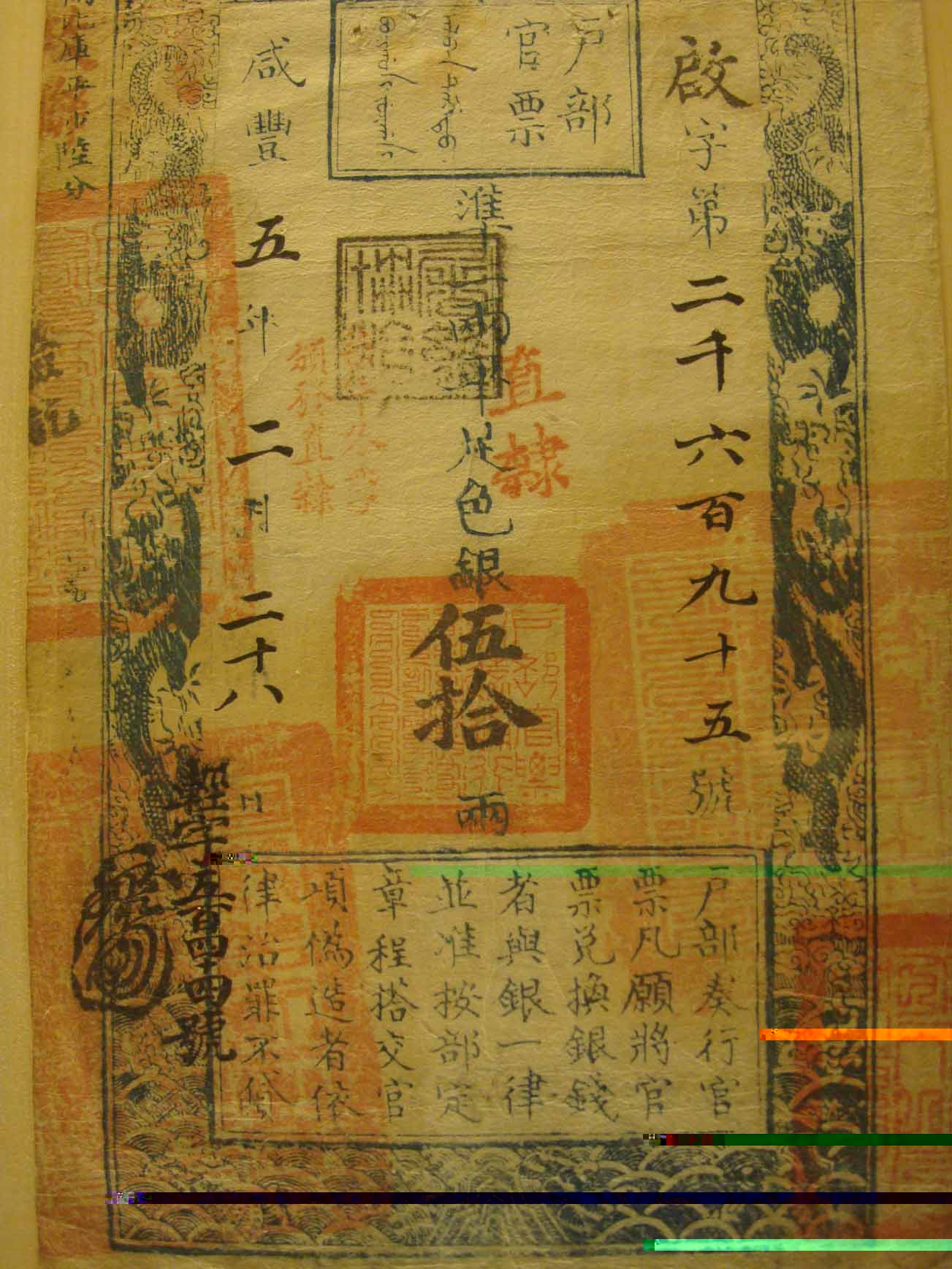
Later on that day, we also visited some gardens in central Shanghai. You can see what they were like from the photo below. 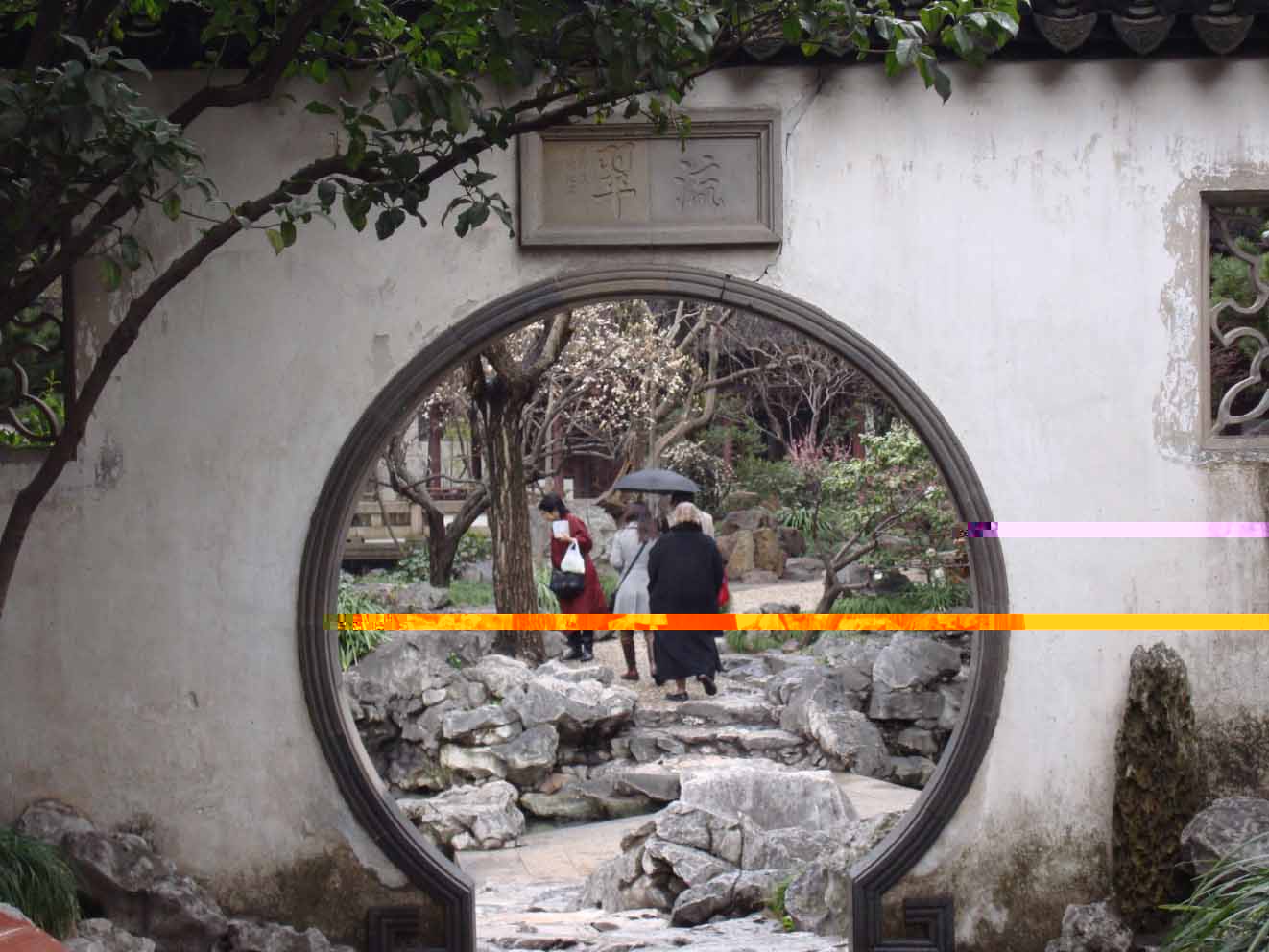
This portal is called a ‘moon gate’, and is aimed at framing the landscape, creating a composition worthy of a watercolour painting.
Lastly, we visited a Buddhist temple. It was incredibly serene. I feel quite drawn to Buddhism, although I don’t know a great deal about it. 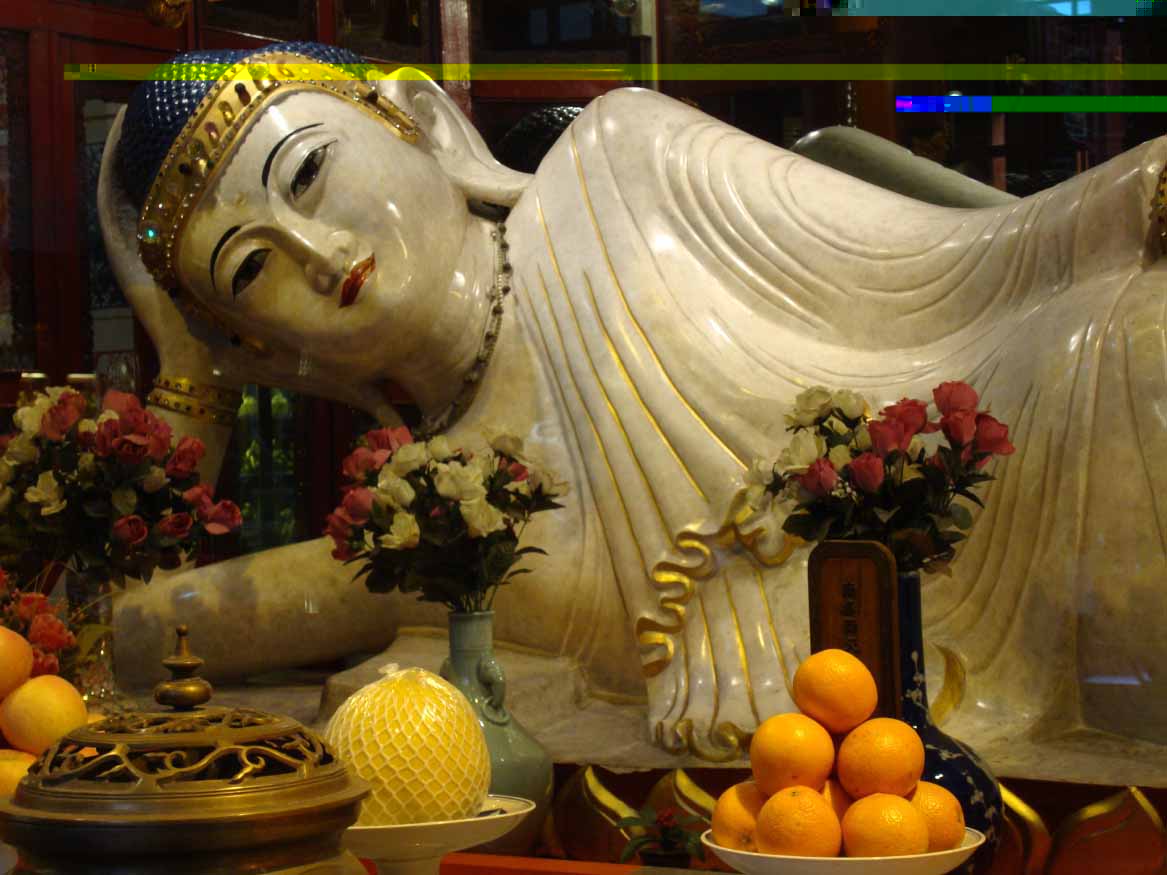
Reclining Jade Buddha
Finally, I made my way back to the hotel. It’s a bit of a monolith, isn’t it? The architecture’s actually inspired by Broadway, an influence which you can detect in the Art Deco style of the exterior. 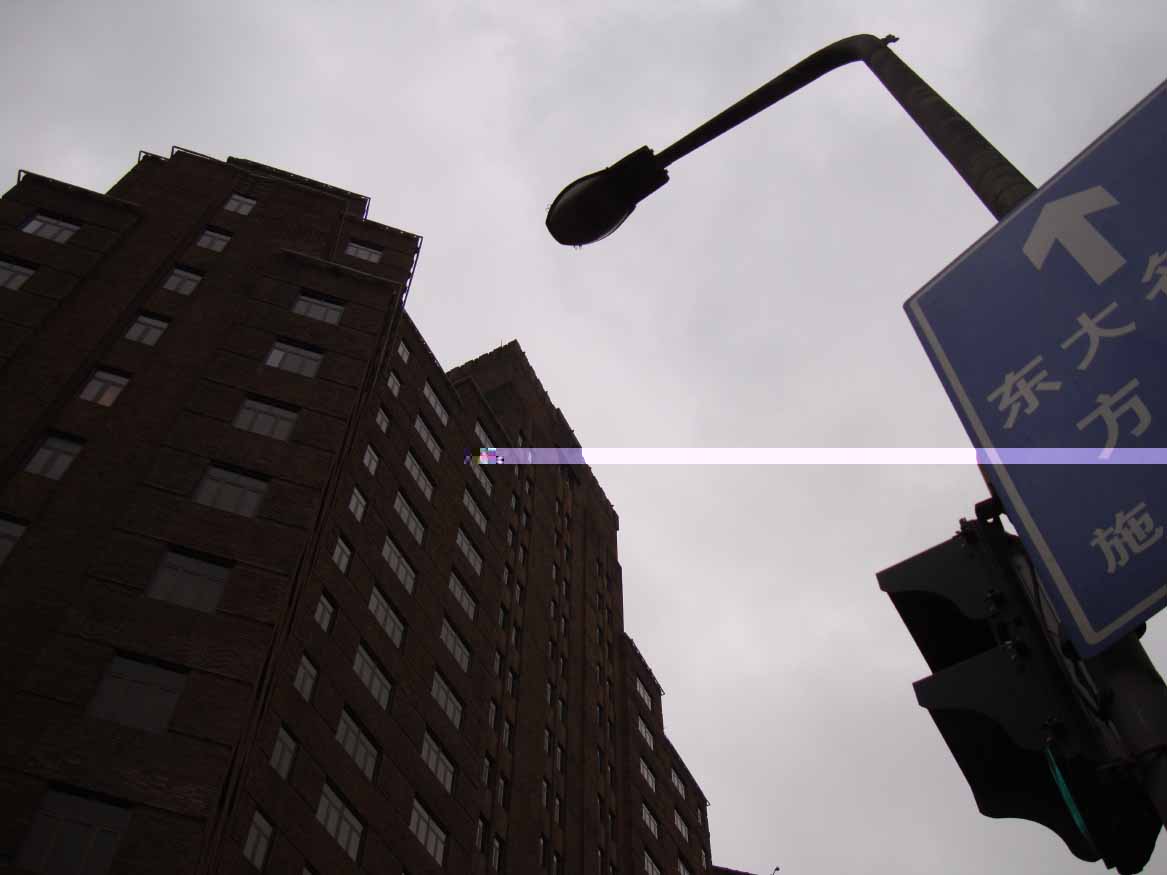
It was interesting to hear about your first words in English, and how you learnt them. Some people learnt through song, others through repetition. My Chinese repertoire has now expanded to include ‘Beautiful, isn’t it?’, ‘I’m full, thank you’, ‘You first’, and ‘You’re welcome’. I’ve also learnt the word for ‘teacher’, so I can tell when people are talking about me ;-) Feeling quite chuffed with myself, although it’s largely thanks to the patience of my Chinese friend that I’ve learnt these words!
Anyway, ‘bye for now, and I look forward to hearing from you all.
Best wishes,
Sarah
VOCABULARY
• bleary-eyed = pink, dry eyes with problems focussing due to lack of sleep
• Nirvana = heaven (a place without worries)
• nose-to-the-grindstone = working very hard
• tedious = boring
• adrenaline = a chemical produced by the brain which gives us a burst of energy
• to stare vacuously into space = to stare into space with a blank expression (and very few thoughts in your head!)
• prototype = the first known example of something, which is usually followed by more refined versions of the initial concept
• worthy of = good enough to (usually used in sentences such as ‘This painting is particularly worthy of note’)
• serene = calm
• a monolith = a big, slabbish building with very little lightness or beauty to break up its heavy appearance
• to feel quite chuffed with oneself = to feel quite pleased with oneself (informal/colloquial)
LE VOCABULARY CHALLENGE
a) Where do you think the term ‘Nirvana’ comes from? What does this word mean to you?
b) Where do you think the phrase ‘nose to the grindstone’ comes from? Can you guess the origins of this phrase?
LE GRAMMAR & SPELLING CHALLENGE
The following sentences are taken from the blog comments, and each contain one tiny error. Can you correct them and explain your corrections? Good luck!
1. So, you’re in China! I’m glad you had a good time. (hint: tense)
2. He didn’t have much money on him, so I picked up the tap. (hint: spelling)
3. I’ve been speaking it for years now, so I’ve never thought about the first words I’ve learnt in English. (hint: tense)
GOOD LUCK!
Comments
Hi Sarah! How is the weather in Shanghai? Sorry to hear you suffer from lack of sleep. You’d better try to sleep more and keep being in tip-top form so that the tiredness won’t spoil your staying in China. To get down to my homework, and these are my answers. a) Where do you think the term ‘Nirvana’ comes from? - Buddhism. What does this word mean to you?-the state of perfect bliss and happiness b) Where do you think the phrase ‘nose to the grindstone’ comes from?-milling. Can you guess the origins of this phrase?- In a flouring mill grindstones are used to grind grain into flour. 1. So, you’re in China! I’m glad you’ve had a good time. 2. He didn’t have much money on him, so I picked up the tab. 3. I’ve been speaking it for years now, so I’ve never thought about the first words I learnt in English. Before King Sejong invented Korean language for his people about sixth centuries ago our ancestors used and shared the Chinese capitals. As a result, people in Korea are familiar to the letters and are interest in learning them. Finally,I believe that the picture of the Buddha lying on his side on your blog shows how he died when he was aged 80. Looking forward to hearing from you soon.xx
Hello Sarah, "Nirvana" comes from "Sanskrit", an old Indian language which is spoken by academics and man of letters in India. It is a term in Buddhism and describes a state of peace and happiness, an aim which a person only can achieve when she or he has given up all personal desirers. I think it is an ideal which nobody is able to achieve but what many of us are dreaming of from time to time.It is a kind of a "garden Eden". In fact, I can not imagine this state, not really. Our time is so full of activities, challenges and fights, too. Sometime it would be better to calm down instead of having stress over and over again. Stress is the right word to give you a tip. I think adrenaline is produced by the the adrenal gland, not by the brain. But of course, under the stimulation of the brain. I don't have my own "Nirvana", I'm happy when my family and friends are healthy. Peace all over the world would be a kind of "Nirvana" for me. I have no idea where the phrase "Nose to the grindstone" comes from. It means to work hard for a longer time without stopping - maybe it comes from the tome of the manufactoring industry. A grindstone is a round stone which is used to make knives, scissors and other tools sharp. You have to work carefully, the nose towards the grindstone all the time to avoid injures. I could also imagine it comes from contests between (sheep) shearers. I'm really curious about the result. Warm greetings Felicitas
Hi Sarah! How is the weather like in Shanghai? Sorry to hear you are suffering from lack of sleep. You’d better try to sleep more and keep being in tip-top form so that the tiredness won’t spoil your staying in China. To get down to my homework, and these are my answers. a)Where do you think the term ‘Nirvana’ comes from? - Buddhism. What does this word mean to you?-the state of perfect bliss and happiness b) Where do you think the phrase ‘nose to the grindstone’ comes from?-milling. Can you guess the origins of this phrase?- In a flouring mill grindstones are used to grind grains into flour. 1. So, you’re in China! I’m glad you’ve had a good time. 2. He didn’t have much money on him, so I picked up the tab. 3. I’ve been speaking it for years now, so I’ve never thought about the first words I learnt in English. Our ancestors used and shared the Chinese capitals until The King Sejong invented Korean language for his people about 600 ago. As a result, people in Korea are familiar to the letters and are interest in learning them. Finally, I believe that the picture of the Buddha lying on his side on your blog shows how he died when he was aged 80. Looking forward to hearing from you soon.xx
Hi Sarah I know you love your job and enjoy teaching English language. That is the reason you have taken long trip to teach the language. I mentioned tedious in context of tiring and in the meaning of boring. Did I wrong? Nirvana, after I refereed the dictionary I found the meaning the state of well being or happiness and away from all the sufferings and worries. As you are in China visiting Buddhist temples this word might have struck in your mind. In our mother tongue we use this word as Nirvanam i.e. without dress. When we read bible in our own language we come across this word, Adam and Eve realized the mistake they had committed after eating prohibited fruit and that time only they felt that they had been Nirvanam and tried to cover the leaves as their dress. In Hinduism a sage went to forest and did meditation in Nirvanam. When we attain the level we are away from our desires or likes we are in the stage of full happiness. I couldn’t guess your second question of vocabulary challenge. 1. So, you’re in China. I’m glad that you are in a good time. Or you are spending good time. 2. He didn’t have much money with him, so picked up the tab.3. I have been speaking I for years now, so I’ have thought about the first words I’d learnt in English.
It is so nice to see all those pictures and they are really stupendous, especially Buddha photo as just seeing the photo itself bring some sort of feeling that could occupy our mind with calmness, so the place would be definitely brings serene to the soul. So, I hope you had riot of time over there and thank you so much for sharing those photos and your experience on your visit. I must say your students are really lucky to get such a wonderful teacher who care for their students, of course we too lucky enough being a virtual students, as you mentioned feeling like a empty shell when the people leave at the end of the day shows how much you attached to your class and the folks around you. And you have rightly said, one never feel tedious in their job if they really like what they are doing, however, it is not all the people get to work in their dream profession in that sense you are lucky and proud of being a teacher too. You know what, in traditional Indian way of life , we proclaim importance to the teachers in one’s life as the priority goes like this , matha (mother) comes first, pitha(father) next, guru(teacher) in the third place and deva(god) who is even only after teachers. Though I do not show much interest in the job I still able to cope up with it as I feel one’s dedication is important than how much one’s interest on the job but still it has to fulfill the some of the satiate factors in one way or other. That’s all for now, rest in the next post!. Ciao.
Hello Sarah! Hope you’re too in a tip-top form. It’s good to know that you’re enjoying your trip and also learning the Chinese language. I hasten to add that you’re very honest with your work; I’m really impressed -J. When I get tired from my work I usually meditate and that re-energizes myself and give me relief from tensions and worries. Anyway, the pictures you’ve posted are awesome. Specially, I like the picture of first paper money it’s quite interesting and the portal of ‘moon gate’ looks real -J. I think it’s worth to watch it live. I’ve attempted the grammar and spelling challenge, please rejig the homework if you think it needs. The first one: 1. So, you’re in China! I’m glad you've had a good time. 2.He didn’t have much money on him, so I picked up the tab. 3. I’ve been speaking it for years now, so I never thought about the first word I’ve learn't in English. We’re waiting with belated breadth to read another entry. See ya, Mahjabeen.
Hi Sarah! I love Milan, but I am not from that city. I live on the outskirts of Padua. It is in the north-east of Italy. I do not mind living here though. Have a nice day!!
Hi Sarah You are a bit tired but happy. I think you love your occupation. There is a big satisfaction in your job. You are lucky to have some keen students and also your students are very lucky to have a teacher like you. Let's have looked the challenges, Nirvana is the basic principals of Buddhism as simply let's have expressed: people should live by doing a favour and listen to their inner man. According to Hinduizm and Yoga philosophy : It is to be matured without needing to be reborn. Another one... Grindstone is a large round stone that turns like a wheel for sharpening and grinding cereal. One of the reasons of the phrasal verb should be that, the people working with it hold their face near the stone whether there is burning smell or not. It is a hard work. Grammer challenge;........you have good time 2. with him 3.......I learnt. Bye for now.
Hi Sarah! Today I’m going to answer your GRAMMAR & SPELLING CHALLENGE. I think the sentences should go like that: 1) So, you’re in China! I’m glad you are having a good time. 2) He didn’t have much money on him, so I picked up the tab/bill. 3) I’ve been speaking it for years now, so I’ve never thought about the first words I learnt in English. The proverb 'nose to the grindstone' sounds very interesting. In Poland we use 'to work like an ox', so I think that both originate from the same period of time when people used to use oxen and grindstones or millstones to grind grain into flour. The noun 'grind' (to work very hard) also comes probably from that times. I imagine so, but I'll be very happy to listen to the true story about it. As for the term 'Nirvana' I haven't the slightest idea so I'm looking forward to hearing about that. Best wishes and good luck!
Hi Sarah! The moon gate portal is fabulous. It´s seems that one is looking at a magical portal which guides to a different world :-). Best wishes, Ana Paula.
Hi Sarah! The moon gate portal is fabulous. It´s seems that one is looking at a magical portal which guides to a different world :-). Best wishes, Ana Paula.
Hey Sarah, Maybe you should take it easy for a while.....Sometimes it's extremely crucial to recharge your batteries to avoid burning yourself out. Nevertheless, you are the only one to know your metes and bounds. Anyway, since the grammer and spelling assingnment has already been taken care of thoroughly, I would like to add a few things to the vocab challenge, to be more exact, to what Hyoshil said. To spill the beans, I have done a bit of research on said topic, and I've figured out that there are actually two different origins of the phrase 'nose to the grindstone': The first one, as Hyoshi has already mentioned, comes from the millers, who are claimed to have put their nose to the stone so as to smell any burning while grinding cereal. The second origin can be traced back to the practice of knife grinders, who used to bend over the stone when sharpening blades. Sometimes, they were so close to the stone that you could have believed they were holding the knife with their nose.......How weird^^... That's all from me so far....hope to read you soon. Best wishes, André
Thanks for all your contributions. This blog has now closed and can no longer accept new comments.


