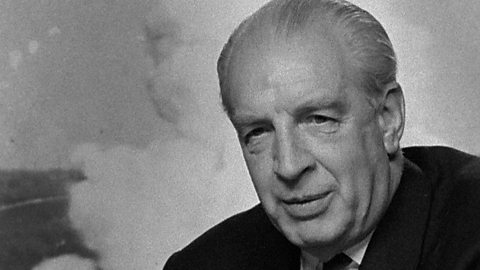
KATIE MORTER: During the time that he was away, I was very, very lonely as I didn't make friends very easily and all the thoughts I had were for my husband. Times were very, very hard and I only had 12 and six a week and therefore I couldn't go out and spend like everyone else. I used to sit at night and try to do a bit of reading or a bit of sewing with my hands to pass the time away like that. But it was very, very hard and at times I would wonder what he was doing and if he was thinking about me, and wondering how he was going on and when I should see him again, and all things like that.
# Keep the home fires burning # While your hearts are yearning # Though your lads are far away… #
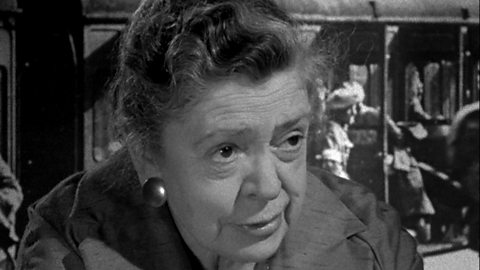
MABEL LETHBRIDGE: My father and my brother were at the front and later my youngest brother. My mother worried very much and her only means of knowing whether they were alive was reading the casualty lists. We children used to gather round and listen and watch and look over her shoulder, even, while she read them and the tension was felt by us all. Were they alive? Were they still with us? And even when my mother would put the newspaper down, none of us really knew. We only knew what my mother had read, we didn't know what was happening at that very minute.
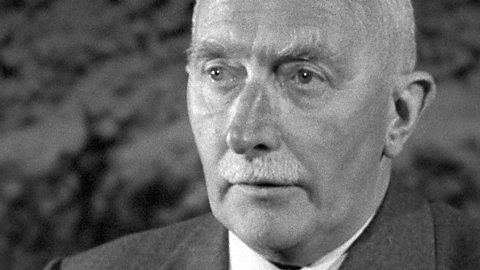
WILHELM EISENTHAL: When I got home to my parents… My father was a soldier himself, he didn't ask any questions, but Mother used to ask all kinds of questions. Why has there got to be a war? And what are you doing there? And can you have your bath regularly? And all those questions which a mother would ask and I couldn't give any answers, or the answers I gave her were very short and not very satisfactory for Mother.
MABEL: When my father and my brothers, uncles, relatives, different sorts and friends, when they came home on leave, as they so frequently did, they were either staying at our house or visiting our house… I noticed a strange lack of ability to communicate with us, to tell us what it was really like. They would perhaps make a joke that you feel… sounded hollow - there was nothing to laugh about.
# And when they ask us # How dangerous it was # Oh, we'll never tell them… #
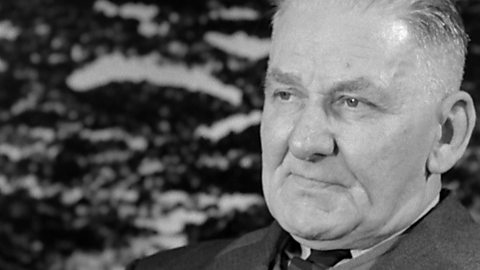
CHARLES CARRINGTON: This world of the trenches was entirely a man's world. Women had no part in it and when one went on leave, what one did was to escape out of the man's world into the woman's world. And one found that however pleased one was to see one's girlfriend, and I'm speaking only of the light emotions of a boy, not of the deeper feelings of a happily married man… one could never somehow quite get through. However nice and sympathetic they were, the girl didn't quite say the right thing and one was curiously upset, annoyed by attempts of well-meaning people to sympathise, which only reflected the fact that they didn't really understand at all.
# Oh, we'll never tell them # No, we'll never tell them # There was a front # But damned if we knew where. #
KATIE: There was a loud knocking on the door, such a big knocking on the door, and this voice shouted, 'Open the door, the Jerries are here.' So my mother said, 'Oh,' she said, 'It's Percy, I can tell his voice,' and in he came, you know, all mucky and what have you, right from France. He only got six days' leave and he had two days' travelling out of that, had to be taken off the six days, so he didn't have very long, and he said, 'Now, Kitty…' Called me Kitty. He said, 'Now, Kitty, what would you like for a present? I'm going to buy you a present while I'm home.' I said, 'Oh, I don't know.' I said… I'm afraid I was rather vain in those days and I was a rather attractive girl and I said, 'Do you know, I've seen a beautiful hat down the street. Oh, it is a lovely hat.' I said, 'I would like it,' and it was in a shop window and I had looked at this hat several times and it was a lovely hat and I would have loved it, but it was such a terribly dear hat. He said, 'Well, come on, we'll go down and have a look at it,' and I'll never forget that hat. It was white felt and it turned up all around and with me being dark… And it had a big mauve feather… Oh, it was gorgeous. We got dressed up after I got this hat - he bought it for me - and I took him to the works, Noblett's leather works, where I worked, and I introduced him to Mr Noblett himself and they all shook hands with him. And how pleased and proud I was when he went in the leather works and everybody could see him.
WILHELM: A girl, I remember she said, 'Why don't you stay on a little longer? They can very well do without you there,' and I said, 'Don't you know there is something like duty?' 'Oh, duty, that's not… There are so many people who never went to war. Why have you got to go to war?'
MABEL: They were restless at home. They didn't want to stay home, they wanted to get back to the front. They always would express a desire to finish.
WILHELM: In the end, I only had the wish to go back. It was as if I were going home to my soldiers.
KATIE: He went back about the Thursday night, I should think, no longer than that. I didn't go with him to the… to the tram, because there were trams those days, you know? There were no buses, there were trams. I didn't go with him to the tram, one of my brothers went with him and a friend of his. And he told his friend, it seems - afterwards he told me. He said, 'I'm afraid I shall never come back again.' Anyway, he went and then I found out that I was pregnant.
Video summary
British women recall their fears whilst their loved ones were at the front, struggling with money and watching the casualty lists.
They recall the disconnectedness of the men coming home, and their inability to talk about the reality of the war.
An Austrian soldier recalls the impossibility of explaining his experiences to his parents, and his desire to return to the front.
The soldiers’ joy of returning home on leave was mixed with the difficulty in talking about their experiences at the Front.
This is from the series: I Was There: The Great War Interviews.
Teacher Notes
Key Stage 3 and Key Stage 4:
This is used to introduce the impact of war on the Home Front, and students identify the main changes war brought to the lives of people left at home.
This clip will be relevant for teaching History at KS3, KS4/GCSE, in England and Wales and Northern Ireland.
Also at Third Level, Fourth Level, National 4 and National 5 in Scotland.
This topic appears in OCR, Edexcel, AQA, WJEC, CCEA GCSE and SQA.
Death and survival. video
The experiences of a disillusioned soldier and the widow of a soldier killed in action
Fighting in the trenches. video
Stefan Westmann presents two contrasting experiences of the war.
Going over the top. video
Infantrymen recall the tense hours in the trenches prior to an attack.
Horace Leslie Birks interview. video
Tank commander Horace Birks describes the impact of the supposed miracle machines.
John Willis Palmer interview. video
John found it difficult to cope with the violence and apparent pointlessness of the war.
Attrition. video
The strains of war drove soldiers to desert their post or inflict a wound on themselves.
Life as a munitionette. video
Mabel was one of many women who put their lives at risk working in munitions factories.
Life as an officer during WW1. video
Charles talks about coping with looming shellshock and aspects of an officer's life.
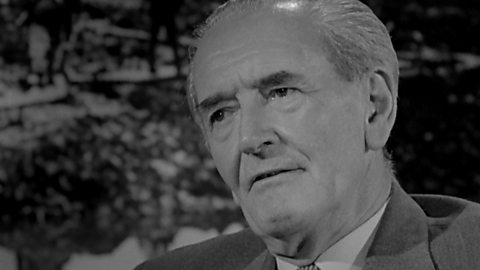
One woman's loss. video
Katie describes what the war was like from a young woman’s perspective in Manchester.
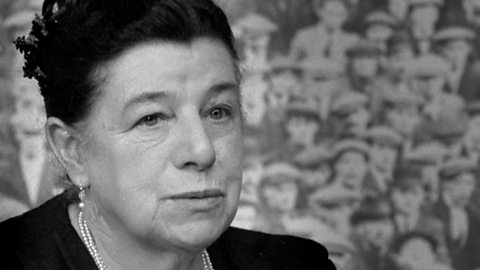
Recruiting soldiers in WW1. video
The different pressures which were applied to persuade young men to join up to fight.
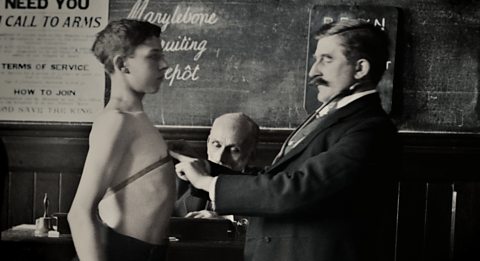
Respite. video
How men could relax and forget about life on the front line when behind the lines and get some respite from the war.
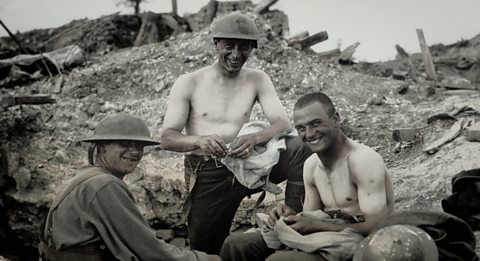
How did shell shock affect soldiers? video
Soldiers from both sides describe their experience of shell fire and the physical and psychological effects it had on them and their colleagues.
The Christmas truce, 1914. video
Henry describes his reaction to being called up and his experiences in the trenches.
The Gallipoli campaign. video
Frank talks about fighting in the disastrous Gallipoli campaign in 1915.
War in the air. video
Pilots identify the different experiences of men in the air, recalling the realities of combat and the tactics used to down an enemy aircraft.
Being a pilot in WW1. video
Cecil Lewis’ experiences reflect how the role of aircraft changed in the course of WW1.