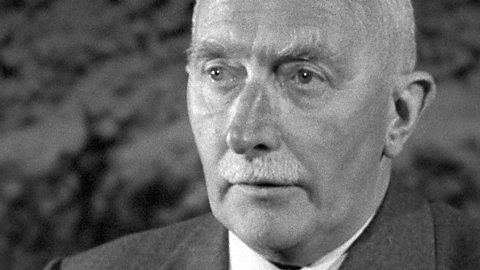
NARRATOR: During the Great War, soldiers from Britain and her dominions didn't only fight in France and Belgium. In 1915, they were launching a naval attack on Germany's ally, Turkey. Frank Brent took part in this ambitious operation.
FRANK BRENT: I was one of about 2,000 blokes stuck in the Galeka. The crew brought us some hot tucker to get on with but I don't think any of us felt like eating. Then somebody said, "Well, you had better have snore-off, you have got a job to do in the morning." We couldn't sleep but we just talked about anything but the job we were going to do. The old bosun of the Galeka came along and said, "Anybody got any of those dirty postcards that you bought in Cairo? If you have, you had better put them down on the deck because if you get knocked, they send them to your next of kin." By this time, I was feeling just about as brave as a ringtail possum. And…I wished that I was anywhere but on the Galeka.
NARRATOR: Frank Brent joined the British Army Service Corps when he was just 14. He was discharged as medically unfit when he turned 18. Frank emigrated and became a soldier in Australia. Now serving with the Australian and New Zealand Army Corps, or Anzacs, Frank and his Antipodean comrades were to spearhead the assault on Turkey's Gallipoli peninsula.
FRANK: As the pinace hit the shore, somebody said, "Out you get." Out we got. There were dead and wounded all around. And we scampered as hard as we could to a little bit of shelter, dumped our packs and then somebody said, "Up you go," and away we went up the slope. It wasn't too bad, but just halfway up, somebody shouted out to me, "Alan Corden has stopped one." Alan was one of my best pals and that made me feel a bit better because if they had got him, I felt, "I am going to get them." Eventually we came to a post where obviously one of the strong points that had been put up. I suppose there were about 20 of us in my group, nobody in charge, the bloke with the loudest voice seemed to take charge of the setting. Three or four blokes got knocked and then I heard somebody say, "This is no good to us, come on, heads down, arses up and get stuck into it." And we went into it. We cleared them, bayoneted them, shot them and the others ran. We sort of dug in on that post for a little while. There was no coordinated effort about it, we were just a crowd of diggers working with each other, trusting each other blindly. A little while afterward, a bloke out of the 8th Battalion said, "Here, look at that bloody bush, it's moving." We looked at it and it was obviously a sniper. He was a sniper and he was done up like a Christmas tree, he had got branches out of his head and out of his shoulders. He was, for all the world, like a bush. But he didn't look like a bush when we'd finished with him. The bloke next to me was Robbie Robinson, a corporal in my battalion. And I can see him now, grinning all over his face, and the next thing I remember was his head fell on my shoulder and a sniper had got him through the jugular vein. I really think that that was my baptism because Robbie's blood spent all over my tunic.
NARRATOR: After three days, Frank and his surviving comrades were shipped further up the Turkish coast to fight in one of the bloodiest battles of the whole disastrous Gallipoli campaign.
FRANK: The barrage had been so heavy that we had thought, well, this is going to be a cakewalk, there's nothing to stop us. But the mistake we made was that after we had got out of our hop-out trenches, our own artillery began to put down a barrage just in front of us, some of it was firing short, you could see your mates going down right and left. And you were face-to-face with the stark realisation that this is the end of it. Despite the fact that we couldn't see a Turk, he was pelting us with everything that he had got, from all corners. The marvel to me, how the Dickens he was able to do it after the barrage that had fallen on him. And sure enough, we got to within about a mile of Krithia village when I caught my packet and as I lay down, I said, "Thank Christ for that."
NARRATOR: Seriously wounded, Frank was evacuated. He spent nearly a year in hospital. The Gallipoli campaign never achieved its objective. But for the Australians and New Zealanders, it marked the birth of national consciousness. The date of the Gallipoli landing, 25 April, is known as Anzac Day and is the most important day of commemoration of war in Australia and New Zealand.
Video summary
The global nature of the conflict was illustrated by the disastrous Gallipoli campaign in 1915.
This attack on Germany’s ally, Turkey, featured a large number of Australian and New Zealand troops fighting in support of Britain and France.
Frank’s experiences included an initial assault on the beaches, the perils of snipers and the impossibility of making progress against a resolute enemy, unwilling to retreat an inch.
This is from the series: I Was There: The Great War Interviews.
Contains scenes which may upset younger viewers.
Teacher review prior to use in class is recommended.
Teacher Notes
This clip could be used to begin an exploration of the reasons why the Gallipoli campaign failed.
It may also be a useful way of introducing the way that the war was a truly global conflict.
This clip will be relevant for teaching History at KS3, KS4/GCSE, in England and Wales and Northern Ireland.
Also at Third Level, Fourth Level, National 4 and National 5 in Scotland.
This topic appears in OCR, Edexcel, AQA, WJEC, CCEA GCSE and SQA.
War in the air. video
Pilots identify the different experiences of men in the air, recalling the realities of combat and the tactics used to down an enemy aircraft.
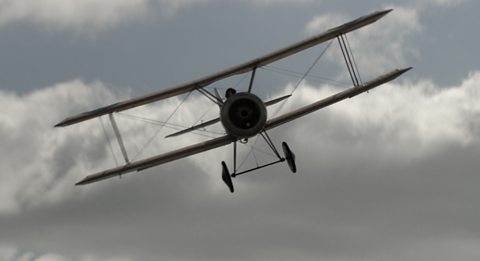
Being a pilot in WW1. video
Cecil Lewis’ experiences reflect how the role of aircraft changed in the course of WW1.
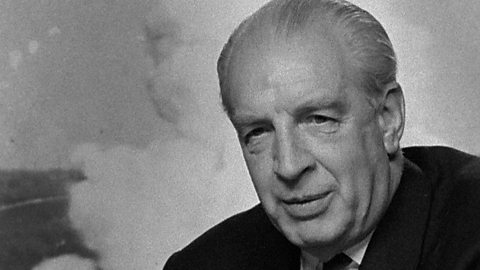
Fighting in the trenches. video
Stefan Westmann presents two contrasting experiences of the war.
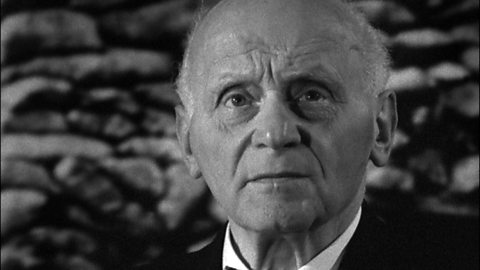
Death and survival. video
The experiences of a disillusioned soldier and the widow of a soldier killed in action
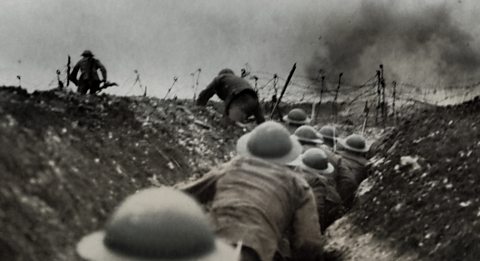
Going over the top. video
Infantrymen recall the tense hours in the trenches prior to an attack.
Horace Leslie Birks interview. video
Tank commander Horace Birks describes the impact of the supposed miracle machines.