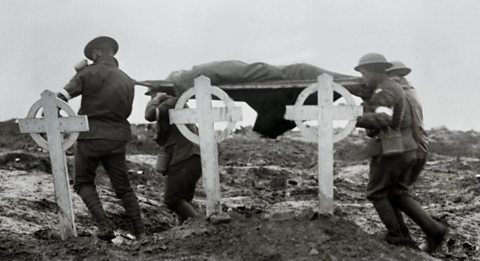
Unlike Britain in 1914, Germany had conscription. Stefan Westmann was a young German medical student. In April 1914, he was called up for national service in the German Army. In December 1914, his unit was ordered to attack British troops defending a French brickworks.
STEFAN WESTMANN: We cut zigzag lines for our barbed wire entanglements. And, at noon, we went over the top. We ran approximately 100 yards when we came under machine-gun fire which was so terrific that, the losses were so staggering, that we got orders to lie down and to seek shelter. Nobody dared to lift his head because the very moment the machine gunners saw any movement, they let fly. And then the British artillery opened up. And the corpses, and the heads and the arms and the legs flew about, and we were cut to pieces. All of a sudden, the enemy fire ceased. Complete silence came over the battlefield. And one of the chaps in my shell hole asked me, 'I wonder what they are up to?' Another one answered, 'Perhaps they are getting tea!' And a third one says, 'Don't be a fool. Do you see what I see?' And we looked over the brim of our shell hole and there, between the brick heaps, out there came a British soldier with the Red Cross flag, which he waved, and he was followed by stretcher bearers who came slowly towards us and collected our wounded. We got up, still completely dumb from fear of death, and helped them to bring our wounded into our trenches.
NARRATOR: But such acts of generosity remained an exception. This was war, and ordinary men like Stefan had to learn to kill.
STEFAN: I was confronted by a French corporal, he with his bayonet at the ready, and I, with my bayonet at the ready. For a moment, I felt the fear of death. And in a fraction of a second, I realised that he was after my life, exactly as I was after his. I was quicker than he was. I tossed his rifle away, and I ran my bayonet through his chest. He fell, put his hand on the place where I had hit him, and then I thrust again. Blood came out of his mouth and he died. I suddenly felt physically… I nearly vomited. My knees were shaking and I was, quite frankly, ashamed of myself. My comrades, they are absolutely undisturbed by what had happened. One of them boasted that he had killed a French soldier with the butt of his rifle. Another one had strangled a captain. A third one had hit somebody over the head with a spade. And they were ordinary men, like me. What was it that these soldiers… stabbed each other, strangled each other, went for each other like mad dogs? What was it that we, who had nothing against them personally, fought with them to the very end, in death? We were civilised people, after all.
NARRATOR: After the war, Stefan completed his medical training and became a surgeon. But in the 1930s, when Adolf Hitler and the Nazi party took control, Stefan felt compelled to leave his homeland. Remembering the incident in 1914, when British soldiers stopped fighting to let his comrades collect their dead and wounded, he chose to settle in England. Stefan Westmann set up a medical practice in London's Harley Street.
Video summary
Stefan Westmann was a German conscripted in 1914, and recalls the terror and horror of being under heavy artillery fire in the trenches.
He expresses horror and regret at his own killing of a French soldier, and reflects on the inhumanity and brutality of war and how it made normal men killers.
He also remembers the kindness of the British in allowing the German to bury their dead after they had repelled a German attack.
This memory informed his decision to move to London when he needed to escape from Germany in the 1930s.
This is from the series: I Was There: The Great War Interviews.
Teacher viewing recommended prior to use in class.
Teacher Notes
Students could identify as many different features of fighting in the trenches as they can find.
The teacher could ask them to focus on the following features in particular: attitude towards the enemy; methods of attack and defence; attitudes of soldiers towards the war.
This clip will be relevant for teaching History at KS3, KS4/GCSE, in England and Wales and Northern Ireland.
Also at Third Level, Fourth Level, National 4 and National 5 in Scotland.
This topic appears in OCR, Edexcel, AQA, WJEC, CCEA GCSE and SQA.
Going over the top. video
Infantrymen recall the tense hours in the trenches prior to an attack.
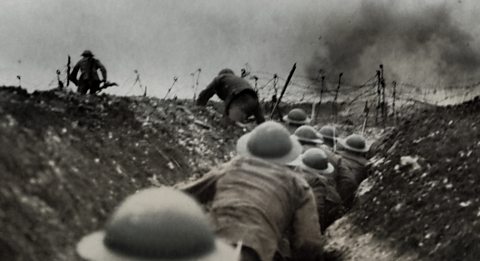
Horace Leslie Birks interview. video
Tank commander Horace Birks describes the impact of the supposed miracle machines.
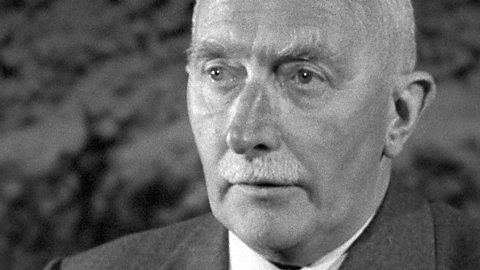
John Willis Palmer interview. video
John found it difficult to cope with the violence and apparent pointlessness of the war.
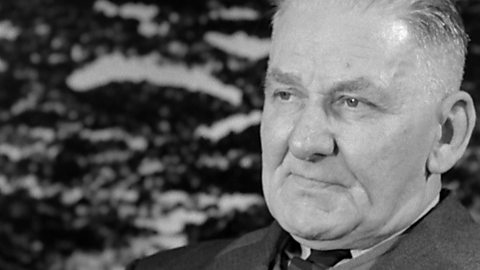
Attrition. video
The strains of war drove soldiers to desert their post or inflict a wound on themselves.
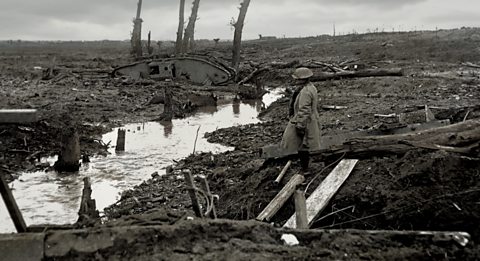
Life as a munitionette. video
Mabel was one of many women who put their lives at risk working in munitions factories.
Life as an officer during WW1. video
Charles talks about coping with looming shellshock and aspects of an officer's life.
One woman's loss. video
Katie describes what the war was like from a young woman’s perspective in Manchester.
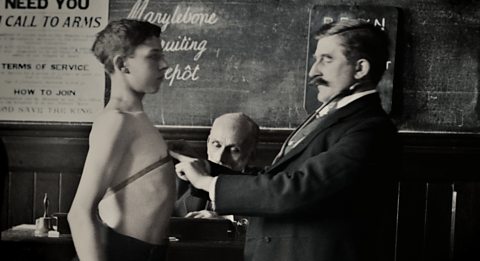
Recruiting soldiers in WW1. video
The different pressures which were applied to persuade young men to join up to fight.
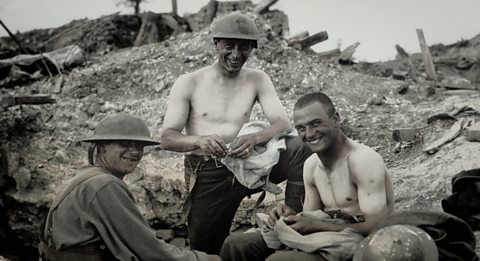
Respite. video
How men could relax and forget about life on the front line when behind the lines and get some respite from the war.
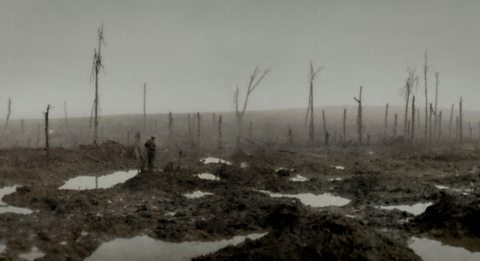
How did shell shock affect soldiers? video
Soldiers from both sides describe their experience of shell fire and the physical and psychological effects it had on them and their colleagues.
The Christmas truce, 1914. video
Henry describes his reaction to being called up and his experiences in the trenches.
The Gallipoli campaign. video
Frank talks about fighting in the disastrous Gallipoli campaign in 1915.
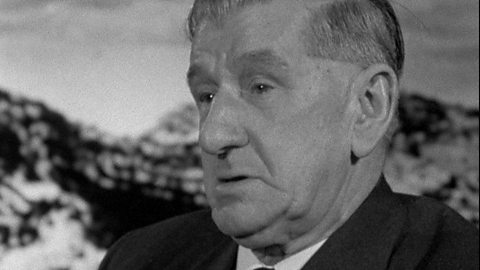
War in the air. video
Pilots identify the different experiences of men in the air, recalling the realities of combat and the tactics used to down an enemy aircraft.
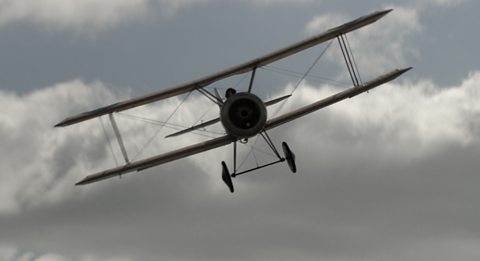
Being a pilot in WW1. video
Cecil Lewis’ experiences reflect how the role of aircraft changed in the course of WW1.
Changes on the home front during WW1. video
Relatives left at home describe what it was like coping whilst the men were away at war.
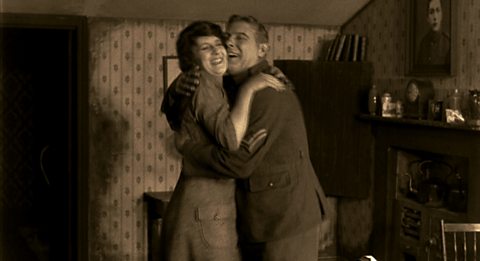
Death and survival. video
The experiences of a disillusioned soldier and the widow of a soldier killed in action