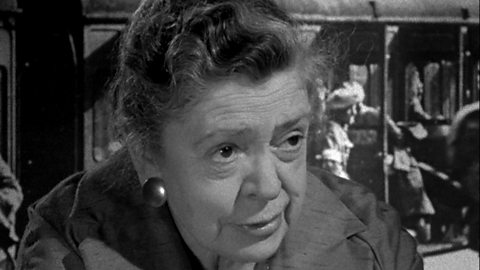
SOLDIERS:
Pack up your troubles in your old kitbagAnd smile, smile, smileWhile you've a Lucifer to light your fagSmile, boys, that's the style…
CHARLES CARRINGTON:
When the war was not very active, it was really rather fun to be in the front line. It was not very exacting, and indeed, it was not very dangerous. One was having a sort of out-of-door camping holiday with the boys, with a slight spice of danger to make it interesting.
MEN WHISTLE:
Pack Up Your Troubles
CLIFFORD W. CRASKE:
We were billeted in Armentieres for most of the summer. A very pleasant summer. It was a quiet sector of the line and of an evening, if we were not on duty in the trenches, we used to go out into the town and go to the nearest estaminet, which is the equivalent of the English local. And behind the bar would be Madame, and we hoped, one or two of her daughters. Very attractive. And… Oh, and we'd had our suppers, and the omelettes were cleared away and the coffees disposed of, and other drinks put round. We used to sing. The popular song, of course, at the time, was Mademoiselle From Armentieres with its six or eight verses.
SONG:
Oh, Mademoiselle from Armentieres Parlez-vous?Oh, Mademoiselle from Armentieres Parlez-vous?You didn't have to know her longTo find the reason why it went wrongInky, pinky, parlez-vous…?
CLIFFORD:
The girls used to ask us to translate them afterwards but we couldn't very well do that. They were not suitable for translation. The verses weren't.
SONG:
I had more fun with MademoiselleBeneath the sheets with MademoiselleInky, pinky, parlez-vous…?
WILHELM EISENTHAL:
Towards the evening, we suddenly heard singing in the trenches. Not a shot was fired anywhere, neither from the Russians nor on the part of the Austrians, and suddenly, that singing…
MEN SING A HYMN
WILHELM:
And soon after that, our soldiers started singing too… and to my greatest surprise, those boys who sang, used to sing all kinds of songs except hymns… started to sing Easter hymns.
MEN SING A HYMN
HENRY WILLIAMSON:
About 11 o'clock, I saw a Christmas tree going up on the German trenches, and there was a light. And we stood still, and we watched this and we talked, and then, a German voice began to sing a song. Heilige Nacht. And after that, somebody said, 'Come over, Tommy. Come over.' Some of us went over at once, and very soon, we were exchanging gifts. The whole of no-man's-land, as far as we could see, was grey and khaki. There they were, smoking and talking, shaking hands, exchanging names and addresses for after the war, to write to one another.
WILHELM:
One of my advanced posts reported that the Russians had thrown something into their hole… into their dugout. And I said, 'Well, what is it? What was it?' And they said, 'We don't know. We don't know whether we can touch it.' 'Well, of course you've got to touch it. If it's hand grenades, you've got to throw it out, but have a look and report again.' And one minute later, they reported, it was Easter eggs. Real Easter eggs, gaudily painted, which the Russians had rolled slowly into their hole. A few minutes later, they, the Russians… a few Russians came along and said, 'Got any vodka for us? Or any cigarettes?' Well, the boys had a few cigarettes but they had no vodka. That, kind of, armistice lasted all Easter Sunday.
MEN SING A HYMN
HENRY:
The Germans started burying their dead - it was frozen out - and we picked up ours and we buried them. And little crosses of ration-box wood were nailed together - quite small ones - and in indelible pencil, they would put, the Germans, 'Fur Vaterland und Freiheit.' 'For Fatherland and freedom.' And I said to a German, 'Excuse me, but how can you be fighting for freedom? You started the war and WE are fighting for freedom.' And he said, 'Excuse me, English comrade…Kamerad… but WE are fighting for freedom, for our country.' And I say, You also put, Here rests in God.' HE SPEAKS GERMAN 'Here rests in God, an unknown hero, in God.' 'Oh, yes, God is on our side.' But I said, 'He's on our side.' 'Well, English comrade, do not let us quarrel on Christmas Day.'
Video summary
Behind the lines men could relax and forget about life on the front line. British troops remember the fun of living in an outdoorsy male environment.
Games, singing, and fraternising with the locals provided an opportunity to gain respite from the war.
Meanwhile, even at the Front, religious festivals such as Easter and Christmas occasionally brought a break from the fighting with temporary truces observed by both sides in the conflict, exchanging gifts and even addresses.
This is from the series: I Was There: The Great War Interviews.
Teacher viewing recommended prior to use in class.
Teacher Notes
Key Stage 4:
Students could focus specifically on the 1914 Christmas truce, and discuss what it suggested about the soldiers’ attitudes towards the war, and also why senior officers were reluctant to allow it occur again.
This clip will be relevant for teaching History at KS3, KS4/GCSE, in England and Wales and Northern Ireland.
Also at Third Level, Fourth Level, National 4 and National 5 in Scotland.
This topic appears in OCR, Edexcel, AQA, WJEC, CCEA GCSE and SQA.
How did shell shock affect soldiers? video
Soldiers from both sides describe their experience of shell fire and the physical and psychological effects it had on them and their colleagues.
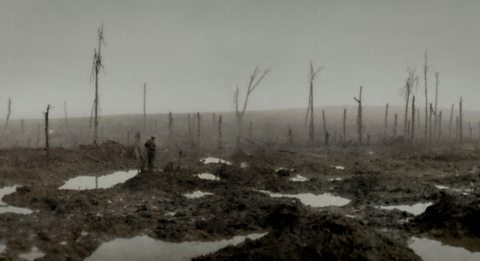
The Christmas truce, 1914. video
Henry describes his reaction to being called up and his experiences in the trenches.
The Gallipoli campaign. video
Frank talks about fighting in the disastrous Gallipoli campaign in 1915.
War in the air. video
Pilots identify the different experiences of men in the air, recalling the realities of combat and the tactics used to down an enemy aircraft.
John Willis Palmer interview. video
John found it difficult to cope with the violence and apparent pointlessness of the war.
Life as a munitionette. video
Mabel was one of many women who put their lives at risk working in munitions factories.