MUSIC: It's A Long Way To Tipperary
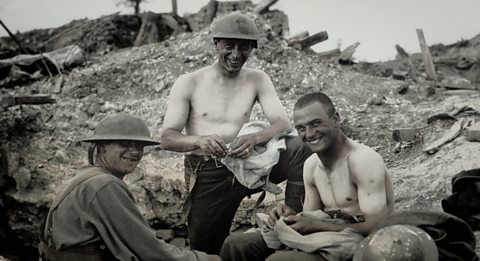
HENRY WILLIAMSON: I was a young soldier of 17 just before the war. I joined the Territorial Regiment for the sport and the boxing and swimming. And when, on 3rd August 1914, mobilisation orders came out, we were all very excited and apprehensive. The whole feeling in the air was one of anxiety, at the same time great endeavour, and most of us wanted to be out in France before the war was over by Christmas.
NARRATOR: By 1914, technological progress had created a new kind of war. To protect themselves against the increased firepower of artillery and machine guns, infantry soldiers had to dig elaborate trench systems. To Henry and his comrades, trench warfare seemed to be a big adventure.
HENRY: We enjoyed our first visit to the trenches. The weather was dry and the whole feeling was one of tremendous comradeship. And I can honestly say there was no fear at all. It was a picnic.
NARRATOR: Henry's picnic didn't last. It started raining and the rain wouldn't stop.
HENRY: We walked about, moved very slowly in a malm or a pug of yellow watery clay. When the evening came and we could get out, it took about an hour to get out. Some of our chaps slipped in and were drowned and weren't seen until we trod on them, perhaps later. It was 60 yards from the Germans and they could snipe right down it and we had a lot of men sniped. I had my friend standing beside me. We were trying to work a pump which we had carried in at night and it wouldn't work. And suddenly there was a tremendous crack, going like that. CRACK The bullet hit my friend in the front of the head and took away the back of his head. And he fell down, he just slipped down.
NARRATOR: Winter came, and the Christmas of 1914 was one Henry would remember all his life.
HENRY: On Christmas Eve we had a job to do in no-man's-land which put the wind up everybody. That is to say, we were all quiet among ourselves. The job was to knock in these posts, 18 inches into this frozen soil, and we would be 50 yards away from the Germans and if we crept out, trying to avoid our boots ringing on the frozen ground and expecting any moment to fall flat with the machine guns opening up, and nothing happened. And within two hours, we were walking about and laughing and talking and there was nothing from the German lines.
And then, about 11 o'clock, I saw a Christmas tree going up on the German trenches. And there was a light. And we stood still and we watched this and we talked. And then a German voice began to sing a song, Heilige Nacht. And after that, somebody, 'Come over, Tommy, come over.' And they still thought it was a trap. But some of us went over at once and they came to this barbed wire fence between us which was five strands of wire, hung with empty bully beef tins which make a rattle if they came. And very soon we were exchanging gifts. The Germans started burying their dead. It was frozen and we picked up ours and buried them. And little crosses of ration box wood were nailed together, quite small ones, and in indelible pencil they would put, the Germans, 'Fur Vaterland und Freiheit.' 'For Fatherland and freedom.' And I said to a German, 'Excuse me, but how can you be fighting for freedom?
You started the war and WE are fighting for freedom.' And he said, 'Excuse me, English comrade,' Kamerad, 'but WE are fighting for freedom, for our country.' And I said, 'You also put "Here rests in God, ein unbekannter Held," here rests in God an unknown hero in God.' 'Oh, yes, God is on our side.' But I said, 'He's on our side.' And that was a tremendous shock. I began to think that these chaps, who like ourselves, whom we liked, and who felt about the war as we did and who said it will be over soon because we will win the war. And we said, 'No.' 'Well, English comrade, do not let us quarrel on Christmas Day.'
NARRATOR: After the Great War, Henry Williamson became an acclaimed writer. His most famous novel is Tarka The Otter.
Video summary
Henry Williamson describes his reaction to being called up and early experiences of life in the trenches.
These experiences included feelings of tremendous comradeship including, at times, with the enemy.
He recounts an informal agreement for temporary ceasefire over Christmas 1914.
During this brief truce, Henry had an opportunity to discuss the purpose of the war with a German soldier.
This is from the series: I Was There: The Great War Interviews.
Contains scenes which may upset younger viewers and there are shots of people smoking.
Teacher review prior to use in class is recommended.
Teacher Notes
This clip could be used to introduce an examination of life in the trenches, and attitudes towards the enemy.
This clip will be relevant for teaching History at KS3, KS4/GCSE, in England and Wales and Northern Ireland.
Also at Third Level, Fourth Level, National 4 and National 5 in Scotland.
This topic appears in OCR, Edexcel, AQA, WJEC, CCEA GCSE and SQA.
Fighting in the trenches. video
Stefan Westmann presents two contrasting experiences of the war.
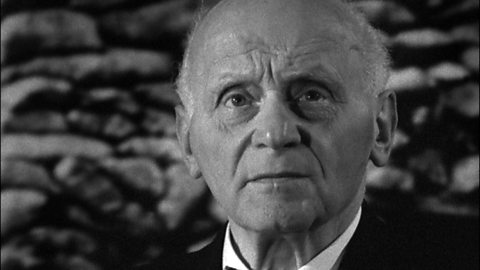
Death and survival. video
The experiences of a disillusioned soldier and the widow of a soldier killed in action
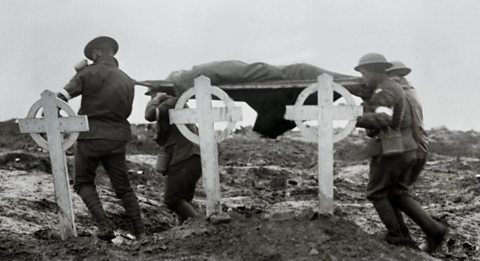
Going over the top. video
Infantrymen recall the tense hours in the trenches prior to an attack.
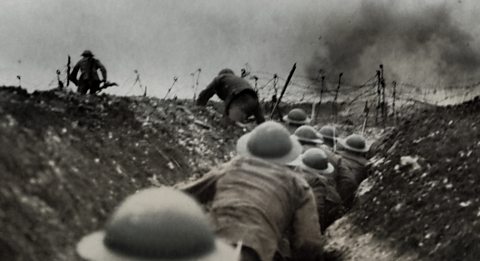
Horace Leslie Birks interview. video
Tank commander Horace Birks describes the impact of the supposed miracle machines.
Changes on the home front during WW1. video
Relatives left at home describe what it was like coping whilst the men were away at war.
John Willis Palmer interview. video
John found it difficult to cope with the violence and apparent pointlessness of the war.
Respite. video
How men could relax and forget about life on the front line when behind the lines and get some respite from the war.