Di main armed groups behind kidnapping, insecurity for Nigeria
- Author, Chiagozie Nwonwu
- Role, BBC Africa
- Reporting from, Lagos
- Published
- Read am in 9 mins
Nigeria dey currently battle wit plenty cases of mass kidnapping. But di kontri - wey big pass France and Germany combine - dey also face plenty oda security challenges.
Di recent attempt by US President Donald Trump and im supporters to make di insecurity situation be like say na purely case of persecution of Christians, no really capture how complex di mata be for Africa most-populous nation.
More dan 250 ethnic groups dey for Nigeria, and di kontri dey roughly divided into mainly Muslim north, largely Christian south, and some mixture for di middle - and di govment tok say pipo from all faiths don be victims of attacks.
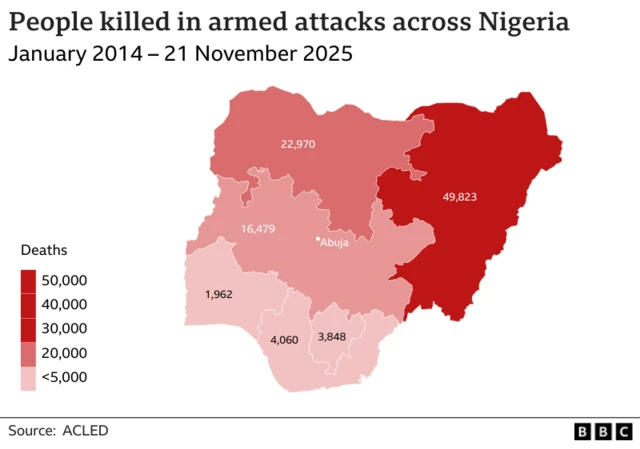
E get criminal gangs for di north-west, Islamist insurgency for di north-east, gbas-gbos sake of land mata for di central regions and wahala from pipo wey dey fight to separate from di kontri for di south-east.
Dis plenty issues don make di 400,000-strong army and di police force of 370,000 officers to dey overstretched.
Dis na di breakdown of di main armed groups and flashpoints:
'Bandits' - kidnap gangs
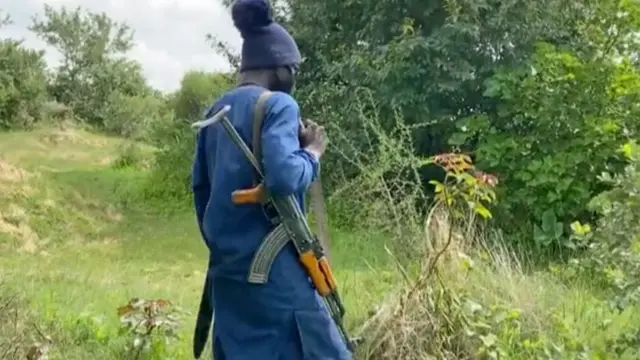
Dis criminal gangs, wey local pipo know as "bandits", dey largely composed of pipo from di Fulani ethnic group, wey traditionally dey make dia living by raising animals.
Dem don exchange dia tools for taking care of cattle wit assault rifles, wey don plenty for Nigeria - and oda kontris for di region - since di wahala for Libya afta Nato-backed forces overthrow strongman Muammar Gadaffi for 2011.
Di gangs no dey motivated by any religious or political ideology, but dem see kidnapping pipo for ransom as quick and easy way to make moni instead of to dey walk plenty kilometres wit dia cows dey search for water and grazing land.
Dem dey normally waka for large numbers on top motorcycles, and e make dem highly mobile and e dey allow dem to strike quickly and escape bifor di security forces fit respond - na dis tactics dem use for di two recent school abductions.
Dis groups no get any central or organised leadership. Each gang, wey be usually from one family or particular community, dey normally dey loyal to dia own leader.
Di police don place bounty on top di head of sum of di notable leaders, including Ado Aleru and Bello Turji, and in 2022, di govment declare di bandits as "terrorists".
Aleru come from Yankuzo town for Zamfara State, and di area na major hub for bandit activity ova di last three years.
Di gangs dey fight demsef sometimes, and dem dey usually travel to neighbouring states and central regions to carry out kidnappings. Dem no dey pity dia own local community and for some areas, dem dey tax residents.
Some of di younger bandits dis days dey go on TikTok to show off dia ransom money, guns and motorcycles - and dem don gada thousands of followers.
Boko Haram - jihadist group
Dis Islamist militant group bicom popular for di world in 2014 wen dem kidnap more dan 200 schoolgirls from di village of Chibok - and 90 of dem still dey miss reach today.
Dem come from one local Islamist group wey di founder na Mohammed Yusuf for 2002 for di north-east city of Maiduguri and dia official name na Jama'atu Ahlis Sunna Lidda'awati wal-Jihad. Dia political goal na to create Islamic state.
Na di local residents call dem Boko Haram - wey im meaning for Hausa language na "Western education dey forbidden" bicos of dia opposition to Western-style schools.
Di group start dia full-blown insurgency for 2009 afta di death of dia leader Yusuf wey police bin arrest afta di group get clash wit security forces.
Under dia new leader, Abubakar Shekau, Boko Haram bin control large plenty territory for di north-east and dem even appoint "emirs" to dey control some areas.
Di Chibok girls na just small fraction out of di many thousands of women and children wey Boko Haram bin kidnap and force dem into sexual slavery, domestic servitude or use dem as suicide bombers.
Boko Haram later divide into rival factions, and afta di death of Shekau four years ago, dia strength don diminish even though dem still dey carry out regular attacks for both civilians and security forces.
Na Boko Haram give birth to plenty group wey dey use kidnapping to raise funds, dem dey usually focus on soft targets like schools, churches, mosques and remote villages wia beta roads and bridges no too dey.
Iswap - Boko Haram splinter group
Plenty Boko Haram commanders - including Abu Musab al-Barnawi, wey pipo believe say na di son of dia founder Mohammed Yusuf - na dem form wetin bicom di Islamic State for West Africa Province (Iswap) around 2016 bicos dem feel say Abubakar Shekau dey violate Islamic doctrine by killing Muslims.
Boko Haram dey usually target markets and mosques wit suicide bombers, but Iswap dey generally avoid attacking Muslim civilians and focus on military and govment targets.
Iswap still dey fight wit Boko Haram, and e get reports of deadly clashes between di two groups around di Lake Chad area earlier dis month. In fact, tori be say Shekau bin kill imsef during one battle wit Iswap, using a suicide vest.
Di group remain very active and last week, dem kpai one Nigerian general, Brig Gen Musa Uba, for one ambush for Borno state.
Court recently sentence one Iswap commander Hussaini Ismaila to 20 years in jail sake of many attacks for di northern city of Kano for 2012.
Di north-eastern jihadist group bin dey blamed for attack for one Catholic church for di south-west of di country for June 2022 wey kill at least 50 worshippers.
But prosecutors now believe say na single cell wey dey linked to di al-Shabab jihadist group for Somalia dey responsible. Five men dey currently face trial sake of di attack and tori be say dem bin go to Somalia for training.
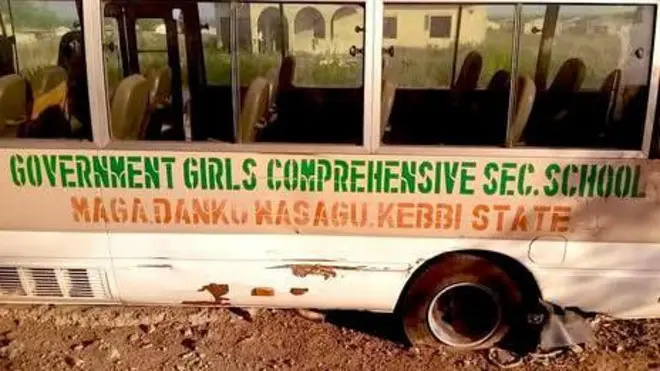
No group don tok say na dem dey behind di two recent school kidnappings for Kebbi and Niger States, but govment believe say na Boko Haram and Iswap do am, according to wetin govment tok-tok pesin Sunday Dare tell BBC.
But some sabi pipo no gree wit dis claim.
"I no tink say e dey accurate. E no get any Iswap or Boko Haram cell for di north-west. Di recent kidnappings, including di mass abductions, na bandits do am," conflict analyst Bulama Bukarti tell BBC.
Ansaru - Boko Haram splinter group
Dis splinter group don move away from di north-east, wia Boko Haram and Iswap dey dominate.
Sabi pipo believe say dis group follow for di 2022 Abuja-Kaduna train attack, wia at least seven pipo bin kpai and dem kidnap more dan 100 commuters.
Dia leader, Khalid al-Barnawi, bin dey arrested for 2016 and e dey face trial sake of many attacks, including di 2011 bombing of di UN building for Abuja. Im trial go resume for December 2025.
Mahmuda - suspected Boko Haram splinter group
Crisis sabi pipo believe say dis group also break away from Boko Haram, and dem don set up for rural areas around Kainji Lake National Park since around 2020.
Dem dey linked to di Islamic State group and dia message dey more moderate compare to Boko Haram. Dem dey use Hausa and oda local languages to preach dia message in oda to attract recruits.
Di group don carry out targeted killings, riding on motorcycles and attacking markets and vigilante groups for di western state of Kwara.
For April, dia fighters kpai plenty vigilante pipo and attack one market for dia wia dem kill Fulani men and odas.
Recently, dia focus don shift from Kwara to Niger and Kebbi States, wey be places wia bandit violence don dey high since, and dis na wia di two recent school abductions hapun.
Lakurawa - jihadist group
Dis new Islamist militant group Lakurawa don dey attack communities for Sokoto and Kebbi states for di north-west and for Niger Republic, di kontri wey get border wit Nigeria to di north.
Authorities say dem dey maintain ties wit jihadist networks for Mali and Niger, and dia members don settle among border communities, marry local women and dey recruit young pipo.
Dem bin start by presenting demsef as protector against di bandit, but di group don dey gradually impose harsh controls - like checking villagers phones for music wey dem consider as un-Islamic, and flogging offenders.
Nigeria govment declare dem terrorist organisation for 2025 and accuse dem of cattle rustling, kidnapping for ransom, hostage-taking and attacking top govment pipo.
JNIM - Sahel jihadist group
Jama'at Nasr al-Islam wal Muslimin (JNIM) dey active mainly for Mali and Burkina Faso, wia dem dey control large areas but dem dey also enta Nigeria.
One confirm attack by JNIM bin hapun for northern Benin Republic early in 2025, close to dia border wit Nigerian.
For October 2025, di group claim wetin go be dia first attack inside Nigeria, for Kwara - di same state wia jaguda pipo kidnap more dan 30 worshippers from a church last week and wia bandit attacks don dey increase.
If JNIM activities dey confirmed, e go complicate one already serious situation for parts of di country wia Ansaru, Lakurawa, Mahmuda and di bandits all dey active.
Herders v farmers - gbas gbos sake of resources
Dis long-running conflict for central Nigeria - also known as Middle Belt - don scata communities, and e don displace plenty pipo and cause di spread of small arms as both herders and farmers arm diasef for wetin don bicom deadly cycle of revenge attacks.
Some pipo frame am as religious fight, but di central grievance na sake of grazing rights - access to land and water.
Di herders na mainly Fulani Muslims, while di farmers na largely Christians from various ethnic communities, although some na still Muslim.
Fulani families traditionally dey walk for hundreds of kilometres from di extreme north to central Nigeria and beyond at least twice a year to find land for dia cattle.
But urbanisation don make pipo to encroach into dis age-old grazing routes and locals accuse di Fulani of allowing dia cow to trample dia crops and force dem out of dia homes and fields.
Clashes don hapun for Kaduna, Plateau, Nasarawa, Benue and Taraba states.
In order to try and stop di violence, some state govments don put anti-open grazing laws and set up ranches for di herdsmen - but dis policy don face resistance from all sides.
One fallout from di conflict na di establishment of ethnic militias wey sometimes dem too dey turn to criminality by stealing from di pipo wey dem claim say dem dey protect.
Ethnic Tiv militias for Benue State don dey accused of carrying out mass killings and some of dia leaders don dey killed or arrested by security forces.
Ipob - separatist group
Di separatist violence for south-east Nigeria get im root for di calls for Biafran independence wey date back nearly 60 years to di brutal civil war wia more dan one million pipo bin kpai.
Even though di Nigeria govment bin crush dat rebellion, demands for independent state for di Igbo pipo for dat region still dey on as some Igbos feel say dem dey marginalised by di Nigerian state.
Di Indigenous People of Biafra (Ipob), led by Nnamdi Kanu, na one of di groups wey dey promote dat call for secession.
For 2009, Kanu launch Radio Biafra wey dey broadcast separatist messages to Nigeria from London. As govment declare Ipob a terrorist organisation for 2017 - three years later, Kanu create one armed wing- di Eastern Security Network (ESN).
Plenty splinter groups don arise since and govment forces blame dem for arson, kidnappings and killing of civilians and security personnel for di five states across di south-east.
ESN don dey control several towns for Imo and Anambra states wia dem don force thousands of pipo to run from dia homes.
For years, di separatists don kill many prominent pipo for di south-east, and dem don impose stay-at-home order on Mondays, causing plenty economic hardship.
Earlier dis year, Simon Ekpa, wey be leader of one faction of Ipob wey e call Biafra Republic Government In Exile, chop six years in prison afta court for Finland find am guilty of terrorism and oda activities for Nigeria south-east.
Last week, Federal High Court for Nigeria also find Nnamdi Kanu guilty on top terrorism-related accuse and sama am life imprisonment.
Ahead of di judgement, Kanu bin write to US President Trump and ask di US to investigate "killings of Christians and Igbo people".