


Wedding day blues and pinks
Hello Cheikh,
Thanks for telling us about the wedding traditions in Mauritania. It's so interesting to see the differences between our two cultures in wedding celebrations and ceremonies. In Britain, if a bride didn't smile on her wedding day, most people would think something was very wrong indeed. It's fascinating to learn that a woman's smile on her wedding day isn't a universal expectation.
An old tradition we have over here for a bride is that on her wedding day she should have or wear:
Something old
Something new
Something borrowed
Something blue
to bring her good luck.
On a more modern note, something you might find interesting is that five years ago the law was changed here in Britain. Now gay or lesbian couples can formally declare their love and commitment through civil ceremonies in this country. As far as I know no Muslim countries recognise gay and lesbian relationships. Do you have any gay or lesbian friends in Mauritania? What do you think about same-sex civil partnerships? 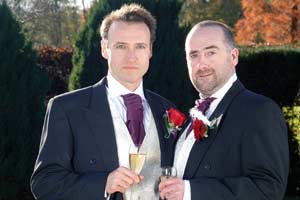
Turning to your post, I thought we'd look at word order, too many/too much, the present simple and a few bits of vocabulary.
In your posting, you wrote:
… they slightly differ from one district to another
Usually adverbs come after the verbs the talk about, describe or modify:
She ran quickly
They sang beautifully
And here's an example of a couple of words where the order should be reversed:
… her coming up marriage
Sometimes there's no real logic for why words are in the order they are; it's just the way they are. For example:
… the mission is yet to be over
is usually written like this:
… the mission is not over yet
Next, too many and too much. When we use too many or too much we mean that there is a lot of something, and that we don't like it. We mean in a negative way that we don't like the situation. So for example, we might say:
There's too much pollution in London
or
There are too many dogs in the park
to show that in this situation we think the pollution and dogs are a bad thing and that there is too much of one and too many of the other.
With that in mind, let's look at your sentence:
There are too many social traditions here in Mauritania
Do you really think the traditions are a negative thing and that there are too many of them in your country? If not, how would you re-write that sentence?
Finally, let's revise the present simple. It's formed like this:
verb
I drive
you walk
we write
they look
verb+s
he sits
she runs
it eats
And one of its uses is to talk about habits or things that happen repeatedly. Your stories about what traditionally happens at weddings is a good example of where we'd usually use it.
On the whole you used the present simple very well when you were talking about weddings in Mauritania. However, when you were talking about the 'kidnapping' tradition in rural areas, you started using a lot of woulds and the past simple. I've bolded some verbs below to highlight what I mean. Have a look at them and see if you can figure out a better way to tells us about this tradition.
One more very strange tradition which is more common now in rural areas, is that the bride close female friends would try their best to kidnap her at any time during the wedding party which usually goes on for seven consecutive nights. When they succeed, they would hide her away from the groom friends. Sometimes even take her outside the neighborhood and make sure to limit the number of people who know her whereabouts.
Socially, the bride must conspire with them and abide by the plot instructions, otherwise she would be considered a bad girl.
Then the groom and his friends would have to embark on searching the whole area, house-by-house, looking for her until they find her.
And even then, the mission is yet to be over, they would have to fight the bride female friends until they free her completely and bring her back to the groom. Sometimes she manages to stay for several days in her hideout.
In some areas, failing to get her would mean that the groom has failed to live up to his responsibilities and consequently lose his bride.
Just before I sign off, let's look at a couple of bits of vocabulary from your posting to the commentators:
Taru - … that kind of language would prople them to think.
Did you mean probe or prompt??
Taru - … the frizzing weather
Did you mean freezing?
Sunshine - make this name more attracting
Attractive is the form you would usually need in a sentence like this. But actually I think there's a better word - pertinent (which means relevant). Is that what you meant?
Sunshine – hedge you name
Did you mean hide?
Sunshine – … they used to burry newborn girls burry
The correct spelling is bury
And finally, a word about your homework. You did very well on it. Top of the class Cheikh! I was interested in the words you chose for your scare quotes. When I was writing to you, the ones I was thinking about were 'crime', and 'civilized' but I think your choice of 'normal' was perfectly justified too.
One last thing about sentence 3. You've changed it beautifully but there's just one more thing we could do to make it really perfect. It would sound more natural if you changed a to one, like this:
… we only gain one benefit by losing another.
That's all for now,
Nuala
Vocabularya universal expectation – expected everywhere
commitment – willing to give your time and energy to something that you believe in (here, a relationship)
civil ceremonies – official, formal (but not religious) acts, often fixed and traditional, performed on important social occasions
Comments
Hi Nuala, Last year, India Govt. changed a law and recognised gay and lesbian relationships. As soon as law was amended, many same-sex marriages were noticed in newspaper. Now these people can marry. Much hue and cry witnessed on media. Long debates on this topic taken place. Almost all religious organisations opposed it. I am learning lot of English from you. Thanks, Have a nice day.
HI Nuala, I correct my today post. I feel Law has not been amended by Govt. yet but Supreme Court of India passed a order recognizing / allowing same-sex marriages. Thanks
Hi, Nuala. I didn't know about the negative meaning of "too much" and "too many". Thank you for explaining it. About the use of conditional, I understood what you meant and would have written all those sentences in present tense. Though, I think the use of conditional (would, would have) in English is not easy at all, as also the use of prepositions. Well, at least for me who speaks Portuguese from Brazil.
Thanks for all your contributions. This blog has now closed and can no longer accept new comments.


