


Life in the slow lane
Hello Cheikh,
Thanks for your interesting posting about life in the slow lane.
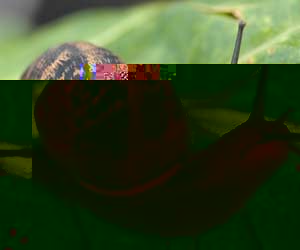
My life often feels like this:

But along with a lot of city people, I'm trying to find ways of slowing things down a bit. In fact there's a whole movement dedicated to slow food. The folks at Slow Food are concerned that we've lost our interest in where food comes from, how it's grown, how we buy, cook and eat it.
We also have an online feature you might be interested in at BBC Learning English. It's called Slow London.
But maybe this is all just the tip of the iceberg. After reading your blog I think we need a world-wide push for Slow Everything! Maybe you'd like to take the lead on this project Cheikh. I'll supply the images!
Today I thought we'd look at some punctuation (inverted commas, sometimes known as 'scare quotes'), as well as some common collocations (or words that go together) and other vocabulary.
I'm sure you know that when you want to show the exact words that someone has said, you use inverted commas or quote marks.
He said, "I'm from Paris."
But we can also use quote marks to show our distance from a word or idea.
Keith thinks his poems are fantastic but I'm not impressed by his "art" at all.
Here, the speaker is saying s/he doesn't think that what Keith writes is poetry at all, even though Keith clearly thinks his writings are very poetic.
In this example from your posting I think there are two words that you could have put in scare quotes, while the word suicide doesn't need the quotes at all. Which words would you like to show you disagree with or would like to distance yourself from here?
This horrible crime "suicide" has become an almost normal act in the civilized world.
Here are some common collocations which means get things done
achieve goals
do things
do activities
complete tasks
meet deadlines
However, we don't achieve activities in English. What collocation would you like to put in here instead?
… you can drive your car and achieve many different activities
This next sentence I'd like to look at is quite complicated:
Today's discussion aims only to argue that we can't seem to get a benefit in our progress without losing another.
The word only is in the wrong place. Where you have it just now means the only thing you want to do today is argue. You don't want to talk, eat, dance or laugh, the only thing you want to do is argue.
Where it needs to go is near the benefit if what you want to say is that the benefit is the only thing to be discussed. However, there are a couple of problems to be sorted out there first.
Only already has a negative meaning but you've got a negative with benefit – can't seem to get. So, first you need to change the negative part of benefit into a positive. Secondly, the collocation with benefit is have or gain. Thirdly, the second half of this kind of only phrase is by + verb+ing. For example:
We only got to go to the party by promising to come home by 10.30.
He only finished the work by staying really late at the office last week.
So to re-cap, to improve this sentence, you have four things to do:
move only
change the benefit part from negative to positive
choose the right collocation for benefit
delete some words in the second half of the only phrase and add by + verb+ing (by losing)
So can you see how you could improve your original sentence?
Finally we use on the contrary when we want to contradict what has been said previously. We often use it if we want to disagree with someone else who has spoken or written. For example:
A: Rich people are generous.
B: On the contrary, I find people who have a lot of money want to keep it all to themselves.
In the paragraph before you use On the contrary you're talking about how people in the desert have a lot of time to think about and consider things. The paragraph that follows contrasts the desert with the city. So a better introductory phrase would be:
In contrast
However
On the other hand
That's all for today. Looking forward to hearing from you soon,
Nuala
Vocabulary
the slow lane – the slow lane is the part of motorway or highway where slower cars drive (as opposed to the fast lane). Here, it means a way of life that isn't hectic or fast-paced but slow and relaxed
concerned - worried
dedicated – putting energy, time and effort into something
just the tip of the iceberg – only a small noticeable part of a problem, the total size of which is really much greater
take the lead – be the boss, be in charge of or be the manager
Comments
Hi Nuala, This is the first time I read your blog. It is wonderful to find such a great blog to read, write and benefit from. Blogging is a very great challenge for me. I have written down many essays and very short feedbacks on news articles, but I never dared to write diaries or blogs, however, I can express and write in English. I love to share my experience, anecdotes, observations and daily rapport of everyday life situation with my classmates, friends or even with those who are strangers to me. I read a blog written by an emigrant living in Canada, which motivated me to give it a shot and taste the pleasure of reading other blogs and writing mine. He said that writing a blog is very essential approach to gain and obtain the potential skills and competencies for your good English writing. Meanwhile, I had no place to post my blog. Hence I surfed the net to find a virtual community to put my personal and daily writing materials. Finally I got it “ BBC Learning English blogs”. It is very helpful community which provides me with written materials to read and place to blog. Today is very hard day. I have to revise for tomorrow translation exam. The exam will focus only on theoretical side, and the final exam will be on practical one. It is very boring to understand and memorize translation theories. In fact I prefer practical exam because it is less stressful than the other one, and requires just a short piece of writing. In contrast with theoretical exam, you should write a very long essay which contains six or seven well written paragraphs. So I am one hundred percent sure that I will sweat a lot next day.
Hello Nuala! I think the picture of you life has much in common with mine. That's just what I have! The only way for me to slow it down is to cut two weeks off my job-flow and leave. Now I'm preparing for vacations, so I have a good chance :) For most of us problem no.1 is how to catch all the beautiful moments around and to live slower EVERY DAY. I tried and I fell :( Maybe you could post a small advise for desperate readers?
Thanks for all your contributions. This blog has now closed and can no longer accept new comments.


