


THE ISLE OF WIGHT - PHRASAL VERBS
Hi guys!
Doesn't Huaraz from Lily's post sound a wonderful place to visit? I wish I could share a mate de coca with Lily and her husband, but I don't think my arms are long enough to reach Peru from England ;-)
Lily - your English is really descriptive; I look forward to correcting a few grammar points later on. I'll also reply to as many of the comments everyone else made on my last blog as I can!
I’m sorry for not writing sooner; this week has been a bit heavy at work, so I wasn’t my usual chirpy self. I recently got involved in planning and running new English courses, and I feel like the added responsibilities have all hit me at once!
However, life seems much better today. This weekend I’ve come away with my parents to the Isle of Wight, which is a beautiful, sleepy little island in the English Channel (or ‘The Sleeve’, as the French call it) just to the south of Portsmouth and Southampton. I’d like to tell you all a little bit about my day today.
______________________________________
This morning we woke up to radiant sunshine, and decided to go on a mini tour of the island. First, I had a few errands to run, so I popped out to the shops to pick up a few bits & bobs, then nipped back across the road to the hotel. 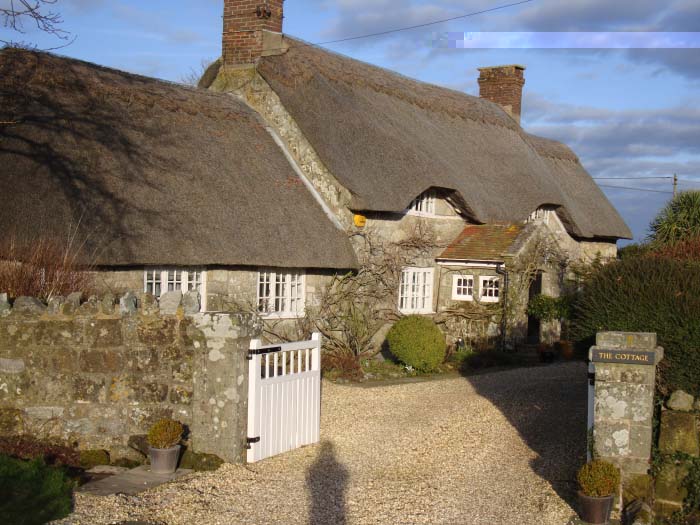
A thatched cottage. This type of roof is made with lots of small bundles of sticks - do you have anything similar in your country?
Then we set off in the car, and headed towards Ventnor, a quaint Victorian seaside town. When we got there, we strolled along the esplanade and climbed up the cliff path, from where we had a fantastic view of the Channel. By the time we got back down again, we were a little out of breath, so we stopped for a beer and a bowl of chips. Tucking into a big bowl of chips after a nice long walk probably wasn’t the healthiest thing to do, but I felt we’d earned it! 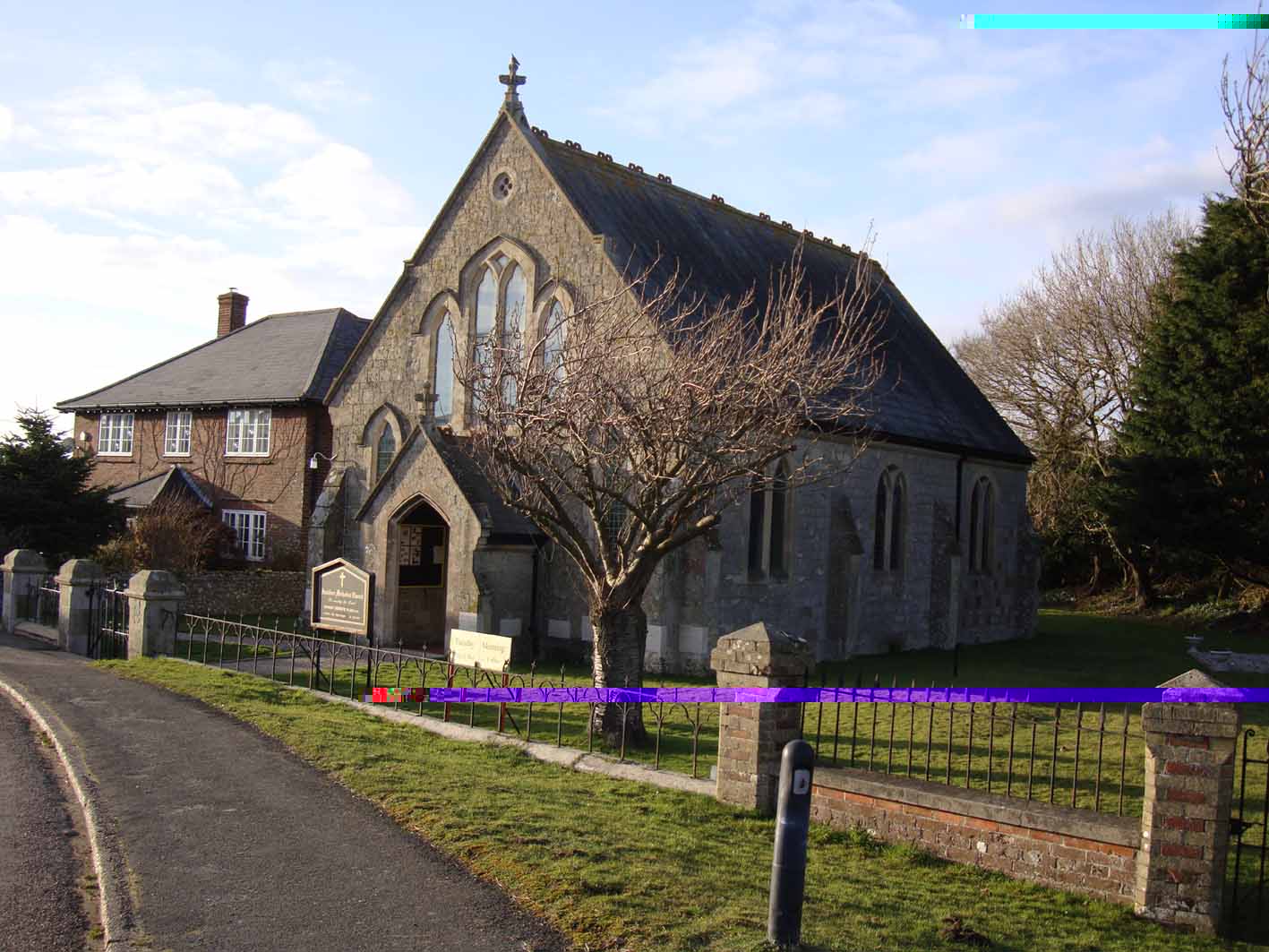
A typical English village church
After wandering back to the car, we carried on with the tour, stopping only to fill up with petrol, and drop something off at a friend’s house. They had been expecting us, but unfortunately, we turned up a bit late so they weren’t at home. 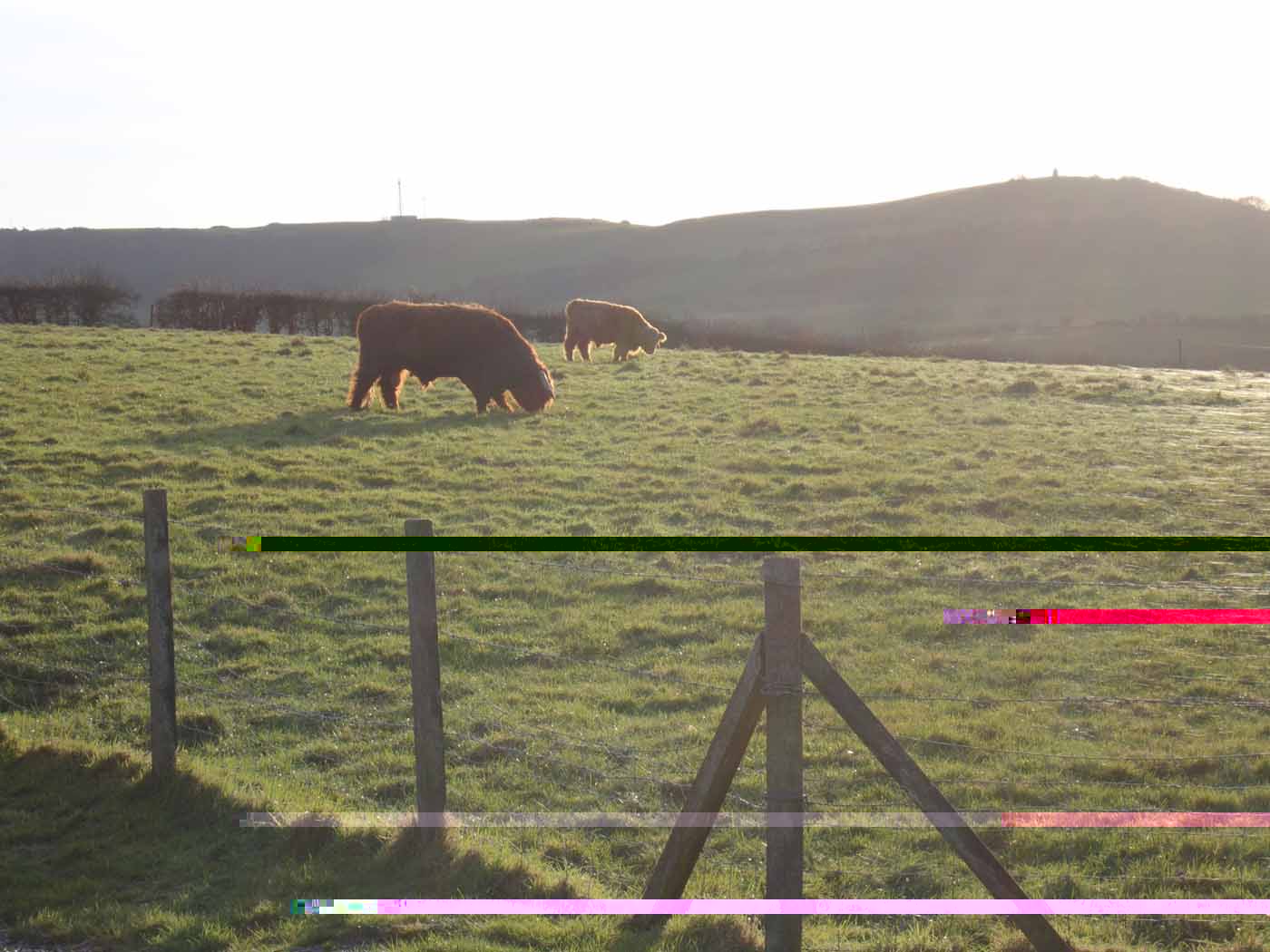
A couple of shaggy Highland cows in a field
I hope you’ll all forgive me this fairly anodyne account, but sometimes the most relaxing days are the ones where nothing exceptional happens...
__________________________________________
VOCABULARY
Adjectives:
chirpy = happy, talkative
radiant = bright, shining
quaint = old-fashioned, usually used to describe small English villages
out of breath = breathing heavily after exercise
shaggy = an adjective used to desribe an animal (especially a dog) with a long coat
anodyne = bland, harmless; perhaps unexciting
Nouns:
errands = places to go, people to see in town (e.g. collecting things, dropping things off)
bits & bobs = small items you need to get from the shops
esplanade = the stretch of pavement beside the sea in a town
Verbs:
to stroll = to walk at a leisurely pace
to tuck into = to start eating a large portion of food with great enthusiasm
You’ve earned it! = You deserve the reward for your hard work or efforts
to wander = to walk slowly, without a real sense of purpose
__________________________________
PHRASAL VERBS
- movement; describing your daily routine
to pop out
to nip across (the road)
to set off
to head towards
to stroll along
to drop off
to turn up
Learning English Challenges:
1. Can you explain the meaning of the phrasal verbs above? Two of them are quite informal, and wouldn’t normally be used in an academic essay. Which two are they?
2. Without changing their meaning as they are used in the context of this blog, can you identify which one of the phrasal verbs above can be used with an object or pronoun between the verb and the preposition that follows it?
3. Can you write a few sentences using the 7 phrasal verbs above?
________________________________________
If you’re interested in finding out more about phrasal verbs, you might like to look at the ‘Face up to Phrasals’ page on the Learning English website.
Comments
Hi Sarah! It’s nice to hear you had a chance to shake off your work stress and have quality time with your parents. I like your picturesque postcards. Especially I love the thatched cottage because it jogs my memory of my parent’s cottage, where I was born. Since my son’s half term started we have done bits and bobs: like nipping out to the local shops to kill the time or popping out for a walk. In terms of homework, I think ‘pop out and nip across’ are informal which I’ve heard my local residents use everyday. We went to Cleethorpes. We had planned to set off 2p,m but as usual we headed towards the beach a bit late due to our laziness. We expected there might have been lots of people with children strolling along the promenade but surprisingly not many people turned up. We played crazy golf and baseball. I must go and drop my son off to the local school for a game with his friends.
Dear Sarah, I agree with you: sometimes the perfect days are the easy ones when you get to rest from the hectic work days. And what a lovely way to rest. The pictures you showed gave us a glimpse of what it is like to get away from everything in England. A real nice day. Let me try the learning chalenges. 1. to pop out: to leave a place. 2. to nip across: to run 3. to set off : to leave by starting the car. 4. to head towards: to go in the direction of 5. to stroll along: to go for a walk along a road or path. 6. to drop off: to deliver something somewhere. 7.to turn up: to appear. My guess for the informal verbs are to pop out and to drop off. But it's just a guess. And the verb that can be used with an object in between the verb and the particle is to drop off. Now let me try to make some sentences. - I was expecting my friend at 7, but he only turned up at 8. - If I want to get to school on time, I'll have to nip across the street. - As I had left work early I decided to stroll along the river. - I dropped the flowers off at my girlfriend's before she arrived home. - I couldn't stand the heat inside the house, so I popped out for some fresh air. I hope I haven't done too badly. Good bye for now, see you soon.
Hello, Sarah! Nice blog and beautiful pictures! This is my first time in a teacher blog, so, I´ll try to answer only some of the challenges. Firstly, I think 'to pop out' was used in your blog as 'appear suddenly'. I mean, you entered into the shops and bought something, but it was in a fast way. Then, I´ve made the following sentence in the same context as used in your entry: yesterday, I popped out into the coffee shop to give a message to one of my friends.
Hi, I liked the challenges of your homework. Let's get straight to the answers. 1) to pop out: a short and sudden visit. ex: I popped out to the coffee shop to have a nice warm cup of coffee. 2)To nip across: to move quickly (informal English). ex: Without using the over bridge, he nipped across the road as he was already late. 3)To set off: to start for a journey. ex: We set off for Chittagong before the sunrise. 4)To head towards: to move in a direction. ex: We headed towards the source of the sound of waterfall. 5)To stroll along: to take a walk. ex: Even staying near the sea, he did not take the chance to stroll along the beach because of his laziness. 6)To drop off: to hand over something to some place. ex: Will you please drop the baggage off to my apartment? 7)to turn up: to appear. ex: I turned up in the meeting in the last moment due to traffic jam. You mentioned about two informal English words. I am sure about the one "nip across" as being informal. However I think "pop out" is also another informal word, although I am not sure about that. The answer to your another question about the phrasal verb which can be used with an object or preposition in between the verb and the preposition following it is "drop off". Thank you in advance for checking my answers.
Hi Sarah, It was not an anodyne blog. In India, you can see plenty of Thatched shed in rural areas. After harvest season the farmers dry up the paddy straw and use it either food for animals or ceiling for shed. It is a living place for most of the poor people. 1.to pop out-to come or go quickly or suddenly. 2.to set off- to begin journey. To head towards-going to one destination. To stroll along-walk along the pavements. To drop off- leave something in one place. To turn up-arrive in one place. I referred some of the words in the dictionary. To pop out and drop something of must be informal one in British usage. Set off- we went to attend one of my relatives’ marriages on Sunday. After attending marriage we set off at 2pm. To pop out- my wife is very fond of Jasmine flowers. The season has begun just now. On our way back she saw some of the flower vendors were selling the flower. She nipped across the road and bought it. To head towards- again we set off our journey to head towards Tanjore, one of the temple cities in Tamilnadu, south India.To turn up- we turned up little late since driver wanted to finish some work in the middle. Though he popped up we could not turn up on time.
Well done on the homework everyone. Paulraj, Halima, Mauricio & Simone: 'to pop out' means that you leave a place, but it also tells us that you will come back again in a few minutes/half an hour. 'Drop off' is fairly informal (formal = deliver), however 'to nip out/across/along to' is even less formal. Bye for now.
Thanks for all your contributions. This blog has now closed and can no longer accept new comments.


