March 2008Hi readers!Hi readers, I'm grateful for the opportunity to be a student blogger in this month and Thanks BBC team.
Now, let me introduce myself. I’m Yanko da Costa. I come from Brazil, Rio de Janeiro, I’m married and have 2 kids.
I’ve been learning serious English for 3 years and I make a lot of mistakes when I try to use English. I hope to improve my English with your help and I appreciate that anyone to correct me.
I’ve started study this language because I lose some opportunity job that one of requirements is to be fluent in English. For my professional, system analyst, is very important to know English, but, most of the time it is enough to know technical English to read.
I have other reason to study English. I hope one day live abroad. I would like to know what are culture differences from my country and to learn about this differences.
I’ve been in other countries like England, USA, France and Italy and I could feel a little bit differences from my culture.
There are some culture shock among places in Brazil imagine among countries.
Trough the Blog I hope to exchange experiences with other readers.
With best wishes,
Yanko.
posted on Sunday, 02 March 2008 | comment on this postMy City, Rio de JaneiroFirst of all, I want to say thanks for warmly reception from the readers.
Today I will tell you about my city and I have to confess! I have researched some data to write the words below.
Rio de Janeiro is the second major city of Brazil, behind São Paulo. The city is capital of the state of Rio de Janeiro. The city was the capital of Brazil for almost a century--from 1763 to 1822 while it was a Portuguese colony and from 1822 to 1960 as an independent nation. It was the de facto capital of the Portuguese Empire from 1808 to 1821. Commonly known as just Rio, the city is also nicknamed A Cidade Maravilhosa - "The Marvelous City".
It is famous for its spectacular natural setting, its Carnival celebrations, samba and other music, hotel-lined tourist beaches, such as Copacabana and Ipanema, 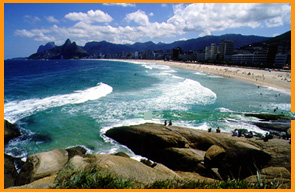 paved with decorated black and cream swirl pattern mosaics. Some of the most famous local landmarks in addition to the beaches include the giant statue of Jesus, known as Cristo Redentor (Christ the Redeemer) atop Corcovado mountain, which has recently been named one of the New Seven Wonders of the World; 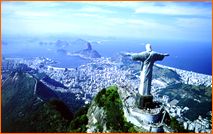 mountain Pão de Açúcar (Sugarloaf) with its cable car; 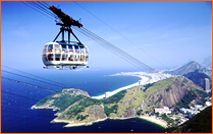 the Sambódromo, a giant permanent parade stand used during Carnival; and Maracanã stadium, one of the world's largest football stadiums. 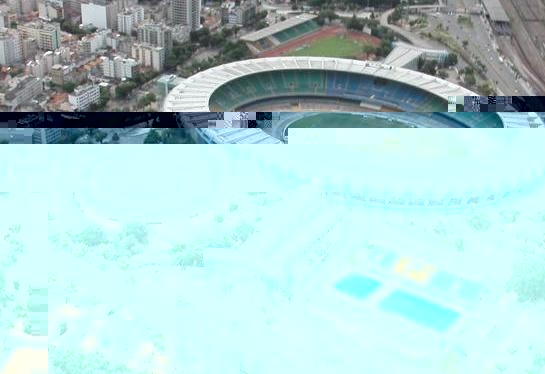 Rio also boasts the two world's largest forests inside an urban area. The first is the forest in Parque Estadual da Pedra Branca (White Stone State Park). The second, almost connected to the first, is the famous Floresta da Tijuca, or 'Tijuca Forest'.
 Rio has a Tropical climate. The temperature occasionally reaches over 40°C (104°F) in inland areas of the city, and maximum temperatures above 30°C (86°F) can happen every month. In the main tourist areas (south zone, where the beaches are located), the temperature is moderated by the cool sea-breezes from the ocean.
This is Rio, with its Tropical climate, the beautiful places and happy and friendly people called “Cariocas”.
There are a lot of beautiful cities In Brazil like Vitoria at Espirito Santos the Adriana’s City and Belo Horizonte at Minas Gerais Paulos’s City. Two of readears at this blog. (Aquele abraço para vocês)
I have some nice friends at this cities, unforgettable place and people.
With best wishes,
Yanko. posted on Tuesday, 04 March 2008 | comment on this postMy Holidays in 2006Hello readers,
Today I’ll tell you about my vacation in 2006 with my wife and kids.
In this trip I drove 3600Km and I stayed in a lot of cities. I started at Rio de Janeiro and I drove for 12 hours and I arrived at city called Huberlandia in Minas Gerias. The road wasn’t good because there were a lot of holes and I had to stop at this city to sleep because I was exhausted.
Next day I started the next part of my trip and 6 hour after I arrived at Rio Quente (Hot River) in Goias.
Rio Quente is a Resort with four hotels and a lot of pools with hot spring water.
The hot water comes up naturally from the ground and come from the river too. The water could flows among the pools, it moves in a steady continuous stream.
When I had contacted with the hot water my body relaxed totally and I didn’t want to do anything anymore.
We could spent all day floating on our back in the hot water only to relaxing the mind and the body.
There are two small pools with 45o C and you couldn’t stay there for more 20 minutes because it was not good for the arterial pressure.
A put the photo with me and my son with three pools and one of them with hot water fall.
There were other activity that was very enjoyable and exciting like scuba dive in the river or go to water park with a lot of water slides.
We could stroll in the big garden and feeling the nature.
One week after, I went to another city called Campinas in São Paulo to know a big park called Hopi Hare.
Unfortunately, I couldn’t took pictures because my camera had broken.
After Campinas I came back Rio de Janeiro and I stopped in more two cities in Minas Gerais to buy a typical regional food and souvenirs.
That’s all
With best wishes,
Yanko posted on Thursday, 06 March 2008 | comment on this postNewsflash - BBC Blogs win an award!Sorry to 'interrupt' you Yanko, but I wanted to make a quick announcement.
The BBC student and teacher blogs have won an Elton award!
What's that? Well, it is a very special award given by the British Council for innovative English language resources. The British Council describes the awards as 'the Oscars of the English language teaching world'!
What's more, BBC Learning English has won a second Elton for our interactive soap opera, The Flatmates.
You can read more about the awards, and see some photos of the ceremony here.
I'm sure you'll join me in saying 'well done' to Paul and Carrie who work hard to look after these blogs. But we feel very strongly that the award really belongs to you - the student bloggers, the teacher bloggers and the whole learning community who have made these blogs so very special.
So, thank you... and congratulations! You are all winners!
William
BBC Learning English
posted on Friday, 07 March 2008 | comment on this postCarnival is the most of popular festival in BrazilThe carnival have its origins in the pagan Saturnalia (the feast with which the Romans commemorated the dedication of the temple of the god Saturn) and it is considered an act of farewell to the pleasures of the flesh.
The first records of Carnival festivities in Rio de Janeiro date back to 1723. Immigrants from the Portuguese islands of Açores, Madeira and Cabo Verde introduced here the Entrudo (Portuguese festivity) and the idea was basically got everybody completely wet.The people would go out in the streets with buckets of water and limes.
Carnival is the most of popular festival in Brazil. It is annual holiday and it happens during 4 days into all country with party in the clubs, party on the streets and parades.
The parades consisting a group of people who dress in costumes or specials t-shirts according to certain themes, playing music called Samba and dancing. Many personalities, celebrities and foreigns come from all of world to participate.
The parade starts Sunday evening and go on into early morning Monday of the celebration. It happens in a place called Sambódromo, it sounds like a road of the Samba, opened in 1984. (See the photo at the publish My City, Rio de Janeiro at Tuesday, 04 March 2008)
Parading in the Sambódromo is an official competition in which a single samba school will be declared that year's winner.
This Samba schools is financed for organizations that work during the year round in preparation for Carnival.
I’ve found out a link at wikipedia explaining how Samba school is organized and there a lot of photos from Sambódromo during paredes.
I’ve found out news about the carnival at this year, sorry because is not in English, it reminded me when Prince Charles stayed in Rio at 1978 and went to Carnival and he danced with Pinah
There are a street carnival at famous place in Rio like Copacabana, Ipanema and anyone is allowed to participate.
The people is organized into blocks (Blocos) and this persons write their own music, which is played at all time during the carnival street or playing old carnival favourites called in Portuguese "Marchinhas de carnaval", and sambas. There are a lot of famous "blocos" and the main are "O cordão do bola preta", "Suvaco do Cristo" (Christ's armpit in Portuguese) and “Banda de Ipanema” (created in 1965).
There are other famous cities with street carnival: Salvador in Bahia and Recife in Pernambuco. There are several differences between carnival city.
In Bahia there are many rhythms, including samba, samba-reggae, axé, and others, which are performed on a truck equipped with giant speakers and musicians play called "trio-elétrico".
This link have a axé music and photos from Bahia carnival
Recife has the rhythms called frevo and there are more two: maracatu and the Galo da Madrugada. This carnival street is the biggest number of participants at carnival parade in the world.
If the reader want to know some carnival music, you can get from "you tube". Put search key “Samba-enredo Carnaval 2008”.
Eugeny, you ask me if I've taken party in carnival. I’ve never taken party in the Sambódromo only at the street carnival and the party at the club. The party at club is very nice and excited. Do you remember when I wrote “farewell to the pleasures of the flesh”, everybody forgot this in Rio.
Tanya, I hope you enjoyed what I wrote above.
I hope the readers enjoyed.
William and BBC team, congratulation.
With best wishes,
Yanko.
posted on Sunday, 09 March 2008 | comment on this postCapoeira - Afro-Brazilian cultureToday I’m writing about Capoeira, but, what is Capoeira? Capoeira is a combination of dance, ritual and martial arts that it was developed by an African slaves in Brazil the 16th century and nowadays represent an Afro-Brazilian culture. Because of this, Capueira is taught in Brazil by Physical Education classes in the universities.
Capoeira was brought to Brazil by captured slaves from Angola. In this foreign land the Angolan people developed their practice into a method of defending themselves against their violent overlords and emerged as a way to resist oppression, secretly practice art, transmit culture, and lift spirits.
The slaves practiced to fight, concealing it with a apparently happy dance routine. This explains why today's Capoeira appears to be a mix of both fighting techniques and artful dance.
The ritual game begins with two players squatting in a circle, or roda, of spectators take turns playing instruments, singing while the players sparring in the center of the circle. The players feints, and extensive use of groundwork, as well as sweeps, kicks, and headbutts and both players must avoid those attacks.
The music is composed of instruments, berimbau and atabaque, and song and it sets the style of game that fast is to be played within the circle (in Portuguese roda).
Some songs are about history or stories of famous capoeiristas. Other songs attempt to inspire players to play better. Some songs are about what is going on within the roda. Sometimes the songs are about life, or love lost. Capoeiristas (Person who practise Capueira) change their playing style significantly as the songs or rhythm from the berimbau commands.
The musician at the berimbau then picks up the song as the players move to the center of the circle. The lead berimbauist is the Mestre, or master of the capoeira game. The roda chants, sings, and drums under the direction of the Mestre.
A player may also improvise his movements according to the musical commentary the Mestre gives to his performance. The Mestre in turn may play music that reflects the players' attitudes, reactions and strategies.
The goal of the game (in Portuguese jogo), is to catch the opponent off-guard using guile, technique and gymnastics. Players can fake each other out using rapid kicks, cartwheels, handstands, leg sweeps, flips, jabs, dodges, and turns. The base movement, and the one most often used by beginners, is a side-to-side motion in a semi squat down stance called ginga.
I’ve practiced a long time ago for 6 months and is very good sport and exited during the game. It’s impossible not incorporate soul of the game because the player want to do more and more ginga, kicks and make the fluid acrobatic.
In the you tube the readers can put key search “Capoeira ( Cara Bom )” to see a good “roda de capoeira” another key search is “Capoeira Malandragem - Ass Kickers” this a Capoeirista give some explain in english about Capoeira and show the typical Roda de Capoeira.
There is a famous Mestre (Master) de Capoeira in Rio de Janeiro called Mestre Camisa Branca and the readers can use this to see good videos at You Tube.
I want to say thanks for all readers left comments in special Thiago Magalhães to complete my blog about Carnival with his comments
Yumiko, my name is Russian name and I wear short and t-shirt during the carnival. In this time all people relax and want to have fun.
Hi Tanya your name is very commom in Brazil. I thing you can put your comments again about carnival.
Pary, you all right about Brazil there are a lot things to say and some time it’s difficult to choose the next subject. Thanks.
Kuldeep, The Carnival days start is references 47 days before the Easter.
Rodrigo said that on his comments. In this year was in febreary
Ricardo Ribeiro, Adriana, Ana Paula, It’s glad to see you at my Blog. Thanks.
Best Regards
Yanko
posted on Friday, 14 March 2008 | comment on this postI’m a coffee addictHello Trudi and Readers, today I’ll writing about my big problem, coffee.
I’m a coffee addict. Nowadays, I only drink three small cups of coffee a day. In the past, I had between 10 to 15 cups every morning.
The coffee properties, can stimulate the brain, improving attention, avoid sleepiness after lunch and combat Alzheimer's disease.
However, the person can get this properties made in the body if the person drink until 6 cups per day.
Some people like me, when have a problem to solve, they drink a lot of coffee to keep attention on the problem because this people don’t want to lose any detail.
I work with project software management and I have to prepare plans to manage the project with timeline, risks can happen during the execution and all requirement that describing the product to make. For the average project, the timeline have between 100 to 150 tasks to make around 130 software artifacts.
To manage the project and make the team work together to build all software artifacts is not easy. The project manager have to pay attention in all detail and all risks can happen like the computer broken, power outage, the technical member get flu, etc.
During the project, the project manager, one time will feel tired, and he or she drinks some coffee to improving attention. During the coffee break the project manager can talk about other subject and this help to relax and some time help to solve some problems about the project.
I always exaggerate and I drink a lot of cup of coffee. This cause me insomnia and the next day my productivity go down.
This insomnia happen, because the brain would rather caffeine than adenosine (The substance says to your brain you have to sleep).
A lot of coffee makes me feel very excited and sometimes makes me impatient and nervous and this has affected my professional relationship with other team members. I’ve argued with all my colleagues. A friend of mine told me to avoid coffee and find another way to keep focused.
From this day, I gave up coffee during on month and after this month I’ve been maintaining until 3 cups of coffee. It’s makes me feel better.
Despite of this story, I love so much coffee, but only to taste.
I have to go because it’s 01:15 am and I have to work tomorrow.
Bye
Yanko
posted on Tuesday, 18 March 2008 | comment on this postBrazil superstitionsHello Trudi and Readers, here in.Brazil there are some superstitions, for example: At new year the people have to wear white clothes because this bring good lucky and prosperity but if the some person wear clothes with other colours, it doesn’t meaning bring the person bad lucky.
The famous superstition about unlucky is, if the person see the black cat cross the road or the black cat through underneath a ladder in front of you, it means unlucky.
Some persons take with them a rabbit paw, because they believe this bring a good lucky.
Most of superstitions come from religious and some people believe you can cure disease like Asthma. The ritual called in Portuguese “Simpatia” (Sympathy) make the person who have as Asthma, spit in the fish mouth and throw away the fish in the see. It means the fish take the Asthma off and go away in the sea.
More one is, the plant that produce pepper, I don’t know in English, some people believe this plant protect them against negative energy come from other person, in Portuguese called “Mal olhado” (Bad looked).
Here in Brazil, the Friday the 13th is another superstition. I think this is global, isn't it?
There are others, but, I have to research because some superstitions are regional.
Trudi, You ask me about the place where I live. When I got married I rent a small apartment with one bedroom. Two years later I bought my first apartment. This is a small apartment too but it has two bedrooms. Ten years later I safe some money and I bought my first house with three bedrooms in the second floor, garden and garage. For years late I sold this house and I bought other. The new house has a small place for my office.
I have no photos from my new house but I’ll take photos a put into blog.
My time up it’s 01:00 am and I ‘m so tired.
Trudi tomorrow I’ll fix the blog about “Coffe addict”. Today it was impossible because I had to study math with my son.
Bye
Yanko posted on Wednesday, 19 March 2008 | comment on this postMy typical dayHello Trudi and Readers, I hope you have a nice Easter. I’ll describe a typical work day.
I usually leave my house around 7 o’clock and go to take a transport. Here in Rio de Janeiro it is usual take van instead of bus because the van driver can take other way if there is a traffic jam, different bus.
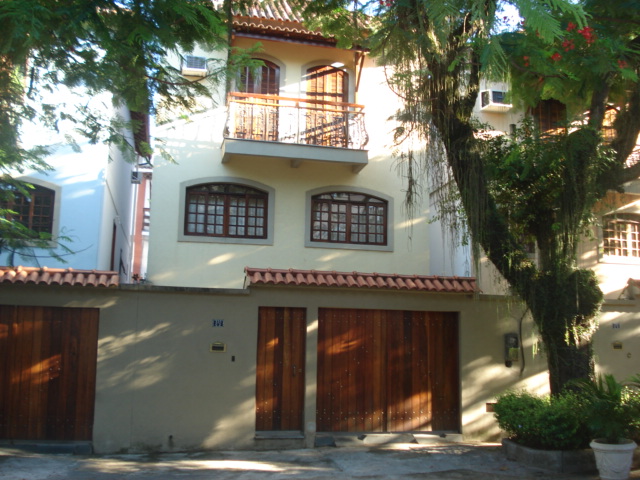
The next, I’m showing you the “Van Stop”, ( I think this expression does not exist, this is a coined word by me). Near the van, I introduce you to Sales. This man is responsible for organizing the van queue. He advises the passengers about who is the next driver is and traffic problems. He’s very nice and polite and He says, “I wish everyone a good journey”.
The travel start toward to downtown, on the road with a native plants.
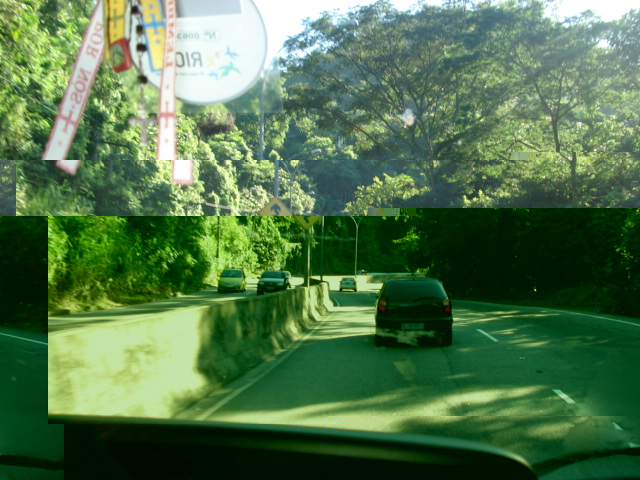
During the travel you can see another famous stadium called Engenhão. This part of the road there isn’t any favela or shantytown. I’ll show at the end of this road a favela.
Here Engenhão Stadium (Click here to see good photo)
Here you can sea a piece of favela
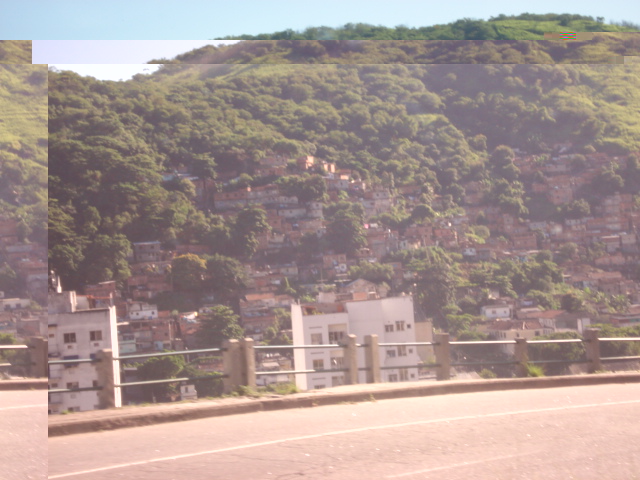
Here in Rio de Janeiro, the Shantytowns stay at mountain and the people who live at shantytown had to build a shanty, but, before they had removed all native plants. This native plants maintain the soil firmly fastened. This process makes the landslide happened during the summer, when there are a lot of storms. (click here to see a photo)
Here start the boring traffic jam, but the driver get other way.

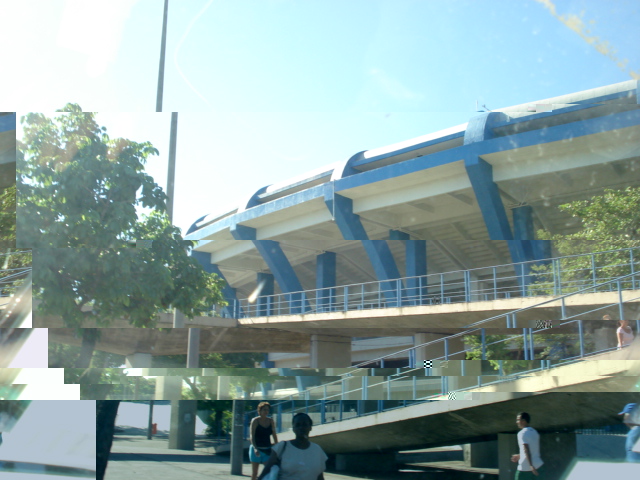
Again, our famous stadium Maracanã.
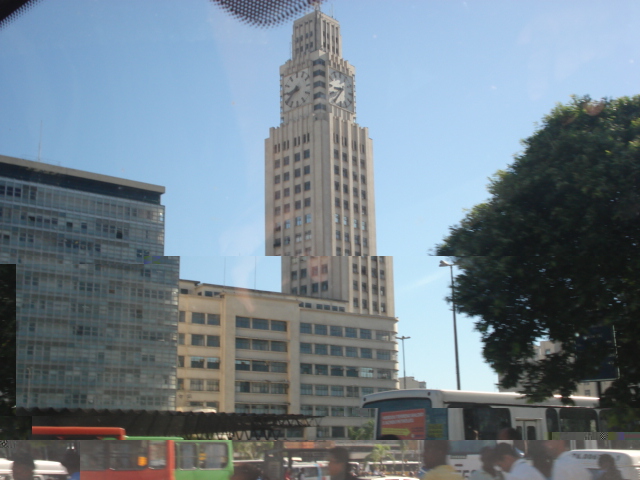
It is Central do Brasil, this is a train station inaugurated in 1858.
We arrived at downtown, there are a lot of nationals and internationals companies.
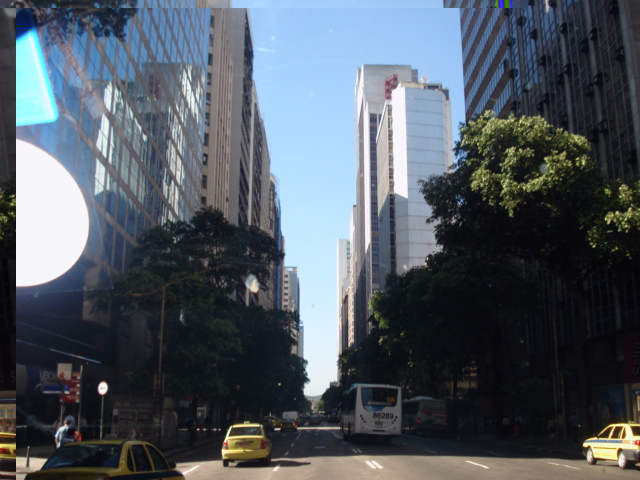
This is the build where I work.
I introduce you my coordinator Anchizes and my colleague Neide.

There are a lot of professional in this company called Petrobras that produces oil and gas.
Unfortunately, I haven’t photos from my team because they are at other build and didn’t have any time to stay there.
My job, maintain an Intranet about Gas and Energy production and distribution.
I and my team, maintain communication through the network and I can know about how is going on with the tasks and I can control the artifacts software quality or if one technical member need some help.
I can see sugarloaf (Pão de Açúcar) from the window where I work.

Finally, I introduce you my customers. They give me all requirements to maintain and produces new web pages on Intranet Gas and Energy production and distribution.
My costumer can enjoy viewing Bahia de Guanabara Cove (Guanabara Bay) and can see other Council from their window called Niteroi. The Guanabara Bay separates the two Councils, Rio de Janeiro and Niteroi. But there a lot of people who live in Niteroi and work in Rio de Janeiro and vice-versa. To cross the cove there is a ship and the big bridge called “Ponte Presidente Costa e Silva”, but, well-know Ponte Rio-Niteroi. (click here to see photo)
This is a special day, because four days late is Easter and today, after work, other people met to celebrate Easter and exchange chocolate (I couldn’t find this word etymology, but, this word is the same in Portuguese) with our colleagues.
That’s all for my typical with exception the Easter celebration.
Hi Trudi,
I’ve talked with my friend, who has helped me about the loan words from Portuguese to English
Most of words come from kind of dance, music, animals and food.
Lambada, bossa nova, maraca, samba came from music.
Cashew (caju) and tapioca is kind of food.
Mosquito, toucan and piranha is kind of animals.
Only loan word I use in this Blog is favela this means shantytown.
I attached the links for the site with etymology words
http://www.etymonline.com/index.php?search=Brazilian+Portuguese&searchmode=nl
http://www.etymonline.com/index.php?search=Brazil&searchmode=nl
http://www.askoxford.com/dictionaries/?view=uk
Bye
posted on Sunday, 23 March 2008 | comment on this postGeneral thinksHello Readers, I'm so sorry for today because I’m not inspired, but, I read the comments and Naheed from Pakistan asked me about Lambada. This loan word come from Portuguese language is a music genre created in the seventies. There was a soap opera in Brazil with a lot of scene with Lambada. Naheed, I’ve never dance Lambada, but, I know is a sensual dance. At this time, in the seventies, a lot of sports center begun teach Lambada and some sports center mix Lambada with gym and they created Lambeorbica (Aerobic Lambada). Naheed you can see some example at YouTube. Put the search key “Kaoma ensinando Lambada”. This video teach in English about Lambada, by the way, the translation is “Kaoma is teaching Lambada”.
Hello Trudi, You talked about barbecue lamb. I usually do barbecue for my family, but, in the past I’ve done barbecue for 20 persons. In this barbecue I cooked meat, chicken, sausage and pork rib. Some time I cook fish at barbecue with a lot of sauce. It’s delicious. Nowadays, I hire a person to do a barbecue for a big party.
Barbecue it’s a typical food in the South of Brazil, but all country usually cook at barbecue.
Another part of barbecue is a “Caipirinha”, I love so much “Caipirinha”. This is a alcoholic drink made with “Cachaça” lemon and sugar. Cachaça is made from sugarcane as strong as vodka.
Trudi, you can get how to prepare a Brazilian Barbecue at YouTube, put the key search “Proper Brazilian Barbeque”, this video will show you in English how to prepare a Brazilian Barbecue. If you have some curiosity, you can use a key search "Churrasco", barbecue in Portuguese.
Samuel from Campinas and Cristina from Buenos Aires-Argentina thanks for your comments and I hope you go on read all blogs at BBC.
Vlad from Montreal, there a lot of place not recommended for a tourist visit, but, if one day you come to Rio de Janeiro you should know about this places. I’m not sure, but, you can hire a tour guide to visit favela.
Vlad, here in Brazil you can have anytime for social relationship. There isn’t any rule about time you to communicating with colleagues. Only the rule for lunchtime. It depends on the company, this lunchtime is flexible or not. It’s usually a colleague ask to other, do you want to drink coffee? In this moment you can talk about anything. The point is, the professionals have to know what their priorities and when they have to give to the boss the outcome.
I’m thinking to study English in Vancouver. Some people tell me it’s not much cold and the city is very cool. What do you think about it?
Hello Tanya, I’ve been in Italy too. I’ve stayed in Rome. Rome it’s a beautiful city and my wife has a relatives there. I hope one day come back to Rome with my wife and my two kids.
Rossina, Brazil is waiting for you.
Hello Ana Paula, some vans drivers are not reliable too in Rio, but, if use a “Van Stop”, you can choose the reliable driver. There are Trains in suburbs for passenger and Subway in suburbs and other place in Rio.
Leila from Finland, Tanya from Moscow, takehito from Japan Thanks for your comments.
Nguyen Van Dung from Viet Nam, the football is most of popular sport in Brazil. There a lot of teams and I think I can write a blog about this subject. I’m not football addict and I think I’ll need some help to write about this.
Ok I’m so tired and it’s 1:15 AM and my time up because I have to work a lot tomorrow.
Bye
posted on Wednesday, 26 March 2008 | comment on this postMy life in Universities.Hello Readers, I’ll talk about Universities in Brazil and something about the education system and my experience about this issues.
In 1981, the student wanted to go to University had to do a written exam about all subjects learned in the fundamental and intermediate courses. (There are two parts in the Brazilian Education System before the University, funfamental with 9 years and intermediate with 3 years)
When the students signed up to do the written exam, they had to choose 3 options of University they want to ingress. If the student got a higher grade he/she could ingress at first option. The first option, the student put the government-funded University because they don’t have to pay to study.
In that time, the Computer Science was a branch of mathematic and only government-funded Universities had this course.
My first option was to UFRJ University, the second one was FAHUPE University (private) and third, I don’t remember.
Unfortunately, I hadn’t enough grade to ingress to UFRJ and I had to go to FAHUPE. The FAHUPE, didn’t have Computer Science, only pure mathematic and in 1982 I had started the course in pure math and I finished in 1986. This course gave me permission to teach math in fundamental and intermediate courses.
I didn’t give up the Computer Science, In 1986, I had started in my second job like a Trainee in System Analyst in the same time I started my first post graduation in Systems Analysis.
After this time I worked with a lot of technologies like Cobol, Basic, Pascal, Clipper, Powerbuilder, Oracle, Data warehouse, Business Intelligent well-know BI, Java and .Net. All this technologies applied in a Business Systems to support the directors and principals to make decisions in a lot of Companies, which I worked.
I should have done a Master's Degree in Software Engineering through this years, however, the Universities offer this course, want students dedication only to study. Well, I couldn’t left my job and gave up to make money to spend my time into a University even the government pay me to study, because the income less than half of salary.
In 2005, I decided to make other post graduation in Project Management Software.This decision was good, because I could update my Knowledge. Another point was, when I approached the University again, I found out the Master's Degree in Information Technology which accept professionals can share the time between Job and University.
I think this story is a lit bit confused. What’s the difference post graduation and Master's Degree here in Brazil? Post graduation is for the professional wish to specialize in some subject and have to write end term about this subject. Master's Degree, the students have to make research about some subject and write a thesis with scientific basis.
About the University, That’s all Dear Readers.
Marianna from Slovakia, I hope solve your anaemia. I think you could change your meal habits to test your anaemia go away.
Takehito from Japan. Here the Brazilians using rise for every meals. It’s common in barbecue to use a mix eggs, ions and a kind of flour called “Farofa”.
Tanya from Ireland, I had a similar experience here in Brazil when I’ve stayed at Belo Horizonte City and I and my friends have had to sleep on the street, but, this is a long old story.
Vladimir from Ukraine, Really, barbecue is usually for a big party, but, sometime at weekend my family wish eat barbecue and I cook for them.
Gak from Pakistan, the place have a computer have a condition air too and your eyes become dry, I think you be able to use some eye drops.
Trudi, if one you day you come to Brazil you are invited to come to my house to BBQ with a lot of Caipirinha.
My time up 01:25 AM.
Bye
posted on Friday, 28 March 2008 | comment on this postTchau my dear Readers and TrudiHello Trudi and Readers, today it’s my last day at BBC Blog and I don’t like to say Farewell, but, I like to say thank for all readers spent time their time reading the texts and left comments.
Unfortunately, I didn’t have much time to write every day, but to write a Blog was a fantastic experience and exchange ideas with people around the world and this people ask me about my life, my country and other thinks.
I tried to answer all readers and Tanya from Ireland, Pary from Iran, Vladimir from Ukraine, Adriana and Ana Paula from Brazil, Richa Pathak from India, Kuldeep from Jammu and others, I always wrote near at midnight, and this time I was exhausted, and I’d like to write much more about your questions, Sorry, for that.
Trudi, thank you for improving my English and to know about life in China and your family. I’d like to know you Personally. Who knows one day I go to China or you come to Brazil to taste Barbecue.
I would also like to thank the BBC Learning English for the opportunity to do this blog.
Finally I can say, “all people have contact with me, give me something and I hope to gave to the readers something too.”
Tchau.
Yanko.
posted on Sunday, 30 March 2008 | comment on this postFrom BBC Learning EnglishMarch is nearly over and that means it's time to say thank you and farewell to Yanko. We have all enjoyed your fantastic pictures of Rio, Yanko, as well as your account of Brazilian customs and superstitions, an insight into Brazil's Higher Education and other stories. We wish you all the best in your efforts to learn English and hope you'll keep coming back to our site in the future.
From tomorrow, we have a new blogger. She is Xuan from Vietnam. Welcome Xuan and enjoy blogging on bbclearningenglish.com!
Finally, some great news from Lewis Davies whom some of you will remember as our teacher blogger back in 2006. Just over a month ago, on 27th February, his wife Tomono gave birth to a baby boy! His name is Oscar and this is his picture:

Congratulations Lewis!
BBC Learning English team posted on Monday, 31 March 2008 | comment on this post | |


