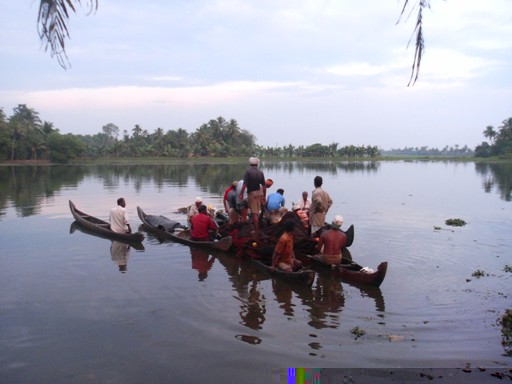
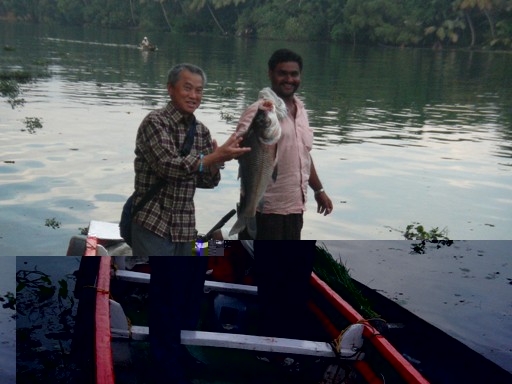
August 2008Welcome to the month of August !Hi everybody!
I am Kiran Gautam from Nepal.
I am really glad to join this blogger for improving my English communication skill.
At first I would like to thank BBC Learning English Production Team for selecting me as a student blogger for this month of August.
I am totally a beginner. My native language is Nepali. Though I took my higher studies in English medium my English communication skill is not good. English has become very common language. Specially, when we work in a multicultural and multinational working environment it is must. To express myself correctly and to understand others correctly is very important. 5 years ago my friend Swanaam told me to watch TV programmes and listen radio to better my understanding capacity. What he says is the more you listen the more you will understand. Since then I am trying and that has helped me a lot. But still when the time comes for writing I can’t go forward more than a paragraph. About 15 days ago, I was searching audio programme in BBC website, I found English learning programme and this blogger. I read Simon’s blog and comments to that blog too. I also wrote comment on one of the blogs. I found interesting and decided to join this blog. Lucky me I got an opportunity to express myself by writing.
I hope I will get many corrections and suggestions to improve my writing skill from Amy Lightfoot as a teacher blogger for this month.
I was born 28 years before in a small village “Rajhena” of Nepal as a daughter of Mr. Basudev Gautam and Mrs. Bishna Gautam . I was grown up there with my parents and two elder brothers Mr. Navin Gautam and Jivan Gautam. I passed my school leaving certificate from my home town. To study intermediate in Science I came to Kathmandu, capital of Nepal in 1995. At that time we didn’t have college of science and technology in our home town. Since then I am living in Kathmandu. I go to visit my parents once or twice in a year. It’s been 12 years, time is really very short.
I know this month of August will be very short for me.
A warm welcome to all of you in the very first day of this month!
I will try to come up with interesting and informative things in my next blog.
Have a nice weekend!
posted on Friday, 01 August 2008 | comment on this postFew things about Nepal !Hi Friends,
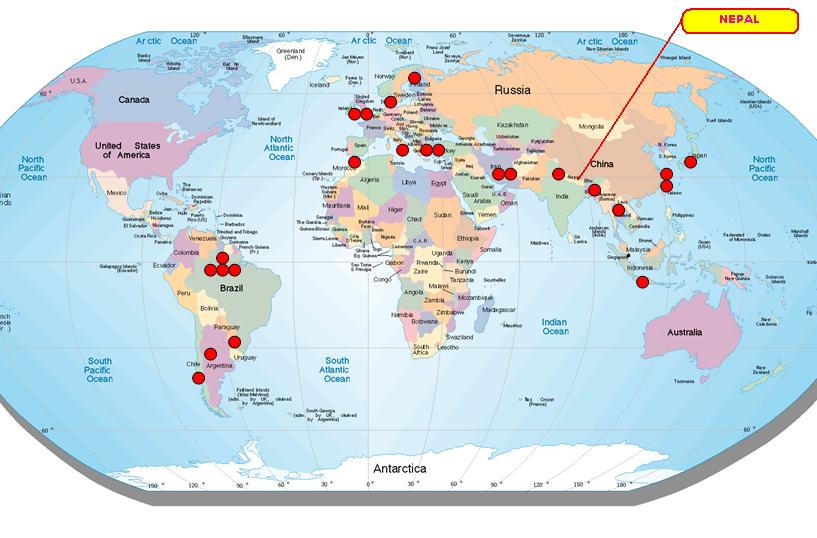
Thank you very much for all your comments . Its really a very nice experience to get comments from all over the world. On 4th of Aug,08 I received 25 comments from 18 different countries.
I tried to plot them on world map just to have a quick idea where we belong to. Dear friends and my respected teacher are you searching for yourself in the map ? I think I haven’t left any of you . By plotting this points I came to know at least my friends location in the world map.
 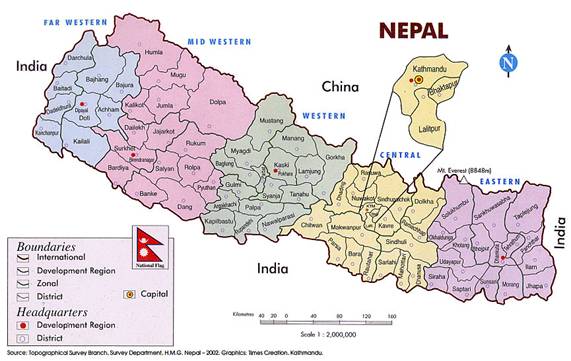 Nepal is a landlocked country situated between Mahachin (Big China) and Maha Bharat ( Big India). It is renowned as the birth place of Lord Budda and contains 8 of world’s 10 highest peaks including Mount Everest and Kanchenjunga - the world's tallest and third tallest - on the borders with China and India respectively. Its altitude varies from 70 to 8848 meters. It has population around 28 million with different culture and languages. Around 199 languages are spoken here in Nepal. Nepali is a common Language. Geographically it is divided into three sectors tarai (plain), pahad (hill) and himal (mountain). Tarai is influenced by Indian culture and Himal is influenced by Tibetian culture. Some of you were asking about changes in Nepal. Yes there has been a change. Just like everything and everybody changes a little everyday, Nepal has also changed. Before the ruling power was in hand of king, so it was a kingdom. Now it has become republican country. First president of Nepal was elected in 21 July 2008. Nepali people are patiently waiting for new constitution in this 21st century with political stability as well. We are really very much enthusiastic about new Nepal.
Development wise it is a least developed country. Purchasing Power Parity of Nepal in International dollars is 1040 (2007). Rank wise it is in 190th position. Per capita income is 210 $. Given the high population growth rate of 2.5 percent, per capita income grew by only 1.4 percent per annum during the last 25 years.
(Source - click here)In waterresources it is second after Brazil. But i feel same to say that we have become able to generate only 616 MW of electricity from hydropower. 80 % of Population still lives in rural area. Some of you will be surprised by knowing that 60 % of population still lives in dark. That means no electricity at all. They are using kerosene to light the lamps. The cooking fuel is wood, twigs and biomass in rural area and in urban area its mostly Kerosene, LPG gas and electricity.
Amy from your previous blogs I knew that you were in Delhi. I was so excited when I saw the picture of Bhaktapur in your blog. The place where you have been is called Bhaktapur Durbar Square. We have other two similar types of Durbar squares in Lalitpur and Kathmandu.  I think Amy you will recognize this photo it’s of Bhaktapur Durbar Square.
 Photo: Kathmandu Durbar Square
 Photo: Patan Durbar Square
Amy was asking about feast and festival in my home town. Yes there are lot of feast and festival in Nepal. In average 1 festival per month. So we have lots of holiday here in Nepal. But my office has its own holiday plans so I can’t enjoy much holidays. There was a holiday for New Year after then it’s been 7 month we didn’t have any holiday. Today we have one festival we call it Naaga Panchami. Naga means Snake so it’s a festival of snake. It is ccelebrated during the monsoon rains on the fifth of the brightening lunar fortnight late in July or early August.
Naga, the Snake-Gods, are associated with rain in Nepal. People widely worship Snake-Gods as a controller of rainfall. When there is a drought, people perform pujas at chanting “Pani deu Naga Raja (Give us water Snake King)”.
Every year on this day, religious mela (fair) is organized at Nag Pokhari, Taudah and Nagdah as well. People of Thimi perform special puja in Sidha Pokhari, Bhaktapur where they believe that a Tantric holy man still dwells in the form of Snake. People, from all way of life, pray Naga, the underground Snake Deity with due respect and devotion for the protection of their treasures and water related calamites. Most of the people perform puja for Naga, before starting construction of new building to reduce the possible collapse of building due to Naga. Their images are displayed over the doorway of every Hindu household. Milk or rice water, honey, curds and boiled rice are offered for the Naga.  Photo : Siddapokhari, Bhaktapur
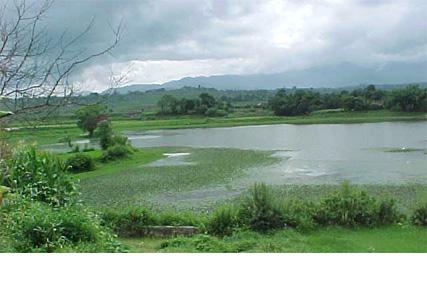 Photo: Taudaha lake , Chovar, Kathmandu
The lake was created by God Manjushree as a home for the serpents who lost their home when the valley was drained. Legend has it that the King of the Naga (or Serpents) - Karkotak resides to this day in the epicentre of the lake.
I don’t know today’s blog will be interesting for you or not. I am feeling that there is not a sequential flow in my writing today. Friends excuse me for this week; I have an interview in coming Friday and an exam in coming Sunday. I have to prepare for that. My office starts from 8:30 in the morning up to 5:30, Saturday and Sunday are with me to do the rest of thing other than official. But there is one drive that I need to find some time for improving my English.
Amy thanks for your all comments. I am weak in vocabulary. I hope “5 a day” will help to increase my vocabulary. Comments and questions to Amy’s blog will be on next blog.
Thank you all!
Kiran
posted on Wednesday, 06 August 2008 | comment on this postThe day of Interview !Hello Friends
This morning I arrived in the office early in the morning at 8:30. My mind was full with lots of wave about interview. Work load was quite low so I managed to find some time to review for the interview. Around 12 I stopped reading and sat for a while to calm and quieten myself mentally. I went for lunch around 12:30 with our staff in the office. Swanaam says don’t take too much food before going to an interview or an exam. Because lots of food makes our brain busy in digesting that food so we forget important things to tell.
I ordered prawn fried rice. I didn’t take whole because it was lot in the plate. I asked waiter to pack the half of food before eating. I don’t like to waste food. While throwing food we should remember people who are fighting for the food. Yes, “we shouldn’t forget animals and bacteria too.” I don’t want to forget animals because some of you can be from animal rights organization.
I came back to office around 1:45. I prepared myself to leave for the interview and bid good bye to my reporting officers and went for the interview. It was not too far from my office; I left around 2:15 and reached before 30 minutes than the time given to me. I went to reception and met with a lady who informed me about the interview and talked with her. Though it was early, that was good for me because I got time to make me familiar to the environment. I was little bit nervous, but this conversation took my nervousness. At 3 I was called by interview panel. There were 4 persons, out of which 3 were gentle man and one was a lady.
Interview was in English medium, I didn’t feel any hesitation to talk. So I am steel feeling glad on that.
All of them asked me one by one. I replied to all the questions except two. It was about clean development mechanism (CDM) and Project Design Document (PDD). They asked me general questions not too technical. That’s why it became easy for me.
What I realized today is , because of working environment in my current office I became more confident. I shouldn’t forget this BBC blog, though it’s a start it also helped me.
Let’s wait, they will call me or not for the job? Hope for the best…….. . Any way learning English is very important.
Around 3:15 my interview was finished. I met my colleague there. He was also there for the same interview. I wished him good luck and came back to office. I opened the blog and read comments. You know this blog has made me crazy.
I opened the Ms Word and started writing to share this day with all of you.
I will address your wishes about my country and life in next blog.
It’s been 05:53 local time. I am gonna go. Bye……… friends.
Have a nice weekend!
posted on Friday, 08 August 2008 | comment on this postSome Houses of NepalHi Everyone,
Sorry for keeping you all for a very long time to get your desires and wishes be fulfilled about Nepal and its life style.
My previous blog became so personal. This week, I became too busy doing office works.
Even then I was managing time to read the Amy’s blog and comments to my blog. I know its not fair with you all to keep you all waiting.
Thanks Dima for your call, finally you had to push me to write.
This time I have taken the advice of an Indonesian friend, Rianto. I hope it’s a common wish of all.
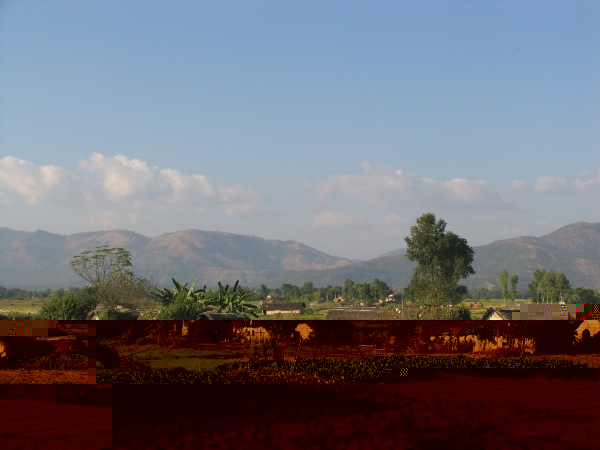 In the picture we can see huts. Whether it is a hut or a house for us, but it’s a home for them. Home a beautiful home for them.
I would like to go in detail about the construction and the materials used in making these huts. May be for some of you it can be a repetition.
The construction materials used in making them are mud, bamboo sticks, thatch, reed , rice straw , cow dung or buffalo dung and wooden bars (but very few). The wall is made of clay and net of bamboo strips/sticks. In place of bamboo some can use reed also. But bamboo is stronger than reed. The roof is thatched roof. Height is around 2 to 2 and half meters. Wooden doors are used. The doors are so small that when we have to enter into the house we need to bend our back. Windows are also very small which looks like a net made of bamboo sticks. Mixture of mud and cow dung or buffalo dung is used as paint. Dung is used as a binder in the mixture. Mixture of cement and sand is replacing this mixture now a day in modern houses.
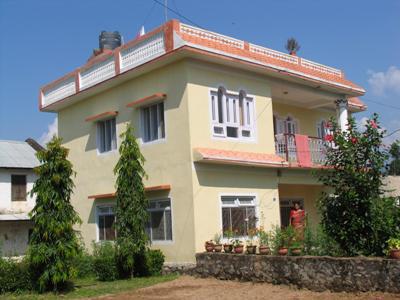
Thatched roofs need maintenance every year. In monsoon season, i.e. June-July roofs get rotten due to rain and in windy season particularly in Teri Region (plain area) they are blown away due to strong wind. These types of huts consist of hardly three rooms otherwise there is a big open space; we can call it one room flat in modern house. You might be wondering how a family lives in a one room hut. They cook in one corner and sleep in other corner. Many people are living like this in Nepal. I can’t give you the exact percentage, its round about 10 % but this is what the condition of shelter of poor people in Nepal excluding squatter (homeless and landless) who are other 10 % of population. Sometimes I feel amazed that in this such a big world people are landless and homeless. Don’t you feel sad about it ? 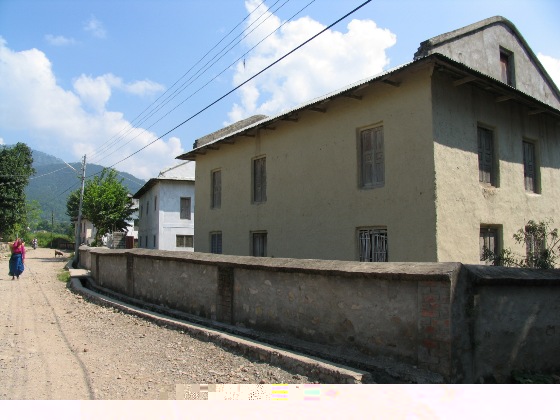 This type of house is more common in Nepal. We can see, though its not that clear it is made of corrugated galvanized steel sheet. But I would like to tell little story about this house. 25 years ago it was a one story house with thatched roof. It was made two stories and roof was with galvanized metal sheet as the earning power increased. Though the metal sheet roof makes the top story too hot during the day time but people prefer it to become free from tension of maintaining the roof every year.
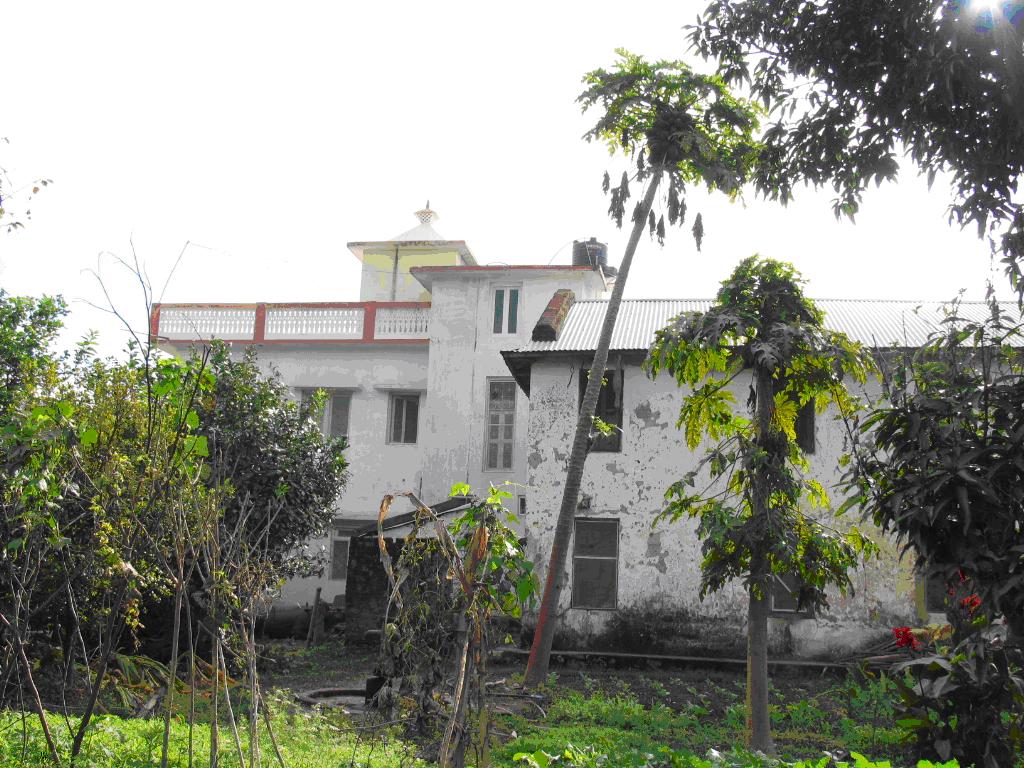
The wall of the house is of clay brick. For plastering mixture of mud and cow/buffalo dung has been used and for painting typical type of mud, the color you can see in the picture, its not white but we call it white mud. The typical Nepal word for this is KAMERO MATO. There is another mud of red color. I couldn’t find the photo. In my village white mud is very much used. In some places of Nepal red mud is used more that white mud. It’s because of their availability. 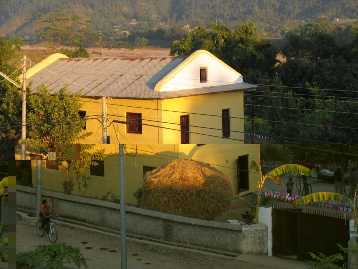 Now this house is same as above one, the difference in it is the plaster with mixture of cement and sand. The paint is the modern paint. It seems like retrofit in old technology to make some changes.
We can see how the changes have been taking place. We can also analyze how changes in economy bring changes in life style of people.
The house below is a modern type of house. Now a day in urban area you can see these types of houses except in some area which are stated as heritage area. Almost everybody in Nepal have now a dream to have a concrete building with at least 4 rooms.
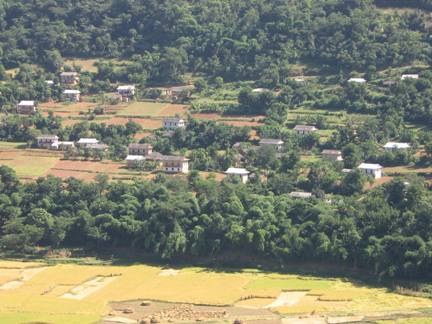
How a society is changing day by day. We can see in this village the most common type of house and the distances of house with neighboring house in the village.
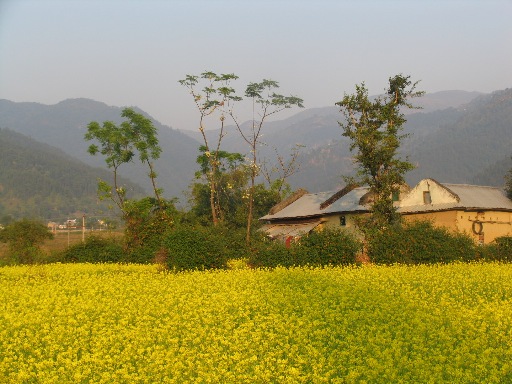
Some More photos: Condition of house due to rainMustard flowerPaddy FieldSome of the flowers from Nepal.I don't know the name of all the flowers in engslish. I hope you will help me out.
Your comments, corrections and suggestions are very very welcome ! It will be a great assest for me.
Have a nice day ! posted on Friday, 15 August 2008 | comment on this postAnswers to your beautiful comments !Hi again,
From a late lady !
First of all I would like to thank you all for the wish and encouragement !
Ismail,
Thank you very much for the comment.
Pary,
I told about the changes in Nepal in my last blog. The prime minister of Consitution Assembly has also been selected on 15 Aug,08. Mr. Pushpakamal Dahal “Prachanda” from Communist Party of Maoist. Still there is not a council of minister. They are working on it to make it inclusive of all party.
James, Sao, Paulo
Thanks for encouraging me. Now I have altogether 13 days in my hand to tell more about me and my country. I will try my best to provide with much information.
Beatriz,
I think you have seen and heard lot about Nepal from your boss. Yes, there has been many changes but the main thing what we Nepalese want is to live in Peace, prosperity and with dignity. We need at least wish from people of all over the world.
Kishor Jee,
Thank you very much for your encouragement and suggestions
Wisarut
I got an opportunity in 2007 to visit Bangkok. So I am happy to get comments from where I have been. I don’t want to forget few words like “Swadikhaa” “ Khapun Khaa”, “Next station Naanaa” and Soi sukumvit.
Ernesto,
Ya, we are really very very far in arithmetical distance, but in the era of globalization and information technology we are very near. You are right, high mountains, narrow streets, reed roofs are the assets of Kathmandu, Nepal now for the tourism.
Weather in Nepal varies from Place to place and it is very unpredictable even in a same place same season and same day. We have here very cold places and very hot places.
Martin,
My academic background is renewable energy engineering, but I have not become professional yet in this sector. I love to talk, to read about clean energy and climate change. Our world is already in vulnerable position. Lets put our hands together to fight for this pollution.
I didn’t feel boring at all while reading your comments. I understood what you wrote. BBC website for me also is a fantastic. With the help of which we from different country are talking to each other and sharing our life style and culture.
Hyoahil,
I miss my family a lot. These days we have access on telephone lines, we can talk. The price has also been decrease than what was before. Its around Npr. 5 per minute. I am here with my brother and sister in law , parents come to visit frequently. That’s how I am managing not to feel sad.
Christine,
I don’t know how much I can write to address your excitement but I will try. Now I am working in an International organization in an Aviation Section. Though my masters degree is in renewable energy engineer , with the help of training in airlines sector and background of mechanical engineering I am doing this. But my future plan is to work in clean energy and climate change. The last interview was also for a research officer for clean energy and climate change.
Djalma,
I am also a new student learning English. We will learn together as much as possible from this website. Thanks for you comments.
Danijel,
When I read the work Bosnia, Horjgovenia came together in my mind. I think Horjgovenia is your neighbouring country. Yesterday we have Gaijatra here in Kathmandu. This festival is in the name of person who died in one year period. It is particulary celebrated by Newari caste every year.
Gurupurnima is a special day to greet, to show our respect and to pay fee for the masters. It’s a Master’s Day. Guru means master and Purnima is foolmoon day. Now a day it is also called teacher’s day. Amy can tell us the difference between Guru and teacher. It’s a day in which a deciple can express his or her gratitude to the master by giving cards(though it’s a modern culture), fruits, sweets etc…. These days in school and college students organize a cultural programme with music and dances for their teachers to celebrate this day.
Cristina,
I agree with you, this is a wonderful website, but I am wondering whether I will be able to fully utilize this opportunity or not.
Mahjabeen,
Thanks for reminding me the song. I don’t like as Juhi in that film. I don’t like person like Saharukh in that film. He was so crazy after her. Ha ha…….But I like the Hero very much.
Rodrigo,
I am also thinking as you thought. I became so slow ans late than Amy. You told from heart. I should say sorry to Amy I am not following her properly.
Jorge,
Sure, we will learn from each other.
Redouane & Bruno
Amy is helping us to improve our English for this month. Lets follow her together.
Adriana,
Thank you very much for your comments.
Rianto, I tried to fulfil your wish little bit in my previous blog. I will wait for your comment.
Anayet
I was like you before,this time I am trying to put my effort in writing. There is a saying that practice makes a man (also woman) perfect. Though there is nothing called perfect, we can put our effort to better than before.
Leila, Guzin, concetaa
Thanks for the comment.
Habooba,
Nepali is the widest spoken language. Out of 199 I can understand only one i.e Nepali. I am learning Newari these days. Kathmandu is dominated by Newari people. They understand Nepali but like to speak in Newari.
In my first bolg I wrote a warm welcome, ya I fully agree with you, for the people from hot region it doesn’t make sense. A cool welcome would be very good. For those from cold region, it’s good.
Yeap,
Thanks you are giving company to me.
Babu,
I wan in Kerela in December. I lived in Champakulum. I will blog on kerala’s visit next time.
Trimie,
Till now I don’t have problem in mentioning my age. May be I will stop telling after two years. My home is not too far Trimie. Its only 12 hrs in Bus from here in Kathmandu. The problem is to get leave from office. What to do, loosing Job becomes another problem.
Vijay,
Our culture is similar in many aspects but we celebrate it differently.
Wanty,
I understood your comment. You can try to be a blogger. But make sure that you have enough time to write. It will be a nice experience.
Guilherme Felicitas,
Thank you for the comment.
Rosalba,
From your past experience of blogging you can give me some tips.
Trang,Trang “ In the website you can go to “ Be our blogger”. There you can find the instructions . I think Amy is a right person to give suggestions on it.
Sude Kemal, Harrron,
Let’s use blog as much as possible.
Selchuk, Julio, Thao
I will keep trying to do as much as possible.
Denis,
Weather in Nepal varies from place to place. It has a very cold places and very hot places as well. Kathmandu is a cold place. In summer the weather in Kathmandu used to be good. But this year we felt hotter than the previous the previous. Experts of climate change are saying that it might be due to global warming. The temperature of Kathmandu goes sometimes below 1 degree centigrade in winter.
There are some places like Phulchoki and Daman where people go to enjoy snow fall. I haven’t been there. I am planning to go this year.
Maurico,
Thanks for your comments.
Kitty,
You are so young and you have baby, good to hear it. Here in Nepal, government has set a limitation on age for marriage. Male must be 22 and female must be 20 year old. Please take care of your health along with your baby.
Villavicencio,
Our common food is Rice, Lentil (used as soup) and curry. But in some places people eat flat bread made of flour corn/maize and also they cook as rice where there is scarcity of rice due to unfertile land and very limited source of water.
Hyoshil,
There is a team with 8 sportsman/sportswoman has gone to Olympic in Beijing. 3 of them are women. They are gone for shooting, swimming, weight lifting and running and for Judo Karate . Seven (7) of them were defeated. Now only one of them is left to participate. I wish him good luck.
Most common sports for women are volleyball, swimming, Judo karate (it can be a Nepali name), running. But Now a day they play every game, football, cricket, shooting etc.
Jeddy,
13 % of our total fuel consumption is petroleum fuels (LPG, Kerosene, Diesel, petrol). Share of electricity in total fuel consumption is only about 1.4% and 86 % share is of traditional fuel sources, only about 0.5 % is of clean energy.
Naweed,
Thanks for your comments.
Pilar,
Some of the differences between 1900 and 2008 A.D. in my view are as follows:
• People are more educated and conscious about their rights
• Urbanization of places are taking place rapidly
• Fuel consumption, waste and pollution level has gone up
• Transportation facility has been increased, before it used to take a month to arrive from my home town to Kathmandu now we can travel in 12 hours in Bus and in around 2 hours in airplane.
• Country has become a republican.
• Internet and telephone networks are available. So communication has become very easy.
Thao,
Nepal is not a Buddist country. We have verity of people from different religion. It belongs to people from every religion. Formerly it was called as only one Hindu nation. Now it in new constitution there is no more hindu nation. It has become now non-religious country.
I don't mind to go wether it is temple, monastry, church, or masjeed. I believe in only one god that is the universe.
Madhav Jee,
You are not a judge that’s true but we are in the process of learning and teaching. I liked your comment. Thank you very much!
Moody, Ada, Stef , Felicitas, Luis and my respected teacher Amy thak you very much for your wishes.
I have tried to answer the common question of all though its late.
Have a nice day !
See you all in next blog tomorrow !
posted on Tuesday, 19 August 2008 | comment on this postDresses in Nepal !Hi Again !
In Nepal we have different castes. They have their own mother tong. They have their own special dress for their identification.
Some of them wear as a casual dress and some of them wear only in special function.
Common dress for a married woman is sari and blouse. Unmarried women normally wear Suruwal(it can be both choose pant or like a pant), Kurta and long scarf. Its similar to Indian dress. I don’t know the name in English . Amy would you kindly help me for this.
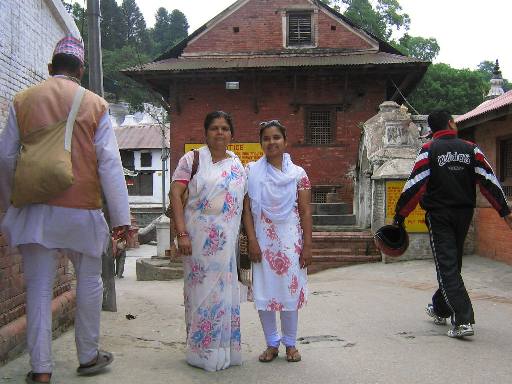
My mother in sari and me in kurta suruwal.
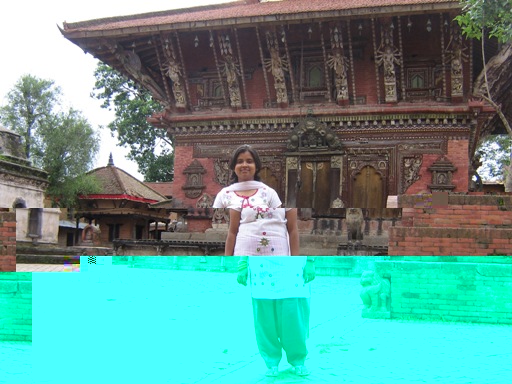
Me in Chagunaryan temple in surual kurta/ Kurta Paijama and a long scarf.
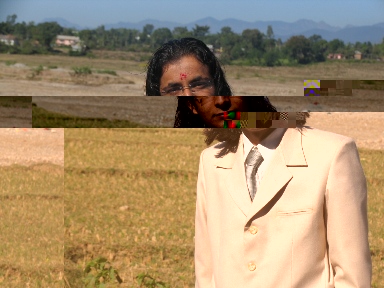
Men wear daura suruwal , kurta and coat as a traditional dress. Daura surwal consists of 8 strings to tie it.
Now a day pant and shirt or T-shirt has become so common that nobody wears the traditional one except in some national programme where the traditional dress in mandatory.
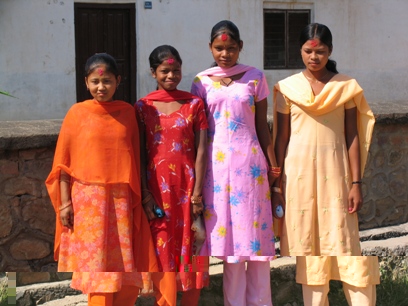
They all belong to Tharu cast.
But in urban areas, girls wear pant and shirt so we don’t see any difference in western dress and in the dresses Nepali girls wear.
Chinese, Thai and Indian dresses are very common in Nepal. Its all made in not their traditional one. You can imagine what kind of dresses we wear.
Regarding traditional dresses, I also don’t know the complete name but I can try.
Here is one picture below in which you can see Gunyo (Sari), Cholo (blouse).
Lady in traditional dress and Lady in man’s dress.

Gurung Women
Tharu dress
Tharu girl with ornaments
Newari dress
The importance and beauty of the dress can be seen when the special type of ornaments are wore with the dresses.
Dress in red color are taken as good for married women. In our traditional culture, a married woman must wear sari, bangles in her hand, tika in her forehead, red colour in her head its particularly for Brahmin, Chettri and madhesi culture. But others also prefer to wear sari.
A woman whose husband is not alive can’t wear colourful dress. She has to wear plain white dress for one year after her husband passed away. After then she can wear printed sari in white, grey which is not colourful. But this rule doesn’t apply to man. They can wear dress of any colour. Man has to be in white dress for one year only when his parents die.
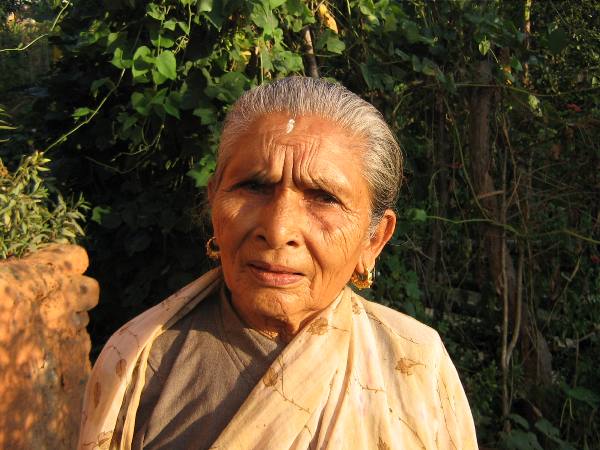
My granny in grey color I don’t have my grandfather now. He passed away when I was a little kid.
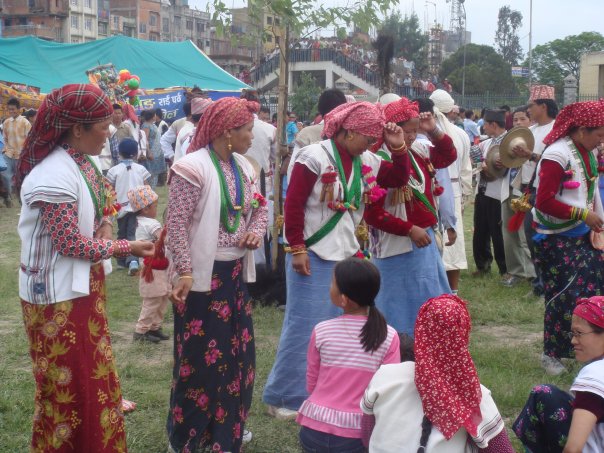
Rai Women dancing in their Ubhauli festival
It’s the special festival of Rai people and is celebrated just before they do rice planting.
There is another called Udhauli which is clebrated at the time of rice harvesting.
But these days tradition has been changing. As Amy’s said “ These days people wear clothes exposing so much flesh”. Similar thing applies here in some urban area like Kahmandu, Pokhara, Biratnagar..
When I read the sentence, I remembered my granny, even my mom doesn’t like clothes like that.
I am also little bit traditional. After high school I left to wear skirt. But I started to wear pant and shirt when I joined bachelor degree. I remember the day my teacher asked me to wear pant and to cut my hair from next time.
Actually, we had to do practical classes every week in a workshop where we need to use lathe machine, milling machine, drilling machine etc. Because of fear of accident with long scarf and long hair, I started wearing pants taking advice from my teacher. But I didn’t cut my hair. At that time I didn’t have courage to cut my hair. I still have my first pant and T-shirt which was bought by my father.
The day I wear pant I was feeling so uncomfortable because I was easy in wearing the dress.
But the tradition is changing and now a day unmarried girls wear sari in special occasion like marriage ceremony, birthday party, office party.
What I am writing is all based in my knowledge and according to what have seen. I represent Brhamin family so it smells more like that. Sorry for that.
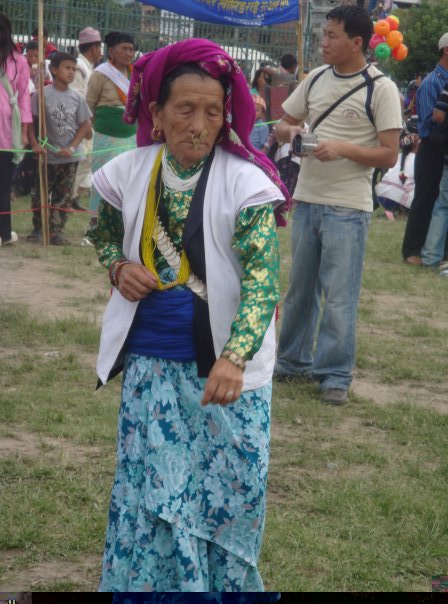
Rai woman dancing in Ubhauli festival.
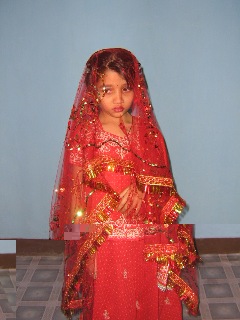
My sister in bride dress.
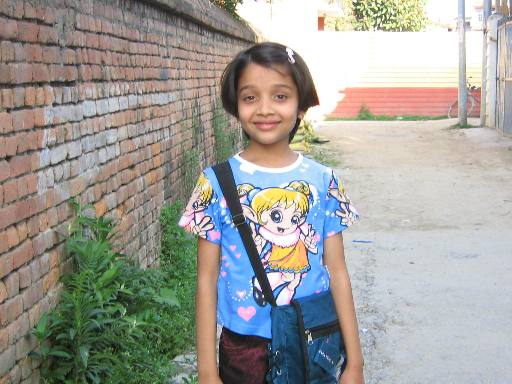
She is also the same sister. When she was 10 years old.
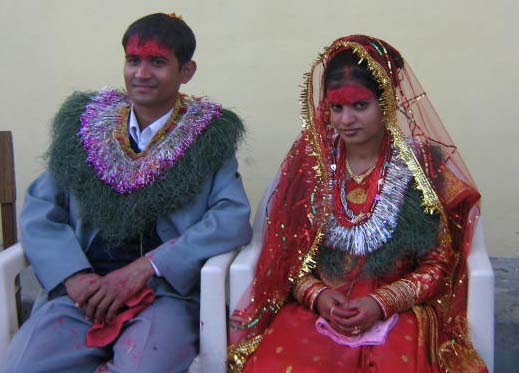
My brother and sister in law in their marriage ceremony
My friends and me in pant.
I have changed a lot these days.
O.K. friends see you tomorrow with something!
Bye !!!!!!!!!!!!
posted on Wednesday, 20 August 2008 | comment on this postMy daily life and undone homework !Hi everybody,
Today i have come up with my homework and my daily life. At first I present my homework and then about my daily life .
Amy, I have tried to link the sentences. I don't know it will be o.k. or not.
Here I go...
1. Despite being very busy in my office works I read Amy's blog and comments to my blog.
2. Though for some of you it may be a repetition eventhen I would like to go in details about the materials and the construction of these huts.
3. The roof is thatched roof and the height is around 2 to 2.5 meters.
4. Red mud is used more than white mud in some places of Nepal because of its availability.
5. The metal sheet roof makes the top story too hot during the day time yet people prefer it to be tension free from maintining this every year.
In my last blog I felt that I wrote more about the dress of brahamin caste in Nepal. I couldn't include and explain more dress for example tharu people. They themselves wear different dress depending on the places. Most of the dress are of brahamin, Kshetri and Newar. I wrote " it smells more like that". I felt my writing little bit biased so I mentioned that.
Kishore Jee, you are right I put more women dress than the man and also i couldn't include all the dress which we see in Nepal.
Here is the natioanl dress of man which i forgot to include last time. I didn't do gender balance last time. sorry for that.
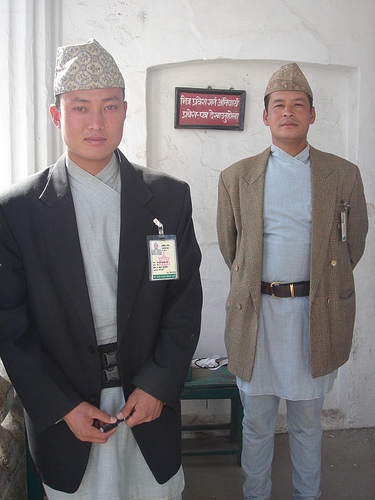 Let's move to the comments on houses in Nepal.
Yes, Amy we have certain procedure which should be completed before we start building a house. In Nepal most of the houses are built in private property. For big building for instance supermarket, shopping mall can be built in leased land which should be returned back to government according to the agreement done between party and the government. The specified period be 25 , 50 years.
The next thing is the drawing of the house should be approved by municipality and house should be made in certain distance from the access road if there is any,
And also there are laws which don’t allow making building more than 3 stories. It is applied in the king’s way where there is a palace and near and around durbar squares to save the beauty of the area and to conserve the heritage area. I think there are more places but I don't have idea about that.
Now about charity shops:
Here in Nepal also we have some charity shops some of them are in the name of orphan children, some are in the name of disabled and some in the name of women. I know about the one in Bhanktapur, they prepare pashmina shawls, scarf, handkerchiefs and put for sale. I haven't got chance to go there. When I find time I will go and try.
Now i would like to go to my everyday life. Though its not interesting I am writing.
Its not that specific as Amy wrote but I will try to write in order.
I wake up around 6 AM. I am a late sleeper. My blood pressure is low and I have heard that a person with a low blood pressure can’t wake up early. So even if I want to wakeup early I can’t do that.
After waking up I finish daily personal routine. These days I am living with my friend. Prior to breakfast we like to have leaf tea and then we prepare breakfast together and have it. The very common dish in the breakfast are bread omlet and milk tea and some pieces of seasonal fruit. After breakfast it’s almost 7.30. I take shower and then change my dress and I become ready before 8 and leave my house at 8 to 8.05. This is the fixed time for me to leave for office. I reach the bus stop 8:15 and I take the local microbus sometimes take a LPG operated tempo and reach the office 8:30. For me from 6 to 8:30 is like an express bus.
In this period of time neither I like to get any call nor do I like to receive any call. Even a second is very important for me.
Busy in office from 8:30 to 12 noon. As soon as clock shows 12, I start going for lunch. In between 12 to 2 I can use 1 hour for lunch. It’s very hot out side. Some times I go to my brother’s place who lives near by my office and some times to the restaurants around my office. I sweat when I go and come back. But I feel hungry what to do I need to go.
I returned back to office around 1 to 01: 15 and then again busy doing works till 5:30. I leave office at 5:35 to 5:45 PM. I rush to bus. Since it’s the office time I got stocked in heavy traffic jam. I reach to house at 6:30. It takes little bit much time than in the morning because I do shopping on the way while returning back to house. When I reach to house I take shower and have black leaf tea and start cooking. The common dinner for us is rice, vegetable curry, chicken/fish and pickle. At 8 PM is our regular time for watching TV for Nepali news. At 8:30 we take our dinner and around 9 finish with cleaning kitchen. 9:15 we sat for meditation for 30 to 45 minutes and then go for sleep.
This is how I pass in usual case but there might be some exceptions. Saturday and Sunday are my weekends. off course these days differ from other weekdays.
Thank god it’s Friday!
Now its 5:35 I am leaving.
Have a nice weekend!
Kiran
posted on Friday, 22 August 2008 | comment on this postA Journey to Kerela !Hi every body,
Thank you very much Amy for the corrections. I really enjoyed the blog. I was missing to put comma very much. From next time I will take care of it.
In December 2007, we planned to visit our friend Bela in Champakulum, Kerala . She was in coma and had been unconscious for past one year.
Me and Swanaam started our journey from Kathmandu airport. The flight was around 4 PM from Tribhuvan International airport.
It took 1 hour 45 minutes to reach the Indira Gandhi international airport, New Delhi. When we got out of the airport it was around 6.30 PM. It was mid winter hence it was dark and cold out side the plane. We took a prepaid taxi to KarolBagh. We had booked a hotel at Karolbagh from Kathmandu. Karolbagh is far from airport. Travel agents did mistake in booking that hotel, they could have done a hotel reservation near the airport. There are many hotels around the airport. We reached Karolbagh area around 7: 30 PM due to traffic jam and it was very dark. After 2 hours of searching we couldn't locate the booked hotel. We called the hotel and they gave the direction to the hotel but the taxi driver couldn't find. It became 9:30 PM we were very scared. Then we decided to take another hotel. The taxi driver took us to a hotel. We stayed to that hotel though the fare was expensive. We didn't have any other alternative at that time, it was already 11 PM.
Next day morning we had flight to Cochin, Kerala at 9 AM. We left hotel at 6: 30 and reached to the domestic airport around 7:15 AM.
We had some coffee at the airport hoping that we would get a wonderful breakfast in the plane.
Our four hours journey to Kerela started from domestic airport Delhi with SAHARA AIRLINES. The flight was via Hydrabad, the ancient city of India. In the airplane we got only a piece of sandwich, small packet of juice around 50 ml. and a tiny cake for breakfast. That much food couldn't fill our belly. I didn't carry any food in my hand bag to eat in the plane because I thought that we would be provided with lunch. But alas! There was a bun and 50 ml juice. By the time we reached Cochin airport we were very hungry. The fare from Delhi to Cochin was 50,000 Indian rupee.
We reached to Cochin airport around 2 PM. The Plane was little bit delayed in Hyderabad due to new passengers coming on board.
Our friends Shyam and Biju were there to receive us. We headed towards Champakulum. On the way we had lunch together.
We reached Champakulum around 6 PM and Bela's husband Tommy was there to welcome us.
This much for today and I will continue in the next posting.
Bye
Kiran
posted on Monday, 25 August 2008 | comment on this postA Journey to Kerela contd...Hi friends,
This is the continuation of my last blog.
We knew in Kathmandu that Bela had passed away 2 days before our flight to Kerela. She had a brain stroke in october 2006. Since then see was in coma. Evenif we planned to see her unfortunately we couldn't meet her while she was living. We reached Kerala after 5 days of her death. Even then we were together with Tommy her husband for few days. Other friends of Bela and Tommy were also there when we reached.
Bela in her charming faceBela was a good friend of Nepal. She worked for democratic peace in Nepal. Neplese people shouldn't forget her contribution. Though we knew in Kathmandu we had to pay our homage to Bela so we had to go to champakulum for the deceased beloved Bela.
She was born in very very traditional and strict Hindu family in India and Tommy was born in traditional Christian family but both of them were not devout religious persons. Her final resting place was the cemetery of the champakulum church. " Tommy told us that if he had land he would have buried Bela in that land rather than on the church ground. The next day we went to Bela's tomb, lighted candels and put flowers. Then we stood in silence in memory of sweet Bela. She liked to stay in Champakulum that's why Tommy took her from Kathmandu to Champakulum in the hope that she may recover.
Bela resting in champakulum church cemetory.Bela was really very nice person, bold, courageous and intelligent. She was good writer, editor and journalist and a master of English language. Swanaam says, as you speak on she could make it an article out of it. Such was her capability.
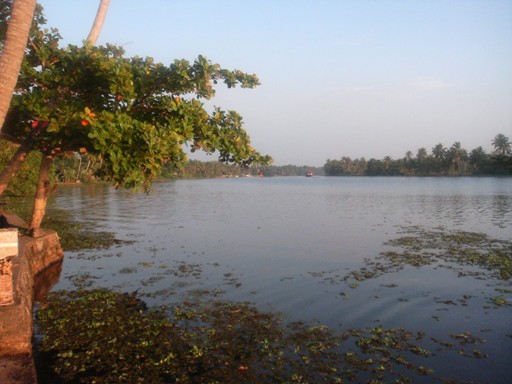
Champakulum is a village situated on the bank of Pamba river. It is 80 km from Cochin, the spice capital of the world and 30 km from Allepy, the Venice of south Asia. Actually we didn’t know it is so far from cochin and far from city area as well. Champakulum is the rice bowl of Kerela. Shyam and Biju had to travell for 6 hours to receive us. But for them it had become used to.
Champakulum is surrounded by rice fields. On the both banks of Pamba river there were coconut trees and groves. On the river bank first time in my life I saw an almond tree, a cashew nut tree and a clove tree. An almond tree on the bank of Pamba River.The boats are the means of transportation. There were many sizes of the boats for carrying people, goods and fishing.
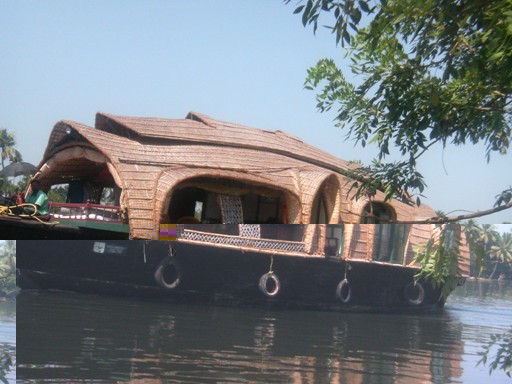
For the site seeing of famous Kerela back water, there are special boats. These boats are floating hotel called house boats. House boats are traditional boats with modern facilities. By day time tourists float on the backwaters watching the day to day life of Kerelite backwater and by night they rest in the boat itself. After dusk boats are not allowed to move.
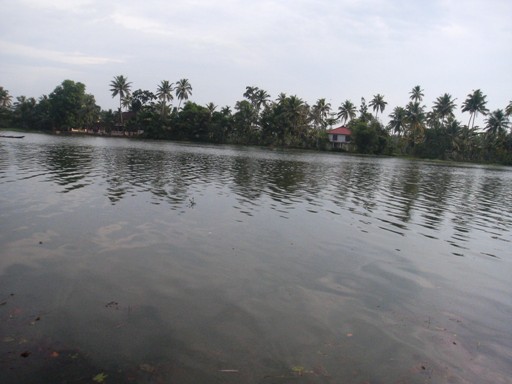
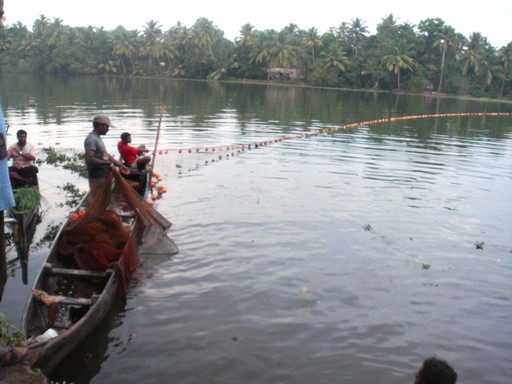
small house boatA big house boat.Kerela means land of coconut. Coconut oil and milk are very much used for cooking food. For me it was so difficult to eat for the first few days. Later, I became accustomed anyhow. The Pamba river, houses and coconut groves.We stayed for five days in Tommy's uncle's house. Though Tommy was in mourning he took us for boat ride in Pamba River. He has his own boat and he used to drive it. Next day he took us to show us the fishing in the river. But there were little fish in the river. The river was polluted with plastic, bottles and water hyacinth plants. A boat ride in the back water ( Babu in red, Tommy in white and Swanaam in check shirt)
Fishing in back waters Fishermen returning back with little fish from a big riverSwanaam with fresh water fish bought from the fishermen. That fish was around 5 Kg.
The river bank is hardly half a meter from the river surface. So this place is also in vulnerable situation due to global warming. Keralite call this place as "God's own country". If temperature due to global warming is not controlled then the God's own country will be submerged. On the Christmas Eve we had a plan to go to the mid night mass in the local church. I had been to Sunday morning mass but never been to midnight mass. I was very much interested to attend but there was a problem of the boat so I couldn't attend. I felt very bad.
I would like to share one of the interesting things. We used to have our food in uncle's house and to sleep there was another house three kilometers away. And we used to take the motor boat for the journey. One day we had a late dinner. It was round about midnight so we took our boat to go to sleep. On the way the motor boat stopped. It was only about 500 meters from uncle's house but Tommy couldn't start the motor. So we had to row and punt the boat but there was only one paddle and one bamboo for punting. We weren't skilled in rowing and punting boats. Instead of going to our sleeping place the boat went to other direction. After two hours we reached our destination which was hardly 10 min. ride in a motor boat. Next morning we tried to find the problem of the engine. Alas! the engine was alright but there was no fuel in the fuel tank. We laughed at our foolishness and went back to uncle's house for breakfast.
Next day Tommy went to his father in law's house in Pune with brother in law. We left champakulum for Trivendrum, the capital of Kereala but that is another story.
I want to hear from you. Thank you very much for your continuous support.
Have a good day!
Kiran posted on Wednesday, 27 August 2008 | comment on this postA man made disaster in NepalHi friends,
Thank you very much for your invaluable comments. I am feeling great at least I wrote something in memory of Bela.
My home work for today :
1. By the day time, we went shopping.
2. The Next day morning I will go to the shops.
3. In the coming Friday I will go shopping.
4. Nowadays I go shopping every day.
These days organic farming has become popular also in Nepal. But I realy don't know about the distribution procedure.
I liked the vegetables in the box. Its a nice way to know the name of the vegetables. For me squash and chard are new vegetables. My father likes Kohlrabi verymuch. I didn't know the english name but the local name of it in Nepali is "Gaatha Gobi". The cucumber you have shown is different than what we find here in Nepal.
Now, I would like to move to today's topic.
Though its not a good news, I would like to tell something about what is happening in Eastern part of Nepal since last week.
In eastern Nepal there is a big river called Koshi River. This river was known as sorrow of Bihar in India. Each year in monsoon season the river used to flood huge area in Bihar due to which many people became homeless, landless and some of them lost their lives. Nepal used to go through the same problem. Due to natural disaster, this year we had less destruction than previous year. It was almost the end of monsoon season people were having peace in their mind thinking that monsoon is over. But it turned into the opposite scenario.
Some of you might have already known through the BBC and other news channels about the disaster in Nepal which happened due to bursting of bank of irrigation canal of the dam in Koshi River which is called Koshi barrage. Around 50 years ago, the Indian government forced an agreement on Nepal government to build this barrage solely for controlling floods, irrigate their lands in the state of Bihar, India and produce electricity.
They diverted water from Saptakoshi River by making irrigation canal in two sides of the barrage. Monsoon starts in July and ends on Aug in Nepal. In monsoon, flooding in India was controlled by raising the gates of the barrage in Nepal. This resulted in the collection of huge volume of water in Nepal which submerged lots of lands and houses in Nepal. People living in that area became homeless and landless and were displaced from that area.
As we know regular maintenance is need for dams and canals. But this dam was not maintained since a long period according to the standard procedures. Last week (around 20 Aug) of this year due to bursting of the canal the whole river is diverted to another direction and took a new path.
Till toady 40,000 people are displaced and around 100,000 have been affected in Nepal and 2 million people of the state of Bihar, India have been displaced due to the same incident. The whole barrage is run by Indian government. They didn't maintained in time, didn't open the gates in time which made so many people to suffer in both the countries. Thousands of hectares of fertile lands and highways have been submerged. Electricity poles and towers have been washed way by the flood. Now there is darkness in the whole eastern part of Nepal. Even in Kathmandu, the electricity load shedding increased to 21 hours per week.
The tears of the people in that area are much more than the monsoon rain.
Many International organizations, civil societies, individuals are raising fund and distributing food, clothes, plastic tents and medicine to help flood victims.
I don't know when the plight of people in the Koshi Basin will be over.
Let's wish for the welfare of Flood Victims.
Now I have to close the computer. The light just went off. I think this is the new load shedding schedule.
Amy enjoy your camping and wish you a good weather !
See you in the last blog.
Kiran
posted on Friday, 29 August 2008 | comment on this postFrom BBC Learning EnglishJust a quick note to say - thank you Kiran for taking us all on a fascinating virtual trip around Nepal. Your stories about where people live and what they wear are really informative and your journey to Kerela sounds like a great adventure! Looking forward to more blogs from you over the next couple of days!
From Monday we have a new blogger, Marvin from Germany. Enjoy blogging Marvin!
BBC Learning English team posted on Friday, 29 August 2008 | comment on this postFarewell to BBC English Learning Blogging !Hi everybody,
Today is my day of last blog. For this whole month you encouraged me to write through your comments. It's really a very nice experience for me. I am realizing now that I missed those 10 days. I could have written much more in those days. But now it will be meaningless to talk about the lost days.
Amy thanks for being a teacher to me. I never expected that a person from a very far distance can be a teacher in my life. I didn't feel hesitation in writing; it might be because you were familiar to Nepalese people, culture and life style which are similar in some aspects of Indian culture.
Getting more than 200 comments from different countries is a wonderful experience for me. Everyday I was thinking about what to write in my next blog though I couldn't tell you much.
Today I felt heat of the summer gone, rains have stopped, cool breeze blowing, the soft sun and the blueish sky. These signs show that the cold winter is not far away. I don't like winter. Days are short and nights are long. Though it's very cold and chilly, it doesn't snow in Kathmandu. I have to wear lots of warm cloths and it's really very hard to wash those clothes.
After Nagapanchami, a chain of festivals starts in Nepal.
Yesterday we had a Father's day which occurs in moonless night. I couldn't go to see my father but I gave him a call and wished him very happy and healthy day. Had I been at home today I would have presented him with a bottle of wine, fruits, sweets and new clothing but poor me I am far away from home.
Day after tomorrow we have a festival called "Teej". This is a special day for women. Women do fasting for the whole day for long life and expecting good relation with her husband. This is a national holiday for women. Women go to worship lord Shiva in temples. There will be a huge gathering women in the Pashupatinath temple in Kathmandu and other temples of lord Shiva all over the country. The queue starts from 3 AM in the morning. In this particular day, Women are only allowed to go to visit the temple. Women wear red dress and gold ornaments as per their economic wealth and interests. Its time to showoff their wealth. So here in Nepal the festivals are good for rich and for poor it's very difficult to celebrate. On this day father or bothers must invite their married daughters or sisters to come to their home. A grand feast is prepared for the women a day before the festival. They start eating from early in the morning and the feast goes on till mid night. After mid night they don't drink a drop of water for another 24 hours. You can call this a festival of feasting and fasting. It's a kind of rest and get together of women in her maternal home with her relatives and friends after one year of work in husband's home. Through their songs and dance they poor out their owes, sorrows, sufferings, exploitations and operations done by husband and in-laws. In this sense it is a festival of expression of misery of women in Nepal. We can see a contrast, though she is humiliated and battered by the husband she worship for the wellbeing of her husband.
After one month we have a great festival called Dashain. It is celebrated for 15 days. Its kind of family and relatives get together. I will also get some leave days and will go to visit my family and relatives. We have a special kind of culture that we have to go to every relative's house in nearby area to get blessing from elders, have fun and food. In my village I have to go to 20 houses of my relatives at the same day. It takes around 4 hours but it's a good chance for me to renew my relation after one year.
Thank you Amy, blog lovers and the BBC English learning team for being with me for the whole month.
My friends its time to close, I will be in touch through the comments. Time and tide wait for no man/women it's time to go.
Be happy and wish you all good luck!
Namaste!
Kiran
posted on Sunday, 31 August 2008 | comment on this post |