


Dresses in Nepal !
Hi Again !
In Nepal we have different castes. They have their own mother tong. They have their own special dress for their identification.
Some of them wear as a casual dress and some of them wear only in special function.
Common dress for a married woman is sari and blouse. Unmarried women normally wear Suruwal(it can be both choose pant or like a pant), Kurta and long scarf. Its similar to Indian dress. I don’t know the name in English . Amy would you kindly help me for this.
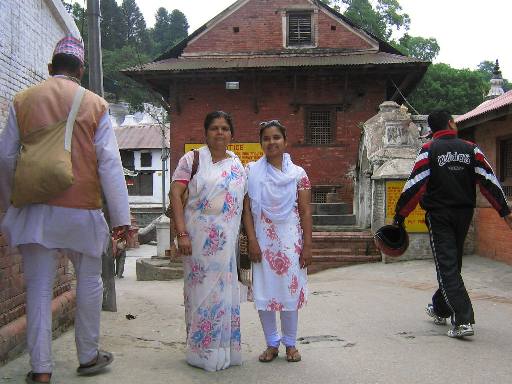
My mother in sari and me in kurta suruwal.
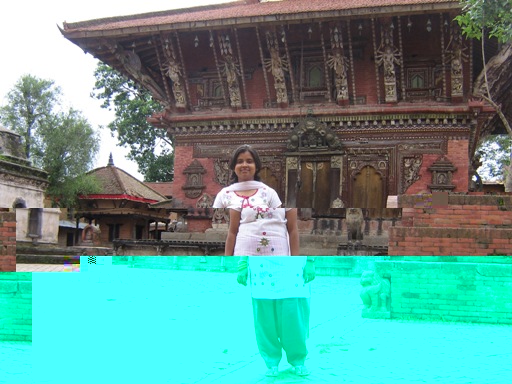
Me in Chagunaryan temple in surual kurta/ Kurta Paijama and a long scarf.
Men wear daura suruwal , kurta and coat as a traditional dress. Daura surwal consists of 8 strings to tie it.
Now a day pant and shirt or T-shirt has become so common that nobody wears the traditional one except in some national programme where the traditional dress in mandatory.
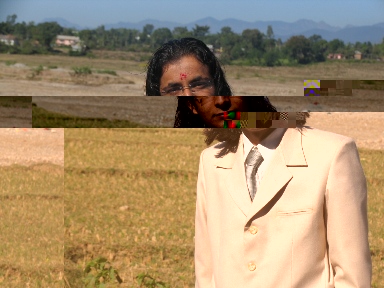
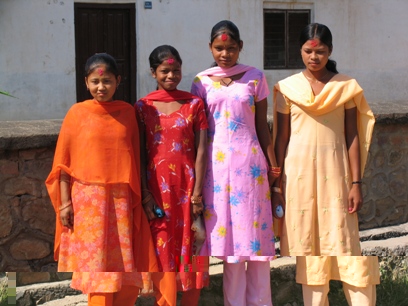
They all belong to Tharu cast.
But in urban areas, girls wear pant and shirt so we don’t see any difference in western dress and in the dresses Nepali girls wear.
Chinese, Thai and Indian dresses are very common in Nepal. Its all made in not their traditional one. You can imagine what kind of dresses we wear.
Regarding traditional dresses, I also don’t know the complete name but I can try.
Here is one picture below in which you can see Gunyo (Sari), Cholo (blouse).
Lady in traditional dress and Lady in man’s dress.

Gurung Women
Tharu dress
Tharu girl with ornaments
Newari dress
The importance and beauty of the dress can be seen when the special type of ornaments are wore with the dresses.
Dress in red color are taken as good for married women. In our traditional culture, a married woman must wear sari, bangles in her hand, tika in her forehead, red colour in her head its particularly for Brahmin, Chettri and madhesi culture. But others also prefer to wear sari.
A woman whose husband is not alive can’t wear colourful dress. She has to wear plain white dress for one year after her husband passed away. After then she can wear printed sari in white, grey which is not colourful. But this rule doesn’t apply to man. They can wear dress of any colour. Man has to be in white dress for one year only when his parents die.
My granny in grey color I don’t have my grandfather now. He passed away when I was a little kid. 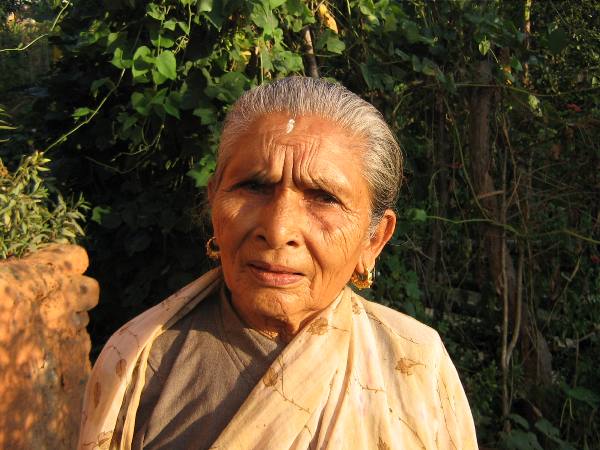
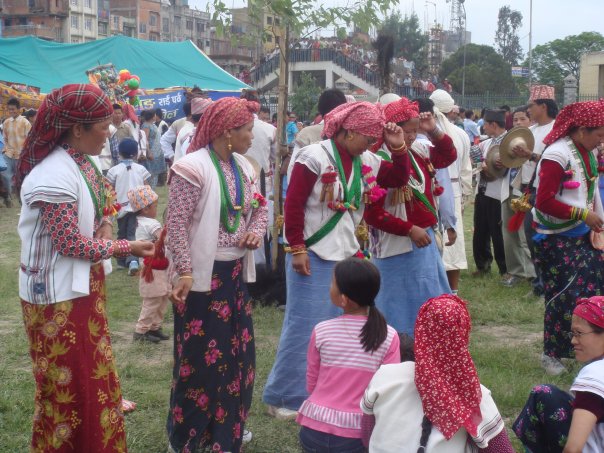
Rai Women dancing in their Ubhauli festival
It’s the special festival of Rai people and is celebrated just before they do rice planting.
There is another called Udhauli which is clebrated at the time of rice harvesting.
But these days tradition has been changing. As Amy’s said “ These days people wear clothes exposing so much flesh”. Similar thing applies here in some urban area like Kahmandu, Pokhara, Biratnagar..
When I read the sentence, I remembered my granny, even my mom doesn’t like clothes like that.
I am also little bit traditional. After high school I left to wear skirt. But I started to wear pant and shirt when I joined bachelor degree. I remember the day my teacher asked me to wear pant and to cut my hair from next time.
Actually, we had to do practical classes every week in a workshop where we need to use lathe machine, milling machine, drilling machine etc. Because of fear of accident with long scarf and long hair, I started wearing pants taking advice from my teacher. But I didn’t cut my hair. At that time I didn’t have courage to cut my hair. I still have my first pant and T-shirt which was bought by my father.
The day I wear pant I was feeling so uncomfortable because I was easy in wearing the dress.
But the tradition is changing and now a day unmarried girls wear sari in special occasion like marriage ceremony, birthday party, office party.
What I am writing is all based in my knowledge and according to what have seen. I represent Brhamin family so it smells more like that. Sorry for that.
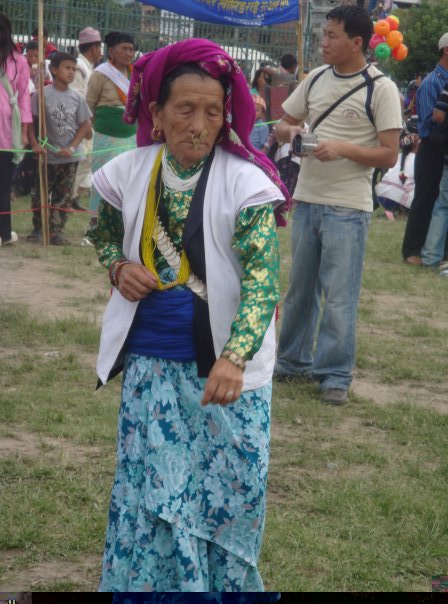
Rai woman dancing in Ubhauli festival.
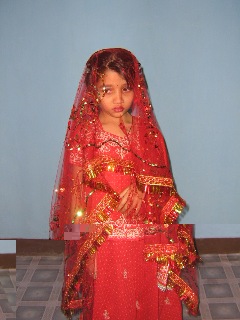
My sister in bride dress.
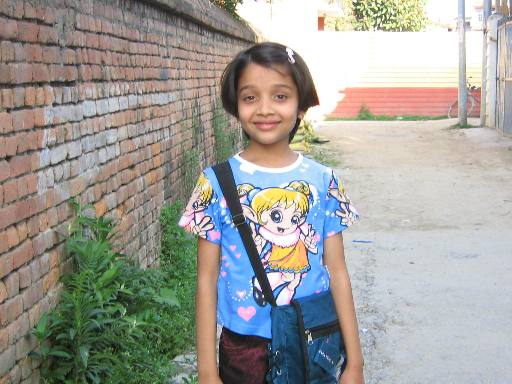
She is also the same sister. When she was 10 years old.
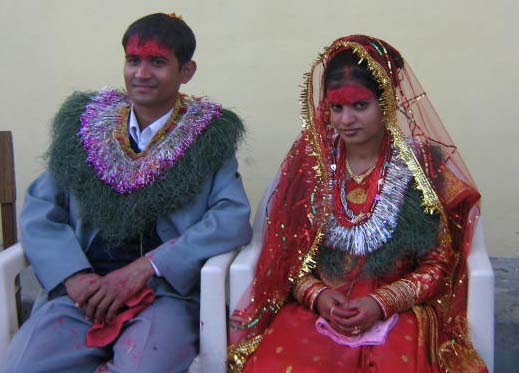
My brother and sister in law in their marriage ceremony 
My friends and me in pant.
I have changed a lot these days.
O.K. friends see you tomorrow with something!
Bye !!!!!!!!!!!!
Comments
Hello Kiran, it's good to communicate with you again. I liked the present post a lot. It was great to know all the different kinds of traditional clothes you have in your country. It's really a very rich culture. And the clothes are so colorful. They seem to be very cheerful. Your wedding costumes have a different color than the ones we have here. Our traditional wedding color is white. S
Hello Kiran, it's good to communicate with you again. I liked the present post a lot. It was great to know all the different kinds of traditional clothes you have in your country. It's really a very rich culture. And the clothes are so colorful. They seem to be very cheerful. Your wedding costumes have a different color than the ones we have here. Our traditional wedding color is white. Some brides eventually wear the red color, but everyone would find it very different. I was curious about the picture you showed of your little sister in her wedding costume. Was she really getting married at that age? Or it was some kind of event in which she was playing a bride? Well, Kiran, I don't know if I should tell you that. Please don't feel ofended, but I had thought your were a boy. The picture on the top of the page is in an angle that is hard to recognize you. When I saw your pictures in this post I was very surprised. I couldn't tell from your name either because it's not a name we use in my language. Anyway I have to tell you that you are very beautiful and so are the clothes you showed us. Good bye for now.
HI Kiran! the traditional dresses are very diverse and colorful in your country. Thanks for your personal comments in your last post. good luk and best wishes
Hi Kiran! Thanks for the lovely pictures. I really liked the colour of the dresses. they all are very beautiful :-). Best wishes, Ana Paula.
Dear Kiran, Though you have gathered a lot of information regarding Nepalese costume, still you are unable to give a glimpse in man’s wear in different parts of country. Similarly your blog about houses of Nepal is well organised but if you consider definition of house with essential facilities, then, they will just be a shelter not a house.
Very good post. Thank you for the complete inform about clothes in Nepal. Good photos and of course interesting for occidental people who don`t know about your way of life and traditions. Keep writing.
beautiful!!
Hi Kiran thank you for the comments and pictures about different kinds of dressing in Nepal. It's really interesting and I enjoyed reading it.I like the traditional costumes of the bride and the bridegroom as well. I found them very beautiful. Take Care, H.
Hello Kiran! I enjoyed another piece of work from you. It sounds like you get into the swing of it. Thank you for writing about this topic. It was so interesting to see all different kinds of clothes and hear about the caste system. Do you mind if I ask you a personal question? How old is your sister in the picture where she is wearing the wedding dress? She seems to be so sad. I am really looking forward to finding out loads more about your life in Nepal! Best wishes,
Hi Kiran! All the posted photos, dress and people are incredibly nice and interesting. Especially I like the photo of your Granny and those dress for bride and mariage ceremony. How many siblings do you have? Do you live all together? Did you visit some places in Europa too? I am glad to see you with your friends so relaxed and smiling young woman. Though I am a bit sory that in the previous time we couldn´t enjoy more of your writing. See you next time!
Kiran, you certainly had worked hard to complete your blog today. The entry was so very interesting that I must go through it again in the evening. Your cultural and religious heritage seems to be so very rich. The photos were lovely.
Hi Kiran - your blog is very interesting. Traditional clothes are beautiful and characteristic.In my country, many years ago, wives used to wear in black for three years after the husband's dead but now this habit has disappeared.Best wishes.
Hi Kiran, Your sister is so cute. Your blog about traditional dresses was very informative. The pictures are really amazing. I have a question to ask you. I always see a painted spot between the eyes on Indian women faces and now on your pictures. What does it mean? And... is it common to have a piercing like the one you posted on this blog? Have a good day, Cris
Hi kiran! This is the first time I read your blog.I like your bride dress best,it's very colourful and beautiful.I wish I will have a lot of oppotunity to communicate with you.
Kiran, I think you have improved the blog day by day. I do enjoy to see the pictures as I see your country has many things in common with India. What is your sister's name?. She is beautiful and her look is like my daughter. I am looking forward to read your next post. bye for now.
Hi Kiran What a nice post, very informative..Thank you very much. Your clothes are very colorful.Wearing Nepali, Indian clothes and ornaments are very fasnionable everywhere. There is a big demand to the clothes and others coming from Nepali and India in Turkiye. Actually the style of your clothes have a big impact on the world fashion.There are many shops selling these clothes in Turkiye. I 've seen the same thing the countries I've visited Long tops which is worn over the jeans are very fashionable in these days as well long scarf. I think this is an inspiration from there.I love your ornaments whose colours and combinations are very very nice. At some point, you said there is cast system and many casts. How is the relationships each other? One day If you demand to be married the guy from the different cast? What does your family say? As far as I understand what you write, being women is difficult in Nepali like all over the world. Have nice day. :))
hi kiran, I am very happy to see ur blog here. I also belong to tharu caste but now I live in Kolkata, west bengal. I will be very happy to see a reply from u. I want to know more about tharu people like their origin.
i like your culture and people.
Hi Kiran! All the posted photos, dress and people are incredibly nice and interesting.I like all the photo and mariage ceremony. ? I am glad to see you with your friends.See you next time!
Hi Kiran! All the posted photos, dress and people are incredibly nice and interesting.I like all the photo and mariage ceremony. ? I am glad to see you with your friends.See you next time!
i love how you have so much love in your culture, also the way you want people around the world to know that it might be a little place in the world but its the world to you. I'm interested in knowing more.
Thanks for all your contributions. This blog has now closed and can no longer accept new comments.


