The area where the Roman town used to be eventually became farmland, the rich river bank soil making it ideal for this. The Earls of Verulam owned all the land down to the lake, until it was sold to the city council in the 1930s. Between 1929 and 1932, Sir Mortimer Wheeler excavated it and turned it into a leisure area, or rather the Jarrow marchers and local unemployed did! They built the lake that you see at the bottom of the slope and the river was moved and 'canalised' on the northern side. What most people think of as being the River Ver is now 150 yards from here on the other side of the valley by the Fighting Cocks pub. But the river used to flow across the valley floor, where you're walking now and some people believe that the Romans first used the river as a moat for this side of the city walls around 2-300AD. But before then, the river's margins were swampy areas and were probably host to mosquitoes. There would have also been lots of marginal aquatic plants such as yellow flag iris, reeds and rushes. Where the lake is now was a water meadow, a damp marshy area that was grazed on by cattle in the summer. Nevertheless, this has been an area where people have come to enjoy themselves for centuries. You are probably walking round the lake with many other people at the moment, but old pictures and photographs show locals paddling and enjoying themselves in a lovely clear stream, well before the lake was here. The lake in the park is important for birds and bats and has been designated a 'Wildlife Site' for its local importance. A variety of wildfowl species can be seen on the lake, ranging from more common species such as the mallard duck, swan and coot to more rarer birds like the Great Crested Grebe. There are also other ducks around the lake such as the South American Muscovy and the white Aylesbury ducks which are a domesticated and bred form of mallards.
The site is also very important for herons which nest on the undisturbed islands in the centre of the lake. If you look carefully, you can see them on the banks around the edges of these islands but they are quite bold now and they can also sometimes be seen in the adjacent river catching fish. However, this man made lake, which has moved the natural flowing river to one side has brought problems with it. Large numbers of farmyard and Canada geese love this highly man-made environment with its nice close cropped grass that they love to graze. And the grass goes right up to the concrete edge of the shallow lake, where they can just hop in. You will see that for up to 30 feet from the water's edge, the path and grass is covered in goose droppings. Be careful here because the geese can be quite aggressive, especially if they have their young with them! The Canadian geese are not a native species but they have done very well in British parklands like this. They like the open access to the water so they can see predators coming. Breadlines
They also congregate here because they know they can get a good supply of food. Feeding the birds at the lake is a popular local pastime and because of this they don't move onto other sites like they would do naturally. Instead they inbreed and are born with deformities. | The problem with Canada geese | | Britain has suffered a serious explosion in the population of Canada geese from 19,000 in the 1970s to over 60,000 now | | They damage the grassy areas around the lake | | Each goose produces up to 2lbs excreta per day, fouling the footpaths, water and grass areas | | The are agressive, especially during the nesting season | | Develop deformed wings due to inbreeding | | Compete with resident wildfowl for food and nesting space |
You will see that some of the geese have one wing permanently sticking out, looking like they've been in some kind of fight! But this condition is called angel wing and is a genetic deformity resulting from inbreeding. Apart from this, and the fact that the bread just isn't good for them, feeding any of the birds here causes other problems too - one of these is called eutrophication. The birds may love a bit of sliced white but the nutrients in it build up and because there's not a fast flow of water, poisonous algae grows in it, producing toxins that are dangerous for both people and animals. The algae also reduces the oxygen level in the water so there's not enough to support large amounts of fish and insect numbers are also reduced. This has a negative effect higher up the food chain.
| 




 PREVIOUS


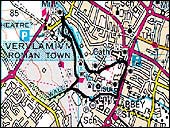

 Listen to the whole WALK THROUGH TIME BROADCAST from BBC Three Counties Radio
 Realplayer required