More info:
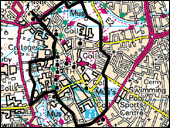
The natural landscape of the area now occupied by Cambridge has been evolving for millions of years. The main agents of this change have been the freezing and thawing of soil during the intense cold of the Ice Ages and the action of rivers that have been removing this material and progressively cutting into the landscape. Rivers carrying gravel, sand and mud at times of flood have built flat 'terraces' or floodplains using some of the material they have transported. In Cambridge, rivers have created a 'staircase' of terraces, each relating to a specific period, which together represent over 400,000 years of landscape change. The river terraces preserve evidence of past climatic conditions that allow the reconstruction of past Cambridge environments. On this walk we will visit various localities where it is possible to see stages in this process of lowering of the land-surface, where terraces at different levels are relicts of several different ancestors of the River Cam. These ancestors flowed in different directions, with different styles of river behaviour and different plants and animals on their banks, because of the way the landscape and the climate was changing. Rivers generally vary greatly in their appearance, depending on the amount of water they are carrying, the type of material (gravel, sand and mud) available, and the gradient of the valley down which they are flowing. Under present conditions and without interference by humans, the River Cam would be a quietly flowing stream with a single meandering river channel and muddy banks. At times in the past, under Ice Age conditions, the river has been much more violent when rapidly melting-snow and ice caused floods that covered large areas of the valley floor with gravel and sand, so that many river channels picked their way between gravel islands, giving it a "braided" appearance. On this walk you will also see a variety of wildlife such as ducks and swans with the potential sighting of moor hens, bats and pike. There is also a a wealth of flora to be found on the route - from a wide variety of trees to the exotic plants in the college gardens! | 






 PREVIOUS





 Realplayer required