Brian's Weekly Sleevenotes - 3 October 15
More information on some of the tracks Brian played this week
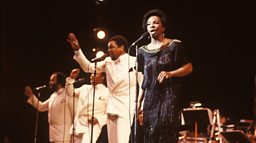
If You Ever Get Your Hands On Love - Gladys Knight & The Pips
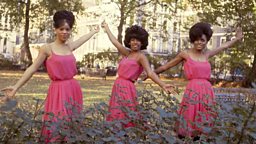
This very rare track was released in America by Motown’s imprint label, “Soul”. Written by Knight with Johnny Bristol, Harvey Fuqua, Vernon Bullock and Stephen Bowden, the song was originally titled, “Love Is Giving, Love Is Living and was intended for The Contours. A few copies of the single found their way into the Northern Soul clubs in the UK with scratchy copies exchanging hands for hundreds of pounds. Over the past few years, the label rediscovered the tapes of the track and included it on their 2002 compilation, “A Cellarful Of Motown”.
I'm The One Who Loves You - The Paramounts
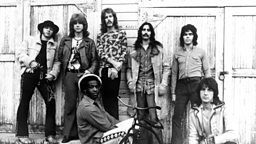
The group hailed from Southend-On Sea in Essex with their initial line up consisting of Gary Brooker on piano, Mick Brownlee on drums, Bob Scott was the vocalist with Chris Copping on bass and Robin Trower on guitar. After Scott left, Gary took over as vocalist but was only fourteen years old creating problems for most live work. After several personnel changes, they were signed to Parlophone in 1964 and their first single, a cover of Leiber and Stoller’s “Poison Ivy” that had been a hit for The Coasters in 1959, gave them a top forty hit. Unable to repeat their success, Gary Brooker began writing with Keith Reid and Matthew Fisher and formed Procol Harum. This though was considered one of their best as The Paramounts, the Curtis Mayfield song, “I’m The One Who Loves You.”.
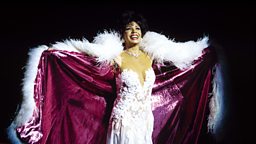
Let's Face The Music and Dance - Shirley Bassey (1962)
This track is from a new fifty-three track CD from Jasmine Records called “Shirley Bassey - Reaching For The Stars, the Singles Collection 1956-1962”. It not only includes all her ‘A’ and ‘B’ sides during this period of her career but also some selected album tracks and from disc two we selected the album cut from her LP “Let’s Face The Music,” the Irving Berlin title track.
Send Me No More Letters - Trapeze (1969)
Midlands band Trapeze were formed in 1969 and their debut eponymous album was released on the Threshold label, a subsidiary of Decca set up initially for material recorded by The Moody Blues from which this track was taken. “Send Me No More Letters” was produced by The Moody Blues’ bass player John Lodge with the original release on which the tracks were deliberately run into each other, suggesting that the album should be listened to as an entity rather than a collection of individual songs.
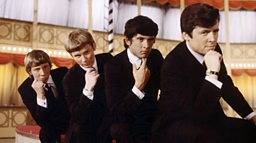
Sugar and Spice - The Searchers (1963)
The follow up to their number one hit, “Sweets For My Sweet”, this was their second top ten hit and their first original song to make the charts. Written by Tony Hatch under his pseudonym of Fred Nightingale, “Sugar And Spice” was re-issued in America in 1964 following their top twenty success with “Needles And Pins” but still only managed to reach number forty-four on the Hot 100.
Soul Twist - King Curtis (1961)
This is a track from new double CD from the Not Now label, “Twistin’ The Night Away” containing fifty tracks that defined the twist craze in the early sixties. The line up of artists include Chubby Checker, The Isley Brothers, The Shirelles, Sam Cooke and this ‘cool’ instrumental from one of America’s top sax players, the late King Curtis and his 1961 release, “Soul Twist.”

Lay Lady Lay - Bob Dylan (1969)
During his school days, Robert Zimmerman, as was Dylan’s real name, formed several short lived bands including The Shadow Blasters and slightly longer lasting Golden Chords, playing covers of popular hits of the day. During a performance of Danny & The Junior’s “Rock And Roll Is here To Stay”, at a local talent competition, their performance was so loud that the microphones had to be switched off. In 1959, Zimmerman listed his ambition to appear on stage with Little Richard and it was in the same year he performed two concerts playing piano and providing hand claps for Bobby Vee
Coal Miner - Nappy Brown (1960)
Born Napoleon Brown Goodson Culp in North Carolina, nick-named ‘Nappy’ he became a pivotal link between R&B and soul music appealing to black ns white audiences alike. Elvis Presley was reported to have seen Brown perform on many occasions when he appeared in Memphis and was believed to have been a strong influence on his career. This 1960 recording of “Coal Miner” was released on the American Savoy label in 1960.
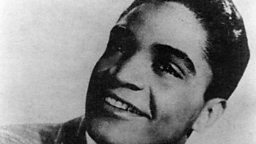
I’m Comin’ On Back To You - Jackie Wilson (1961)
Jackie Wilson’s career gave him a whirlwind of solo American hits from 1957 until his decline in the early seventies. In the early days he became lead vocalist with Billy Ward’s Dominoes after the departure of Clyde McPhatter. After an introduction to nightclub owner, Al Green who helped him secure a contract with Decca, became his manager but died soon after leaving his assistant Nat Tarnopol in charge. His first solo hit was “Reet Petite” in 1957 and along with his exciting stage presence, gained the nick-name of “Mr Excitement.” Now twenty-nine of his most popular songs between 1957 and 1962 have been released on one CD by Jasmine called “You Better Know It” from which we’ve selected this American top twenty hit from 1961, “I’m Comin’ On Back To You.”
Soul Twist - King Curtis (1961)
This is a track from new double CD from the Not Now label, “Twistin’ The Night Away” containing fifty tracks that defined the twist craze in the early sixties. The line up of artists include Chubby Checker, The Isley Brothers, The Shirelles, Sam Cooke and this ‘cool’ instrumental from one of America’s top sax players, the late King Curtis and his 1961 release, “Soul Twist.”

Thunderball - Tom Jones (1966)
Written by John Barry and Don Black, this was the title song to the fourth James Bond movie starring Sean Connery. Tom Jones almost fainted at the end of the song as the final note was held for so long, he closed his eyes to help reach it and when he opened them, the vocal booth was spinning.
Blame It On The Bossa Nova - Eydie Gorme (1963)
We were saddened to learn of Eydie’s death back in August this year but she leaves behind a wealth of material including this 1963 chart hit written by Barry Mann and Cynthia Weil with Backing vocals provided by The Cookies, “Blame It On The Bossa Nova.” The following year she reached the lower end of the American Hot 100 with a sequel she wrote with her husband, Steve Lawrence and Marilyn Gins, “Can’t Get Over (The Bossa Nova).”
![]()
The Twist
The history of the Twist phenomenon.