Brian’s Weekly Sleevenotes – 11 July 15
Discover the stories behind the songs in this week's playlist...
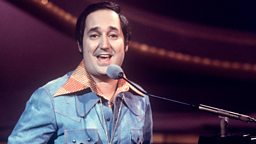
Breaking Up Is Heard To Do - Neil Sedaka
Sedaka had been unhappy with the way other people sang the songs he wrote with Howard Greenfield so he decided to pay a visit to RCA Records where he met Steve Sholes, the man who’d signed Elvis to the label. Within a few days, Neil was in the studios recording his first track as a performer, ‘The Diary’ that became an American top twenty hit. Hit after hit followed and the night before he was about to record ‘Breaking Up Is Hard To Do’, Neil couldn’t sleep as he felt something was missing from the song. Jumping out of bed, he telephoned his arranger, Allan Lorber in the middle of the night and sang ‘down doo-be-doo down-down, comma, comma’ down the phone explaining to the startled man that this was the missing piece of the song.
Holiday - Andre Brasseur
A massively popular instrumental in the Northern Soul clubs notably at The Twisted Wheel in Manchester despite DJ’s complaining the track has nothing to do with Northern Soul. To confuse matters further CBS who released the single managed to label the record incorrectly with the ‘B’ side ‘The Kid’ actually being the ‘A’ side ‘Holiday’ and vice verca, so what had been known for years as ‘The Kid’ is actually ‘Holiday’, this error has also been repeated on Andre Brasseur’s albums and CD’s so we can only hope this is the track you wanted to hear whatever it’s called.

Tonight Is So Right For Love - Elvis Presley
From the soundtrack album of the movie ‘G. I. Blues’ and included the number one hit, ‘Wooden Heart’. Due to copyright problems, the opening track, ‘Tonight Is So Right For Love’ had to be substituted with a different song, ‘Tonight’s Alright For Love’ on all the European pressings. The problem was with ‘Tonight Is So Right For Love’ infringed on Jacques Offenbach’s ‘Barcarolle’ from his opera, ‘Tales Of Hoffmann’ but in later years the situation was resolved and the original opening track was reinstated.
Let Him Try - Mac Davis
Scott ‘Mac’ Davis was born in Lubbock, Texas then moved to Atlanta where he played in a rock and roll band and also worked as a regional manager for Vee-Jay Records. Before he became known as a songwriter, he began working for Nancy Sinatra’s production company, 'Boots Enterprises’ during which time he played guitar on several of her records and in her live band on stage. In 1970 he signed to Columbia Records as an artist but got his big break a year earlier when Elvis Presley turned his song ‘In The Ghetto’ into a major hit. One of Davis’s earliest recordings was for Jamie in 1962, ‘Let Him Try’ which has now been included on a new Eleven Light City Records CD, ‘I Fought The Law-The Sound Of West Texas’.
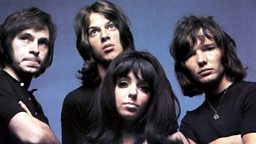
Maybe Tomorrow - The Iveys
As The Iveys, the group headed towards The Beatles Apple offices in the hope of being signed as both writers and performers and their dream came true when they became one of the first acts outside of The Beatles to be signed to the label. Their first record, ‘Maybe Tomorrow’ was released in November, 1968 but at failed to make the charts leading to a discussion as to what went wrong. One conclusion was their name so many suggestions were thrown into the pot with executive Neil Aspinall’s choice of Badfinger being the one they finally chose.
We’ve Gotta Get Out Of This Place - The Animals
Written by husband and wife Barry Mann and Cynthia Weil who recorded the original demo themselves with the view of offering it to The Righteous Brothers having written their classic, ‘You’ve Lost That Lovin’ Feelin’ Mann was then offered a recording contract himself and his label wanted him to release his own version. Meanwhile show business manager Alan Klein got to hear the song and sneaked a copy to Mickey Most, the producer of The Animals who was looking for new material for them. Loving the song, he rushed them into the studios and had a finished record before Mann’s signature was dry on his new contract. When their record was released in America by MGM, EMI mistakenly shipped an outtake version by mistake and ended up being released. The lyric that gives away which version is which the first line of the second verse is when Eric sings watch my daddy in bed a dyin’ but on the American release he sings ‘see my daddy in bed,’ a version that as yet has not turned up on any British compilation although we played it a few months ago.
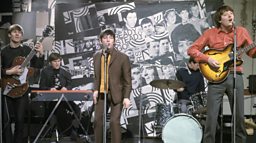
It’s Your Thing - The Isley Brothers
Over the years, The Isley Brothers recorded for a number of record labels achieving most success in the UK on Tamla Motown before deciding to do their own thing and create their own T Neck Records. Named after the family’s hometown of Teaneck, New Jersey, this proved to be a good decision because their first single for the label gave them their biggest American hit of their career.
Miller’s Cave - Charley Pride
Country singer Charley Pride was born and reared on a farm near Oxford, Mississippi and spent many an evening sitting around the radio with his family listening to the Grand Ole opry. Today Charley is considered one of the great country singers of our time and now BGO Records have released four of his most popular LPs’ on one double CD, ‘The Country Way’ and ‘Pride Of Country Music’ from 1967, ‘Make Mine Country’ from 1968 and from 1966, ‘Country Charley Pride’ from which we’ve selected Jack Clement’s song, ‘Miller’s Cave’ that has been recorded by many artists including Don Williams, Hank Snow and Tommy Tucker.

V-A-C-A-T-I-O-N - Connie Francis
‘Vacation’ was the only Connie Francis hit on which she was given a writer’s credit, her co-writers were Gary Weston and Hank Hunter. The song was originally intended as the ‘B’ side but proved more "radio friendly" than the intended "The Greatest Sin of All.” When her co-writers brought her the song, the melody was complete but the only words they had were ‘v-a-c-a-t-i-o-n in the summer sun’ leaving her to add the rest of the lyric.
A Message To Martha - Adam Faith
Written by Burt Bacharach and Hal David, this became Adam’s final top twenty hit and a cover of the original American version by Lou Johnson. In 1966, Dionne Warwick wanted to record a female’s version of the song against the composers’ wishes as they’d only ever considered it to be performed by a male. In his attempt to discourage her, Hal David told her that the only name that would work in place of Martha was Michael, a name he claimed not to like. That was all Miss Warwick needed to hear to record the song as ‘Message To Michael’. Her version so impressed the writers that they later admitted that they’d probably sub consciously written the song for Dionne in the first place even though they thought they were writing it for a man.

![]()
Bob Meets Brian
The final instalment in our series of interviews with the legendary broadcaster

![]()
Remembering BB King – The Greatest Ambassador of the Blues
A celebration of the giant of Blues