Brian’s Weekly Sleevenotes – 16 May 15
Find out more about the songs in our playlist...
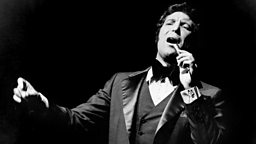
I’ll Never Fall In Love Again - Tom Jones
Written and originally recorded by the late Lonnie Donegan, Tom Jones reached number two in our charts during the fourth week of August and there he remained for four weeks, firstly being kept at bay from number one for the first two weeks by Scott McKenzie. Tom’s record only reached number forty-nine when first issued in The States in 1967, but was re-issued there two years later and climbed to number six.
Only A Northern Song - The Beatles
Northern songs was a publishing company set up in 1963 mainly to exploit Lennon and McCartney material with both writers owning 15% of the shares. George Harrison, who wrote ‘Only A Northern Song’ owned less than 1% and because the company retained his material, it meant that John and Paul would earn more than him from his own songs, this the somewhat bitter song that was recorded during the sessions for ‘Sgt. Pepper's Lonely Hearts Club Band’ but was omitted from that album. It was first featured in the Beatles' 1968 animated movie ‘Yellow Submarine’ and appeared on its soundtrack album, released early the following year.
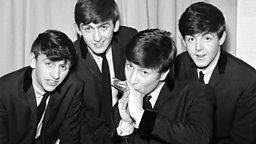
Interpol - The Checkmates
Produced by Joe Meek, ‘Interpol’ by The Checkmates was recorded in 1963 but failed to get a release so it remained in the archives until it found its way onto a box set compilation of Joe’s material in 2005. The group recorded both vocal and instrumental tracks for Meek as well as backing some of his other artists from time to time including Glenda Collins and Michael Cox.
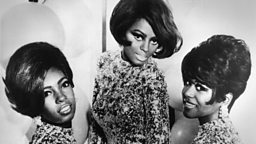
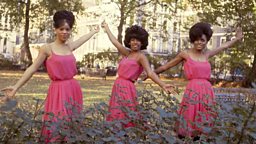
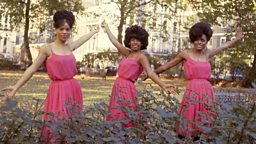
Stop In The Name Of Love - The Supremes
This became their fourth consecutive American number one and the first single to be released in the UK on the Tamla Motown label. The single topped the American charts for two weeks making them the first group to achieve four consecutive number one’s in the history of the Hot 100. The now legendary choreography for the song was created whilst the girls were on tour in the UK, the famous one hand on the hip with the other outstretched in a ‘stop’ gesture was taught to them by Paul Williams and Melvin Franklin of The Temptations.
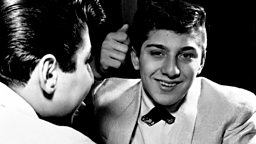
The Wanderer - Dion
Like his previous hit, ‘Runaround Sue’, ‘The Wanderer’ was written by Ernie Maresca who gave the song to Dion with the view of it becoming the ‘B’ side of his next single, ‘The Majestic’, a song selected by his record label. However, once the record was released many DJ’s began playing ‘The Wanderer’ so the record was flipped.
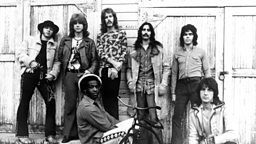
I See The Light - Simon Dupree & The Big Sound
The group started as The Howling Wolves before changing their name to The Road Runners, playing local gigs in the Portsmouth area the hometown of founder members, Phil, Derek and Ray Shulman who became Simon Dupree & The Big Sound in early 1966. They focused on performing the hits of soul stars such as Wilson Pickett, Otis Redding and Don Covay and in that same year were signed to EMI releasing their first single, a cover of an American psychedelic hit by The Five Americans, ‘I See The Light’.
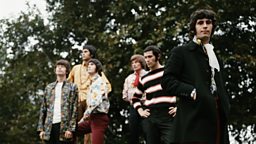
Deep In The Heart Of Texas - Freddy Cannon
Track two on side two of the album, ‘The Explosive Freddy Cannon’ is his interpretation of the 1941 June Hershey and Don Swander classic, ‘Deep In The Heart Of Texas’ and the first known recording was by Alvino Rey in that same year followed closely with versions by Perry Como, Bing Crosby and Woody Herman’s Band. Cannon’s concept album was made up entirely of songs about different States in America including St Louis, Carolina and his hit singles ‘Way Down Yonder In New Orleans’ and ‘Tallahassee Lassie’.
Dancing In The Street - Martha & The Vandellas
The song was written by Marvin Gaye, Ivy Joe Hunter and William ‘Mickey’ Stevenson who was married to Kim Weston in whose attic the song was first conceived, and has always claimed she let a good song go from right under her nose. However, when Marvin Gaye first sang it to Martha Reeves of The Vandellas, it was a romantic ballad but when they got into the studio after a few takes, Martha was unhappy with the result and asked if she could sing it her way. Taking the pitch up and at a faster tempo, everyone in the studio was elated with the result until they leaned the engineer had not turned the recording machine on. Martha was so angry, she didn’t want to sing it again but finally was persuaded to give it one more try and ended up with a perfect live vocal after only two more attempts.
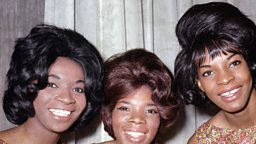
Groovin’ - The Young Rascals
The second of three American number one hits for the group founded by Felix Cavaliere who once a member of Joey Dee’s Starliters with Eddie Brigati and Gene Cornish. They all decided to leave to form The Young Rascals with drummer, Dino Danelli. In 1965, they were signed to the Atlantic label and their first release, ‘I Ain’t Gonna Eat My heart Out Anymore’ made the Billboard Hot 100, but it was their 1966 release, ‘Good Lovin’, which gave them their first American number one. They followed with two more top twenty hits before topping the charts again in 1966 with ‘Groovin’ after which they decided to drop the “young” from their name.
In The Midnight Hour - Wilson Pickett
Backed by Booker T & The MG’s, Steve Cropper and Pickett wrote the song at the famous Lorraine Motel in Memphis where Martin Luther King would be fatally shot whist standing on a balcony three years later. ‘In The Midnight Hour’ became the first hit single for Wilson Pickett and also the title of his debut album for the Atlantic label as well as being included on ‘The Exciting Wilson Pickett’ the following year.
![]()
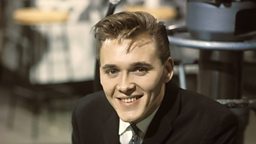
Brian Matthew meets the shy Billy Fury
Brian recalls a particularly disastrous episode of Thank Your Lucky Stars

![]()
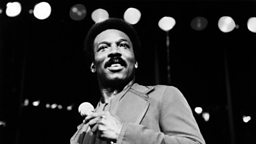
The art of 'the Wicked Pickett'
Bob Stanley traces the wild life and career of Wilson Pickett