Brian's Weekly Sleevenotes 29 August 15
Discover the stories behind this week’s playlist...
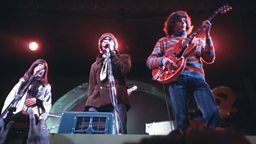
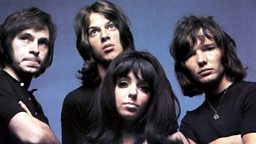
Somebody To Love - Jefferson Airplane (1967)
San Francisco based Jefferson Airplane signed to RCA Records in 1966 with two albums and three singles already to their name before the release of “Somebody to Love”. Their original singer, Signe Anderson was replaced by Grace Slick who had previously been with The Great Society, who had recorded an earlier version of the song as “Someone To Love” for a small Independent label. The song was recorded for their album, “Surrealistic Pillow”, at the RCA studios in Hollywood where The Rolling Stones had cut “(I Can’t Get No) Satisfaction” and “Get Off Of My Cloud”, with the same engineer.
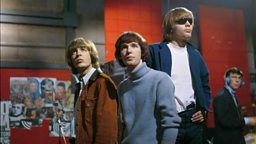
Western Union - The Five Americans (1967)
Although they will probably be best remembered for their recording of “I See The Light”, this was the biggest of their six American Hot 100 chart entries. The group were formed in 1962 by five college students in Durant, Oklahoma and were later signed by the Dallas, Texas based label, Abnak. The song “Western Union”, was covered in Britain by The Searchers but neither version made our charts.
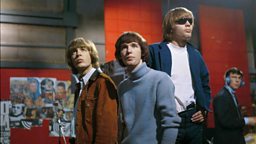
Love Her - The Walker Brothers (1965)
After failing to chart with their first release for the Philips label, “Pretty Girls Everywhere,” the label had the theme song to the movie, “The Seventh Dawn” earmarked for The Walker Brothers’ next release with the Barry Mann and Cynthia Weil song, “Love Her” being placed on the ‘B’ side. When they were recording the latter, everyone realised they had a magical song with the movie theme ending up on the other side and “Love Her” giving The Walkers their first hit.
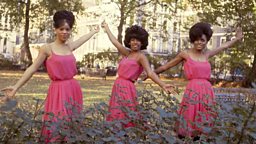
I Want A Boy - Ronnie & The Relatives (1961)
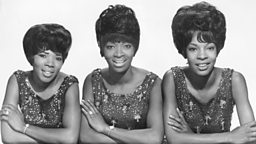
Ronnie & The Relatives began their recording career with the Colpix label formed in 1958 by Jonie Taps and Harry Cohn, it’s name being a configuration of ‘Columbia’ and ‘pictures’ founded mainly as an outlet for soundtracks to movies and television shows produced by Columbia pictures. The girls were originally a six piece singing act but in 1961, three of them left leaving the line up of Veronica and Estelle Bennett and Nedra Talley who recorded four tracks for the label, the first two being released Ronnie & The Relatives, “I Want A Boy” and “Sweet Sixteen” followed in 1962 by “I’m Gonna Quit While I’m Ahead” and “I’m On The Wagon” by which time they’d changed their name to The Ronettes who would go on to make hits under the supervision of Phil Spector.
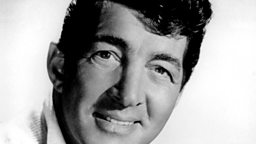
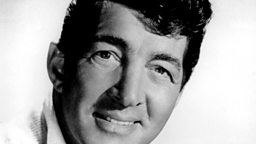
Gentle On My Mind - Dean Martin (1969)
Written by John Hartford and became Dean Martin’s biggest UK hit of the sixties without even bothering the American charts. “Gentle On My Mind” became one of the most widely covered country song of all time and was also the title track to Dean’s 1968 album for Reprise that was produced by Jimmy Bowen and arranged by Ernie Freeman.
We’re A Winner - The Impressions (1968)
This became The Impressions’ twelfth American top forty hit at which time they still had been unable to break through into the UK charts. The song was written and produced by the group’s lead singer, Curtis Mayfield and is notable for being one of the most prominent records dealing with the subject of ‘black pride.’ The phrase "We're a Winner" was later used as the slogan of Mayfield's record label Curtom Records that he launched in 1968 where subsequent Impressions’ records were issued.
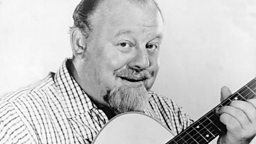
A Little Bitty Tear - Burl Ives (1962)
Ives was a big man towering a mighty six foot and weighing over 250 pounds. He was born in Illinois and was the youngest of seven children in a family of poor tenant farmers. In 1937, he settled in New York studying music and drama and by 1940 had his own CBS Radio show, “The Wayfaring Stranger” that was interrupted by him being called for military service. On his release, he started recording for Decca and one of his hits was the children’s favourite, “Big Rock Candy Mountain.” In 1958 he appeared as Big Daddy in the movie, “Cat On A Hot Tin Roof”, and by the sixties started recording country music achieving his biggest hit with “A Little Bitty Tear.”
Night Owl - Bobby Paris (1966)
For any AVID that ever visited either the Mecca ballroom in Blackpool or the Wigan Casino, you would probably have heard the Bobby Paris record, “Night Owl,” based on a melody he wrote on the piano at the age of five and that became a massive Northern Soul floor filler over the years and considered by many to have been one of the biggest Northern Soul anthems of all time a fact unknown to the singer until he was made aware of the fact in 1999.
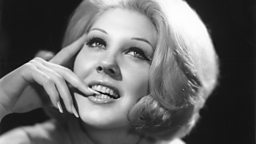
I Want To Go Back There Again - Chris Clark (1967)
Written and produced by Motown boss, Berry Gordy Jnr, who signed Chris to his label after she walked into his office in 1963 and performed an impromptu version of the Etta James song, “All I Could Do Was Cry”, resulting in her landing a receptionist’s job at the company for two years before finally recording her first single in 1965, “Do Right Baby, Do Right” followed by “Love’s Gone Bad” and her third single, “I Want To Go Back There Again”.
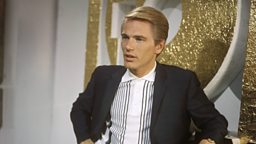
Who Am I - Adam Faith (1961)
This was Adam’s second double ‘A’ side release as the previous year he’d issued the coupling of “When Johnny Comes Marching Home”, with “Made You”. On this occasion Les Vandyke or Johnny Worth to his friends, wrote the two songs and the combined timing of both tracks was less than four minutes with “This Is It” cashing in at one minute and forty three seconds and this track, “Who Am I” running for just eleven seconds longer.
![]()
The story of the record Elvis played the Beatles
When the 'King' met the 'Fab Four' what was on the record player?