Brian's Weekly Sleevenotes - 12 December 15
Buffalo Springfield, Dusty Springfield and more - the info behind today's 60s records
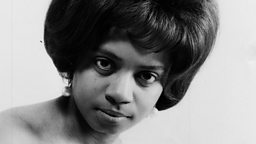
Recovery - Fontella Bass (1966)
The follow up to Fontells Bass’s big single, ‘Rescue Me’ that came from the same writers and sounding like part two of the original hit. When she signed to the Chess label, they agreed to give her artistic control, she also claimed that she helped write the two hits but the records came out without her name included on the credits. She was told it would appear on the contract but never did and she continued to fight for her rights giving her a name as a trouble maker. She delivered just one album to Chess called ‘The New Look’ before deciding to leave the label after only two years.
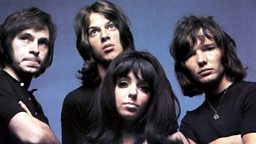
I’ll Keep On Holding On - The Action (1966)
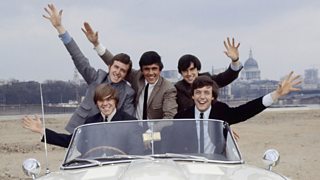
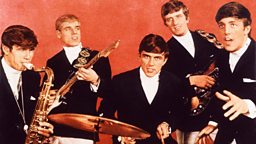
Continuing our ‘British Beat Season’, this week we’re focusing on the North and South of London with one of the most underrated bands to emerge from the mid sixties Mad scene. The Action who hailed from Kentish Town in the north of London were originally known as The Boys, changing their name in 1965 after signing to EMI. This was their third single released on Parlophone, a cover of a Mickey Stevenson and Ivy Jo Hunter song originally recorded by The Marvelettes, ‘I’ll Keep On Holding On’.
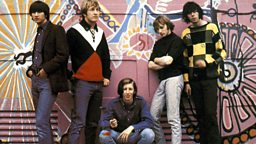
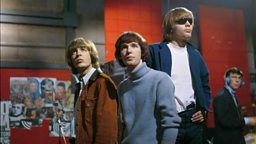
Sit Down I Think I Love You - Buffalo Springfield (1966)
This song was written by Stephen Stills as a love song prior to the formation of Buffalo Springfield when he’d just moved to Los Angeles from Florida. At this time he had begun composing songs with personal statements. Unfortunately during hard times, Stills sold most of his publishing rights so he received very little money from the royalties. ‘Sit Down I Think I Love You’ was included on the band’s eponymous 1966 album and was released as a single making number thirty-six on the American Hot 100.
Younger Girl - The Critters (1966)
Written by John Sebastian of The Lovin’ Spoonful and originally recorded by the group for their debut album, 'Do You Believe In Magic', that contained so many good songs that it would have been impossible to have released them all as singles. Enter The Critters’ producer, Artie Ripp who was quick to pick up on the potential of the song who cut it with his new group giving them their first of four American Hot 100 hits. The group’s career came to a sudden end in 1968 when three key members received their call up papers and their record company released them from their contract. The two remaining members kept the group going for a further eighteen months but the hits by then had dried up.
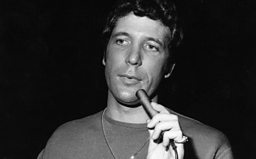
Time Alone Will Tell - Tommy Scott & The Senators (1963)
Tommy earned money to keep his family by taking on an assortment of jobs, including a builder's labourer and a door-to-door vacuum cleaner salesman. He also sang in the pubs at night, working with local groups. By 1963, he had gained notoriety with his own group, Tommy Scott and the Senators, and was playing regularly in the working-class clubs and dance halls. Gordon Mills, who had decided to branch into song writing and management, went to see Tom work resulting in a change of name to Tom Jones and a recording contract with Decca Records. This track is one of his earliest recordings with The Senators and has only recently been discovered and never before been released. It pre dates even the early recordings he made with Joe Meek by a good year, and were recorded in quite a primitively equipped studio, the poor quality of the original disc has been cleaned up to the best of the ability of top studio technicians.
On A Slow Boat To China - Emile Ford & The Checkmates (1960)
The follow up to their chart topping debut hit, ‘What Do You Want To Make Those Eyes At Me For’, Emile Ford had no intention of becoming a pop star, he only started singing to demonstrate his home built sound system but his performances proved so successful, he decided to give it a go and formed a backing band, The Checkmates with two of his half brothers, George and Dave Sweetman and guitarist Ken Street. After being rejected by almost every record label, he joined the Grade organisation for management representation who secured them several TV appearances which in turn led to them being signed to Pye.
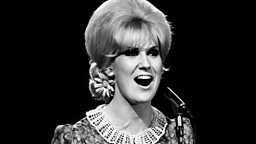
Son Of A Preacher Man - Dusty Springfield (1968)
In 1968, Dusty changed labels in The States from Philips to Atlantic and her subsequent teaming up with producers Jerry Wexler, Tom Dowd and Arif Mardin. The Memphis sound brought her back into the UK charts with a song that had been rejected by Aretha Franklin gaining a new lease of life in 1994 when it was featured in Quentin Tarantino’s movie, ‘Pulp Fiction’ and it’s interesting to note that Aretha did finally record the song a year later and Dusty felt that Aretha’s treatment was superior to her own and thereafter adopted some of her phrasing when performing the song live.
Neighbour, Neighbour - The Spectres (1966)
The second band as part of this week’s ‘British Beat Season’ takes in the South of London from where the band, The Scorpions were formed in Peckham in 1962, changing their name to The Spectres later the same year. Having gone through several personnel changes over the coming years, they were signed to Piccadilly by producer, John Schroeder who supervised their first release, a cover of the classic, ‘I Who Have Nothing’ with the more interesting ‘B’ side, Jimmy Hughes’s classic R&B song ‘Neighbour, Neighbour’. After a couple more failed releases, they changed their name again to Traffic Jam before finding fame and fortune as Status Quo.
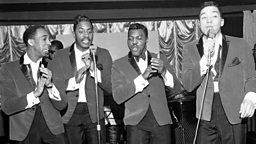
Going To A Go-Go - Smokey Robinson& The Miracles (1965)
The group met Motown records boss Berry Gordy Jr at an audition for Jackie Wilson’s manager who turned them down but Gordy saw potential and signed the group to his Detroit Tamla label. Following the release of a few unsuccessful records, The Miracles finally made the charts with ‘Shop Around’ reaching number two in 1960 on the American Hot 100. A string of further hits ensued during the early sixties including ‘You’ve Really Got A Hold On Me’, ‘Mickey’s Monkey’ and this 1965 release, ‘Going To A Go-Go’.
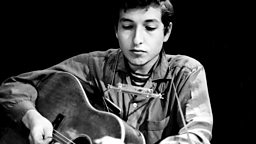
I Want You - Bob Dylan (1966)
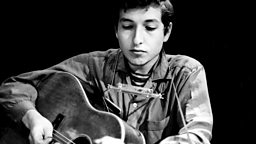
Featuring Robbie Robertson on guitar and Levon Helm on drums, both members of The Hawks who would later become Dylan’s backing group, The Band. The song was originally written and recorded for and featured on his album, ‘Blonde On Blonde’. It was widely believed to have been written about the girlfriend of Rolling Stones’ Brian Jones, Anita Pallenberg. Jones and Dylan spent time together in London and through their somewhat tense friendship, it ended up with a car chase and eventual crash in the middle of the night fortunately without any casualties.
![]()
Beat Cities: London Part 1
Bob Stanley with some of the best Beat bands from the Capital...