Brian's Weekly Sleevenotes - 19 December 15
Extra notes and information on some of the tracks Brian’s played this week...
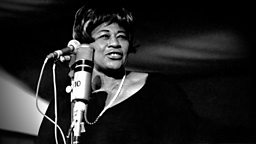
Can’t Buy Me Love - Ella Fitzgerald (1964)
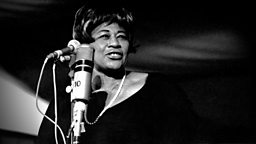
Ella Fitzgerald was an active performer long before any one of The Beatles were born but on her 1964 album, 'Hello Dolly' she paid tribute to the composing abilities of John Lennon and Paul McCartney by recording a big band version of 'Can’t Buy Me Love' whist on a tour of the UK. The session took place at EMI’s Abbey Road studios and was arranged and conducted by the late great Johnny Spence.
It Takes Two - Marvin Gaye & Kim Weston (1967)
Kim Weston’s husband at the time, William ‘Mickey’ Stevenson produced the record as well as co-writing it with Sylvia Moy. Mickey had just been offered a big job to head the West Coast division of MGM Records and he intended to take his wife with him. Motown boss, Berry Gordy got wind of the move and decided to release 'It Takes Two' that had had been languishing in the vaults for some nine months , as her farewell to the company. There had also been a lack of product from Marvin Gaye, so his plan worked, giving the pair the hit they needed but alas, Kim still went with her husband to MGM for a higher fee.
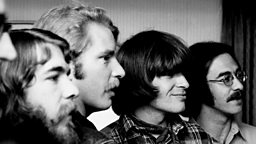
Green River - Creedence Clearwater Revival (1969)
The third consecutive top twenty hit by the group. The song title was a reference that composer and lead singer, John Fogerty got from a fizzy drinks label that he discovered when he visited a soda fountain where they had bottles of a flavoured green liquid. They would pour soda water onto it and you’d have yourself a green river. The song was also the title track to the group’s third album that also contained their biggest hit, “Bad Moon Rising.”
Let’s Think About Living - Bob Luman (1960)
Bob Luman landed his first recording contract with Imperial in 1957 then the following year he signed to Capitol but the hits eluded him. The label wanted to change his name to Bobby Glynn, but on his father’s insistence he declined resulting in his contract being cancelled. Undeterred he was soon signed to Warner Brothers but after a number of failed singles he decided to quit the music business and relocated to Nashville where he was introduced to top music publisher Wesley Rose who persuaded him to have one final attempt at recording with a new song written by Boudleaux Bryant who had been responsible for so many of The Everly Brothers’ earlier hits. The song turned out to be “Let’s Think About Living.”
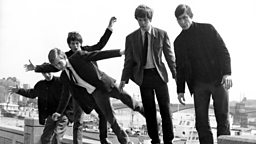
Let’s Spend The Night Together - The Rolling Stones (1967)
'Let’s Spend The Night Together' was avoided by many American radio stations when it was first released because of the nature of the lyrics where it only maintained a chart position of number fifty-five. It was allegedly once reported that two policemen came into the studio in London where The Stones were recording this track and in order to distract them so they wouldn't hold up proceedings by searching for any illegal substances, their manager asked them to bang their batons on one of the takes to create a percussive sound.
Dance The Night Away - Cream (1967)
Cream’s second album, 'Disraeli Gears' was recorded in the Atlantic Records’ New York studios and produced by Tom Dowd and had to be completed over a period of just three days as the band’s visas expired on the final day of recording. Two hit songs were included in the running order, 'Strange Brew' and 'Sunshine Of Your Love' as well as this Jack Bruce and Pete Brown song, 'Dance The Night Away'.
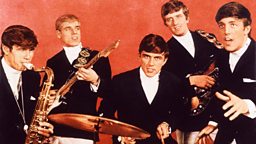
Everybody Knows - The Dave Clark Five (1967)
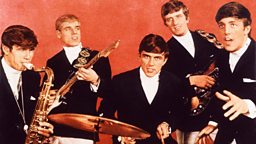
The Dave Clark Five are probably the only recording act ever two have achieved two top forty hits in one decade with two different songs but both with the same title. Such was the case with the song 'Everybody Knows'. The first song reached number thirty-seven in 1965 but in later days, to save confusion was called 'Everybody Knows (I Still Love You)'. Then in 1967, the second and far superior song written by Les Reed and Barry Mason climbed all the way to number two.
Who Could Be Bluer - Jerry Lordan (1960)
As a child, Lordan taught himself to play the guitar and piano before he started writing songs in the late fifties and through a number of contacts, one of his songs, A House A Car And A Wedding Ring” reached singer Mike Preston who immediately recorded it for Decca. Although not a hit, the same label took another of his songs, “I’ve Waited So Long” for Anthony Newley giving both writer and performer, their first hit. Lordan himself was then signed to Parlophone as a singer, achieving his first hit in 1960 with “I’ll Stay Single” but it was his next release that gave him his only UK top twenty hit as an artist, with “Who Could Be Bluer.” He went on to compose hits for dozens of other artists including The Shadows, Louise Cordet, Shane Fenton and Jet Harris and Tony Meehan. Lordan died in July 1995 aged sixty-one.
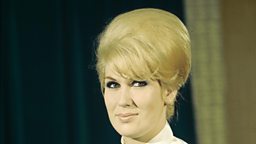
My Colouring Book - Dusty Springfield (1964)
'My Colouring Book' was written by Fred Ebb and John Kander and first recorded by Barbra Streisand in 1962 with American hit versions the following year from both Kitty Kallen and Sandy Stewart. Dusty Springfield was so taken with the song that she decided to record her own version that became one of the stand-out tracks on her 1964 debut solo album, 'A Girl Called Dusty' for which most of the original tapes no longer exist in the Philips Records archives, so some of the CD versions had to be re-created and in some cases using alternate vocal takes.
Animal Magic (Las Vegas) - Laurie Johnson & His Orchestra (1966)
Laurie Johnson from Hampstead in London became known as one of Britain’s finest composers of cult TV themes and movie scores. He started composing for television in 1959 with his first big theme being for 'No Hiding Place' starring Raymond Francis as Detective Chief Superintendent Lockhart. In 1963, the BBC began a factual series, 'Animal Magic' aimed at children with presenter Johnny Morris who would often visit zoos dressed as a keeper and provide voices for the animals and engage in conversations with them. Laurie’s track, 'Las Vegas' was selected as its theme tune and was used continuously until the series ended in the early seventies.
The Kids Are Alright - The Who (1966)
Concluding our 'British Beat Season' we turn to West London based band, The Who, sounding remarkably like The Beatles on this track that was issued as single from their first album on the Brunswick label. By the time of its release, The Who had moved on and signed to Reaction but their previous label wanting to gain as much mileage as possible with what catalogue they still had available, released 'The Kids Are Alright' on the same day as Reaction issued 'Substitute'.
Again - Vera Lynn (1960)
In 1960, after almost twenty five years signed to the same record label, Vera Lynn and Decca parted company during which time she completed thirteen albums and released over twenty singles. Her new deal with EMI saw her initial releases issued on the American owned MGM that included three albums and a number of singles with musical director, Geoff Love and allowed Vera to re-visit some of her favourite songs including this Doris Day classic from the forties, “Again” that she had been including in her repertoire for several years and had first recorded earlier for Decca.
![]()
Beat Cities: London Part 2
Bob Stanley introduces the Beat bands that were born in London's suburbs