Brian's Weekly Sleevenotes - 13 June 15
Find out more about the song's in today's playlist...
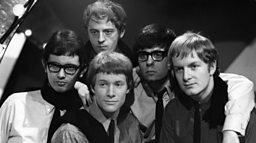
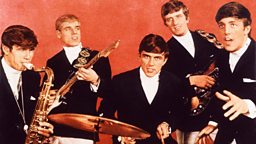
Smokestack Lightning - Manfred Mann
This classic blues composition based on a number of earlier blues songs was written by Chester Arthur Burnett, better known as Blues legend, Howlin’ Wolf who recorded the original version in 1956 and became the opening track on side one of Manfred Mann’s debut album, ‘The Five Faces Of Manfred Mann’ on the HMV label released in 1964 and regarded by many as one of the great blues-based British albums. Although released in America, very few of the tracks on the UK issue appeared on the Stateside issue which ended up being far more pop orientated and almost a completely different album.
Stay - Maurice Williams & The Zodiacs
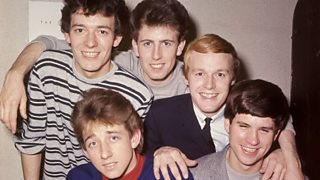
Covered by The Hollies in 1963 whose version reached number eight in the UK. The group from South Carolina began as The Gladiolas who travelled to Nashville in search of a recording contract and ended up with a deal with Excello Records releasing their original version of ‘Little Darlin’ in 1957 that became a massive hit for The Diamonds later the same year. In 1961 they moved to the Herald label after personnel and name change to Maurice Williams & The Zodiacs and released their International hit, ‘Stay’ but never managed to repeat that success.
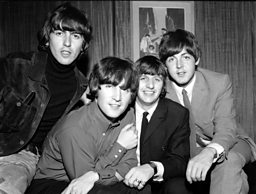
Twist And Shout - The Beatles
This was the first hit song written by Bert Berns who went on to write and produce hits for dozens of acts. Originally recorded by The Top Notes but became a hit in 1963 for The Isley Brothers whose version inspired The Beatles to record it for their first album, ‘Please Please Me’ which eleven of the fourteen songs were completed in one ten hour recording session with ‘Twist And Shout’ being the last and had to be completed in just two takes as John Lennon was suffering from a cold and his voice gave up at the second attempt so the initial version was released.
I Want To Stay Here - Steve & Eydie
The song written by Carole King and Gerry Goffin became a far bigger hit in the UK than in America, it also gave them their biggest hit as a duo. The husband and wife team of Steve Lawrence and Eydie Gorme mainly recorded separately but released their duets as Steve and Eydie. In 1979, they covered the Eurovision Song Contest winning number, ‘Hallelujah’, under the pseudonyms of Parker and Penny.
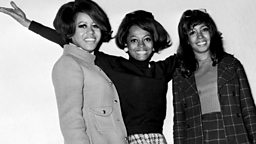
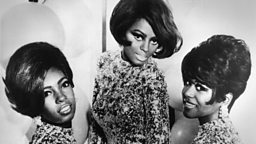
Tears Of Sorrow - The Primettes
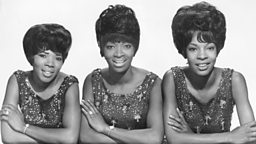
Smokey Robinson’s sister helped The Primettes get an audition with Berry Gordy Jr at Motown Records but he turned them down, however songwriter Richard Morris was more impressed with the girls and introduced them to record executive Robert West who then set up the Lu Pine label to release the group’s debut single, ‘Tears Of Sorrow’ that although not a hit, managed to get them noticed. Determined to get a deal with Motown, the girls hung around the company’s studios most days and eventually persuaded Gordy to allow them to contribute backing vocals to other acts including Marvin Gaye and Mary Wells. In 1961, Gordy finally relented and signed them to his label under the condition they changed their name to The Supremes.
Just Like That - The Robins
The Robins were one of the first teen orientated vocal group to emerge from Los Angeles where in 1947 they entered and came runners up in a talent contest held at the Barrelhouse Club partly owned by Johnny Otis who gave them a weekly residency where they began to gather a following. In 1949 they were signed to the Savoy label where they recorded ‘Double Crossing Blues’ with Little Esther that became one of the label’s biggest selling singles. In 1951 they teamed up with Jerry Leiber and Mike Stoller with whom they would remain linked for the rest of the decade. The pair assigned their records to Atlantic and were then given a permanent position with the company and invited The Robins to join them but only Bobby Nun and Carl Gardner took up the offer and formed The Coasters as the other members had already registered the name of The Robins who continued to record into the early sixties.
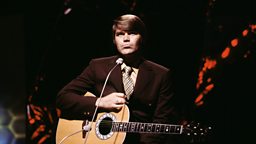
Guess I’m Dumb - Glen Campbell
Glen Campbell moved to LA in the early sixties and teamed up with songwriter Jerry Capehart who had worked with Eddie Cochran and under his supervision recorded ‘Turn Around Look At Me’ that became a minor American hit. By 1962, Campbell was a much in demand session musician and in 1964 was invited to take the exhausted Brian Wilson’s place as a member of The Beach Boys when touring. Already signed to Capitol and passed from one producer to another, Wilson offered to record a song with Glen that he’d written with Russ Titelman, ‘Guess I’m Dumb’ and although it had the makings of a hit, most agreed that the production wasn’t as radio friendly as was hoped.
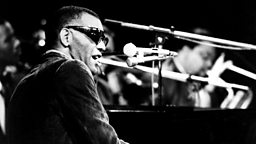
One Mint Julep - The Ray Charles Orchestra
Written by Rudy Toombs, the song first became an American R&B hit in 1952 for The Clovers. Nine years later, Ray Charles covered it as an instrumental with his orchestra and recorded it for his only album for ABC’s Impulse label under the direction of legendary jazz producer, Creed Taylor. Released as a single, ‘One Mint Julep’ became a surprise hit, reaching number eight in the American pop charts.
Mission Bell - Donnie Brooks
His real name is John Abohosh and he’ previously recorded under the names of Johnny Faire, Johnny Jordan, Clint Miller and Dick Bush. ‘Mission Bell’ was his first release under his most recent name. This was one of a number of songs written by Jesse Hodges, who would made a living out of taking terrible songs that had been written by amateur composers and turn them into something recordable. Brooks later went on to become a booking agent before turning his hand at stand-up comedy.
On Days Like These - Matt Monro
This was the theme song of the 1969 movie ‘The Italian Job’, Matt Monro was the original singer with his record being produced by George Martin and arranged by Kenny Clayton. ‘On Days Like These’ was a Quincy Jones and Don Black composition with Matt’s version being used during the opening credits of the movie starring Michael Caine.
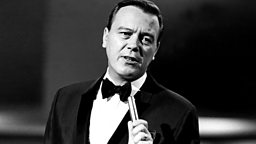
I’ve Told Ev’ry Little Star - Linda Scott
The song was written by Jerome Kern and Oscar Hammerstein and first published in 1932 when introduced in the musical, ‘Music In The Air’ and has since been recorded by many different artists including Pat Boone, Annie Ross and this 1961 top ten hit by Linda Scott who made her recording debut a year earlier with ‘In Between Teen’ as Linda Sampson. The following year she changed her name to Scott and turned out this million selling single.
Highway 61 Revisited - Bob Dylan
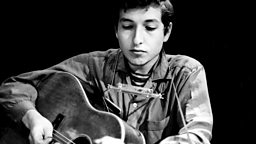
This was the title track to Dylan’s sixth album and included the hit single, ‘Like A Rolling Stone’. For ‘Highway 61 Revisited’ ranked number four by Rolling Stone magazine’s ‘500 Greatest Albums of All Time’, Dylan made use of rock musicians on all but one track, the closing eleven minute epic, ‘Desolation Row’. The album was named after the major American highway which connects Bob’s birthplace in Minnesota to several music heritage cities including Memphis, New Orleans and St Louis.
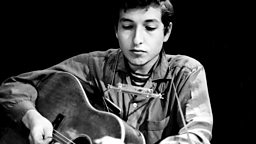
Old Man River - Johnny Nash
Born in Houston, Texas, Johnny Nash achieved a number of minor hits in America in the late fifties including ‘A Very Special Love’ and ‘The Teen Commandments’ with Paul Anka and George Hamilton IV. In 1962 he signed to the Warner Brothers label where he released three singles including this seldom heard soulful interpretation of Jerome Kern and Oscar Hammerstein’s ‘Ol Man River’, from ‘Showboat.
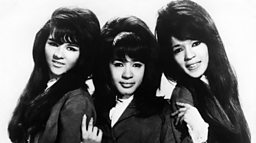
(The Best Part Of) Breakin’ Up - The Ronettes
The record just missed out from making our top forty when it stalled at number forty-three in 1964 after which The Ronettes’ UK record label, London rushed out another single, ‘Do I Love You’ less than six weeks later that gave them their final hit with a chart placing of number thirty-five. ‘(The Best Part Of) Breakin’ Up’ featured Ronnie Spector on lead vocals, with the other two girls, Nedra Tally and Estelle Bennett on backing vocals along with Darlene Love and Sonny and Cher.
![]()
Brian's Reunion with Paul McCartney
Brian Matthew shares more memories of his time with The Beatles
![]()
The Hollies And Their Hit Songwriters
Bob Stanley takes a look at the big names behind some of their early hits