Brian's Weekly Sleevenotes - 19 March 16
Your weekly guide to the stories and facts behind today’s selection of 60s songs...
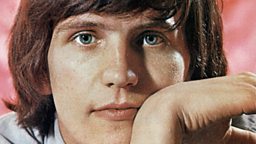
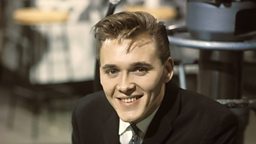
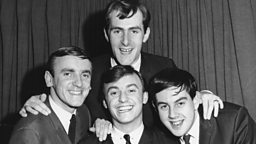
It Was Easier To Hurt Her - Wayne Fontana (1965)
In October, 1965 it was announced that Wayne Fontana was about to break away from his group, The Mindbenders to pursue a solo career with both acts continuing separately to record for the Fontana label. The Mindbenders scored the first really big hit with ‘A Groovy Kind Of Love’ that made the top three both in the UK and America but it was Wayne who was the first to make the charts, reaching number thirty-six with his solo release of this Jerry Ragavoy and Bert Russell song, a cover of Garnett Mimms’s ‘It Was Easier To Hurt Her’.
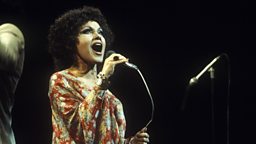
Weddings Make Me Cry - The Exciters (1967)
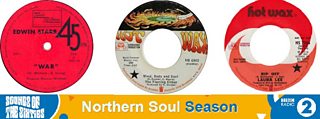
The Exciters recorded the original American hit version of ‘Tell Him’ that was a major UK hit for Billie Davis in 1963 but this recording from four years later became a seventies floor filler when import copies on the American Bang label fell into the hands of the more influential Northern Soul DJ’s resulting in copies exchanging hands for vast sums of money. You can find out more about our Northern Soul Season by clicking here where Bob Stanley has much to say on the subject.
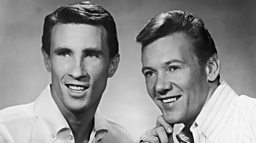
Ebb Tide - The Righteous Brothers (1966)
After the huge success of ‘You’ve Lost That Lovin’ Feelin’’ and ‘Unchained Melody’ in 1965, The Righteous Brothers were on the lookout for their next hit single and decided to record the old 1953 standard ‘Ebb Tide’ written by Robert Maxwell and Carl Sigman at which time there had been recordings by Frank Chacksfield and His Orchestra, Vic Damone and Roy Hamilton with many more to follow. This version became a major American hit but here in the UK, it struggled to make number 48 on our charts.
Festival Time - The San Remo Strings (1966)
This recording by the Detroit based San Remo Strings produced by Al Kent was first released in 1966 but only became a top forty hit in 1971 thanks to the plays it received in the Northern Soul clubs after being discovered by some of the more astute DJ’s. The orchestra was made up of both members of the Detroit Symphony Orchestra and The Funk Brothers, Motown Records’ resident backing band. Their early recordings were issued as The San Remo Golden Strings later being shortened to The San Remo Strings.
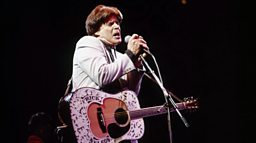
You Just Can’t Quit - Rick Nelson (1966)
In 1963, Rick Nelson signed a twenty year recording contract in America with Decca Records and although he found reasonable success in 1964, the following year were void of any real action with none of his four album releases reaching the charts. By 1966 he was at an all time low with little work on the horizon. In February he went into the studio to record some new tracks after guitarist James Burton suggested he might change direction and try some country songs. The results were superb and the album, ‘Bright Lights and Country Music’ was born and although not a hit, Rick’s song ‘You Just Can’t Quit’ created a great deal of interest from radio stations and soon he was back touring with his band.
Black Mountain Rag - The Dillards With Byron Berline (1965)
The Dillards from Salem in Missouri are bluegrass players Douglas and Rodney Dillard who come from an amazing musical heritage. Their father Homer was an old time fiddle player who bought his sons their first instruments. They have thirty-two banjo pickers and numerous violin and guitar players in their immediate ancestry. This track, ‘Black Mountain Rag’ written by Leslie Keith, once a member of The Stanley Brothers who often performed the piece in the mid-forties and comes from their 1965 album, ‘Pickin’ And Fiddlin’ and features Byron Berline, one of the world’s premier fiddle players.
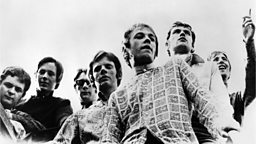
High In The Sky - Amen Corner (1968)
In less than three years from formation to break up, Amen Corner had six hit singles, released five albums and embarked on various sell out tours. Their first four hits appeared on Decca’s Deram label after which they switched to Andrew Oldham’s Immediate label where they achieved their only number one with their first release for the company, ‘(If Paradise Is) Half As Nice’. In 1969, they announced their split and the remnants of the group re-emerged in 1970 as Fairweather, achieving just one hit with ‘Natural Sinner’.
Waterloo Sunset - The Kinks (1967)
The group’s tenth of eleven top ten hits achieved by them in the sixties was once again written by Ray Davies who also produced ‘Waterloo Sunset’ that was released as a single from their album, ‘Something Else’ and became one of the group’s most acclaimed songs around the world and was their first single to be released in true stereo. In a poll carried out in 2004, the song was voted ‘The Best Song about London’.
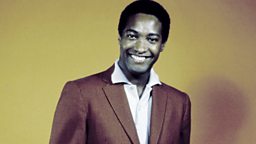
Cupid - Sam Cooke (1961)
This became Sam’s second consecutive top ten hit of the sixties that was later covered in 1969 by Johnny Nash who reached number six. The backing vocals were provided by twin brothers Kenneth and Bobby Simms who were making their first appearance on record, Kenneth also supplied the effect of the arrow leaving the bow and Bobby made the sound of it hitting the target, an idea Cooke came up with during the recording.
Mr Golden Trumpet Player - Junior’s Eyes (1968)
Guitarist, the late Mick Wayne played on sessions for many top stars including David Bowie, Leon Russell and Stevie Wonder who in 1965 formed his first group, The Outsiders boasting a young Jimmy Page in its line up. After playing in a number of different bands and being involved in several unsuccessful record releases, he formed an embryonic trio, Junior’s Eyes in 1968, releasing their debut single on Regal Zonophone, ‘Mr Golden’s Trumpet Player’, produced by Tony Visconti and bolstered by the piano playing of Rick Wakeman after which the group expanded into a quartet but called it a day in the early seventies after Mick accepted an invitiation to travel to Los Angeles to work with Joe Cocker.
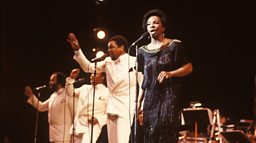
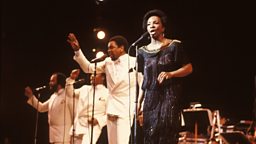
I Heard It Through The Grapevine - Gladys Knight & The Pips (1967)
Singer and song writer Barrett Strong was walking down Michigan Avenue in Chicago when the phrase ‘I heard it through the grapevine’ came into his head from nowhere. He then sat down at a piano and worked out the basic song that was completed by producer Norman Whitfield who then decided to record it with Marvin Gaye. Motown’s quality control panel rejected the record so Marvin’s version lay in the vaults until 1969 so Whitfield tried a different arrangement with Gladys Knight & The Pips and achieved a number two in America. The Pips originally consisted of brother, Merald ‘Bubba’ Knight, sister Brenda and cousins William and Eleanor Guest and although there were changes along the way, always remained a family affair.
All I Have To Do Is Dream - Glen Campbell& Bobbie Gentry (1969)
The song was written in less than fifteen minutes by Felice and Boudleaux Bryant and gave The Everly Brothers their first transatlantic number one. The song has subsequently been covered by artists as diverse as Richard Chamberlain, Roy Orbison and Barry Manilow. The song itself was named one of the ‘500 Songs that Shaped Rock and Roll’ by the Rock and Roll Hall of Fame and received the Grammy Hall of Fame Award in 2004.
![]()
Northern Soul Season: The Instrumentals
From 'Hungry For Love' by San Remo Golden Strings to Laura Lee's 'Festival Time'.
![]()
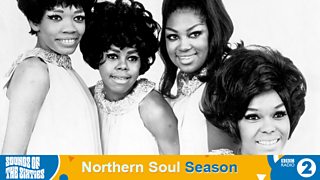
Northern Soul Season: The Twisted Wheel, The Shirelles and The Incredibles
Northern Soul Season: the Twisted Wheel, the Shirelles and the Incredibles
![]()
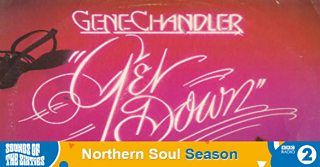
Northern Soul Season: Gene Chandler
Bob Stanley on Gene Chandler's northern soul releases
![]()
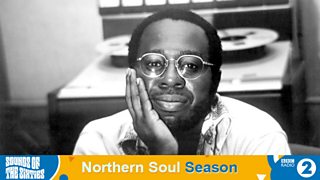
Northern Soul Season: Curtis Mayfield and The Fascinations
Tales of the one-man Chicago hit machine: Curtis Mayfield, by Bob Stanley
![]()
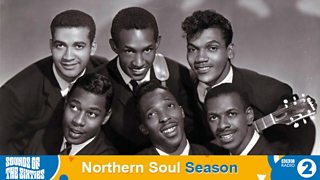
Northern Soul Season: The Contours
Northern Soul: The Contours
![]()
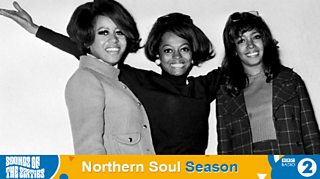
Northern Soul Season: The Supremes
The less appreciated northern soul music of the Supremes...
![]()
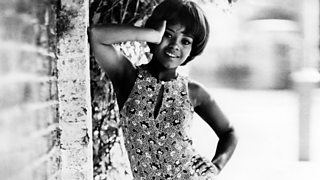
Northern Soul Season: The Making of P.P. Arnold
Bob Stanley on how P.P. Arnold became a northern soul star in her own right
![]()
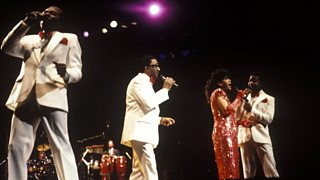
Northern Soul Season: The Elgins
Bob Stanley on the hits that should have been...
![]()
Northern Soul Season: Robert Knight
Robert Knight and the northern soul tracks that were lost in their own popularity

![]()
Northern Soul Season: Van McCoy
Bob Stanley explains the widespread influence of Northern Soul artist, Van McCoy.

![]()
Songs for Lovers - 15 of the 60s most romantic tracks
Need some help creating the right mood for Valentines day? The Sounds of the 60s team have picked their favourite tracks for a romantic weekend.
![]()
Sounds Of The Sixties - Top 10 Girl Groups
Sounds Of The Sixties - Best Girl Groups of the 1960s