Brian's Weekly Sleevenotes - 23 January 16
More stories behind the collection of classic tracks and rarities we play...
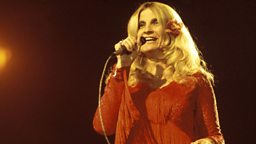
Gonna Get Along Without You Now - Skeeter Davis (1964)
Skeeter achieved her first US hit in 1960 before her biggest success in 1963 with ‘The End Of The World’ but continued to have a steady stream of American chart entries in the lower end of the Hot 100 until 1964 when ‘Gonna Get Along Without You Now’, a song first made famous by Teresa Brewer in 1952, became her final chart entry. It was also successfully revived in 1956 by sisters, Patience and Prudence when they reached number eleven in the States.
I’m On My Way - Dean Parrish (1967)
First released in 1967 to little interest but thanks largely to plays at the Northern Soul Club, Wigan Casino during the seventies, the record made by American actor and singer, Phil Anastasi, better known by his stage name of Dean Parrish was reissued in 1975 finding its way into our top forty. Interest in Parrish's mid 1960s recording career began to gain in popularity but Parrish himself remained completely unaware of his success in the UK as he’d reverted back to his real name and no one was able to track him down until 2001 when he made his first trip to Britain some thirty years since his last concert appearance.
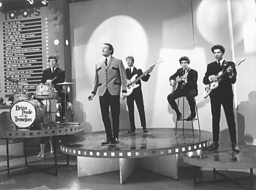
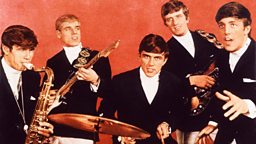
Candy Man - Brian Poole & The Tremeloes (1964)
'Candy Man' was Brian Poole & The Tremeloes’ fourth consecutive top forty hit and was originally an American top thirty hit in 1961 for Roy Orbison which was the ‘B’ side to Roy’s hit, ‘Cryin’’ in the UK but both titles found their way into the American top forty. The song has often been credited to Orbison as the composer but in fact the song was written especially for Roy by Beverley ‘Ruby’ Ross and Fred Neil, the latter who went on to write the classic ‘Everybody’s Talking’ for Harry Nilsson.
Since You’ve Been Gone - Jimmy Justice (1963)
Neil Sedaka and Howard Greenfield were the songwriters credited on Jimmy Justice’s 1963 ‘B’ side ‘Since You’ve Been Gone,’ first recorded by Clyde McPhatter and was the flip of Jimmy’s ‘You’re Gonna Need My Lovin.’ Since its initial release, the song has appeared on a couple of compilations and along with the two originally named composers, five further names, Phil Spector, Barry Mann, Cynthia Weil, Tony Powers and Jack Keller were added.
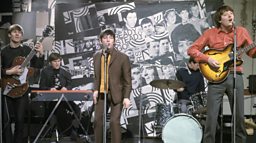
I’m Crying - The Animals (1964)
The bands second UK and American top twenty hit where they had previously reached number one with ‘The House Of The Rising Sun’. It also became one of the few hits to be written by band members, Eric Burdon and Alan Price. Despite the success of ‘I’m Crying’, it was considered a relative failure following on from a number one so thereafter songs written by members of the band were confined to ‘B’ sides and album tracks for over two years.
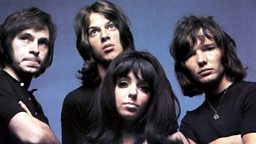
Baby You’ve Gotta Stay - Angel Pavement (1969)
The group Angel Pavement grew out of a soul based band called 'Wesley Hardin’s Shotgun Package' in 1967. Guitarist and singer, Alfie Shepherd had his mind set on forming a West Coast sounding close harmony group so set about forming Angel Pavement. Gathering a following in the York area, they set about recording a number of demos that they privately released on EP’s. Putting future recordings on hold, they took up an offer of work in Mexico for five months, returning to the UK in 1969 to resume their studio work for an album. This track was one of their more lushly arranged singles on which the group only provided the vocals.
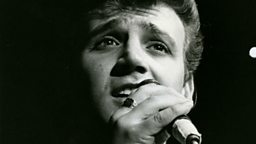
Do You Want To Know A Secret - Billy J. Kramer & The Dakotas (1963)
'Do You Want To Know A Secret' was the debut single from Liverpool group Billy J. Kramer and The Dakotas that reached number two in the UK. It's a cover of the John Lennon and Paul McCartney song that The Beatles had included on their first EMI album that had previously been rejected by Shane Fenton. As was the case with The Beatles, Billy J. and his band were managed by Brian Epstein and the record was produced by George Martin.
Ticket To Ride - The Beatles (1965)
This was the first Beatles hit single to have a running time of over three minutes and started a trend for longer songs from the fab four. Early American pressings of the single declared that the song was from the movie, ‘Eight Arms To Hold You’, the original working title for their second full length movie that ended up being called ‘Help!’.
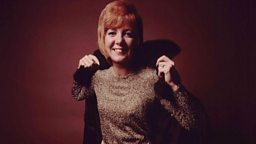
Alfie - Cilla Black (1966)
Although Burt Bacharach wanted Dionne Warwick to record his title song for the movie, ‘Alfie’ starring Michael Caine., Paramount Pictures insisted on a British performer and it was first offered to Sandie Shaw who turned it down. Cilla Black was then told the song had been composed especially for her, and although wasn’t over keen on recording it, agreed on the condition that Bacharach came to London to supervise the session and to her surprise, he agreed and flew into town during February 1966. Despite the record becoming a big hit, an alternative version by Cher was finally used over the closing credits of the film.
Do The Teasy - Joyce Bond (1967)
This cheesy rock steady Jamaican non hit single received a huge amount of attention from the Northern Soul clubs in the East Midlands. A record appeared to egg girls onto the dance floor and encouraged them to unbutton the buttons on their blouses. The song was originally recorded by Hopeton Lewis as ‘Take It Easy’ a year earlier in 1966.
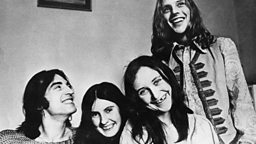
Air - The Incredible String Band (1968)
The track ‘Air’ comes from The Incredible String Band’s double, ‘Wee Tam And The Big Huge,’ released in 1968 and was written by Mike Heron. Unfortunately it failed to trouble the charts mainly due to the lack of marketing and publicity despite being critically acclaimed by reviewers. The lack of success forced their label, Elektra to re-issue the double LP as two single items thus splitting the sales three ways.
She Fooled Me - Alexis Korner’s Blues Incorporated (1962)
In 1961 Alexis Korner and Cyril Davis decided to reform their Blues Incorporated as the very first British blues band and in the process recorded ‘She Fooled Me’ with Korner on vocals. Unable to secure a residency at any of the London venues, they decided to open the Ealing Club in 1962 after which interest in blues and R&B began to escalate.
![]()
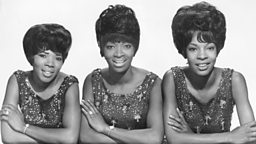
Sounds Of The Sixties - Top 10 Girl Groups
Sounds Of The Sixties - Best Girl Groups of the 1960s

![]()
Northern Soul Season: Robert Knight
Robert Knight and the northern soul tracks that were lost in their own popularity

![]()
Northern Soul Season: Van McCoy
Bob Stanley explains the widespread influence of Northern Soul artist, Van McCoy.