Brian's Weekly Sleevenotes - 16 January 16
Your weekly bite-size guide to the info and facts behind today’s selection of 60s songs...
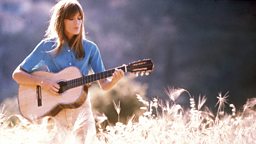
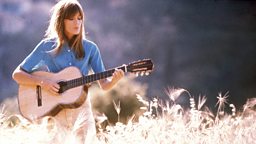
All Over The World - Francois Hardy (1965)
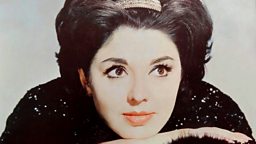
In 1961, Francois Hardy began her music career and after a number of auditions, she was offered a recording contract by the Vogue record label. In 1962 she released her first single, ‘Tous Les Garçons Et Les Filles’, which was popular across Europe but didn't become a UK hit until 1964 when she toured Europe. Her talents in song writing, performing, acting and modelling were complimented by her ability to sing in a variety of languages including English, Italian, Spanish and German. In 1965, her English version of ‘Dans Le Monde Entier’ recorded as ‘All Over The World’ reached number 16 in the UK charts.
Love On A Mountain Top - Robert Knight (1968)
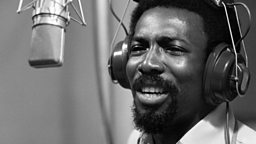
’Love On a Mountain Top’ is the first song this week in our ‘Northern Soul Season’. It’s a record that was first released in 1968 by Robert Knight to little success. It was however picked up by the DJ’s at ‘The Golden Torch,’ a venue that was in fact a pub in the middle of Yorkshire. Due to demand, Knight’s record label decided to re-issue the single in 1973 when it immediately raced into the UK pop charts reaching number ten and selling in excess of a quarter of a million copies along the way.
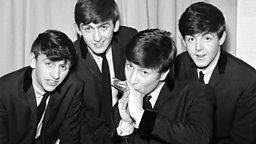
Love Me Do - The Beatles (1962)
The Beatles first UK hit that wasn’t given a release in America until 1964 where it became their fourth chart topper. John Lennon is featured on a harmonica that it has been alleged, he stole from a shop in Holland. It was Delbert McClinton who played on Bruce Channel’s ‘Hey Baby’ that taught him to play the instrument whilst they were on tour together in the UK.
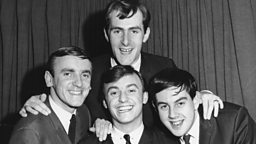
Ferry Across The Mersey - Gerry & The Pacemakers (1964)
Written by Gerry Marsden, this was the title song from the movie that starred Gerry & The Pacemakers with guest appearances by Cilla Black and The Fourmost. Directed by Jeremy Summers, It was the first to be shot on location in Liverpool after the city became famous the world over for its music. Over the years, there have been a number of covers of the song including versions by Frankie Goes To Hollywood and Pat Metheny.

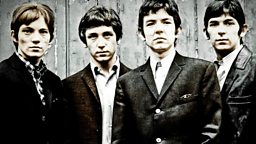
My Mind’s Eye - The Small Faces (1966)
This became the group’s fifth consecutive UK top twenty hit but was originally intended just to be an album track but ended up as a single without the band’s knowledge or consent whilst they were on tour in the north of England. Their manager, Don Arden wanted the group to release a new song and with an unfinished, rough demo copy in his possession, he handed it over to Decca, the group’s record label. The single was a hit, reaching number 4 on the UK singles chart, but in terms of relations between Arden and Small Faces, it was to signal the end of the band's relationship with both Arden and Decca. The song was written by Ronnie Lane and Stevie Marriott who once admitted to taking part of the popular Christmas hymn, ‘Gloria In Excelsis Deo’ also known as the ‘Greater Doxology’ as inspiration for the melody and chorus.
I’ve Got To Be Going - The Peppermint Trolley Company (1968)
The group hailed from Redlands in California making their recording debut in 1965 as The Mark 5 and continued to record under various aliases including The C Minors and The Intercoms before recording their first single, ‘Lollipop Train’ as Peppermint Trolley Company. With line up changes and a few further failed releases, producer Dan Dolton had just recorded ‘Baby You Come Rollin’ Across My Mind’ with Jesse Lee Kincaid for Capitol but the label refused to allow him to record an album resulting in legal complications and record being withdrawn. Dan invited The Peppermint Trolley Company to cover the song against their wishes but bribing them with money, they agreed to go into the studios to record the song as session musicians but after hearing the end result, agreed it should be their own single Issued in 1968. When it made the American Hot 100 , they were asked to cut an album that included this track, ‘I’ve Got To Be Going.’
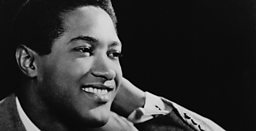
Another Saturday Night - Sam Cooke (1963)
Sam wrote this song in 1962 during his only UK tour by way of a joke. One Saturday, he was staying at a leading London hotel where the management refused to allow men to have any female guests in their rooms. Bored with sitting alone, he picked up his guitar and began strumming ‘here’s another Saturday night and I ain’t got nobody,’ thus proving it can help to have time alone to write hit songs.
Jennifer Artichoke - Kaleidoscope (1968)
Kaleidoscope were formed in 1963 as The Sidekicks but changed their name to The Key in 1965 when they were joined by their new lead singer, Peter Daltry. At the beginning of 1967 they signed to Fontana releasing their first single ‘Flight From Ashiya’ in a full picture sleeve to rave reviews and calling themselves Kaleidoscope. After a few further singles, it was politely suggested to them by their label to come up with a hit or else. So making a study of the charts came up with ‘Jennifer Artichoke’ inspired by Donovan’s ‘Jennifer Juniper’ but still that hit eluded them and the lads, strapped for cash, began taking part time jobs.
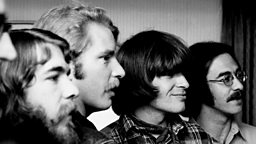
Bad Moon Rising - Creedence Clearwater Revival (1969)
The Song was written by John Fogerty after he was inspired by a movie called ‘The Devil And Daniel Webster’, in which a hurricane wipes out most of a town. It was the first single to be taken from the album, ‘Green River’ and released several weeks ahead of the LP. ‘Bad Moon Rising’ was the second UK top ten hit for Creedence Clearwater Revival on which John sang lead vocals and his brother Tom is featured on rhythm guitar.
Things - Bobby Darin (1962)
Released in 1962 at a time when Bobby Darin wanted to be taken more seriously as an actor, after being the first male to have had contracts with five major movie studios having written the music for several movies in which he appeared. In 1962, he won the ‘Golden Globe Award’ for ‘Most Promising Male Newcomer’ for his role in ‘Pressure Point’, and the following year was nominated for an Academy Award for ‘Best Supporting Actor’ for his role as a shell-shocked soldier in ‘Captain Newman, M.D’.
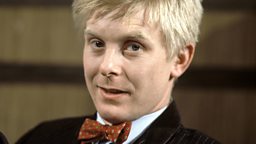
It Only Took A Minute - Joe Brown (1963)
This became Joe Brown’s sixth UK top forty hit but only his second to make the top twenty. He was born in Lancashire and began his musical career as a guitarist with ‘Clay Nicholls And The Blue Flames’ and then with ‘The Spacemen Skiffle Group’. He was one of the first to feature an electric guitar. Pete Oakman was the group’s leader and one day when he wasn’t around, Joe took Pete’s guitar and exchanged it for a double bass, from then on Pete became the bass player and later became part of Joe’s backing group, The Bruvvers.
White Room - Cream (1969)
It’s quite amazing to think that Cream only existed for a little over two years, from mid 1966 to late 1968, but during that time they were amongst the leading pioneers of the evolving British rock scene. ‘White Room’ became the group’s second American top ten hit and was written by Jack Bruce who sings lead vocals and poet, Pete Brown. It wasn’t released as a single until after the group had broken up.
![]()
Northern Soul Season: Robert Knight
Robert Knight and the northern soul tracks that were lost in their own popularity

![]()
Northern Soul Season: Van McCoy
Bob Stanley explains the widespread influence of Northern Soul artist, Van McCoy.