Brian's Weekly Sleevenotes - 21 February 15
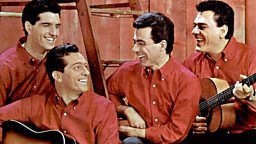
Come On Over To My Place - The Drifters
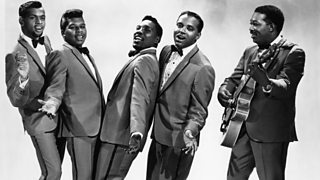
Written by Barry Mann and Cynthia Weil, the record just scraped into our top forty when it was first released in 1965, but it was seven years later and thanks largely to the Northern Soul clubs that the record was re-issued and then reached number seven. By the time they came to record this track, there had been so many changes in the group’s line-up it was almost impossible to keep track as to who appeared on the record but it is believed to be Johnny Moore on lead vocals with the help of Charlie Thomas, Eugene Pearson, Johnny Terry and Billy Davis
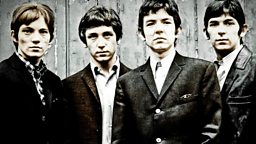
Paint It Black - The Rolling Stones
The idea for the song came when Mick Jagger was walking down a street where every door apart from one was painted black, after which he began putting the song together in his head which he originally intended to be recorded at a much slower pace. It was only when Bill Wyman began playing around on the studio organ and playing the song as if it was a spoof of something that might have been heard at a Greek wedding that it was decided to use the more upbeat rhythm as the counterpart to the slower intro.
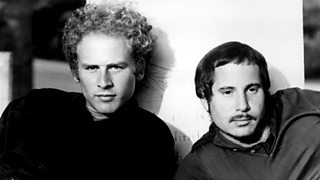
Scarborough Fair/Canticle - Simon & Garfunkel
The album from which we’re going to "double dip" this week is Simon and Garfunkel’s third album, 'Parsley, Sage, Rosemary & Thyme' and consists mainly of acoustic pieces most of which Paul Simon wrote during the time he was living in England. It’s also part of a recently released box set issued by Sony Music that includes twelve CD’s five of which are studio albums recorded by the duo between 1964 and 1970 as well as the first remastering of 'The Graduate' Soundtrack. This is the opening track on side one of 'Parsley, Sage, Rosemary & Thyme', and is their arrangement of 'Scarborough Fair/Canticle'.
Bob Stanley's latest article looks at the career of the notorious duo, here.
The Bride - Lou Rawls
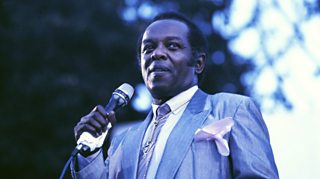
After being part of a number of different groups, Lou was launched as a solo singer in 1959 and signed to Rex productions that also employed two young producers, Herb Alpert and Lou Adler and together created Lou’s first release, 'Love, Love, Love'. Working the clubs for very little money, he was then signed to Candix, the label that first introduced the world to The Beach Boys but his records proved unsuccessful and Candix went bankrupt in 1962 just before Rawls had signed to Capitol who purchased much of his back catalogue as well as being hooked up with jazz pianist Les McCann and his trio to record the album, 'Stormy Monday' that is included on this collection along with this single, 'The Bride (La Novia)' that would later be revived and revised by Julie Rogers as 'The Wedding'.
Palisades Park - Freddy Cannon
One of his biggest US hits, written by Chuck Barris, the producer and presenter of American TV’s long running “Gong Show”. He found the inspiration in Manhattan after deciding to write a song using the name of an amusement park as the title, Palisades Park that closed in September 1971. The record was originally released in America as the ‘B’ side to a song called 'June, July And August', but one day, a DJ on a local Michigan Radio station played the wrong side by mistake. The switchboard lit up from listeners wanting to know what the song was, resulting in his label switching sides giving Cannon his biggest Stateside hit of his career.
Dear Mrs Applebee - David Garrick
David was managed by Robert Wace who also looked after The Kinks and was prone to taking pills due to his hypochondria. He had the idea of getting David to cover The Rolling Stones song, 'Lady Jane', a good decision as it made the top forty. For the next release, Robert had a record by Flip Cartridge that became a minor American hit, 'Dear Mrs Applebee', but there were no plans to release it in the UK so together with producer, John Schroeder, it was decided to cover that. After the recording, Robert complained it didn’t sound right so they had to re-mix it four times before all were satisfied and Robert on hearing the final product, did the only thing possible, took two more pills.
She Came In Through The Bathroom Window - Joe Cocker
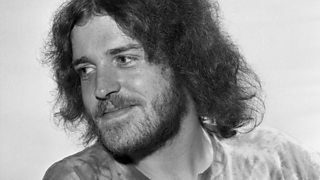
It seems all too often we’re having to pay tribute to the passing of some of our great names in pop and this time it’s with sadness that Sheffield born Joe Cocker, perhaps the greatest rock and roll singer ever to come out of Britain. In 1964 he signed to Decca releasing his version of Lennon and McCartney’s 'I’ll Cry Instead' but when it failed to chart, they sent him packing and it wasn’t until four years later when he hit the big time with another Lennon and McCartney song, 'With A Little Help From My Friends' that gave him a UK number one, but it was another Beatles cover that saw him enter the American top thirty for the first time in 1969 with 'She Came In Through The Bathroom Window'.
I Heard It Through The Grapevine - Marvin Gaye
The song that was first introduced to us in 1967 by Gladys Knight & The Pips and produced by Norman Whitfield who was also responsible for a version by Smokey Robinson & The Miracles that ended up gathering dust in the Motown vaults. When he was looking for a couple of songs to complete Marvin’s album, 'In The Groove', it was decided to include 'I Heard It Through The Grapevine', then WVON Radio in Chicago started playing it and the phone lines lit up from listeners wanting to get hold of the track. Motown were finally persuaded to release it as a single and to everyone’s surprise including Marvin, it became the label’s biggest selling record in their history.
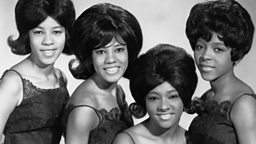
The One You Can't Have - The Honeys
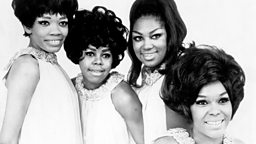
Written and produced by Brian Wilson. The girls previously recorded song demos for many other acts. They were three sisters, Marilyn, Diane and Barbara Rovell and began as The Rovell Sisters until they were introduced to Brian Wilson who named them The Honeys, a nickname for female surfers. He married Marilyn in 1964 and they remained together until 1979, they had two daughters from this marriage: Carnie and Wendy Wilson, who would go on to musical success of their own in the early 1990s as two-thirds of Wilson Phillips.
![]()
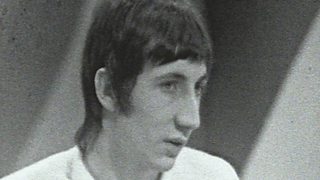
Brian Meets The Who's Guitarist
Brian Matthew looks back at an archive interview with Pete Townshend
![]()
Simon & Garfunkel
Bob Stanley profiles the career of the notorious duo