Brian's Weekly Sleevenotes - 13 February 16
More fun facts from this week’s selection of 60s classics and rarities
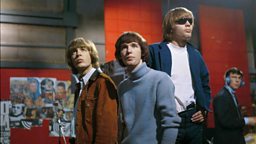
My Ship Is Coming In - The Walker Brothers (1965)
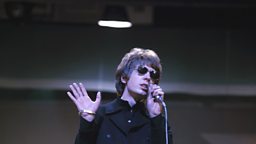
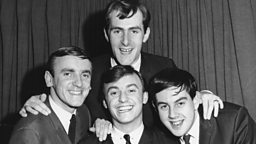
The song was first recorded by Jimmy Radcliffe in 1965 and became The Walker Brothers’ third consecutive UK top twenty hit. By this time the group were becoming increasingly popular with the fans especially Scott. The more the fans chased after him, the more of a recluse he became, his dislike for the limelight becoming more apparent to the rest of the group by the day as he would turn up in various disguises.
Claudette - Roy Orbison (1965)
Roy Orbison went backstage to meet The Everly Brothers after a concert and several song writers were pitching songs to them. When they were introduced to Roy, they suggested he sang a few songs for them to hear but he declined saying that he didn’t want to impose on their time. When he went to leave, they asked if he had anything at all to play them, he replied that he had just the one number, ‘Claudette’ which they liked so much that they wrote down the words on the top of a shoe box and took it back to Nashville to record resulting in a number one hit. This though is Roy’s own interpretation from his 1965 album, ‘There Is Only One Roy Orbison’.
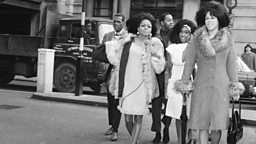
Love Is Like An Itching In My Heart - The Supremes (1966)
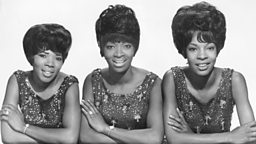
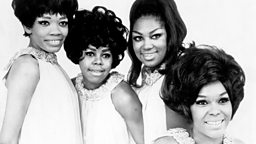
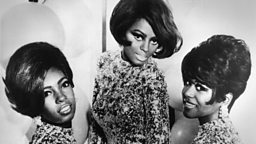
As with most of the early to mid sixties Supremes singles, ‘Love Is Like An Itching In My Heart’ was written by Holland, Dozier and Holland but surprisingly wasn’t a hit in the UK. With lead vocals by Diana Ross backed by Mary Wilson and Florence Ballard, the song was recorded in June 1965, but wasn’t released until almost a year later. Despite disappointing sales it nevertheless proved hugely popular and a massive floor filler in the Northern Soul clubs around the country. And if you want to learn more about the whole Northern Soul scene then click here where Bob Stanley has come up with some fascinating facts about the music and venues.
Fortune Teller - Benny Spellman (1962)
Written by the late Allen Toussaint under his pseudonym of Naomi Neville this familiar song has been recorded by dozens of acts including The Searchers, The Rolling Stones and The Who but there’s never been a hit version. This original by Benny Spellman who made his name as the bass voice on Ernie K Doe’s hit, ‘Mother In Law’ released ‘Fortune Teller’ on the ‘B’ side of his only Stateside hit, ‘Lipstick Traces (On A Cigarette)’ a decision that many found absurd as this was considered by many to be as good if not a better song as did the Northern Soul DJ’s who flipped the record to the approval of the fans of their clubs.
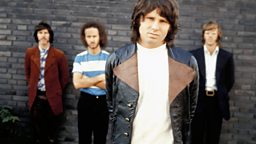
Hello I Love You - The Doors (1968)
Early American pressings had the title as ‘Hello I Love You Won’t You Tell Me Your Name’. The song came about whilst the band were having difficulty recording their third album, ‘Waiting For The Sun’ largely due to the intemperance of lead singer Jim Morrison who was making work impossible. One day drummer John Densmore threw his sticks across the room in frustration and announced he was quitting the band. Trying to calm him down, the rest of the band decided to thumb through some of Jim’s old poems and discovered ‘Hello I Love You’ that he’d written in Venice one afternoon when he and Ray Manzarek had watched a girl walk along the beach. Heading back to the studio, the group managed to complete what would be the album’s opening track and their biggest hit single.
La Poupee Qui Fait Non - Michel Polnareff (1966)
The English translation of ‘La Poupee Qui Fait Non’ is ‘The Doll That Says No’ and was written by Franck Gerald and singer and song writer Michel Polnareff who recorded the original French version and had an immediate hit in his homeland. He also recorded the song in German, Spanish and Italian, helping the song to become successful throughout Europe with further versions by local artists including English versions by The UK Birds and Scott McKenzie recorded it as ‘No, No, No, No, No’ in 1967.
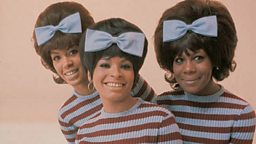
Finders Keepers, Losers Weepers - The Marvelettes (1964)
This Holland, Dozier and Holland produced and composed track by The Marvelettes was given the catalogue number of TMG 1000. It should have marked the five hundredth release by the Tamla Motown label in the UK but scanning through their catalogue, there were a number of tracks that were allocated numbers but never released. The song was recorded in 1964, but not officially released as a single until 1975 as part of a double ‘A’ side with Kim Weston’s ‘Do Like I Do’ as the other title.
I Will Follow Him - Little Peggy March (1963)
Little Peggy March was a few days past her fifteenth birthday when ‘I Will Follow Him’ went to number one on the American charts in April 1963 making her the youngest female artist ever to achieve that accolade. Born in Pennsylvania, she began singing at the age of two and was heard at a cousin’s wedding by a friend who introduced her to Hugo Peretti and Luigi Creatore at RCA who suggested she should record the French song, ‘Chariot’ once English lyrics had been added by Arthur Altman and Norman Gimble, turning her into an International star.
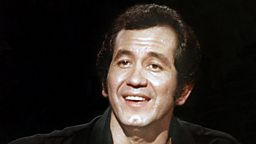
I’m Coming Home Cindy - Trini Lopez (1966)
Trinidad Lopez was born the son of poor Mexican immigrants, escaping to America to escape their country’s severe poverty. Heading for Dallas, Texas, his father who was a musician taught Trini to play the guitar, initially performing Mexican folk songs with his family. Moving to LA and making money by playing night clubs, he was spotted by Don Costa whilst performing at PJ’s, a well known music venue who introduced him to Frank Sinatra who signed him to his Reprise label. His debut album was recorded at PJ’s and became an instant hit as did his single, ‘If I Had A Hammer’. The hits continued across the sixties with ‘Lemon Tree’, ‘La Bamba’ and this 1966 release, ‘I’m Coming Home Cindy’.
Cindy’s Birthday - Shane Fenton & The Fentones (1962)
This cover of the American hit by Johnny Crawford gave the artist his biggest UK hit under his name of Shane Fenton who went on to achieve far bigger success during the seventies and eighties as Alvin Stardust. Despite heavy promotion, the single failed to make it into the top ten, however, there was no doubting the popularity of Shane and his group on the touring circuit at this time, being one of the few selected non Liverpudlian acts to play the famous Cavern Club in Hamburg.
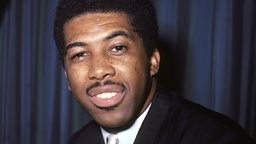
Amor - Ben E. King (1967)
Ben E. King’s solo debut and only UK chart album, ‘Spanish Harlem’ was first released in 1961 when the opening track, ‘Amor’ became an American top twenty hit, but it wasn’t until 1967 that it was re-issued here and reached number thirty on the charts. This opening track, a Spanish composition with English lyrics added by Sunny Skylar was first recorded by both Bing Crosby and Andy Russell in 1944 and when King’s single was issued in the UK, it appeared as ‘Amor, Amor’.
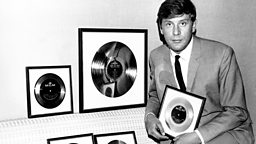
The Femine Look - Mickie Most (1963)
At the age of seventeen Mickie Hayes formed his first group, Mickie Hayes and The Most with his friend Alex Wharton, performing covers of skiffle numbers. They then became The Most Brothers and signed to Decca in 1957 with little success so with his wife to be and manager, Christine, they moved to South Africa returning in 1963, by which time he was named Mickie Most, achieving a minor hit on Decca with ‘Mr Porter’ before signing to EMI where he recorded three singles including this 1963 release, ‘The Feminine Look’ featuring Jimmy Page on guitar.
![]()
Songs for Lovers - 15 of the 60s most romantic tracks
Need some help creating the right mood for Valentines day? The Sounds of the 60s team have picked their favourite tracks for a romantic weekend.
![]()
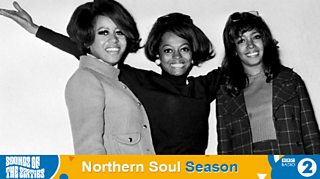
Northern Soul Season: The Supremes
The less appreciated northern soul music of the Supremes...
![]()
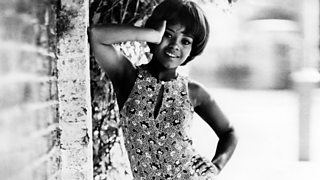
Northern Soul Season: The Making of P.P. Arnold
Bob Stanley on how P.P. Arnold became a northern soul star in her own right
![]()
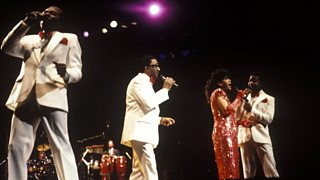
Northern Soul Season: The Elgins
Bob Stanley on the hits that should have been...
![]()
Northern Soul Season: Robert Knight
Robert Knight and the northern soul tracks that were lost in their own popularity

![]()
Northern Soul Season: Van McCoy
Bob Stanley explains the widespread influence of Northern Soul artist, Van McCoy.

![]()
Sounds Of The Sixties - Top 10 Girl Groups
Sounds Of The Sixties - Best Girl Groups of the 1960s