Brian’s Weekly Sleevenotes – 28 February 15
This Old Heart Of Mine - The Isley Brothers
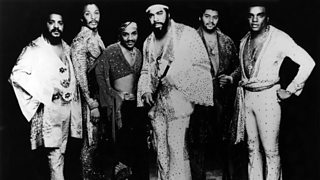
They were four brothers when they first sang together at Cincinnati’s First Baptist Church in the early fifties, but tragically Vernon was killed in a car accident in 1954 while riding his bicycle. Carrying on as a trio, Ronald, Rudolph and O’ Kelly migrated to New York where they eventually signed to RCA where they raised their profile with the classic, 'Shout'. They then released four singles on Atlantic before moving to Wand then United Artists. In 1965, they jumped at a deal offered to them by Motown and in the Autumn of that year recorded their first single for the label, 'This Old Heart Of Mine', a song planned for the Four Tops who were unable to record it as they were on tour. It reached number twelve the following year in The States but they had to wait another two and a half years before it made any real impact in Great Britain when it reached number three on re-issue in 1968.
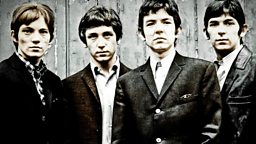
Bringing On Back The Good Times - The Love Affair
Their last of five UK top twenty successes but soon after its release, the group issued a couple of further singles with a change in musical direction before Steve Ellis decided to leave in search of a solo career. The rest of the band continued to work and record without any further success bringing in new vocalist, August Eadon. From time to time the group have got together and Ellis has also performed live with a new line-up calling themselves Steve Ellis’s Love Affair.
The Drifter - Ray Pollard
Ray Pollard was a native of New York City and in 1953 joined the American R&B vocal group, The Wanderers, achieving two minor hits in the early sixties. They were regular performers at the famous Apollo Theatre in Harlem and they also appeared on the same bill as such stars as Ella Fitzgerald, Sam Cooke and Eartha Kitt. In 1965, Pollard decided to leave the group in pursuit of a solo career, and one of his first recordings was this popular track, 'The Drifter'. In later years, he briefly joined The Ink Spots as lead singer and in the early eighties, he went on to perform in the Broadway plays, 'Purlie' and 'Timbuctu'. He also made TV and movie appearances in 'Law And Order', 'NYPD Blue', 'New Jack City' and 'Do The Right Thing'. In April 2005, he died in Las Vegas of lung cancer at the age of 74.
The Wind Cries Mary - The Jimi Hendrix Experience
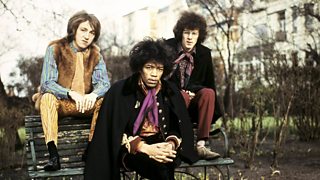
In America, this track was released as the "B" side of 'Purple Haze' and was taken from their album, 'Are You Experienced'. Jimi wrote the song following an argument with his girlfriend named Kathy Mary Etchingham. He'd gotten into an argument with her about her cooking. She got very angry and started throwing pots and pans and finally stormed out to stay at a friend's home. When she came back, Jimi had written 'The Wind Cries Mary' for her. He didn’t play the song to anyone until one day there was twenty minutes left at the end of a recording session when he played it to the rest of the band who loved it and recorded it on the spot in the remaining time
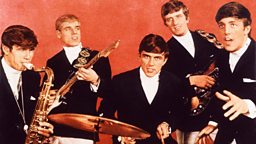
Every Little Thing - The Spencer Davis Group
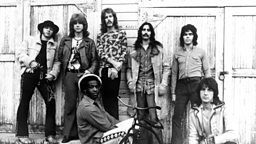
By 1968 the Spencer Davis group had a new line up consisting of Eddie Hardin, Pete York and Phil Sawyer following the departure of the Winwood brothers Stevie and Muff. In 1968, the group were asked to supply most of the music to the soundtrack to the movie, 'Here We Go Round The Mulberry Bush' and one of their favourite songs from the selection was Spencer’s own composition, 'Every Little Thing'.
Click to hear archive clips of Brian Matthew interviewing Spencer Davis and Steve Windwood at the height of their fame in the 60s.
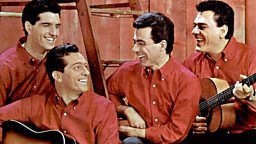
Big Girls Don't Cry - The Four Seasons
In November, 1962, The Four Seasons began a five week run at the top of the American singles chart with 'Big Girls Don’t Cry', the same length of time their first number one and previous hit, 'Sherry' remained at the top. It’s little surprise that the two records are similar in style and sound as both tracks were recorded at the same time. Written by Bob Gaudio and Bob Crewe who came up with the title whilst at home watching a John Payne movie, 'Slightly Scarlet' in which actress Rhonda Fleming was slapped across the face by the star and when asked what she thought about the slap replied, "big girls don’t cry". Crewe noted the line, then fell asleep and began work on the song the following day.
Colours - Donovan
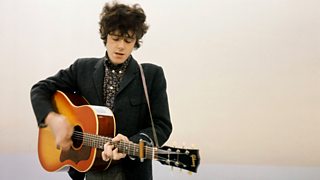
This was the follow up to his debut hit, 'Catch The Wind' with both records peaking at number four on the UK charts. This original hit single version featured a solo with Donovan playing harmonica but several subsequent ‘Greatest Hits' releases have used a different mix with the harmonica part removed. It is believed the reason for this was because they were unable to obtain permission to license the better known recording. Donovan wrote the song on the spot in the recording studio having turned up with several other numbers, none of which he felt were as strong as his first hit.
Woman You Took My Life - Kevin Johnson
In 1973 Pye Records who owned the rights to some of Australia’s Mainstream product released a single by Kevin Johnson called 'Rock And Roll (You Gave Me The Best years Of My Life)' and became a massive hit in his home country but failed to chart in the UK. Two years later it was re-issued here on Jonathan King’s UK label and reached number twenty-three. However it was back in 1968 that Kevin released his first single, 'Woman You Took My Life' on Decca that was later covered by Tom Jones on his 'Close Up' album. Both those songs are now available on a new Angel Hair CD, 'Rock And Roll I Gave You Songs'.
The Magic Book - The Gibsons
Written by Roger Cook and Roger Greenaway and arranged by Charles Blackwell. The band began as a trio in Melbourne in the early sixties as The Hi-Fi’s before moving to Sydney where they were signed to RCA and changed their name to The Cicadas achieving a local number one with the cover of 'That’s What I Want'. In 1964 they moved to England and joined Philip Solomon’s Major Minor label changing their name again to The Gibsons purely in the hope that if they found success, they might be given free Gibsons guitars. Despite airplay on the pirate radio station Caroline owned by Solomon, their first two releases failed to make much impact and they were then signed to Deram releasing 'Two Kinds Of Lovers' followed by 'The Magic Book' written by Roger Cook and Roger Greenaway and arranged by Charles Blackwell using a large orchestra for the accompaniment. After several takes it was decided the sound was too big and complicated for the song so most of the musicians left, retaining a small band for a cut down arrangement giving the song a completely different and appealing feel.
![]()
Brian the Producer
Brian Matthew reveals more about his brief career as a music producer
![]()
Spencer Davis Group
Bob Stanley dips into the recording career of the Birmingham band