Brian's Weekly Sleevenotes - 22 August 15
Discover the stories behind this week’s playlist...
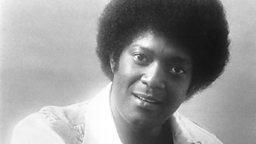
The In Crowd - Dobie Gray (1964)
The song was written by Billy Page and arranged by his brother, Gene. Dobie Gray was born Lawrence Victor Ainsworth although this has been disputed as his name has also been listed as Leonard Victor Ainsworth and also Laurence Darrow Brown from Texas. However, the Texas births records show him as being born on 26th July, 1940 to Jane P Spence and Jethro Clifton Brown. In the sixties, he moved to California where he was met Sonny Bono who became his mentor. ‘The In Crowd’ gave him his first international recognition.
The Girl Most Likely - Jeannie C Riley (1968)
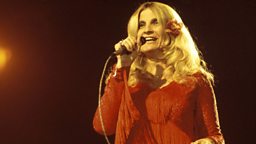
‘Harper Valley P.T.A’ was an American number one and reached number twelve on our charts but singer Jeannie C Riley never managed to repeat her success although this, her follow up made the Hot 100 in the States reaching number fifty-five in 1968 which she followed with three more even lower placed releases, ‘There Never Was A Time’ in 1969 and ‘Oh Singer’ and ‘Good Enough To Be Your Wife’ both in 1971.
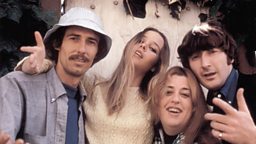
I Saw Her Again Last - The Mamas & The Papas (1966)
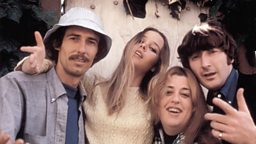
Another John Phillips song, this time about an affair his wife Michelle was having with Denny Doherty and with all three being members of the group, it made for uncomfortable relationships within the act and ultimately Michelle’s unceremonious dismissal and divorce from John. Despite all the upheaval, Denny received a composer credit for the song.
Anyway, Anyhow, Anywhere - The Who (1965)
The Who’s second UK top ten hit was like most of their chart successes, written by Pete Townshend but on this occasion jointly credited to singer, Roger Daltry, the only time a joint composer credit was given to the pair. It was one of the earliest hits to feature a solo guitar feedback, and featured Nicky Hopkins on piano. The song was rarely played live by the group but since 1999 has become a much requested song for their live shows. Some early pressings of the single listed the title incorrectly on the label, calling it ‘Anyhow, Anywhere, Anyway’.
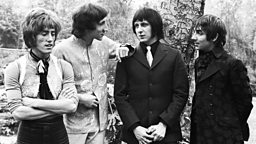
Early In The Morning - Vanity Fare (1969)
Their second of three UK top twenty hits by the group that took their name from a classic by the great English novelist, W. M. Thackeray. Originally called The Avengers, they were spotted by record producer and promotion man, Roger Easterby who subsequently became their manager and found them their first hit with ‘I Live For The Sun’, a cover of a minor American hit for The Sunrays. Vanity Fare had to wait almost a year before their next hit, a song written by Mike Leander and Eddie Seago, ‘Early In The Morning’ reached number eight in the UK but even more encouragingly made number twelve in The States selling over a million copies.
Hallelujah I Love Her So - Richard ‘Groove’ Holmes (1962)
Released as the ‘B’ side of Richard ‘Groove’ Holmes’s 1962 single, ‘Secret Love’, it was this Ray Charles classic, Hallelujah I Love Her So” that received more of the attention around the clubs of London. Holmes hailed from St Louis, Missouri and is best remembered for his 1965 recording of ‘Misty’ although recognised as one of the jazz organ giants. A year after his death in 1991, American rappers, The Beastie Boys paid tribute to him by including an organ based instrumental track, ‘Groove Holmes’ on their album, ‘Check Your Head’
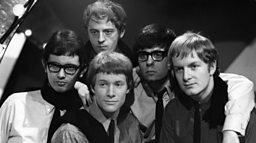
Pretty Flamingo - Manfred Mann (1966)
The last major hit for the group before the departure of Paul Jones as lead singer who was replaced by Mike D’Abo. This was the group’s second number one coming five singles and nearly two years after their first, ‘Doo Wah Diddy Diddy’.
Too Many Rivers - Brenda Lee (1965)
In America, ‘Too Many Rivers’ by Brenda Lee was released as a double ‘A’ side with the less successful ‘No One’ whereas in the UK it was the stand alone track and although it made number twenty-two on our charts, it would became Brenda’s final chart record in this country. Written by Harlan Howard whose other successes include Guy Mitchell’s ‘Heartaches By The Number’, ‘Patsy Cline’s ‘I Fall To Pieces’ and Ray Charles’s ‘Busted’.
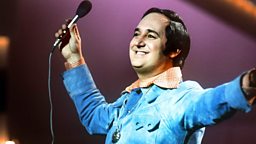
Calender Girl - Neil Sedaka (1961)
This became Neil’s fourth top ten hit in the UK all self written with Howard Greenfield and by 1963, the pair had written over five hundred songs that between them had sold over twenty million records. One of the guitarists on the session was Al Caiola who recorded the hit version of the theme to the movie, ‘The Magnificent Seven’.
Rainbow Chaser - Nirvana (1968)
Nirvana were songwriters, Patrick Campbell-Lyons and Greek composer, Alex Spyropoulos, who would supply the vocals and use top session musicians on their recordings to augment their sound. Patrick would occasionally play guitar whilst Alex would contribute some keyboards. They performed this single on French television with Salvador Dalí, who splashed black paint on them during their performance. Campbell-Lyons kept the jacket, but regrets that Dalí did not sign any of their paint-splashed clothes. Island Records allegedly sent the artist an invoice for the cleaning of one of the musician’s cellos.
What’d I Say - Jerry Lee Lewis (1961)
Roy Orbison recorded a version of this Ray Charles composition for the ‘B’ side of his 1964 top twenty hit, ‘Borne On The Wind’ The song came about when one evening Ray was appearing live with his orchestra and singers and found his set was running early. He decided to set a rhythm and improvise a song that turned into ‘What’d I Say’, that he recorded some months later. Subsequently the song has been covered by dozens of artists including Ricky Nelson, Eddie Cochran and Nancy Sinatra but the first successful recording was this Jerry Lee Lewis version.
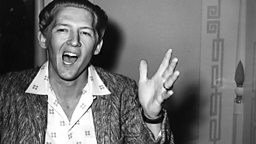
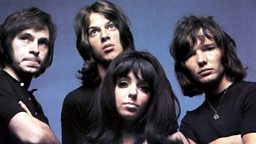
Blister On The Moon – Taste (1969)
The group were formed in Ireland in 1966 by the late Rory Gallagher and originally called The Taste and in their early years spent much of their time touring Hamburg when they weren’t appearing locally. In 1968 they began performing in London with a new line up and were signed to Polydor. That year they were invited to open for Cream at their farewell concerts and in 1969 released their first of two studio albums, the eponymous ‘Taste’ that contained Rory’s ‘Blister On The Moon’ as the opening track.
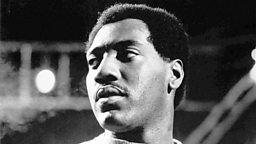
My Girl - Otis Redding (1965)
Co-written by Smokey Robinson whose inspiration for the song was his wife and Ronald White, both men being co-founders of The Miracles. This track gave Otis Redding his first UK hit. In America the original version of the song became the first number one for a successful Motown group who almost immediately adopted it as their signature tune; they were The Temptations.
![]()
The Sad Demise of Immediate Records
Bob Stanley tells the story of Andrew Loog Oldham's iconic record label on the 50th anniversary of its launch