Brian's Weekly Sleevenotes - 13 December 14
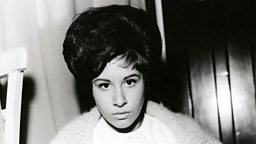
Come To Me - Julie Grant
This became the third and final UK top forty hit for Julie Grant who was discovered by Frankie Vaughan who introduced her to his agent Eric East who arranged for her to audition for Pye who then signed her under her real name Vivian Foreman but at the label’s request adopted her new stage name. Her debut single was 'Somebody Tell Him' and the first of her fifteen singles all produced by Tony Hatch, the fourth of which gave her a hit with the cover of The Drifters’ 'Up On The Roof'. She followed that with two further chart entries, 'Count On Me' and this 1964 release 'Come To Me'.
Bring Back Your Heart - The Del-Vikings
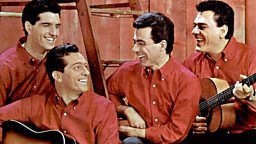
Formed in Pittsburgh, Pennsylvania in 1955, The Del-Vikings will probably be best remembered for their two American top ten hits of the fifties on the Dot label, 'Come Go With Me' and 'Whispering Bells'. They continued to work and record throughout the sixties and in 1961 moved to Mercury then ABC Paramount where they released this Latin tinged soul song, 'Bring Back Your Heart'. Although there has been many personnel changes over the years, The Del-Vikings are still a working group today.
Take This Hammer - The Junco Brothers
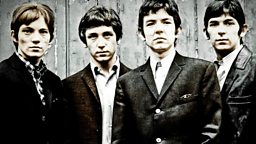
The band hailed from Newcastle where they took over from The Animals as the resident house band at the famous Club A Go-Go as well as playing many of the popular clubs and ballrooms in the north east of England. In 1965 they were signed to the Robert Stigwood agency and Stigwood himself produced their only single, 'As Long As I Have You', a cover of a Garnett Mimms track from the previous year. The ‘B’ side was 'Take This Hammer', a song that they featured in their stage act and always went down well with their audiences but not enough to give them a hit record.
Mickey's Monkey - Doug Sheldon
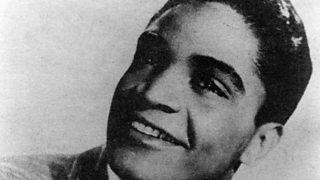
London born Doug Sheldon achieved three UK top forty entries all of which were covers of American hits, 'Runaround Sue', 'Your Ma Said You Cried In Your Sleep Last Night' and 'I Saw Linda Yesterday'. Several records followed but he was unable to gain any further access to our charts. In 1963, he released his final single for Decca, yet another cover, this time of The Miracles US hit, 'Mickey’s Monkey' after which he concentrated on both an acting and writing career, and in 1975 he published the novel, 'The Rainbow Man'.
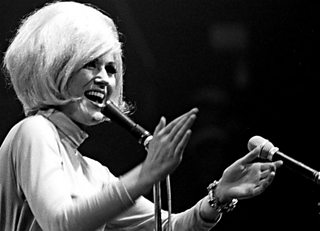
Losing You - Dusty Springfield
When looking for a follow up to her hit, 'I Just Don’t Know What To Do With Myself' written by Burt Bacharach and Hal David, another song written by the two Americans, '(They Long To Be) Close To You', that she’d already recorded, was a strong contender but they finally opted for this Tom Springfield and Clive Westlake composition. She had already cut the song in French as 'Je Ne Peux Pas T’en Vouloir' and had been a single in France before she went back into the studio to record the original English lyric version. 'Close To You' finally ended up three years later as the opening track on side two of her album, 'Where Am I Going?' and three years after that the song became a worldwide hit for The Carpenters.
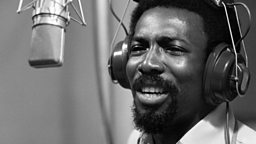
Night - Jackie Wilson
This became Jackie’s fourth American top ten hit and was the third to have been based on a classical piece. In 1960 he reached number four with 'Night' based on the aria 'Mon cœur s'ouvre à ta voix' meaning 'My Heart At Thy Sweet Voice' from the opera 'Samson and Delilah' by Camille Saint-Saëns, with lyrics by Johnny Lehmann, then later the same year he found himself at number nine with 'Alone At Last' based on Tchaikovsky’s Piano Concerto in B Flat and in 1961 this recording of 'My Empty Arms' reached number nine based on 'Vesti La Giubba' from Ruggero Leoncavallo's 1892 opera 'Pagliacci'.
Single Girl - Sandy Posey
Sandy Posey was born Sandra Lou Posey in Alabama and after graduating from high school she gained work as a session singer whilst working as a receptionist at a studio in Memphis. She found her break singing back up for artists including Elvis Presley, Joe Tex, Bobby Goldsboro and Tommy Roe as well as Percy Sledge’s classic, 'When a Man Loves a Woman'. Her first solo record, 'Kiss me Goodnight', she released under the name of Sandy Carmel before signing with MGM and achieving success with a song written by Martha Sharpe, 'Born a Woman'. Following its success, Sharpe was invited to write the follow up, 'Single Girl'.
That's All You Gotta Do - Brenda Lee
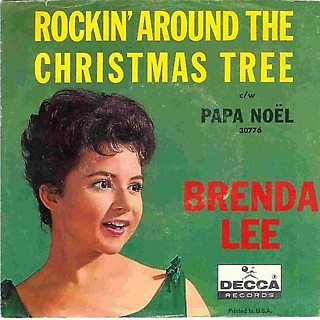
To recognise Brenda Lee’s seventieth birthday this month we played a track from her eponymous second album recorded in four sessions between 1958 and 1960 'That’s All You Gotta Do'. It was written by country star Jerry Reed and was released as a double ‘A’ side in America reaching number three alongside her chart topping, 'I’m Sorry'. In the UK, it was decided to put all the effort into 'I’m Sorry' which might have been a mistake as it only peaked at number twelve here.
For more information about the life and career of Brenda Lee, click here.
![]()
Matthew & Son
Brian shares stories about his beloved son
![]()
Brenda Lee
Bob Stanley profiles the star