Brian's Weekly Sleevenotes - 31 January 15
Cry, Cry Cry - Ritchie Valens
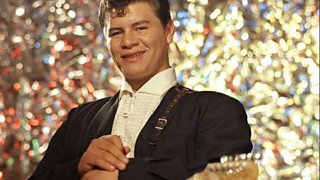
Valens, who was born in California began playing guitar at the age of nine and eventually formed his own group, The Silhouettes whilst still at High school in San Francisco playing mainly at local dance halls before he was discovered by Bob Keene, president of Del-Fi Records who invited him to record some of his songs, the most successful being his fifties hits, ‘La Bamba’ and ‘Come On Let’s Go’. ‘Cry, Cry, Cry’ was one of many songs that Ritchie created from a riff he played on his guitar and who was considered one of the best guitarists of his time. Ritchie perished in the same plane crash that took the lives of Buddy Holly and The Big Bopper in February, 1959 and this record was posthumously released a year later.
The Colour Of My Love - Jefferson
Jefferson, or to give him his real name, Geoff Turton had previously been a member of The Rockin’ Berries before deciding on a solo career. Piccadilly Records chief, John Schroeder who had helped develop The Berries’ career, decided to take on Turton and produced his first single, the Burt Bacharach song, ‘Don’t You believe It’. After its relative failure, it was decided a name change was in order and so Jefferson was born as was the first single under that name, the Jimmy Webb penned ‘Montage’ but still no sign of chart action. For the next release it was decided to turn to a British songwriter and it was this Paul Ryan song that gave Jefferson his only top forty hit.
Girls Are Out To Get You - The Fascinations
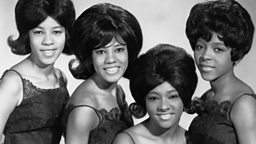
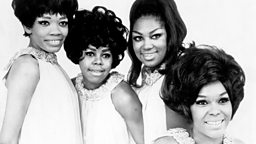
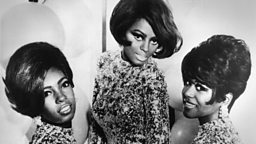
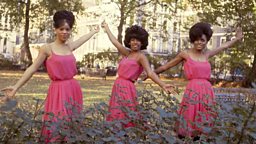
This female vocal group were formed in Detroit in 1960 and one of the founder members was Martha Reeves who left soon after the formation over disagreements with the rest of the group. They were discovered by Curtis Mayfield who wrote and produced ‘Girls Are Out To Get You’ in 1966 to a luke warm reception. However, once again thanks to the Northern Soul clubs, the record became immensely popular in the early seventies leading to its reissue in 1971 and a UK chart placing of number thirty-two.
Whisper You Love Me Boy - Chris Clark
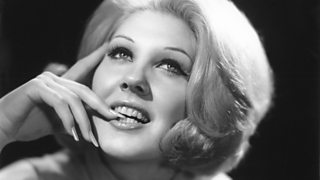
White female singer, Chris Clark earned her contract with Motown by strolling into label boss, Berry Gordy Jnr’s office and performing an impromptu version of Etta James’s ‘All I Could Do Was Cry’. The fact that he also co-wrote the song helped him take the decision to sign her up. This track was written and produced by the labels’ most successful team of Holland-Dozier-Holland and Chris later became an executive for Motown Productions' film and television division in Los Angeles.
Popsicles and Icicles - The Murmaids
Written and produced by David Gates, the girls were Carol and Terri Fischer and Sally Gordon whose hit record was remarkable in the fact that each time it was re-pressed in The States, it contained a different ‘B’ side, a total of four in all. None of their follow up releases made any impact on the wonderfully named Chattahoochee records and before long and after contractual hassles, they were dropped from the label. The trio resurfaced briefly during the flower power era with a cover of Traffic’s ‘Paper Sun’.
Footsteps - Steve Lawrence
Steve signed to the mighty ABC Paramount label in America in 1959 after previously recording for Coral. His first major hit for his new label was the original version of ‘Pretty Blue Eyes’, successfully covered in the UK by Craig Douglas. A his version climbed the American charts, he was halfway through a two year tour of duty with the army and was unable to exploit the record apart from his capacity as the official vocalist with the US Army band at Fort Meyer, Virginia. His follow up was also covered in the UK, this time by Ronnie Carroll, whose version reached number thirty-six but it was the original ‘Footsteps’ that won through.
Confessin’ - Frank Ifield

The song began life with different lyrics and title when Fats Waller recorded it as ‘Lookin’ For Another Sweetie’ in 1929 and credited to Chris Smith and Sterling Grant. The following year it re-emerged as ‘I’m Confessin’ (That I Love You)’. with new lyrics by Al Neiburg and music credited to Doc Daugherty and Ellis Reynolds and four versions were immediately recorded by Louis Armstrong, Guy Lombardo, Chester Gaylord and Rudy Vallee with many other covers following in later years including this number one for Frank Ifield in 1963.
When My Little Girl Is Smiling - Jimmy Justice
Born James Anthony Little, he hadn’t originally considered a career in music. In his teens, he’d hang out at Soho’s 2I’s coffee bar where he met Emile Ford who encouraged him to bring along a guitar and sing. Ford introduced Jimmy to Tony Hatch who signed him to Pye where he released a number of failed singles then the ‘B’ side to one of his records became a success in Sweden and whilst on a promotional visit there, received a call from Hatch telling him to fly home immediately as he’d booked a recording session to cut an amazing song. It turned out to be his first hit, his cover of The Drifters’ American hit ‘When My Little Girl Is Smiling’ also covered here by Craig Douglas with both versions reaching the same number nine position on our charts.
Son This is She - John Leyton
Following his success with his number one hit, ‘Johnny Remember Me’ and the follow up, ‘Wild Wind’ that reached number two, composer, Geoff Goddard and producer, Joe Meek came up with John’s third consecutive top twenty hit, ‘Son This Is She’ and like it’s two predecessors was voted a miss on ‘Juke Box Jury’. John was unable to promote the song on TV as at the time of release a strike was called by Equity, the actor’s union and John being a member, was duty bound to withdraw his services. Despite an appearance on both ‘Saturday Club’ and ‘Easy Beat’, the record stalled at number fifteen.
![]()
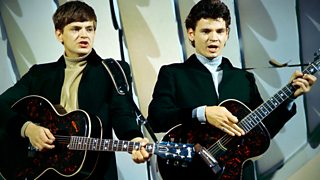
Brian (briefly) meets The Everly Brothers
Brian Matthew recalls meeting the infamous duo
![]()
John Leyton
Bob Stanley reflects on the career of the 60s icon