Filming lion cubs in a flooded landscape
By Juliette Martineau, Researcher and Assistant Field Producer
An average of 60% of lion cubs die in their first year...
At the end of 2023, after three years of filming and many failures, it looked like our lionesses were finally going to have a shot at raising some cubs successfully. Multiple mothers gave birth in close succession, so they would be able to rely on each other to care for their little ones this time. This would vastly increase their chances of survival. The Kingdom team was thrilled.
The births happened right at the end of the dry season, so the lion film crew had to go home before the rains completely flooded the National Park. Nsefu was now predicted to be inaccessible by car for the next few months, and all we could do was wait. An average of 60% of lion cubs die in their first year, so we were all impatiently waiting for the waters to recede so we could find out how they were faring.
In January, we got some exciting news. Our partners at the Zambian Carnivore Programme (ZCP) had spotted the pride from their small aircraft. Through the long grass, they had seen that at least some of the cubs were still alive!
We would need luck and perseverance to get to the lions...
Even more thrilling, from the satellite collars ZCP use to monitor the lions, we knew the lionesses were hanging around Nsefu’s main road, close to the park’s southern border. This might just be driveable in a stretch of dry weather, although no one had really attempted it. Given how vulnerable these cubs were and how fast they would grow, we were very keen to get a camera on the ground to do justice to the story of the pride. I was sent from Bristol to join a team to try to do just that. We would need luck and perseverance to get to the lions, let alone to get any footage.
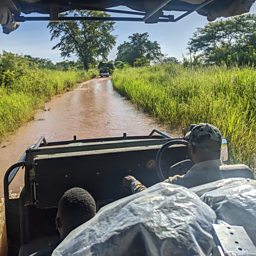
Freshly arrived on location, we went to check the road condition. It had rained recently, so it was very waterlogged. After an assessment on foot, it was clear we were going to need several days of dry weather for the road to harden. The road was far too muddy to drive on.
A few days later, we made our first attempt. As we drove through the villages at the fringes of the park, we got a few head shakes from the locals, but this was no deterrent to our determined team. To our disappointment, however, driving through the mud took us the better part of the day – we had to turn back in order to avoid getting stuck in the dark.
...we had to hope it didn’t come up to motor level.
The next morning, having got up extra early, we were off again. Unfortunately, one of the cars quickly came to a stall. After a few phone calls, a mechanic was dispatched on a motorbike with a replacement part. He somehow navigated the mud much faster than us, and we were off again, having lost some precious time. In some areas, the road was fully flooded, the water level dangerously high on the tyres, and we had to hope it didn’t come up to motor level.
...we finally made it to the drier, open flat of Nsefu.
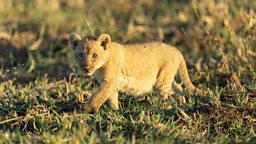
After almost seven hours of battling through the mud, we finally made it to the drier, open flat of Nsefu. Frazer, our tracker, turned on the radio receiver for the lionesses’ collar. It started beeping: she was within 2 km. Soon enough, we spotted glimpses of sand coloured fur moving through the tall grass. We were in the presence of the pride, and they had small cubs in tow. Nothing can describe the team’s excitement in that moment.
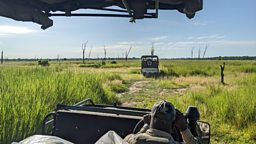
We followed them at a distance, Samson, our cameraman, managing to grab a few shots of the travelling pride through the lush vegetation. Very quickly, they settled down for the hottest part of the day, cubs stashed under some bushes. Impossible for us to film anything.
...the entire shaft fell off as we were driving...
We parked nearby, but as our driver was repositioning, the engine started emitting suspicious sounds, and the car fully refused to move. We couldn’t exit the Land Rover to have a look under the hood with the lionesses so near. Thankfully, there was just enough space to manoeuvre the other vehicle in front of us. The drivers could work their magic, concealed from the pride – it turned out the engine had, in fact, flooded. The car was functional again, to our great relief. This far in the park, no one would have come to get us, except a helicopter, which might take several hours to arrive!
It was already time to head back – we really did not want to be stuck on those muddy roads at nighttime with a dodgy motor. As we drove back, we were buzzing from having managed what we set out to do.
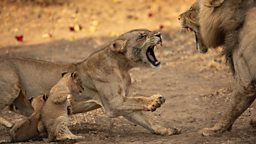
Our next attempt was smoother, with a direct run to the lionesses. The pride had one more surprise in store for us: one of the males was with them. He must be the reason the cubs were still alive; through his protection, the females and their cubs had been safe from intruding males.
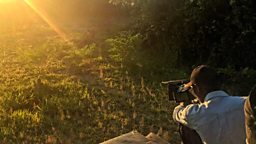
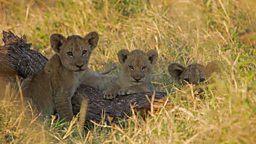
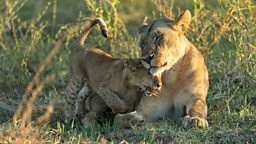
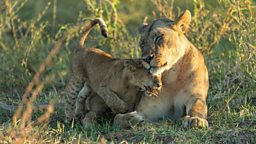
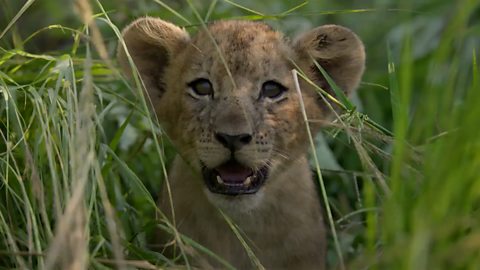
Samson captured some adorable portraits of the cubs and footage of them suckling. This time, as we left the lions, we felt we had accomplished everything we had wanted to. We decided this had been our final attempt for this shoot. From our repeated driving, the roads had started to get more treacherous. The weight of the vehicle had dug into the soft mud, bringing the water level even further up. The truck also had one more surprise for us. This time, the entire shaft fell off as we were driving, thankfully after the worst of the roads!
Samson captured some adorable portraits of the cubs and footage of them suckling.
Following this unexpected success, we decided to leave the camera kit in Zambia after I went home, just in case another window of opportunity presented itself… And sure enough, the weather allowed Samson and the rest of the team to succeed in documenting the young cubs growing up in the lush green landscape.
A baby boom in the lion pride
Five of the lion pride’s lionesses have had new cubs.