Filming lions after dark
By Juliette Martineau, Researcher and Assistant Field Producer
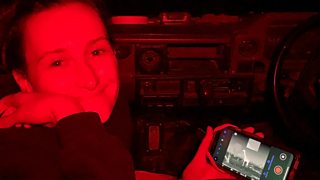
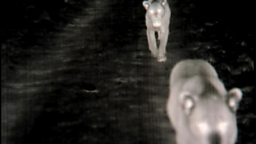
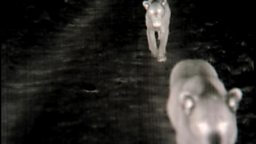
Lions spend roughly 80 per cent of their time lying down. As a result, three years into filming Kingdom, the vast majority of the hours I had spent in their company had been spent watching them sleep. Assigned on my first night shoot, I was about to experience for myself that following those big cats in the dark is a very different proposition. On a hot late afternoon, equipped with a military-grade thermal camera in a specially adapted filming vehicle, we were heading off to find the pride.
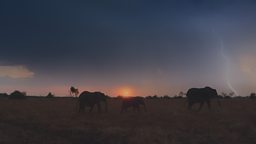
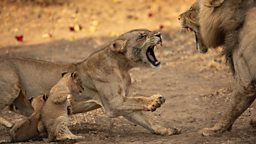
Inevitably, we arrived to find some very sleepy cats. But as the sun set in blazing colours and the light got dimmer, the lionesses slowly started to stir: getting up, stretching, yawning. And then, they all started to roar. A roar is a long-range advertisement, designed to be picked up at a distance. Close up, you can hear all the low frequencies in the sound. It resonates through your entire chest and taps into some real primal feelings of fear…
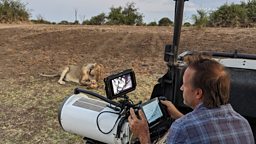
Unnerving for us, but perfect conditions for the pride
Lions need to hide in order to get close and surprise their prey, so they are most active on the darkest nights. Therefore, to maximise our chances of filming some action, we would have to be out on the nights free of the moon’s reassuring glow. As the sun set and the light disappeared completely, our eyes could barely detect anything beyond our own vehicle. Unnerving for us, but perfect conditions for the pride: the lionesses got moving with real intent. I would come to recognise this as the typical start to a night with lions.
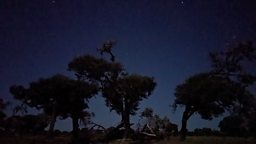
Your hearing becomes a super-sense and you get attuned to every rustle in the grass.
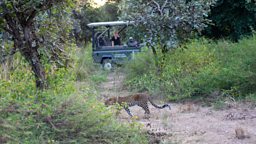
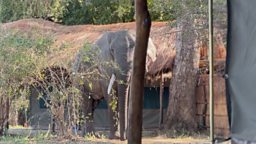
It’s hard to describe how exposed it can feel at night in such a wild place, in an open vehicle, with the knowledge that leopards, elephants, and lions could be anywhere! Your hearing becomes a super-sense and you get attuned to every rustle in the grass. We came equipped with some thermal binoculars, so we could also rely on our eyesight to get our bearings, which was a great help.
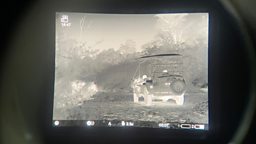
...this individual could inflict some serious damage to our car!
Having inevitably lost the lions in the dark, and in search of our characters, our driver, Newton, turned a corner and we came face to face with a browsing hippo. Newton managed to brake, stopping less than metre short of his snout. It’s thought hippos get confused by blinding headlights, and can charge as a response. They can weigh up to 1000 kgs : this individual could inflict some serious damage to our car! Newton flicked the lights off. I monitored the hippo through the thermal binoculars. He stayed incredibly still, with the whole crew holding their breaths. After what felt like hours, he finally scampered away into the bushes to the right of the car, at impressive speed, and we all sat in silent relief for a few seconds, or that’s what I thought – I’d forgotten no one else could see him in the pitch black and the rest of the team had only heard the sound of him running with no idea of what was going on!
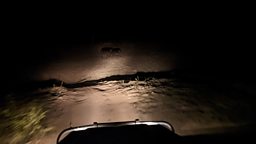
I think we all stopped breathing for a few seconds.
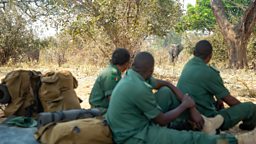
Another night, we were following our lionesses determinedly looking for something to hunt, when one of our tyres got punctured. We stopped and let the pride move far ahead of us till we could just about see them through the thermal binoculars. Only then did the crew start changing the tyre. I was in charge of spotting any danger and alerting our armed wildlife police officer if I spotted anything. I walked laps of the car, alternating between flashing my spotlight and looking through the thermal binoculars. All was well, until, suddenly, the lionesses - or rather globs of light, through the binoculars - that had seemed so distant started to appear larger. They were coming back toward us. I informed the crew (as calmly as I could muster), who sped up the pit stop, and we were all safely in the vehicle once again. The lionesses walked straight to us, maintaining what seemed like direct eye contact until they diverted to the side of the vehicle at the very last moment. I think we all stopped breathing for a few seconds.
One thing is for certain, you never know what the next night will offer in South Luangwa!
During our nights, the crew was rewarded with some incredible behaviour from the lions. My most memorable moment was seeing the lionesses attempt to hunt a baby hippo who was grazing with its mother. The attack lasted about an hour, with the youngster actually charging the lionesses, and the mother also putting up a brave fight. We were all in awe of the sheer power of both parties, filming the interaction from a safe distance. The whole team were, in the end, quite happy to see the lions move on, and the baby hippo walk away unscathed. One thing is for certain, you never know what the next night will offer in South Luangwa!
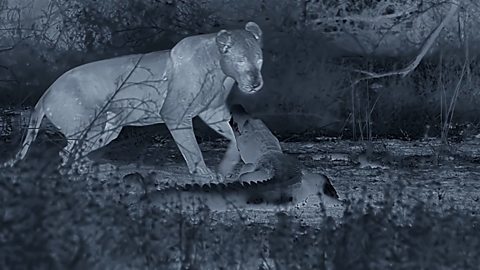
Lions take on crocs and hippos in the dark
Even in the dark of night, lions dominate the most dangerous of animals.