Wet and wild (dogs)
By Anna Place, Producer/Director
There was no easy way to film our animal characters in South Luangwa during the wet season; in fact, in many areas it was close to impossible to film on the ground. The land floods, the roads disappear, and the smallest streams become impassable torrents. Travelling any distance at all requires a boat, nerves of steel and a dedicated ‘croc spotter’!
Throughout the series we had huge success keeping up with our characters using drones, but even that was difficult during the wet season. The answer was to take to the skies with something a little bigger.
...we had to travel to our remote camp by boat...
In a helicopter, not only would we be able to show the transformation of the park and the beauty of the wet season, but we’d also be able to appreciate what it takes for our Kingdom characters to survive here at this challenging time.
With no passable roads, we had to travel to our remote camp by boat, along the now mighty and capricious Luangwa River, avoiding enormous trees that had towered over solid land their entire lives, now toppled into the chocolate brown river by the will of the water, like lethal pooh sticks. Just as dangerous were the sandbanks that massed unseen beneath the surface or the notoriously cantankerous hippos, quick to charge at any disturbance. Despite the potential pitfalls, we made it to camp both dry and unscathed.
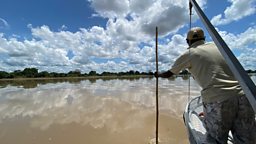
Being in the heart of the park in wet season was glorious...
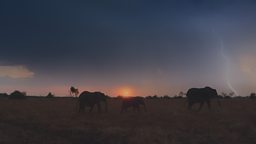
Being in the heart of the park in the wet season was glorious; it felt like a completely different place, a different landscape with different sounds and a different pace of life. We were so excited to show that to the audience. Rigging the camera system to the helicopter was pretty straightforward – I think our Director of Photography, Mark MacEwen, could do it in his sleep; he’s done it that many times! – though the intermittent torrential rain did require the deployment of that bastion of the Great British village fete, the gazebo, to keep everything dry (and occasionally shaded from the sun!).
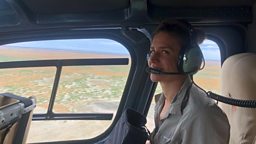
Astonishingly Gibson achieved this seemingly impossible task each day...
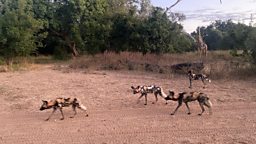
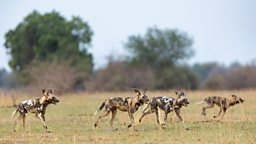
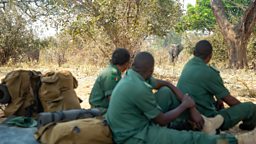
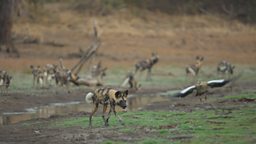
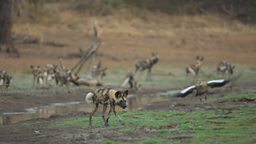
Filming from a helicopter is expensive and dangerous and therefore pretty stressful. Add in to that an elusive subject (or 13 of them!) that run at high speed in multiple directions at once in tall grass, and then you have wet season wild dog aerial filming. Luckily for us, several members of Storm’s wild dog pack were already collared by the Zambian Carnivore Programme, so each morning we would get a GPS location for the pack, then it was a case of flying to that point and hoping they were there. If not, then we were entirely dependent on Gibson, our park ranger and tracker, picking up the VHF signal – which involves rotating an aerial and being able to hear a very faint beep over the roaring of the rotor blades if the collars are within 2km. Astonishingly Gibson achieved this seemingly impossible task each day, and then it fell to me to identify the dogs (I had no idea it would be so difficult from above; their coat patterns look completely different!), work out which individual we needed to stick with, and then communicate to both the helicopter pilot and Mark where they needed to fly/film, alternating between my binoculars, the camera’s monitor and old-fashioned looking out the window.
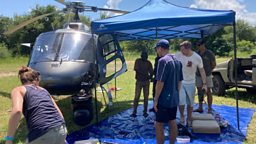
...the most mentally challenging experience I think I have ever had.
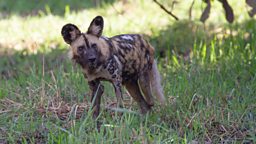
The pups of the group turned out to be the most challenging; they were very nearly full-sized, so difficult to tell apart from the adults – but sometimes their behaviour gave them away. They were so excitable and would often just play around and chase each other and anything else that moved! In nearly 15 years of filming, following Storm’s wet and wild dog pack from the air was the most mentally challenging experience I think I have ever had.
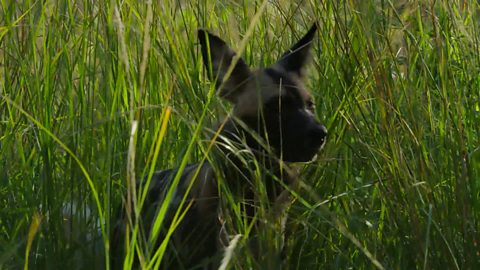
Wild dogs lose their pups while hunting in the long grass
Whilst trying to learn how to hunt, wild dog pups lose sight of the pack.