Writing the music of Kingdom
By Segun Akinola, Composer
...a clear and authentic connection to the location...
As soon as I heard about Kingdom, I was excited. With it being the longest the BBC Studios Natural History Unit had ever continuously filmed in one location, I felt it would be really important for the score to have a clear and authentic connection to the location too.
The only way to do this would be to visit Zambia and make some recordings, so that’s what I did!
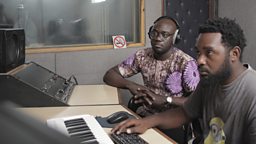
But how did I do it, and how did I get there?
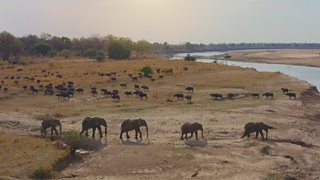
I use the main theme to connect viewers with the location itself...
It all started with weeks and weeks of research into Zambian music, traditional and contemporary. I wanted to find out what distinctive features were present in Zambian music as well as collate a list of current musicians and singers I could record. I wasn’t quite sure what I would need at this point, so I had to keep my list as broad as possible.
Next, I had to figure out what music these musicians would be playing/singing. So far I’d only written the main theme so it was time for an in-depth conversation with series producer, Felicity Lanchester, and the other producers/directors in Bristol.
Because the story of Kingdom is rooted in key characters who are followed over a long period of time, we always knew that the series would need a thematic score, one that could connect viewers with the characters amidst a rollercoaster of emotions. The main question we all had was simply: how many themes?
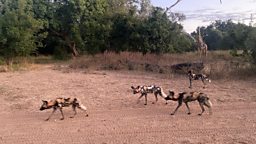
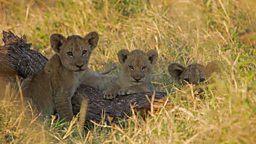
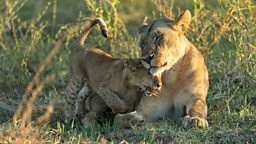
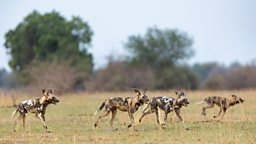
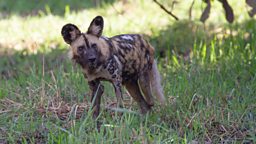
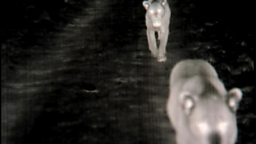
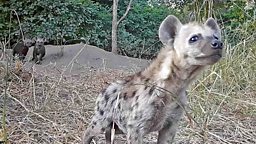
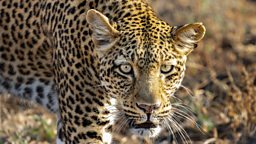
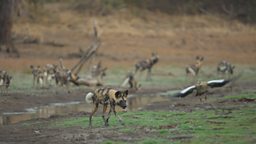
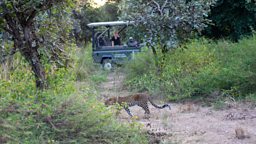
Particularly because there are important characters within each family, did they each need their own theme? We soon agreed that, as is often the case, less is more, so focusing on one theme per family (lion, hyena, leopard and wild dog) would work best and I felt it would be very effective to characterise the theme differently for any individual characters that have important storylines. A good example of this is with the leopard theme, where I knew I wanted to record a higher female voice for Mutima and a lower female voice for Olimba so they could be easily distinguishable.
I’m also a big fan of using main themes or series themes within the body of a series at certain moments that really connect with viewers. In Kingdom I use the main theme to connect viewers with the location itself, so this was part of the plan too. With all of this agreed, it was time for me to go home and actually do some composing!
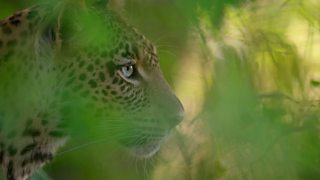
...there are important characters within each family
I thoroughly enjoy writing themes, but it’s often a drawn-out process of having some initial inspiration and then painstakingly agonising over every single note time and time again until eventually it all fits and feels ‘right.’ In this case I spent a few weeks working on very simple piano iterations of the themes so I could really fine-tune them.
They not only had to characterise each family, but they had to work well together too, allowing me the freedom to seamlessly move from one to another in the same piece of music.
Thankfully, when I presented them to Felicity and the rest of the team, the response was really positive, so the next step was booking flights, studios and musicians.
At this stage, I was still many months away from actually sitting down with each episode and composing the specific music for each scene, so I had a very clear set of aims to achieve with my trip to Zambia. I wanted to use recordings:
- In their raw form;
- To make authentic instruments out of;
- To transform them into new sounds.
Using recordings in their raw form is probably the most obvious use because it meant I would record the lion theme with a singer, for example, and you would hear that singer in the final music.
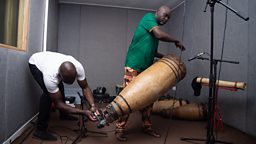
Because my trip was so early in the process, however, I wanted to have more flexibility with the recordings so that I could get as much use out of them as possible.
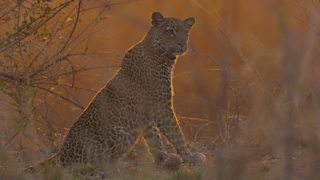
I wanted to record a higher female voice for Mutima and a lower female voice for Olimba...
To achieve this, I planned some sampling sessions where I would record each note of an instrument multiple times (quietly, medium-loud and very loud), knowing that back home those recordings could be used to create a library of sounds played on a keyboard. What was most important to me here is that the sounds were always true to the original instrument.
Finally, I also wanted to use the recordings to make sounds that were completely unrecognisable from the original recording. There’s a synth sound I use quite a lot in the series that’s actually made from a recording of some drums!
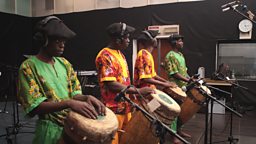
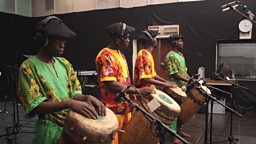
After a little over a week, I had recorded a lot of singers, drummers and other traditional Zambian instruments with the help of fantastic studios, recording engineers and musicians, all of whom I’m indebted to.
It took quite a lot of time to listen through all of the recordings and choose which material to use but it ultimately gave me my own Zambian music library that I could utilise as much as possible once I actually started writing the specific music to each episode.
Once the music had been signed-off, all that was left was to add some more brilliant performances from musicians like the BBC National Orchestra of Wales and others. The end result is a score that makes use of a huge amount of material recorded in Zambia, sometimes in obvious ways and other times in more subtle ways, but always with the intention of connecting viewers with authentic Zambian music.