Dog days
By Anna Place, Producer/Director
Each day threw up different challenges...
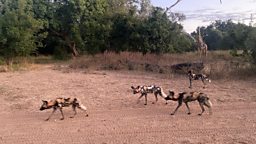
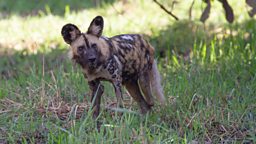
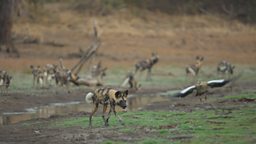
As the series has progressed, I’ve found myself talking a lot about the wild dogs, why they are so wonderful (they really are!) and what it is like to film them. Each day threw up different challenges and surprising events, but the rhythm was always the same, so here is a typical day spent following Storm’s wild dog pack.
- 04:00: For me, a wild dog filming day usually starts with a whimper at the sound of a 4am alarm – not for the wild dogs, they are still fast asleep and likely to remain that way for several more hours!
- 04:02: Drag myself out of bed and, with trepidation, find out what kind of wild animals are lurking in the bathroom. If nothing more dangerous than a frog/mouse/lizard, then I can clean my teeth and get dressed (but not before thoroughly shaking out all clothes and shoes for any dangerous critters not encountered in the bathroom).
- 04:10: Make coffee in the dining tent and share bleary-eyed ‘Mwauka bwanji’s (good morning) with the team.
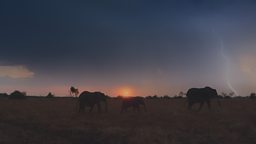
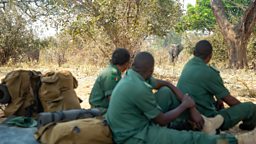
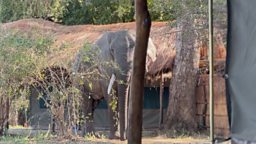
- 04:15: Make my way to our office (shipping container), careful to avoid any surprisingly quiet elephants or hippos munching on foliage between our tents, to find out if Titus (tireless field researcher from the Zambian Carnivore Programme (ZCP) and key team member) has a GPS location for the wild dog collars.
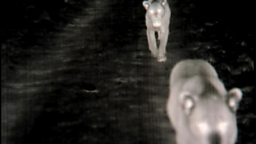
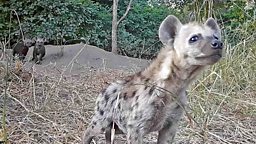
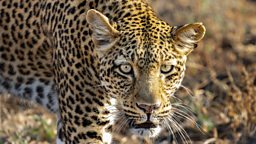
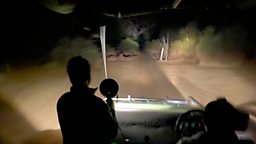
- 04:20: Bundle into the filming vehicles for the dusty, dark bump across the park, while swinging a spotlight to see if we can spot any bonus leopards, lions or hyenas for the other teams.
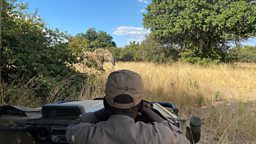
- 04:21: Stop, sit and wait while elephants/hippos/buffalos/giraffes finish eating and move off the road
- 05:30: Arrive at the collar coordinates
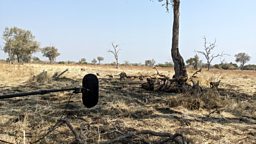
- Scenario A (preferred!) - if we’re lucky the dogs are there and still asleep, so we rig the camera and wait. Happily, this is likely to be the shortest time today spent watching dogs sleeping, and so we cheerily set about making coffee and play ‘What time are the dogs going to wake up?’ – a game that you would think would get old quickly but has enjoyed surprising longevity.
- Scenario B - if we’re not lucky the dogs have already left, then it’s a case of more bumping across the park, this time with Titus swinging an antenna to try to pick up the VHF signal from the collars. Ideally, we pick up the signal and find the dogs before they’ve started hunting, if not, then we have a very long day of watching a pack of full-bellied wild dogs sleeping and digesting in the shade—at which point ‘What time are the dogs going to wake up?’ does get a little old.
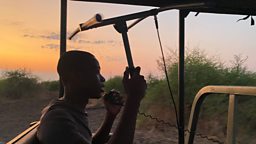
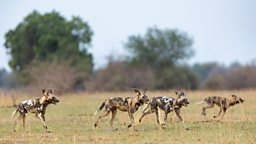
- 06:45: Hooray! We’re in luck, the dogs start to wake up and run around in a blur of waggy tails, greeting each other like they’ve been apart for years, rather than merely asleep next to each other for a few hours. This is my favourite part of the day. Not only do you get to see just how closely bonded the dogs are, but it is the time I feel most like I am one of the pack – knowing that wild dog Nyumba is going to be the first to wake up; Nguni will trip over in his excitement and rush to nibble his sibblings; Choccie will keep rushing to the fringes, eager to start hunting.
- 06:45: Choccie finally gets her way and the dogs set off in search of breakfast. Filming a dog hunt is an exhilarating, nerve-wracking, often frustrating, seat-of-your-pants experience. One minute you’re following the dogs as they trot happily along, the next everyone in the vehicle is looking in different directions as the pack erupts like an explosion in a fireworks factory. Then you need to work out which dog to follow (once you can work out who’s who as they whip past in a blur of patchwork coats and furious tails) and attempt to keep up. The bumpy ground is bad at our usual snail’s pace, but it becomes impossible at wild dog hunt speed – the only hope is to predict a direction of travel and take a shortcut. You have to be in the right spot when they catch their prey, because the whole thing can be over in the blink of an eye. There are times that we’ve caught up with the dogs just minutes after losing sight of them, and the only evidence that they have killed and eaten their prey is their red chops.
- 09:30: The fuller-bellied, slightly slower pack find a shady patch for their daily 7-hour nap. My heartrate slows, breathing returns to normal and we move out of sight/smell of the dogs to eat our breakfast. Then it’s just 7 hours to fill, moving with the sun to find what shade there is, periodically turning the binoculars on the dogs, bird watching, playing I Spy and anything else that helps to pass the time.
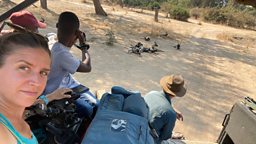
- 16:30: Turn on the camera and start ‘What time are the dogs going to wake up?’ now with an added edge of ‘Will it be before the sun sets??’
- 17:00: The dogs start to wake up, if there are pups, they wake first and initiate the customary full pack greeting.
- 17:15: The sun starts to get low and I start to panic that we’re going to lose the light.
- 17:20: The dogs set off on their evening mission, which will almost definitely involve hunting, chasing a leopard, bothering baboons/hippos/elephants or something we could never predict – or all of the above!
- 19:30: A tired, hungry, weary crew arrives back at camp to clean cameras, offload footage, review what we filmed, report back to the other crews/ZCP to swap notes, eat, rinse off the day's dust, and get ready to start the whole wonderful process all over again tomorrow.
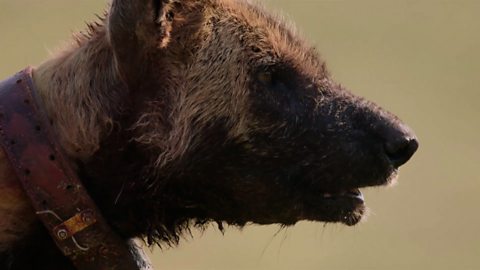
Finding another pack
The remaining dogs from Storm’s pack hear other dogs across the river.