Q&A with Godfrey Mwanza
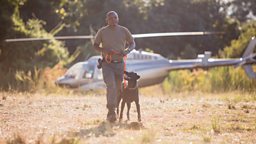
Godfrey Mwanza is head of the K9 Unit at Conservation South Luangwa, who work in partnership with the Zambian Department of National Parks and Wildlife (DNPW). The Unit uses trained sniffer dogs to detect illegal wildlife products leaving the National Park by road, or concealed on private property. His story is featured in Episode 6: The Secret Story of Kingdom.
The Unit uses trained sniffer dogs to detect illegal wildlife products...
He sat down for a Q&A with the team, so we could learn a bit more about what motivates him, and about the trailblazing unit he is at the head of.
What made you want to work in conservation?
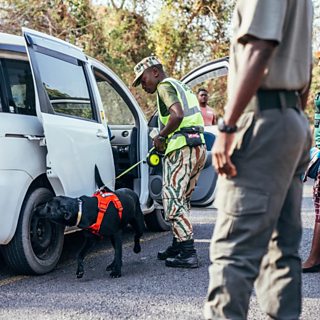
...it was my passion to conserve the wildlife...
In South Luangwa National Park, we earn our living through the wild animals. So I just wanted to protect the wildlife. We live together with the animals, so it was my passion to conserve the wildlife for the generation that is coming next.
Can you tell us how the K9 unit started? How have detection dogs made a difference in your work?
Before the K9 unit, we were struggling, mostly on the roadblocks, taking a lot of time to search one vehicle. We were missing a lot of illegal wildlife products going out from South Luangwa into the neighbouring areas, like Malawi, Mozambique.
In 2014, a team came from Working Dogs for Conservation in the US with sniffer dogs. The dogs were put to the test to see if they could find wildlife products, so it was discovered that the dogs can help. We were the first K9 team in Zambia. And after us, there are a lot of teams which were introduced.
With the dogs searching, it takes only a few minutes, you are done with one vehicle. And even searching the houses, we are not taking a lot of time. It’s simple and straightforward. Before the communities realise that we are in their communities, we are gone already. When the dogs came, they helped us to recover the wildlife products which were going out of the park.
Tell us a bit more about Ody (the new K9 recruit featured in Episode 6) and the other dogs you have in the unit.
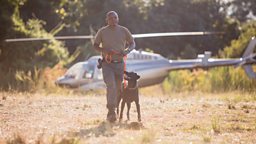
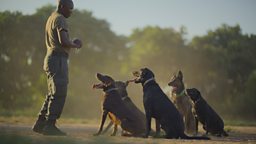
Ody is a black lab, he’s now three years plus. He’s able to detect ivory, leopard skin, ammunition, gunpowder and bushmeat. Now he can do seven scents, he is one of the most reliable dogs which we have. He is able to follow a trail of about 5 kilometres as long as the temperature is cool. He is able to search 20 vehicles in a row. He’s good at listening to the handler, so he’s one of our best dogs so far.
We have 5 dogs, but one is retired, which is Rudi. I’m just looking for someone who can adopt him. Currently we have Gene, Ody, Cassie, and Sherman, which is a brand new dog. They are all very active and young.
What is your typical day like?
The dogs help us find the wildlife products, and it makes a real difference.
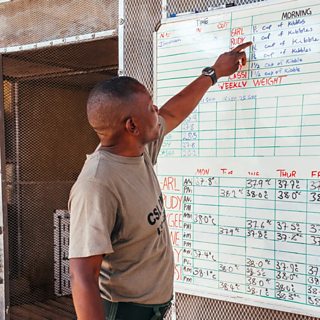
In the morning I go take the temperatures of the dogs, making sure that each and every dog is okay. After that I take the dogs for a walk, then we feed them. After that, if I’m not going out on operation with them, we conduct training. It can be detection training, it can be tracking training, it can be obedience, or it can be maintenance. If on operation you suspect the dog’s missed something, then you train them on that scent so that they can be solid on that odour.
What obstacles do you encounter to doing your job daily?
The most challenging part is that when our dogs are bitten by tsetse flies, they can get very sick and die.
The other thing is that South Luangwa is very hot. So our dogs can only track for less than an hour. It’s different again when it is rainy season, but when it is hot it is very challenging to work with the dogs. When it comes to operations, because a lot of people now know that we are using the sniffer dogs, they hide a lot. It’s not like before the introduction of the K9. Now, you may find that you have information, someone has ivory in his possession, but it is not within his premises. He’s hiding it maybe a kilometre or two kilometres from his house. That’s the biggest challenge which we are finding whilst on the operations.
The other thing is, some people may try to poison the dogs. So especially when we are searching the vehicles, we need to be very careful that the dogs don’t tamper with anything which is maybe smelling good in the car. That is why they are trained not to eat anything when on operation, and the handler needs to be very observant.
What are the next steps in your conservation mission?
I want to have the species which we lost back, we used to have rhinos in South Luangwa National Park. And to reduce the poaching activity, maybe by 50% or 30%.
My next step, since I’m a dog handler, is to be one of the dog trainers in the near future. So that I can train the future wildlife police officers and dog handlers.
What would you like people to take away from Kingdom Episode 6?
I would want people to take away from that episode the importance of the detection dogs. I mentioned it was the first K9 team to be introduced in Zambia for conservation. We want people to learn from us and know if we can also learn from them.
This isn’t drama or the movies, but it’s what is happening on the ground. What we are doing is the real thing. The dogs help us find the wildlife products, and it makes a real difference.
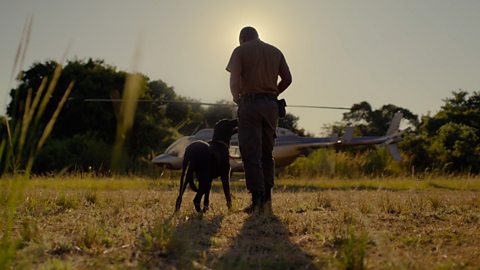
Meet Ody the dog, hero in training
Will Ody be able maintain a calm head while riding in a helicopter?