Extremes of South Luangwa
By Dom Walter, Producer/Director
...shaped by its untamed inhabitants and its extreme weather.
South Luangwa is a wilderness of beauty shaped by its untamed inhabitants and its extreme weather. It is the reason we spent 5 years filming there. Yet, the very forces that makes it so breathtaking also made filming a constant challenge…
Animals bagsied the best shade
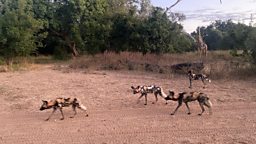
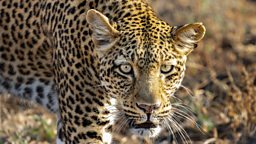
Most of the filming took place during the dry season, which runs from April to November each year. Around 230 days straight of no rain and temperatures slowly building to nearly 50°C means water is scarce and the air is thick with dust, resulting in a beautiful orange “Lion King” version of the African landscape. Fortunately, on the hottest days, many animals are active early in the day, so a lot of filming could be done in the cooler hours. Plus, with food and water being in short supply and vegetation dying back, it was actually easier to track the animals down and even predict what they might do next. Of course, there were plenty of days when we just had to tough it out under the blazing sun as the animals bagsied the best shade or kept us guessing with their movements. It is quite possible lions suddenly decide midday is the perfect time to hunt, leopards stay poised to leap from a tree, or hyenas stumble on a fresh kill just as the sun hit its zenith—you name it, it happened. On those long, hot days, keeping cool out in the field became a survival skill in itself.
Not exactly glamorous
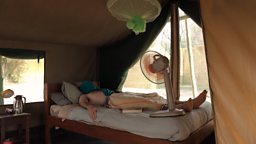
You would imagine it would be a blessing to be on a night shoot, working through the cooler hours, during this hottest part of the year, but some of my worst times were when I had to try and sleep through the unrelenting daytime heat in the tents. The “solution”? Lying right in front of a fan with soaking wet blankets draped over me. Not exactly glamorous—but it worked… at least until the blankets dried out. Then it was up again to re-soak them, flop back down, and hope you could drift off before they dried once more...
And then comes the infamous “wet season”
My weather app swore it was clear skies ahead
And then comes the infamous “wet season”—always living up to its name and usually arriving with a thunderous bang. The first rains are dramatic, and arrive with shocking immediacy… You’d think with so much time working in one place we would learn the rhythms of the year pretty well, and nothing would surprise us… but that’s not quite true!
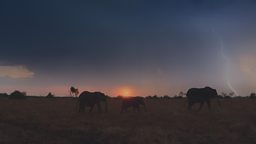
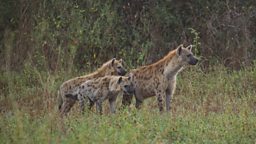
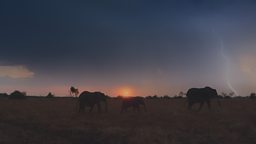
In 2022, while filming hyenas in the hottest month of October, cameraman Samson Moyo and I found ourselves caught off guard. We’d done our homework, checking the historical weather data, and everything pointed to the rains arriving weeks after we planned to wrap. Perfect—we thought we had plenty of time to capture as much from the dry season as possible and, more importantly, those last key hyena behaviours of the year. But just a week into the shoot, we started noticing the skies behaving differently. Clouds began stacking up earlier and heavier than usual. My weather app swore it was clear skies ahead, so I tried to stay calm. That was, until I noticed the elephants beginning their annual march from the muddy river areas to places further afield where new, lush growth is expected – one of the many telltale signs that the dry season is ending. I put the drone up to get a better vantage point on the situation, and sure enough, the elephants were correct. The stacked clouds in the distance were now a dark, brooding grey, and they were moving our way fast!
The stacked clouds in the distance were now a dark, brooding grey, and they were moving our way fast!
A biblical deluge
Samson and I sprang into action. His priority was shielding the precious camera, while mine was to quickly try to land the drone before the impending storm engulfed my eye in the sky. We managed to get everything packed away just in time. The place went eerily calm, not even a sound of a ground squirrel…then an unholy wind struck our vehicles, followed by a biblical deluge. Within minutes we were soaked, and the entire landscape was underwater. Then, just as suddenly as it had begun, the storm cleared. The sky returned blue, and the hyenas reappeared, stretched and looked at us as if nothing had ever happened and we were the ones being overly dramatic!
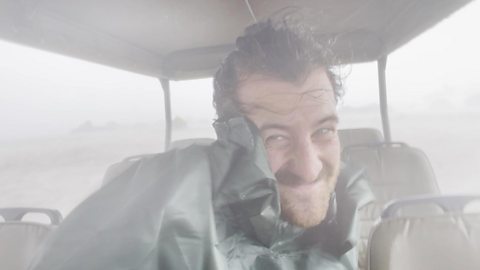
Dom gets caught out in the rain
While filming for Kingdom, producer Dom Walter gets caught in a storm.
...the rains had one more surprise for us...
One more surprise
This unpredictable weather continued for the next 4 days until eventually it became too dangerous to keep filming—the mud roads in and out of the park were thick like quagmires, and it was only a matter of time before they became completely impassable. Reluctantly, we packed up camp and moved to accommodation outside the park. But the rains had one more surprise for us: an almighty insect eruption. Termites were everywhere—the skies, the ground, our gear, even our rooms and toilets were swarming with them. Yet another event that caught me totally off guard.
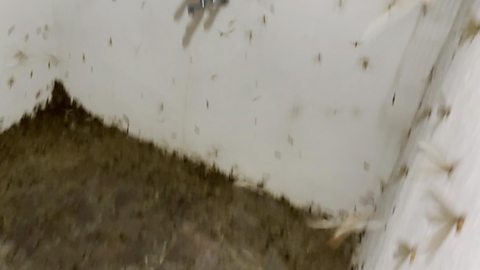
The termites erupt in Dom's bathroom
Producer Dom Walter shows us the scale of the termite eruption in his outdoor shower.
When I returned to the park the following year, after the rains had passed, it was almost unrecognisable. Months of relentless downpours had reshaped the land entirely. What had once been dusty and arid was now lush and overgrown, teeming with vegetation—more jungle than savanna. But, beneath this beauty lay concern: there was still a lot of water around, a sign that this rainy period had been a particularly intense one.
They battle through and endure all that comes their way
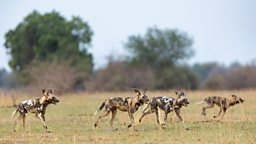
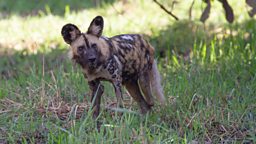
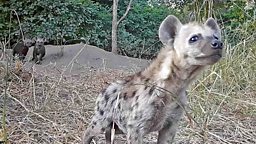
I set out to find the hyena clan, only to find that their sacred den was completely flooded and there were no signs of life. Weeks of searching confirmed my fears… Nearly all the cubs had died. Although one rainstorm had not bothered the hyenas in October nearly as much as it did the crew, it seems the combined rain of several months was just too much. The once tight-knit clan that we had been following and filming were now depleted and scattered throughout this watery labyrinth. The team and I were devastated and heartbroken. But, despite this tragedy, hope endured… we found Tenta, the clan's queen, and amazingly, her twin cubs. She had done what many of the other mothers could not and, against the odds, kept her small family alive. We continued to follow Tenta and her little ones for weeks as they searched for the clan. Slowly but surely other members started to appear.
It was truly remarkable to witness the unity of this clan and the strong will of a mother in the face of such adversity. Seeing this firsthand has deepened the respect I have for all that live in South Luangwa. They battle through and endure all that comes their way – surviving extremes, raising a family and some, even thriving!