Immerse yourself in the sounds of the Kingdom
Interview with Chris Watson, Sound Recordist
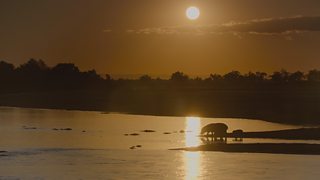
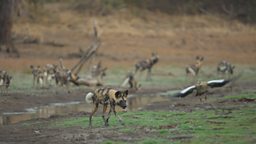
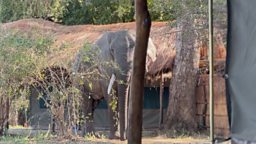
To really immerse our audience in the Kingdom of Nsefu, we wanted to do justice to the rich soundscape that accompanies our character’s daily lives: from the gurgling Luangwa River with its honking hippos to the bush squirrel alarm calls, the African wild dog’s unique twitters, the moody trumpeting elephants, the hyena’s haunting whoops, to the bones cracking at a lion kill.
The legendary recordist Chris Watson, who has been recording sound for BBC wildlife documentaries for over 25 years, was the perfect person to capture the varied auditory landscape of South Luangwa.
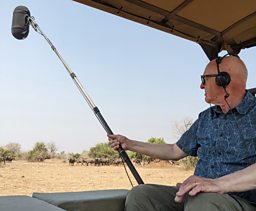
Q: Why is sound so important to the Kingdom series?
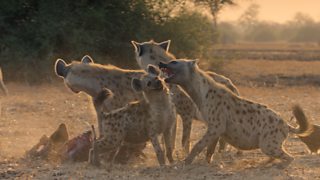
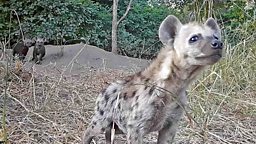
Spotted hyenas give their long-range “whooping calls”...
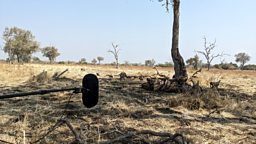
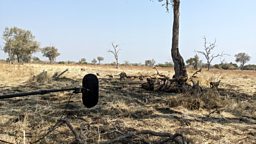
One of the things about coming here to the banks of the Luangwa River is that it's a wonderful mosaic of habitats, and so there are different sounds within a few hundred metres of each other and also different animals. And each habitat has its own signature sound. What I've really enjoyed about the process of recording here is being able to tap into that sound. We’ve been recording it in surround sound, so what I’m hoping to do is put the audience where my microphones were when I made the recording and immerse them in each habitat.
The animals also use the acoustics of their environment to broadcast their message. When you hear the echo of lions’ voices and the reverberation of hyena whoops, I’m sure that it helps them localise themselves within the habitat. For the predators, they need to be able to be very quiet and listen to the calls of the animals, the antelope that they’re stalking.
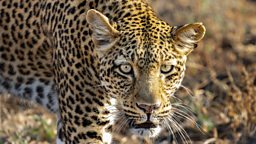
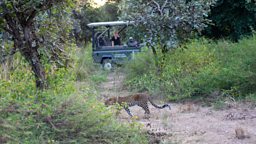
And for the antelope, they need super hearing to be able to feed: when they get their heads down in the grass, they can’t see something like a leopard approach. So sound is a key element to their lives, and I’m really excited about collecting those beautiful, detailed minutiae of sound, which help to understand the animals.
Q: What makes South Luangwa unique in terms of sound?
Paradoxically, it’s the absence of sound, or the absence of noise, which makes this place unique. There are vanishingly few places in Africa, and certainly in Europe and the rest of the world, where I can record sound without being plagued by noise pollution. That’s people, engines, traffic, and aircraft. Here, it’s remarkably quiet most of the time. In the two weeks we’ve been recording, I think I’ve only been disturbed by a vehicle once and an aircraft once. There are very few places like that.
Q: What is a sound that stands out from your time in South Luangwa?
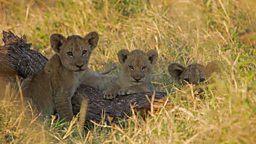
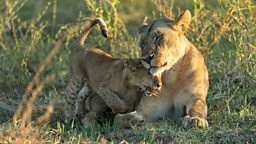
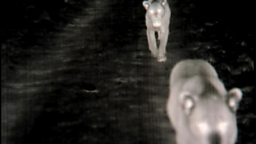
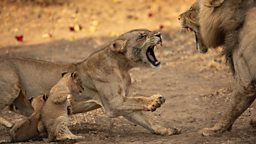
There have been some really exciting times, where our guide has been able to get us in really close proximity to lions feeding on a buffalo carcass, and hearing those intimate sounds in close-up detail, not just the bone crunching, but the contact calls between lions – these are sounds we rarely get the opportunity to hear. And I hope that comes across in the programme, that intimate family life of lions.
Q: What do you need to consider when recording animals?
Animals will often use the acoustics of their particular habitat to amplify their message. We imagine this is to increase the apparent range of their territory or to contact more distant family members. It’s therefore important to include the reflections and reverberations of their habitat in the sound recordings. Somewhat perversely this means not getting too close to the source of the sound in order to capture all the information.
When recording lions, for example, I would rig a static microphone array perhaps 20 m away, which would allow me to record from all directions, not just the sounds in front of the microphone. Spotted hyenas give their long-range “whooping calls” directly into the ground, using the baked earth as a sounding board to radiate their calls out in all directions. This call is best recorded at some distance, perhaps 30 m to 50 m from the animal, with a directional microphone array aimed towards the source.
Q: Why is it so difficult to record African wild dogs?
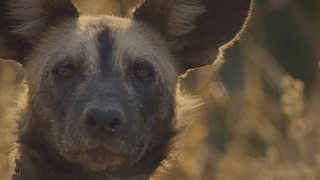
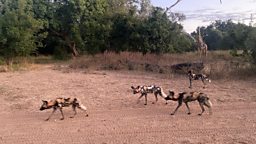
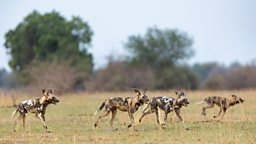
Wild dogs have been a real challenge because they are very elusive
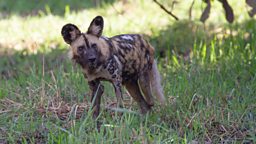
Wild dogs have been a real challenge because they are very elusive; they’re threatened by other larger carnivorous predators, lions and hyenas in particular. And you’ve only got to look at them to see the size of their ears: I think these predators are great listeners rather than vocalisers.
With the whining call, I found it very difficult to localise which animal was doing it, and that’s a case of high frequencies. The animals can hear it in close proximity, but it doesn’t warn potential enemies or predators that they’re around. I’m sure it goes into the ultrasonics. I’ve had to use a very special device called a parabolic reflector, which gathers sound from a distance and focuses it onto the capsule of a microphone. And it’s been perfect for the dogs because it operates within their frequency realm.
Q: What’s the importance of these recordings in creating an archive for future generations?
It’s a really unique privilege for me to come here and record the sounds of the birds, the predators, the antelopes and the environment of this place. It all adds up to a great series of signature recordings. Imagine, in two hundred years, in five hundred years, in a thousand years’ time, being able to not only see this place but also hear it. In centuries to come, there’ll be countless images and footage of this place. I wouldn’t mind betting that there will be precious few sound recordings.
In the future, sadly, it might be the only way people can identify some of the animals that were here. So it’s crucially important so you can really hear the essence and spirit of a place like South Luangwa.