US stop help for Somalia
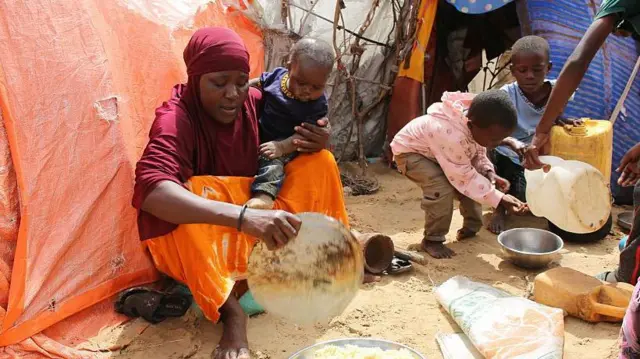
Wia dis foto come from, Anadolu/Getty Images
- Author, Anita Nkonge
- Role, BBC Africa
- Read am in 3 mins
Di US don suspend all support to di govment of Somalia, accuse officials say dem destroy warehouse of UN World Food Programme (WFP) and seize "food aid wey donors fund."
"One tolerance wey di Trump administration get for waste, theft and diversion of life-saving assistance na zero," statement from US State Department tok for X.
Di message, wey dem post for di account of di under secretary for foreign assistance, say dem receive reports say officials illegally seize 76 tonnes of food wey suppose go help "vulnerable Somalis."
Di statement add say any plan to resume di assistance go depend on Somalia govment "taking responsibility for dia unacceptable actions and taking correct steps to fix di matter."
Even though di US don comot from some UN organisations under President Donald Trump, e still be di biggest contributor to di World Food Programme (WFP) by far, as e pay $2bn (£1.5bn) for 2025 – almost one-third of di agency total funding.
Di Somali govment, wey don dey fight al-Qaeda-linked Islamist militants for long as e dey try rebuild di kontri afta serious civil war and years of drought, neva tok anytin about di matter yet.
Dis na di latest sign of how relationship between Washington and Mogadishu dey spoil.
Last month, Trump attack Somali migrants wey dey live for di US, tell reporters say make dem "go back to wia dem come from" and say "dia kontri no good for a reason".
Immigration raids don target some communities as di govment dey accuse pipo of large-scale benefit fraud for Minnesota, di US state wey get di highest Somali population for America.
Di recent decision by US ally Israel to recognise di breakaway republic of Somaliland – wey Somalia still see as part of im territory – don further anger Mogadishu.
According to WFP, di aid wey dem allege say Somali officials seize suppose help people manage di effects of "drought, floods, conflict, high food prices and poor harvests".
Di agency quote figures show say about 4.6 million pipo for Somalia dey face serious hunger crisis.