How second-hand clothes dey choke beaches and drains for Ghana
Wia dis foto come from, ANDREW CABALLERO-REYNOLDS/BLOOMBERG VIA GETTY IMAGES
- Author, Komla Adom
- Role, Senior Journalist, BBC News Pidgin
- Reporting from, Accra
- Published
- Read am in 6 mins
Second-hand clothes wey pipo dey call thrift clothing from di global north dey cause wahala for kontris for di south – especially Africa.
Kontris for Europe and America dey ship dis second-hand clothes to Africa evri week. Even though dis clothes dey help millions of citizens for di south, dem also dey carry along dia own wahala wey involve pollution of di environment.
Authorities dey struggle to deal wit dis wahala - di cost of dis second-hand clothes industry be crazy!
Follow us trace wia tonnes of dis second-hand clothes dey end up as waste for Ghana.
Di real second-hand clothes industry problem
According to US-based NGO di OR Foundation, evri week about 15 million second-hand clothes dey enta Ghana from di UK, China & US.
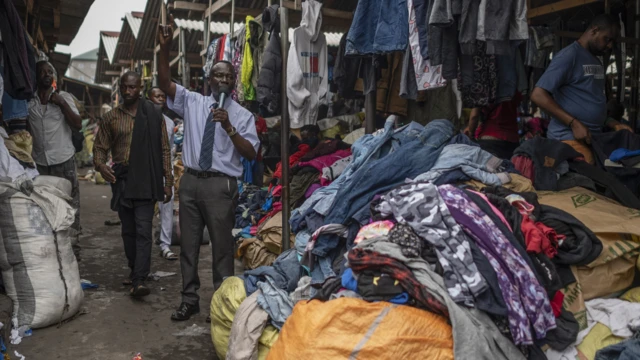
Dem dey land for di world largest second-hand clothes market - Kantamanto for Accra, wia ova 30,000 traders dey work.
Di market dey help dis women to put food for dia table and care for dia families.
For 1 January 2025, fire scata dis market wey e destroy evritin including bales of second-hand clothes for di women.
Bifor di govment go know wetin dey happun, di traders rebuild dia stalls and shops for di market as fire service pipo still dey investigate di cause of dat fire.
For di traders, if dem decide to wait for city authorities, dem fit lose dia position for di market wey dia business wey dem dey run for many years, go collapse.
Wit donations from pipo and oda places, dis traders rebuild di market wey dem continue dia business – dis time dem dey practise safety.
At night, dem dey lock di main entrance of di market to prevent 'junkies' from sleeping dia – wey dem dey open di gate afta six o'clock in di morning.
But even bifor di fire disaster, di traders for di Kantamanto market dey complain about di waste dem dey find inside di bales anytime dem receive dem.
BBC News Pidgin visit di market to find out from di traders how dis dey affect di business.
Maame Felicia, one of di traders tok say "bifor now business be good inside dis Kantamanto market. Pipo dey buy a lot especially on market days. Dose wey dey sell outside the market dey get more business pass dose wey dey inside, dis days."
She tok BBC News Pidgin say "you go open di bales and di clothes no good at all. Plenti of dem be 'borla' (rubbish) - clothes pipo no fit wear again. So, we dey trash dose ones."
Wia dis foto come from, ANDREW CABALLERO-REYNOLDS/BLOOMBERG VIA GETTY IMAGES
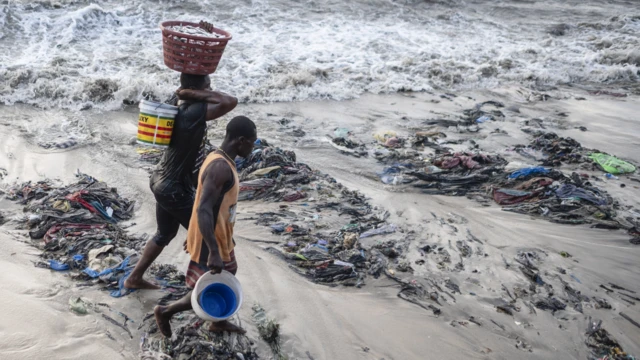
Di waste clothes dey pollute drains and beaches
Di cost of di bales dey range from GH 3k ($280) to GH 7k ($654), wit di waste and clothes wey spoil inside dem, di traders say dem no dey get value for dia money; some dey run at loss, wey di environment dey suffer from dis waste on di oda side.
About 40% of dem dey end up for landfills, inside drains and beaches.
Groups like ObroniwawuFest, di OR Foundation, Buzstop Boys, already clear more dan 2million KG of textile and plastic waste from di beaches of Accra.
But di waste still choke.
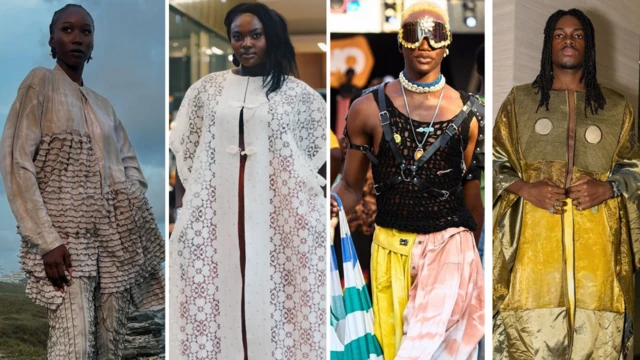
Oda pipo like Titus Gakpe of Calcul Studios dey help deal wit di textile waste in anoda way.
Di young designer wey start dis journey for at least three years now say "we dey transform second-hand materials like curtains, bedsheets, and shirts we dey get from Kantamanto into trendy new designs."
E explain to BBC News Pidgin say "I start upcycling to help to reduce di environmental impact of fast fashion for Accra".
"Ova di years I raise awareness and conversation wey I create fine upcycle pieces wey dey show wetin be possible if we choose sustainability."
Odas like di Nubuke foundation and di OR Foundation also dey reuse textile waste wey dem dey transform dem into paintings, bags, sculptures, room fittings and oda installations.
Wia dis foto come from, CALCUL STUDIOS
Wetin local authorities and govment dey do about dis textile waste crisis?
Even as di traders continue to complain about di waste from di second-hand clothes industry, local authorities also dey worry about di environmental pollution.
How di authorities dey deal wit dis mata since dem no fit to ban import of dis clothes into di kontri.
BBC News Pidgin speak to di Accra Metropolitan Assembly public health director - madam Florence Kuukyi wey she explain some tins.
"We dey need national used textile regulation strategy wey we gatz to revamp di landfill sites so we go fit dispose textile waste wey no go affect di environment."
She add say "thousands of pipo dey survive on di second-hand clothing market, so you no fit ban am".
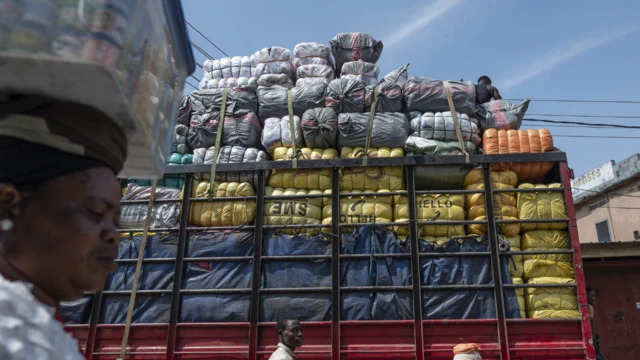
Wia dis foto come from, ANDREW CABALLERO-REYNOLDS/BLOOMBERG VIA GETTY IMAGES
Burning di waste be option?
Di public health director tok say dat one too no be option.
"We also make di traders understand say make dem no burn di waste openly to pollute di environment. We dey arrest pipo wey break dis law, especially dose wey dey burn in di night."
Florence Kuukyi explain say: "We already arrest and prosecute many of dem. We also dey put in measures wey go make pipo import slightly used clothes no be di type wey be waste.
"Di assembly dey try to review our by-laws most of dis tins go dey inside di law. Wen you import dis clothes wey dem open and find say waste dey inside, you go pay for di proper disposal of dat waste."
She add say "one study by Professor Chris Gordon from di university of Ghana find say some of di fish from di sea for Accra get plastic or used clothes inside dem, wey we dey eat dis fish".
Dis be serious wahala.