Species information
For many people, the first glimpse of a swallow heralds the onset of summer. These birds are the epitome of summer. They arrive here usually late-March to mid-May, after spending the winter months in southern Africa.
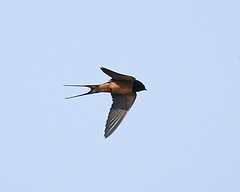
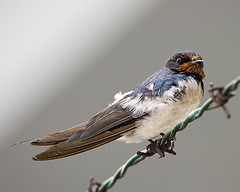
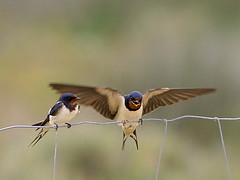
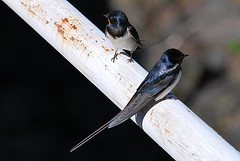
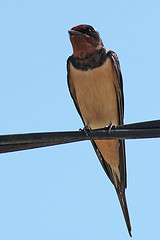
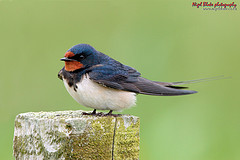
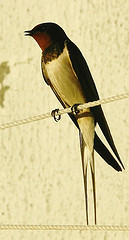
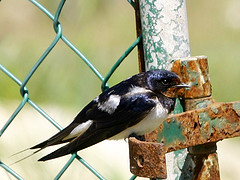
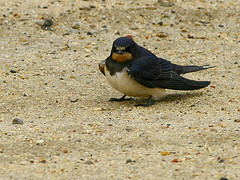
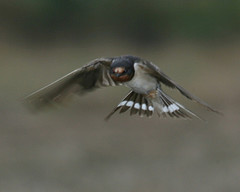
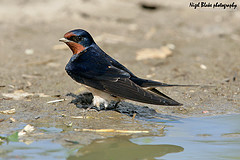
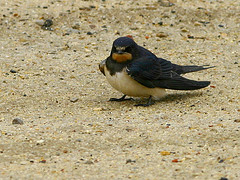
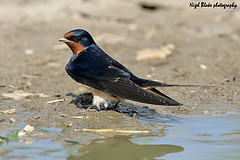
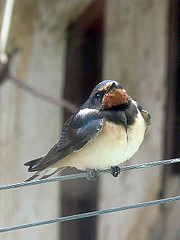
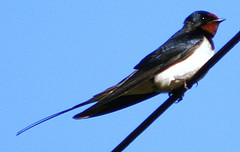
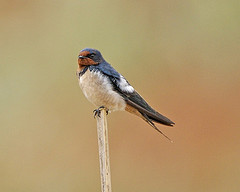
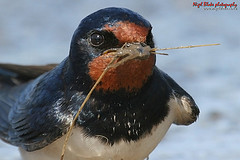
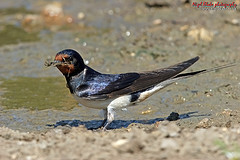
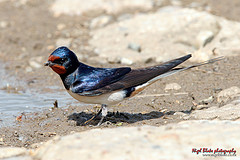
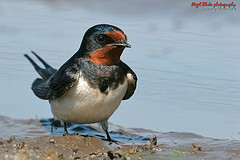
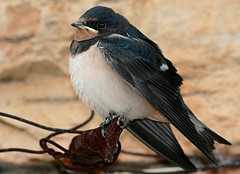
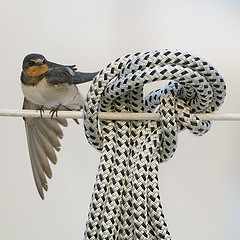
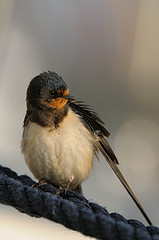
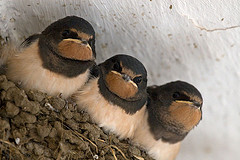
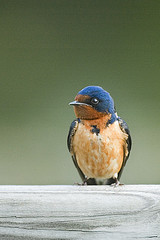
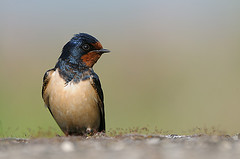
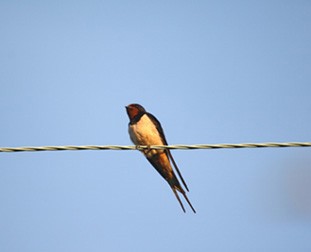
They are striking looking birds; dark glossy blue backs (sometimes described as metallic blue), red throats, pale under parts and long distinctive tail streamers. They have a large mouth with a small bill; and short legs. Male and female birds are similar in appearance but the tail streamers of the females are shorter than those of the males, and the length of the tail streamers are one character which the female uses to choose her mate – long tail streamers are a sign of a fit healthy male with good genes.
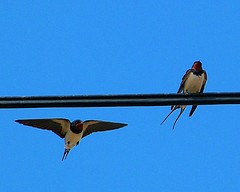
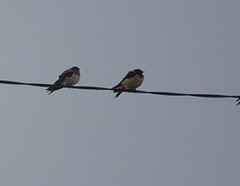
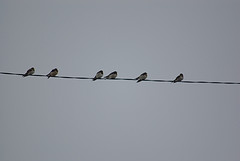
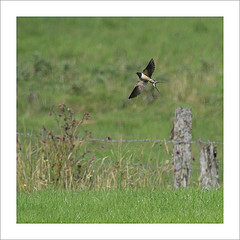
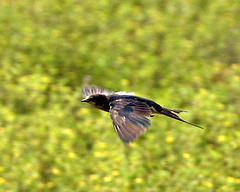
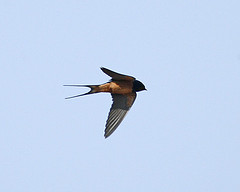
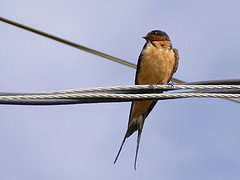
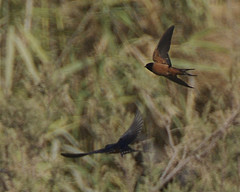
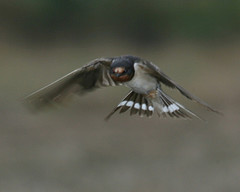
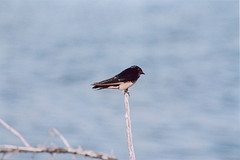
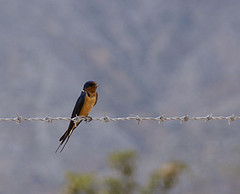
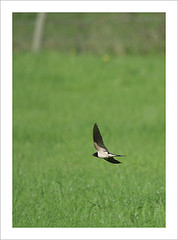
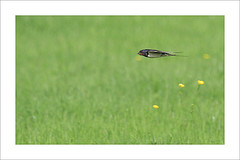
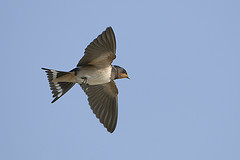
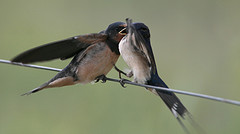
Swallows are small birds; about 7-8in in length (17-20cm), with a wing span reaching 12-14” (30-35cm). They are extremely agile and graceful in flight and spend most of their time on the wing, twisting and turning to catch airborne insects. You often see them either circling gracefully overhead, or swooping low over the water or ground, snatching up food. Like house martins and swifts, swallows feed on the wing hoovering up insects in their large gaping mouths, like flying vacuum cleaners! The long tail is put to good use whilst they briefly stall in flight, intercept an insect and move on. Although they spend much of their time on the wing, you can also see swallows perching on wires and other prominent perches
Unlike most other passerines (perching birds) they are diurnal migrants, travelling at almost ground level and skimming the waves whereas most migrants move at a height of several thousand feet. When they drink they skim low over the surface scooping water with open mouths. They breed in the Northern Hemisphere and then migrate south again for the winter.
The song of the swallow is a lively hurried dry twittering trill. You can almost imagine they are chattering to one another, like humans but very quickly! Their alarm call is a loud ‘vit’ which is often heard when they’re flying.
Where to see a swallow
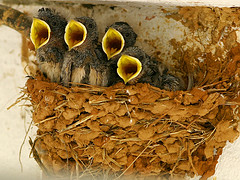
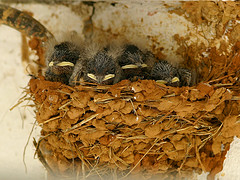
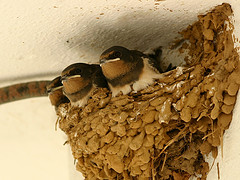
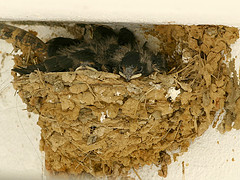
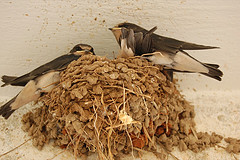
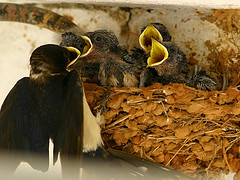
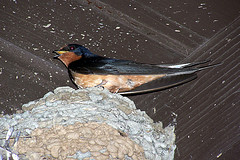
Swallows are most likely to be seen where there are plenty of small insects on which they feed. They are particularly fond of open country with access to water and quiet farm buildings where they can nest. They nest mainly on ledges in barns, outhouses, old buildings, or under bridges, so usually near human habitation. Large reedbeds in late summer and early autumn can be good places to look for pre-migration roosts.
Your Swallow Sigthings
All your Swallow sightings from 2008